
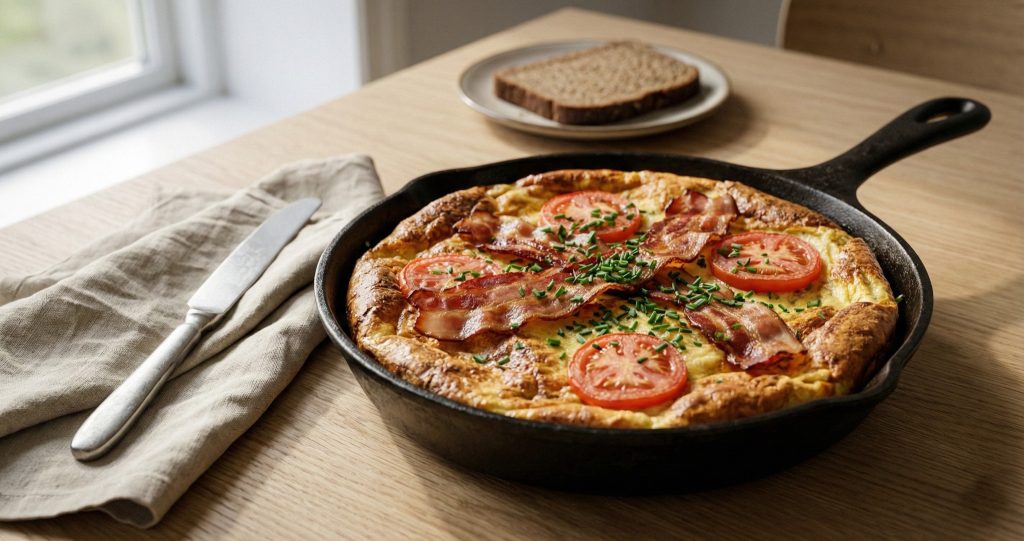
Few dishes capture the homely comfort of the Nordic countryside quite like æggekage (pronounced eh-geh-kah-eh), literally “egg cake.” This rustic skillet omelet sits at the intersection of frittata and pancake – a thick, golden blanket of eggs topped with smoky bacon, juicy tomatoes and a scattering of chives. Traditional Danish cuisine notes that æggekage is “similar to an omelette” and is usually served in the pan with fried bacon, sliced tomatoes, copious amounts of chopped chives and buttered rye bread, sometimes accompanied by smoked herring. Food historians describe the dish as a mixture of lightly beaten eggs, milk and flour poured into a skillet; it’s finished in the oven until the top sets and is customarily garnished with fried bacon, tomatoes and chives. No wonder the dish has endured – it’s hearty enough for farmers yet elegant enough for a leisurely brunch.
A Nordic Breakfast Story
In the days when men and women worked their fields from dawn to dusk, æggekage emerged as a practical meal. Danish farmers could cook a robust egg cake for lunch and share it straight from the pan alongside buttered rye bread. Across the water in Sweden’s southern region of Skåne, a similar äggakaka (or äggakaga) evolved, using eggs, flour, milk, butter and cornstarch, topped with bacon and chives and served with lingonberry preserves. TasteAtlas notes that this savory pancake‑like dish was once packed into sacks and carried to the fields so it could be eaten cold. Whether you call it æggekage, flæskeæggekage or äggakaka, the idea is the same: plentiful eggs, a bit of flour and dairy, and whatever toppings the season allows.
For modern cooks, this means flexibility. You can add tender slices of new potato, a handful of spinach or cheese, or keep it stripped back to eggs and bacon. In Denmark it’s not uncommon to serve æggekage with boiled potatoes or even slide a wedge onto smørrebrød for an open‑faced sandwich. I love the way this dish invites improvisation while still honouring its roots.
Ingredients and Variations
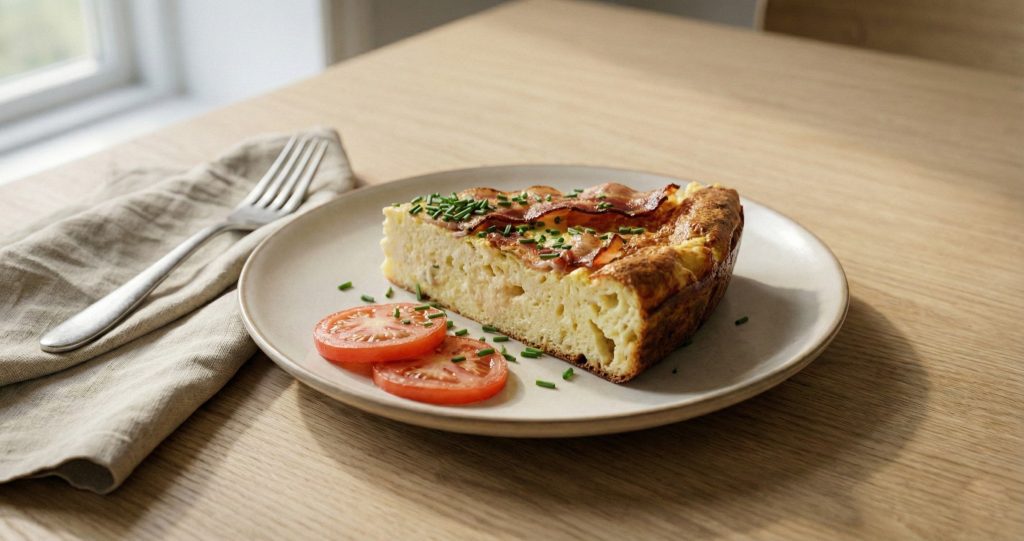
At its core, æggekage is about eggs – lots of them – enriched with a splash of milk or cream and, in many versions, a spoonful of flour. The flour creates a batter somewhere between an omelet and a pancake, giving the finished cake a gentle rise and a custardy center. Traditional recipes call for bacon on top; the salty, crispy strips contrast beautifully with the fluffy eggs. Tomatoes add acidity and color, while chives (or other herbs) lend a grassy freshness.
If you’d like a lighter cake, omit the flour entirely and it becomes closer to a fritatta – many recipes leave the flour out and still yield a tender omelet. Feel free to vary the vegetables: sautéed leeks, roasted peppers or diced potatoes are all welcome additions.
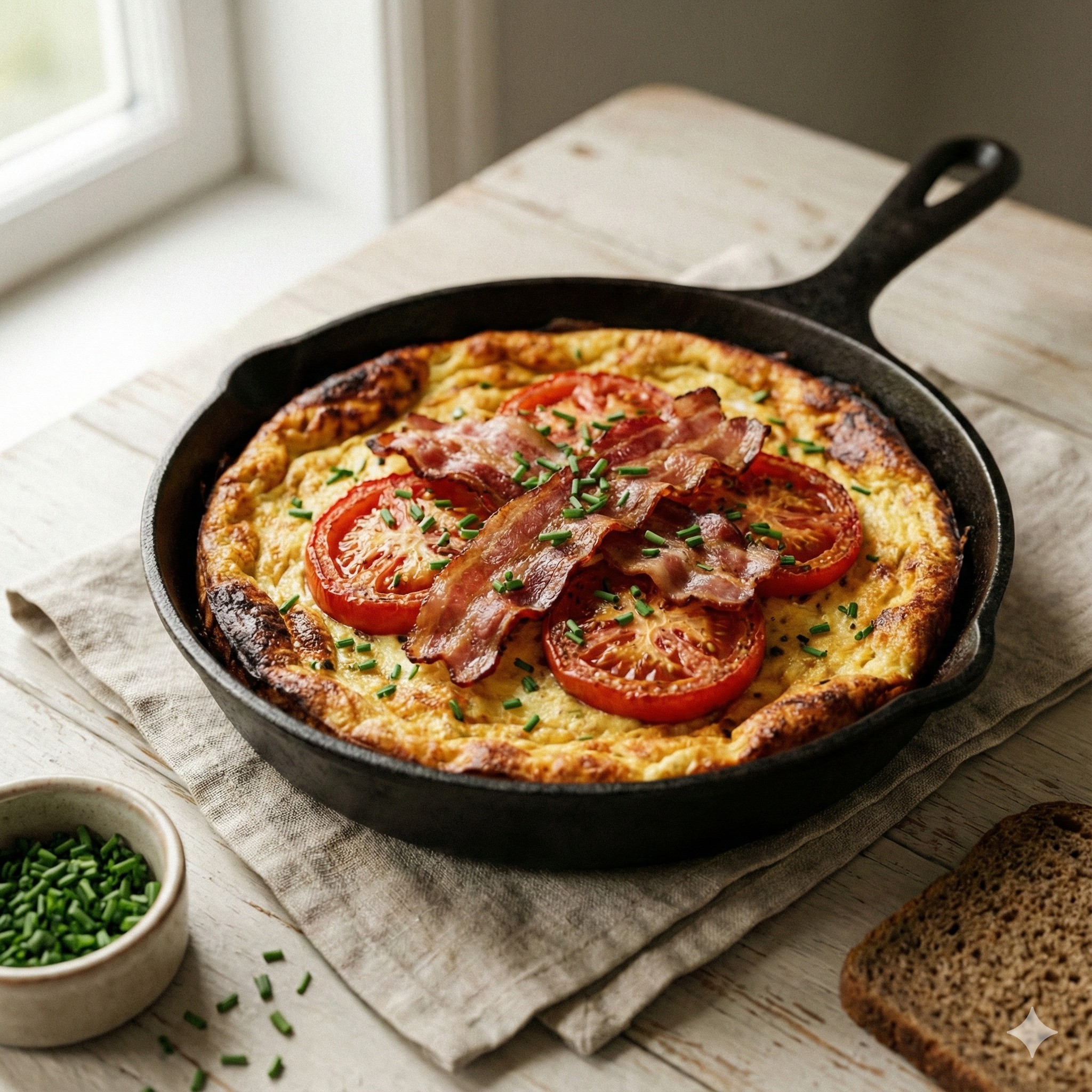
Danish Æggekage: A Cozy Nordic Egg Cake for Breakfast and Brunch
Ingredients
Method
- In a 10 inch (25 cm) cast‑iron or other oven‑safe skillet, cook the chopped bacon over medium heat until crisp.
- Transfer the bacon to a paper‑towel‑lined plate and pour off all but 1 Tbsp of the bacon fat.
- In a large bowl, whisk together the eggs, milk, flour (if using), salt and pepper until smooth and slightly frothy.
- Set the skillet back on medium heat and add the butter to the remaining bacon fat.
- When the foam subsides, pour in the egg mixture.
- Using a heat‑resistant spatula, stir gently and constantly for 2–3 minutes, scraping the bottom and sides, until large curds begin to form but the center is still quite loose.
- Smooth the top of the eggs, scatter the cooked bacon evenly over the surface, then lay the tomato slices decoratively on top.
- Cook for another 30 seconds on the stove without stirring.
- Place the skillet under a preheated broiler about 8 inches (20 cm) from the element.
- Broil for 2–4 minutes, watching closely, until the top is set and just beginning to brown.
- Remove from the oven and let rest for 5 minutes.
- Sprinkle generously with chopped chives.
- Cut into wedges and serve warm, directly from the skillet, with buttered rye bread or boiled new potatoes on the side.
Notes
Serving and Enjoyment
Like many Scandinavian dishes, æggekage is as much about how it’s eaten as what’s in it. In Denmark it’s customary to bring the whole skillet straight to the table – there is something wonderfully communal about digging in together. Buttered rye bread is the usual accompaniment, though boiled new potatoes or a crisp cucumber salad work nicely too. Some families even add a smear of mustard or a dab of creamy remoulade for extra tang.
Because æggekage contains plenty of eggs and bacon, it’s filling enough to serve as a stand‑alone meal. Yet it never feels heavy; the eggs are airy and the toppings bright. In summer I like to pair it with sliced cucumbers and radishes and a glass of cold milk; in colder months it’s lovely with pickled beets and a mug of hot coffee.
Final Thoughts
Æggekage is proof that simplicity can be deeply satisfying. A handful of pantry staples and a good skillet yield a dish that feels special without fuss. Its heritage spans Danish farmhouses and Swedish fields, and yet its appeal is universal – who can resist a golden omelet showered with bacon and herbs? Whether you’re looking for a hearty breakfast to start the day or an effortless brunch centerpiece, this Nordic egg cake deserves a spot in your repertoire.