
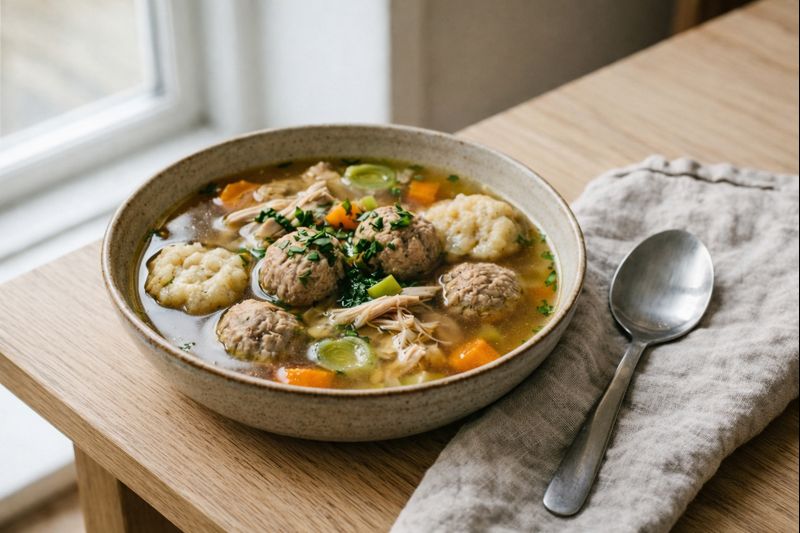
On winter afternoons when the light fades early and the wind rattles the evergreen branches outside, few things feel as restorative as a pot of chicken soup quietly burbling on the stove. In Denmark that soup is hønsekødssuppe – a clear, golden broth made from a suppehøne (soup hen), aromatic vegetables and the tenderest little meatballs and dumplings. It’s a dish born of thrift and comfort, one that whispers of farmhouse kitchens and Sunday meals but fits just as easily into a modern weeknight.
What is Hønsekødssuppe?
At its core, hønsekødssuppe is a clear chicken soup cooked from a large hen specifically raised for soup, called a suppehøne in danish. The hen is simmered with vegetables such as celeriac, carrots, onions and leeks until the broth turns golden and flavourful. A few aromatics – typically thyme, bay leaves and a pinch of white pepper – perfume the stock. Tradition calls for tiny white dumplings (melboller) and savoury pork or pork‑and‑beef meatballs (kødboller) to be poached separately and added to the soup just before serving. The cooked hen isn’t wasted; frugal Danish households shred the meat for other dishes like høns i asparges or chicken salad. A generous bowl of hønsekødssuppe is warming, lightly savoury and somehow both elegant and deeply homely.
A Spoonful of History
Chicken soup has long been a fixture of Nordic kitchens. Early Danish cooks would combine a hen, water and whatever root vegetables were at hand and let the pot simmer for hours to create an intense stock and tender morsels of meat. These simple broths were valued as nourishing, healing meals during the cold months and even served as a staple in the household sickbed. In humble farmhouses the soup was a way to stretch ingredients during lean times; a single soup hen could feed a family for days, yielding 7–8 litres of broth and plenty of meat to turn into other dishes. The dish’s thriftiness made it part of everyday life, yet there was a time when rich chicken soup with dumplings was reserved for the tables of Danish nobility.
The soup also crossed borders. A 17th‑century Norwegian play by Ludvig Holberg mentions hønsekjøttsuppe med boller (hen soup with dumplings), hinting that the Danish dish had already influenced neighbouring cuisines. In Norway, chicken meat was considered a delicacy – hens were kept for eggs – yet cooks prized older laying hens for soup because their age and size produced a richer stock. Even today, experienced cooks seek out stewing hens or large soup hens because the extra work yields a broth of remarkable depth. Modern Danish recipes may add ginger, lemon, noodles or rice for fresh twists, but the essence of the dish remains unchanged: a clear, deeply flavoured broth served with delicate dumplings and meatballs.
Serving Suggestions & Variations
Hønsekødssuppe is a versatile bowl. Traditionally it arrives as the starter at holiday gatherings or as skrub‑af‑mad (“scrape‑off‑food”) at the end of a long celebration. Because the broth is clear and not overly heavy, it pairs nicely with hearty rye bread or crusty sourdough. In Denmark it’s common to poach tiny pork meatballs and melboller dumplings separately, then warm them gently in the finished soup just before serving. A sprinkling of chopped parsley lends colour and freshness.
For a heartier meal, serve the soup as a main course with boiled potatoes or egg noodles stirred into the broth. You can also fold cooked rice or barley into the soup, as some modern variations do. In the spring a splash of lemon or a handful of finely diced asparagus brightens the stock, while a slice of red chilli or a knob of ginger gives an Asian‑inspired twist. And don’t forget to save the leftover meat for høns i asparges (a creamy chicken‑and‑asparagus filling spooned into crisp puff‑pastry shells) or hønsesalat – the soup was always part of a cycle of dishes.
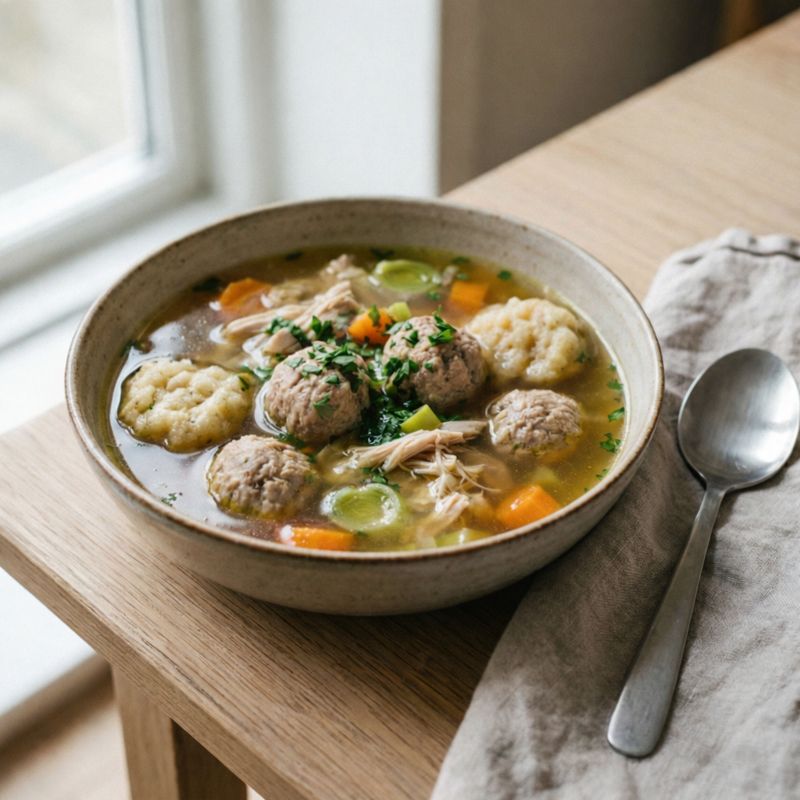
Traditional Hønsekødssuppe with Meatballs & Dumplings
Ingredients
Method
- Rinse the soup hen and remove any giblets.
- Place it in a large stockpot and cover with the cold water.
- Slowly bring the pot to a gentle boil, skimming off any foam for a clear broth.
- Add the carrots, leeks, celeriac, onion, bay leaves, thyme and peppercorns.
- Reduce the heat and simmer uncovered for 2–3 hours.
- The bird should be tender and the stock a deep golden color.
- In a bowl, mix the ground pork with flour, grated onion, egg, salt and pepper.
- Stir in the milk, a tablespoon at a time, until the mixture is soft but holds together.
- Wet your hands and roll into 2–3 cm (about 1 inch) balls.
- Bring a separate pot of salted water to a simmer and poach the meatballs for 5–10 minutes, until cooked through.
- Transfer to a plate and set aside.
- Melt the butter with the water in a saucepan.
- Add the flour all at once and stir vigorously until a smooth dough forms and pulls away from the sides of the pan.
- Remove from the heat and let cool slightly.
- Beat in the eggs one at a time until the dough is glossy and holds a shape. Season with a pinch of salt and pepper.
- Using a teaspoon or piping bag, drop small dumplings into simmering water (use the water from the meatballs if you like).
- Cook until they float and are puffed, about 5 minutes.
- Lift out with a slotted spoon and set aside.
- When the broth has simmered long enough, lift out the hen and vegetables.
- Strain the stock through a fine sieve for a clear soup, or leave some vegetables for a rustic texture.
- Pull the meat from the hen, discarding skin and bones.
- Season the broth generously with salt and taste; its warmth should be deep and mellow.
- Return the strained broth to the pot and bring to a gentle simmer.
- Add the cooked meatballs and dumplings and warm through for 5 minutes
- Ladle the soup into bowls, making sure each serving has meatballs, dumplings and a few shreds of chicken.
- Scatter with chopped parsley and serve with bread.
Final Thoughts
There is a reason generations of Danes have turned to hønsekødssuppe when winter knocks or a relative falls ill. The soup’s clear broth and tender dumplings offer comfort without heaviness, and its aromas of thyme and bay seem to cleanse the air. Like so many traditional dishes, it also embodies a philosophy: nothing goes to waste, everything is used to feed and nourish. Whether you serve it as a first course at a celebratory dinner, tuck it into thermoses for a snowy day or simply ladle it into bowls for a quiet evening at home, hønsekødssuppe is an invitation to slow down and savour the simple act of making soup.