
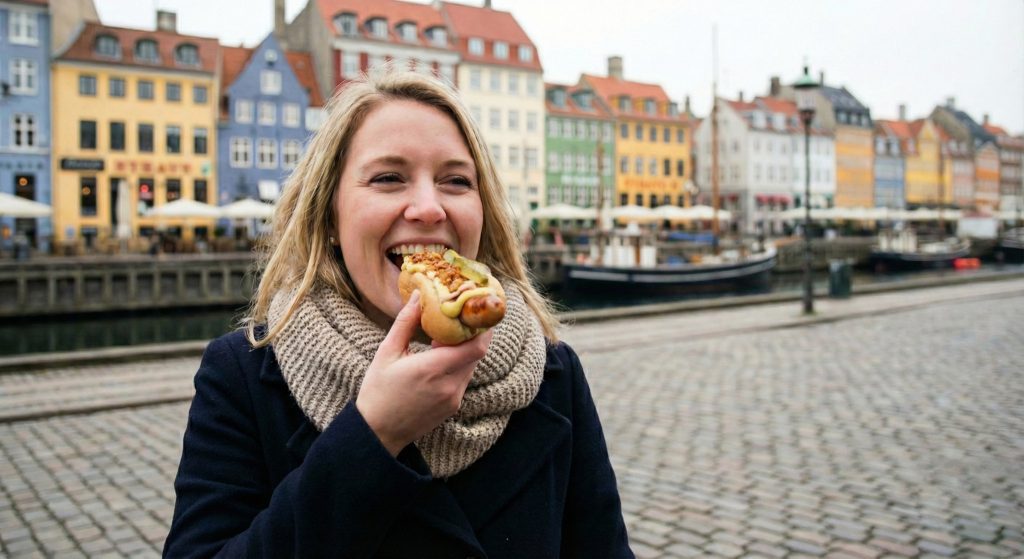
In Denmark, the humble hot dog is more than a quick snack – it’s a national treasure intertwined with the country’s cultural identity. The iconic pølsevogn (sausage wagon or hot dog stand) has been serving sausages on Danish streets for over a century (the first carts appeared in 1921) and remains a “living” cultural heritage symbol today. Despite competition from modern fast food, Danes hold an enduring affection for their hot dogs – so much so that hot dog stands were recently voted onto Denmark’s official list of intangible cultural heritage, celebrated as “a democratic space where everyone can meet at eye level”. From late-night revellers to politicians on lunch break, nearly everyone in Denmark has a hot dog memory – and a strong opinion about how a proper one should be assembled.
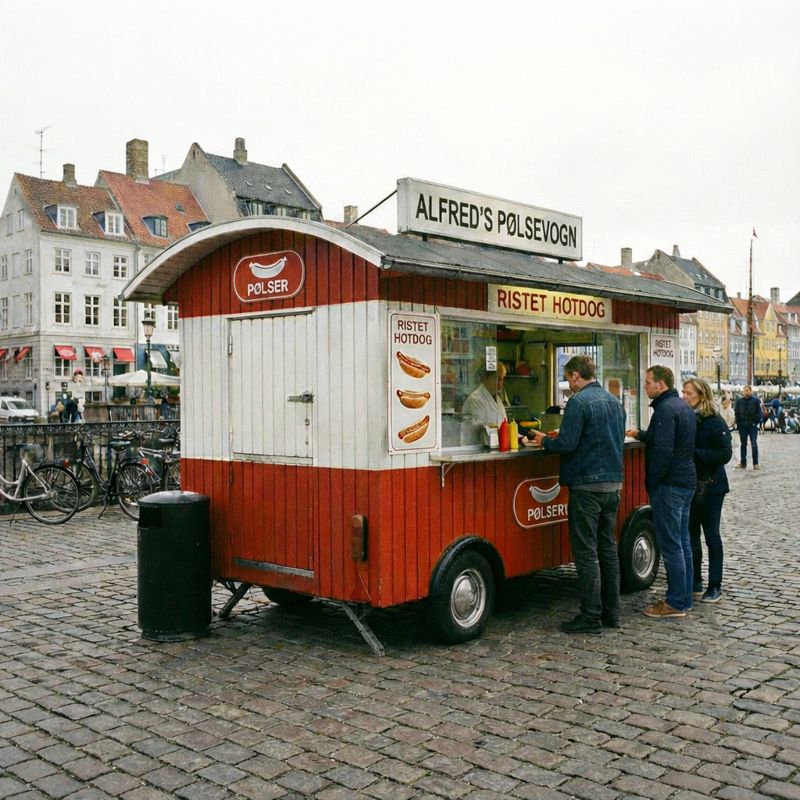
A classic Danish pølsevogn (hot dog stand) in Copenhagen. These mobile stands have been beloved gathering spots for generations. At their peak in the mid-20th century there were hundreds across Denmark, and even today about 100 remain in operation.
Popular Toppings on Danish Hot Dogs
One thing that sets Danish hot dogs apart is the palette of flavorful toppings piled on each one. Ask for a hot dog “med det hele” (with the works), and you’ll get an explosion of taste and texture: mustard, ketchup, creamy Danish remoulade, two kinds of onions (raw diced onions and crunchy fried onions), and tangy pickled cucumber slices on top. This fully loaded style – a ristet hotdog med det hele, or grilled hot dog with everything – is the gold standard at Danish stands.
A typical Danish hot dog “with everything” (pølse med det hele): a grilled red sausage in a soft bun, topped with creamy Danish remoulade, sweet-sour pickled cucumber slices, chopped raw onion, and crunchy fried onions for that signature mix of richness, tang, and crunch.
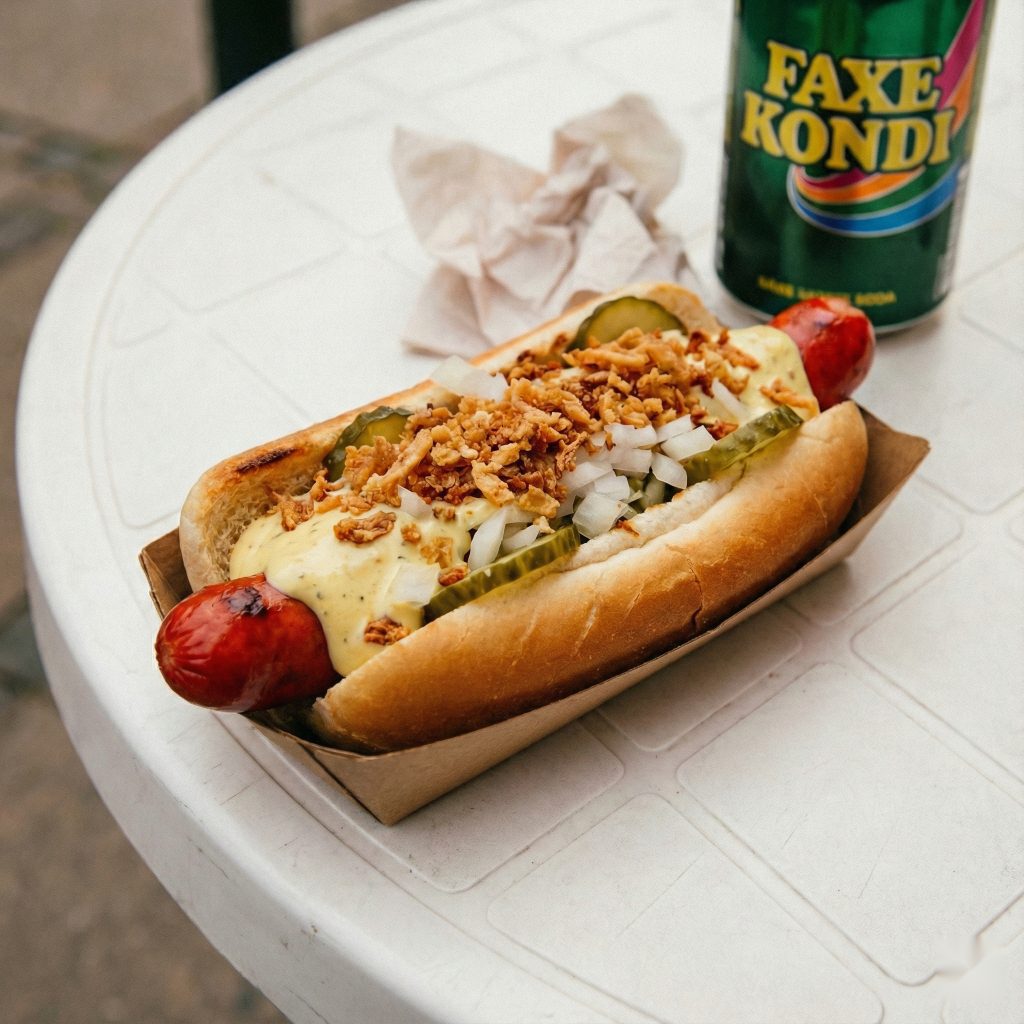
Remoulade is the star condiment: a lusciously thick, yellow mayonnaise-based sauce studded with bits of pickle and curry seasoning. Danish remoulade is “an awesome tangy, mustardy mayonnaise, kind of similar to tartar sauce” – it adds a creamy, mildly spiced element that you wouldn’t find on a typical American hot dog. Then comes the crunch: Danes crown their dogs with a generous handful of crispy fried onions (the kind that come in a bag, famously addictive) alongside a sprinkle of fresh raw onions for bite. The mix of the two types of onion – soft and sharp vs. toasted and crunchy – creates “an avalanche” of flavor and texture that elevates each bite. To balance the richness, pickled cucumber is a must. Danish hot dogs are traditionally topped with thin slices of sweet-and-sour pickled cucumber (a type of relish known as agurkesalat). These bright, vinegary cucumber pickles add a refreshing tang and slight sweetness that cut through the fat of the sausage and sauce.
Of course, ketchup and mustard are also on hand – though Danish mustard tends to be browner and more pungent than its American yellow counterpart. Typically, all three sauces (mustard, ketchup, remoulade) are zig-zagged over the sausage for det hele. The result is a hot dog bursting with contrasting flavors: smoky and salty from the meat, creamy from remoulade, sharp from mustard, sweet from ketchup, with crispy onions and pickles adding crunch and zing. No wonder one travel writer declared that these Danish toppings “hit all the buttons” – “salty, tangy, fresh, creamy, and smoky” – all at once. This fully-loaded approach has become a point of national pride: it’s difficult to find a Dane who doesn’t have a passionate opinion on the proper hot dog toppings and assembly order, much like Italians debating pasta sauce.
Sausage Varieties: From Rød Pølse to Bacon-Wrapped
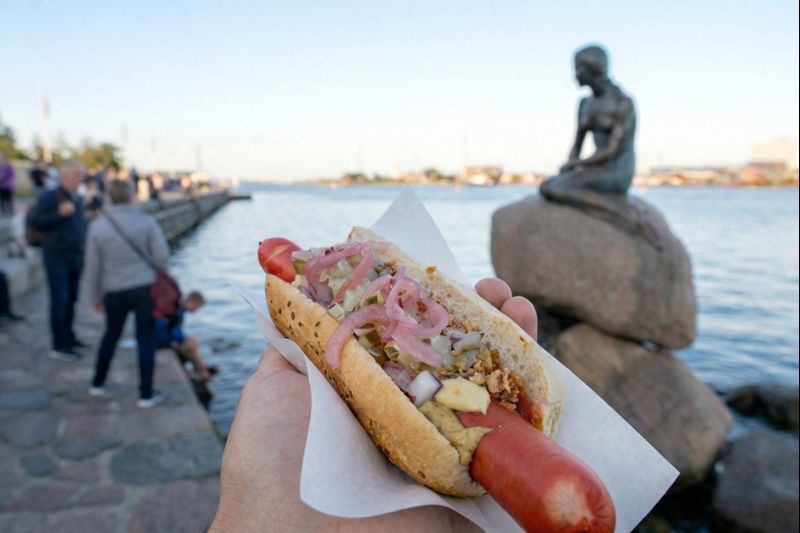
At the heart of every Danish hot dog is the pølse (sausage) itself – and there are a few classic types that reign supreme. The most famous is undoubtedly the rød pølse, or red sausage, a pork-based frankfurter dyed a bright crimson red. This slender, vividly colored sausage is typically boiled and has become “a national symbol” of Danish hot dog culture. In fact, many Danes consider the rød pølse so iconic that it’s practically a national dish. According to tradition, the red dye was originally used to mark day-old sausages so they’d be sold cheaply – but the colorful look stuck around and became beloved in its own right. A boiled rød pølse is often served “med brød” – with bread on the side (an unadorned hot dog bun or piece of French bread) – plus the usual condiments on top or on the side. Bite the sausage, then the bread, and repeat. It’s a simple pleasure that older generations especially appreciate.
Equally popular is the classic ristet pølse, which refers to a grilled or roasted sausage (usually similar to a standard frankfurter or Vienna sausage, just not dyed red). This one typically comes tucked in a bun. Most hot dog stands let you choose your sausage – so you can get a grilled frankfurter-style dog or a boiled red dog dressed with the same toppings, as you prefer. The grilled sausages often have a satisfying “snap” from the casing and a lightly smoky taste, pairing perfectly with the condiments.
For those looking for extra indulgence, many stands also offer a pølse i svøb, literally “sausage in a blanket,” which is a sausage wrapped in bacon before cooking. This bacon-wrapped hot dog is a crowd-pleaser – the bacon gets grilled until crispy on the outside, adding an addictive salty crunch to each bite. “For the frisky ones, there’s often also pølse i svøb… Yum!” as one Danish food blogger put it. It’s a popular choice for anyone who agrees that everything is better with bacon.
Beyond these staples, there can be other varieties depending on the vendor. French hot dogs (more on those unique buns next) usually use a slender, spicy sausage similar to a frankfurter. Some modern or gourmet pølsevogn have added specialty sausages – for example, cheese-infused sausages or all-beef varieties – and even vegetarian or vegan sausages for today’s diverse eaters. But at a traditional stand, the big three offerings are usually: a grilled hot dog (often just called a “ristet hotdog”), a rød pølse (red, boiled), and sometimes a fransk hotdog or a bacon-wrapped option. No matter the type, Danish sausages are typically of high quality – a mix of pork (and sometimes veal or beef) with a light smoke, giving a juicy snap and savory flavor that pairs perfectly with the array of toppings. This flavorful base is what makes the Danish hot dog experience stand out from its American cousin; as one writer noted, the combination of Denmark’s spiced sausage and its fixings creates a “unique flavor profile that distinguishes it from other hot dogs worldwide”.
Bun Variations: Classic vs. “Fransk Hotdog”
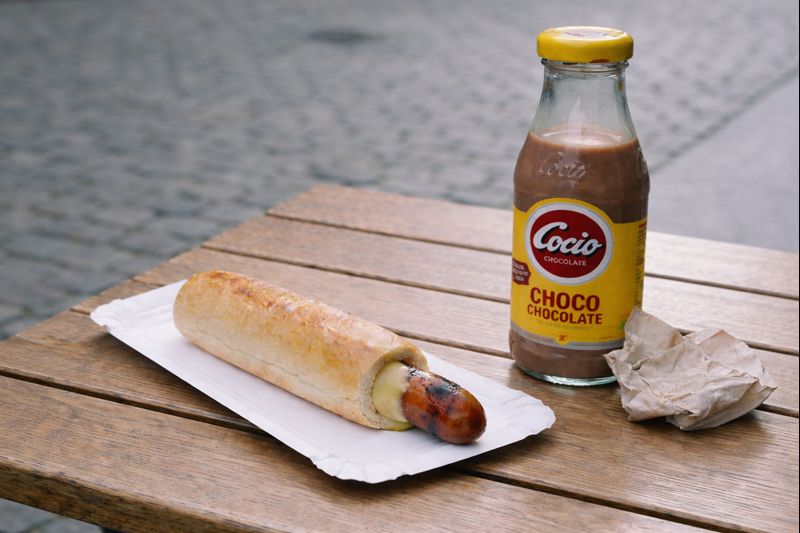
The vessel for a Danish hot dog is just as important, and in Denmark you’ll encounter two main bun styles. First is the classic hot dog bun, a soft white wheat bun similar to an American hot dog bun, sliced from the top or side to cradle the sausage. This traditional bun (often slightly steamed or toasted) is used for the standard open-faced hot dog loaded with toppings. It’s the kind of bun you’d get for a ristet hotdog med det hele, where the sausage is nestled in the split bun and then heaped with sauces, onions, and pickles on top. Historically, early hot dog vendors actually charged extra for bread – in 1920s Copenhagen, a sausage cost 25 øre and bread was +5 øre more – but nowadays the bun is a given, and it’s essential for catching all those delicious toppings (and for keeping your fingers somewhat clean!).
The second, very Danish option is the fransk hotdog bun – despite the name, a “French hot dog” isn’t from France at all, but a local innovation. A fransk hotdog is served not in a split bun, but in a hollowed-out baguette-style bread. The bread is a short baguette or torpedo roll with a hole drilled lengthwise through the middle. The sausage is slipped inside this bread pocket, along with your condiment of choice squirted into the hole. This design makes for a neat, less-messy hot dog that’s ideal for eating on the go. In fact, one commercial bakery describes the French hotdog bun as having “a hole in which a sausage and sauce can be inserted,” making the hot dog “easy to eat with one hand” while strolling the street. The sauces (often a single “dressing” like remoulade, ketchup, or a mix) get smeared inside the bread, so unlike the overflow of a traditional hot dog, a fransk hotdog is self-contained. You might think of it like a hot dog in a baguette cone. Many visitors find it ingenious. As one guide explains, a French hot dog is basically “a grilled sausage in a little ‘pocket’ of bread” – no toppings spilling out, just a delicious grab-and-go snack.
Both bun types have their devotees. The classic bun allows for piling on all the condiments “with everything” on top, giving that full sensory experience (albeit requiring ample napkins!). The French hotdog bun, on the other hand, is loved for its convenience and the satisfying way each bite contains sausage, sauce, and bread all together. It’s common for Danish hot dog stands – especially the big chains like Steff’s – to offer both styles. So you might grab a ristet med det hele in a regular bun for lunch, and a fransk hotdog later for a quick snack. In either case, the bread itself is generally mild and soft, meant to complement the sausage rather than steal the show. Some modern stands have even experimented with whole grain or sourdough buns for a twist, but the classic white bun remains a staple of this comfort food.
Perfect Pairings: Drinks to Wash It Down
No Danish hot dog experience is complete without washing it down with a favorite local beverage. Interestingly, the most classic pairing isn’t a beer or soda, but an ice-cold chocolate milk. Danes have a beloved tradition of enjoying a cold Cocio chocolate milk alongside their hot dogs. Cocio (a Danish chocolate milk brand founded in 1951) is sold at virtually every pølsevogn; its rich, not-too-sweet cocoa flavor somehow pairs perfectly with the salty, tangy hot dog. After a night out dancing or an afternoon at a football match, many Danes swear by “a hot dog and a Cocio on the way home” as the ultimate treat. It might sound like an odd combo to the uninitiated, but biting into a savory hot dog and then sipping cold chocolate milk is a little ritual of Danish street food culture.
If chocolate milk isn’t your thing, the stands also stock plenty of soft drinks. A particularly popular choice is Faxe Kondi, a Danish lemon-lime soda reminiscent of Sprite or 7-Up. There’s an old-school charm in grabbing a hot dog and a bottle of Faxe Kondi – the sweetness and fizz of the soda cut nicely through the richness of the dog. In fact, one local enthusiast recommends chasing a roast pork sandwich or hot dog with “a Faxe Kondi” to complete the meal. Of course, you can also opt for a beer on the side (some stands sell bottled beer) or even a cup of coffee, but the hot dog + Cocio (and maybe a Faxe Kondi for round two) is the time-honored combo that many Danes grew up with.
In Denmark, enjoying a hot dog isn’t just about the food – it’s about the atmosphere and tradition. Standing by a shiny red pølsevogn, rubbing elbows with strangers, you partake in a little piece of Danish life. The vendor (the pølsemand) might crack a joke or chat about the weather as he hands you your order. Locals often say the hot dog stand is a great equalizer: “a meeting place – a popular symbol of Danish community, humor, and everyday quality”. For a few minutes, everyone is simply enjoying life’s simple pleasures – a warm sausage, crunchy onions, a cold drink – all at eye level, with no pretense. It’s this warm, communal spirit, as much as the taste of the food, that makes the Danish hot dog experience so special. So next time you find yourself in Copenhagen or anywhere in Denmark, follow the locals’ lead: order a hot dog med det hele, savor each delicious bite under the Scandinavian sky, and don’t forget to shake your Cocio well before sipping. Smak velbekomme – enjoy!