
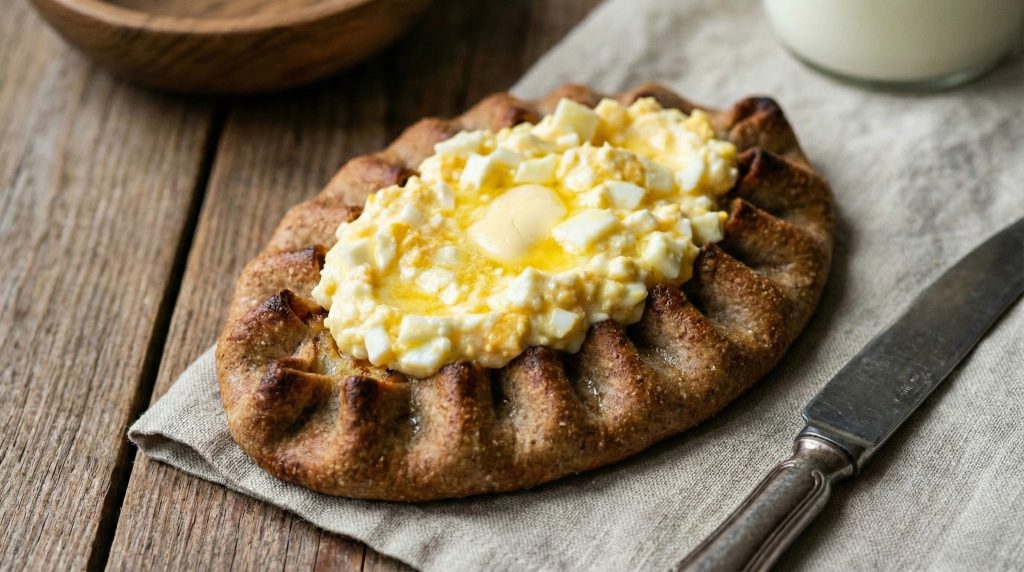
Imagine a warm, oval rye pie straight from a Finnish oven – slightly chewy crust folded up around a creamy rice porridge filling. That’s the humble karjalanpiirakka (literally “Karelian pie”), a Karelian pasty that’s a beloved comfort food across Finland. These petite “boat-shaped” pies (with the filling exposed in the center) taste especially rich when served hot with a smearing of Finnish munavoi (egg butter). Whether enjoyed as a cozy breakfast or a hearty snack, karjalanpiirakat are welcoming even to first-timers: flaky rye meets creamy filling in every bite, bridging Finnish tradition with something any palate can love.
A Taste of History
Karjalanpiirakat trace their roots to Karelia, an eastern Finnish-Russian borderland. Bakers have made these open-faced pies since at least the 1600s, and the first written mention dates to 1686. Traditionally, rural Karelians used local grains: early versions even featured barley and talkkuna (roasted grain flour) fillings. Over the centuries new staples arrived – potatoes in the 1700s, rice in the 19th century – transforming the recipe into the iconic rice version we know today.
The 20th century solidified karjalanpiirakka as a symbol of Finnish heritage. After the Winter War (1939–40) Finland ceded most of Karelia to Russia, displaced Karelians brought their recipes to new homes. By sharing these pies and their warmth, they wove karjalanpiirakka into the national fabric. Today they’re so cherished that the EU has granted them “Traditional Speciality Guaranteed” status, meaning only pies made to the old recipe can bear the name.
What Are Karjalanpiirakat?
Karjalanpiirakat (also called Karelian pasties or Karelian pirogs) are small, oval pies made from rye flour. The dough is rolled paper-thin – often a mix of rye and a bit of wheat for pliability – then pinched into little boats. Each is filled with creamy rice porridge (think mild risotto-like pudding) before baking. As one description notes, it’s “a pasty made of a rye pastry shell filled with a savory milk pudding and shaped into a boat-like shape”.
After baking until the crust is golden and crisp, the pies are immediately brushed with butter (sometimes with a splash of milk) to keep the crust tender. The result is a contrast of textures: a nutty, rustic rye edge and a soft, milky center. The traditional garnish is munavoi – butter mixed with chopped hard-boiled egg – spread generously on the hot pie so it melts into every crevice. In short, a karjalanpiirakka is a humble farmhouse treat: hearty rye outside, fluffy filling inside, and always enjoyed warm.
Serving Suggestions
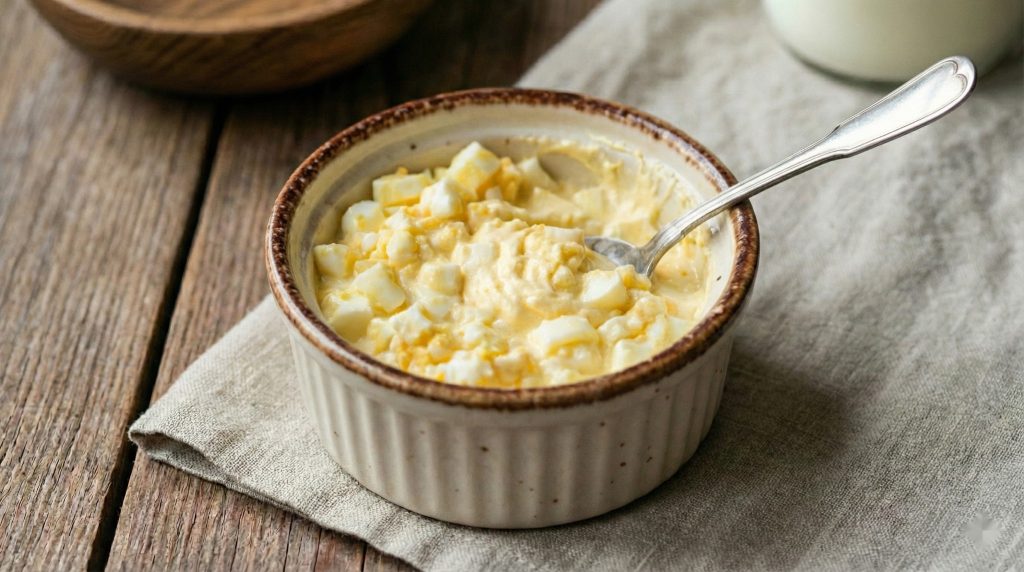
Serving these pies is half the fun! Traditionally, Finns eat them warm, slathered with munavoi or a pat of real butter that melts into the rice. They’re a common sight at breakfast or lunch – even as a savory snack with coffee.
Feel free to get creative with toppings. Traditionally you might add sliced boiled eggs or a sprinkling of dill, but they’re also tasty under a slice of cheese, ham, or gravlax “bruschetta-style” (reflecting Nordic open-faced sandwich traditions). Don’t shy away from sweet pairings, either: many Finns (and hikers on the trail) spread theirs with jam or fresh berries for a sweet-savory treat. Basically, think of these like mini flatbreads – they carry butter, eggs, meats or jams beautifully. And yes, they’re very good with afternoon coffee or tea (try them with a Finnish roast if you find it)!
Variations to Try
Though the rice version is king, you’ll also meet karjalanpiirakat with other fillings. Two popular variants are potato and carrot pies. The potato version (perunapiirakka) simply swaps in creamy mashed potatoes (seasoned with butter, salt and a little milk) in place of rice. For a carrot version (porkkanapiirakka), shred or puree cooked carrots into the porridge – often with a pinch of sugar or spice – giving a subtly sweet twist. Both bake up the same way and pair with egg butter just as well.
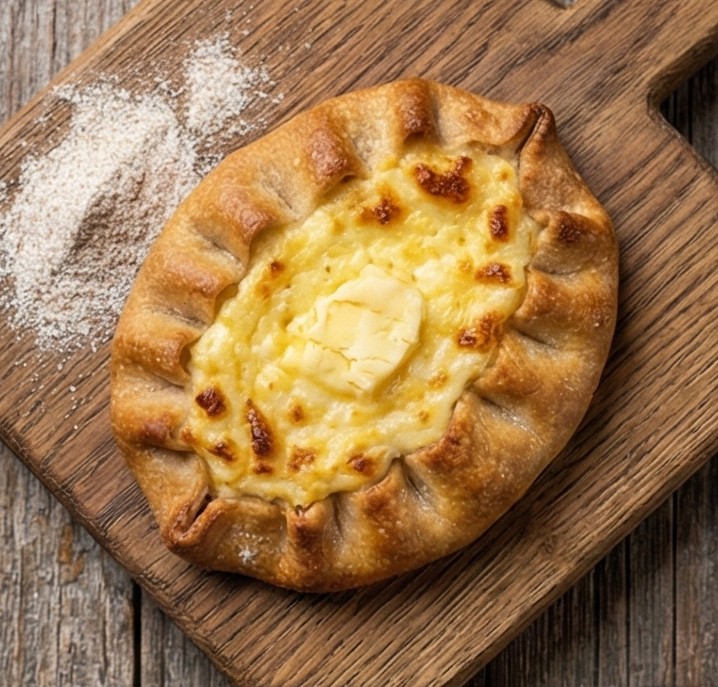
Karelian Pasties – Finnish Rye Hand Pies with Creamy Rice Filling
Ingredients
Method
- In a medium pot, bring the rice and 1 cup water to a gentle boil.
- Reduce the heat and simmer, covered, for about 10 minutes.
- Add 4 cups milk and 1½ teaspoons salt.
- Cook on low heat, stirring often, until the rice is very soft and the mixture is thick and porridge-like, about 20–25 minutes.
- If it thickens too much, add a splash more milk or water.
- Set aside to cool. (The filling should be cool or at room temperature before assembly.)
- In a bowl, whisk together the rye flour, wheat flour, and 1/2 teaspoon salt.
- Stir in the melted butter and about ¾ cup warm water, mixing until a dough forms.
- Knead for a minute or two until smooth.
- If the dough is crumbly, add a little more water; if it’s too sticky, add a pinch more flour.
- Cover with a towel and let rest for 10 minutes.
- On a lightly floured surface, divide the dough into 16 even pieces (about 1½–2 tablespoons each).
- Roll each piece into a small ball.
- Press or roll each ball into a very thin round, roughly 4–6 inches / 10–15 cm in diameter.
- Aim to get them quite thin, especially at the center.
- Place about 1–2 tablespoons of the cooled rice filling in the center of each dough circle, leaving about a ½-inch margin around the edge.
- Gently fold the edges up over the filling all the way around.
- Pinch tightly with your fingers to make crimped pleats.
- Shape each into an oblong “boat” with the filling visible in the middle.
- Preheat the oven to 450°F (230°C).
- Lightly grease a baking sheet (or line with parchment).
- Transfer the pies to the sheet, spacing them a couple of inches apart.
- Brush the tops lightly with melted butter.
- Bake for 10–12 minutes, until the crust is just firm and the filling has a few golden spots.
- Immediately after baking, brush the hot pies generously with more melted butter to keep the rye crust from hardening.
- Let cool slightly before serving.
Notes
- Resting the cooled rice filling before assembling helps prevent soggy dough.
- The crust can be delicate; flour your hands or work on a smooth board for easy folding. Don’t worry if your first few pies aren’t perfect – rustic pleats are charming!
- Soften the crust: As soon as they come out of the oven, brush or even lightly dip the hot pies in melted butter (mixed with a tablespoon or two of water) – this ensures the rye never becomes too hard.
- Storage: These reheat beautifully. Simply warm in a skillet or oven, and enjoy with fresh egg butter each time.
Final Notes
Karjalanpiirakat may look intricate, but once you’ve rolled and pinched a few, the rhythm becomes almost meditative. The recipe is forgiving, the shapes don’t need to be perfect, and a slightly rustic look is part of their charm.
Don’t be afraid to play with fillings once you’ve mastered the traditional rice version. Try a batch with creamy mashed potatoes or a carrot–rice mix and make the recipe your own. However you fill them, you’re keeping a small but beautiful piece of Finnish food tradition alive.