
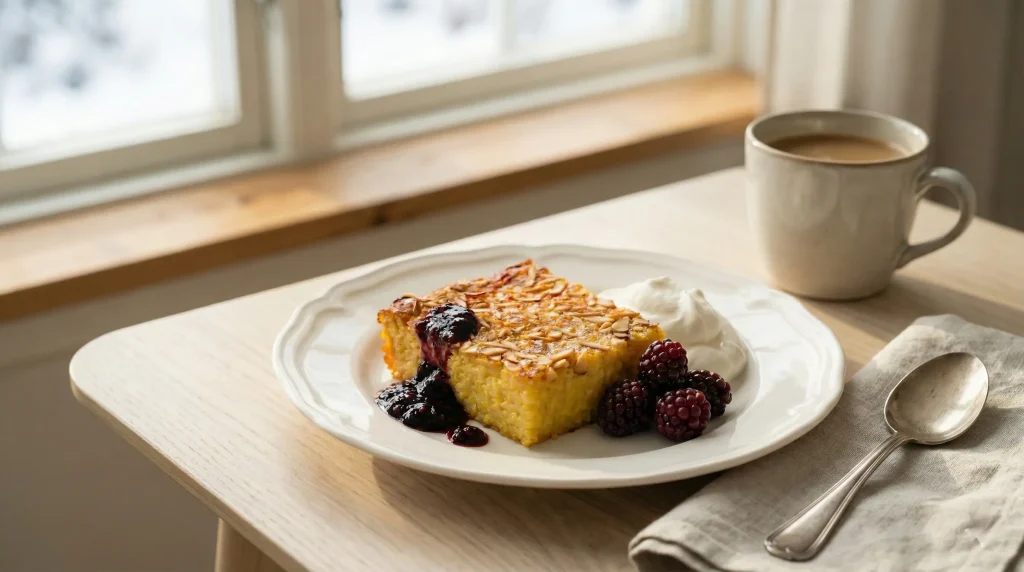
Gotländsk Saffranspannkaka: The Swedish “Pancake” That Isn’t a Pancake
If you hear “Swedish saffron pancake” and picture a stack of flapjacks swimming in maple syrup… I have news for you. Gotland’s beloved Saffranspannkaka is a “pancake” in the same way a cheesecake is a “sandwich” if you squint hard enough. Like Sweden’s classic oven pancake, it’s baked in a pan—but instead of a flour batter, this one is built from creamy rice porridge, eggs, cream, sugar, saffron, and almonds, then baked until golden.
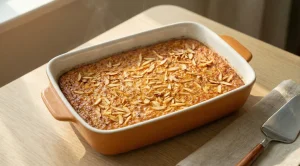
In reality, this is a luxurious, baked rice custard cake. It is built from creamy rice porridge, eggs, cream, sugar, saffron, and almonds, then baked until golden. Served in tidy slices with whipped cream and tart berry jam (traditionally salmbär, or dewberry), it is dense but not heavy, sweet but not cloying, and deeply saffron-scented in that quietly luxurious, lagom way.
It is essentially the island of Gotland in a baking dish: rustic, historic, and having an odd talent for keeping the good stuff.
Why Gotland has saffron at all (and why this tastes like history)
Gotland sits in the middle of the Baltic Sea, and during the Middle Ages, the walled town of Visby was a major trading hub. It was the center of a merchant network that moved luxury goods across Northern Europe.
Back then, spices weren’t just flavor; they were status, medicine, and currency-adjacent symbolism. While the rest of Sweden eventually relegated saffron mostly to December’s Lussekatter (Lucia buns), Gotland held onto that spice-forward palate year-round.
From Leftovers to Luxury
Rice has a similarly dramatic origin story here. For centuries, it was an imported, expensive luxury—sold more like a special commodity than a pantry staple. By the 1800s, rich rice porridge had become a festive food rather than everyday fuel.
Saffranspannkaka likely evolved as a brilliant way to ennoble leftover festive porridge. By adding eggs, cream, sugar, and almonds, cooks transformed leftovers into something sliceable and celebratory.
There’s also a specific Gotlandic tradition that explains why this dessert is so proudly rich: förning. This was a structured “bring-a-dish” custom for large gatherings where the quality of what you brought reflected directly on you. A Saffranspannkaka—laden with expensive dairy, exotic saffron, and imported rice—was basically a dairy-and-spice mic drop.
How to serve it like a local
Today, this dish is most famously eaten at summer cafés on Gotland (a fun seasonal flip from its wintery, porridge-based roots), but it still behaves like special-occasion food. It’s not breakfast; it is fika with authority.
The golden rule: It is best served lukewarm or at room temperature. This allows the custard to set properly and the saffron flavor to deepen, ensuring every bite tastes like history.
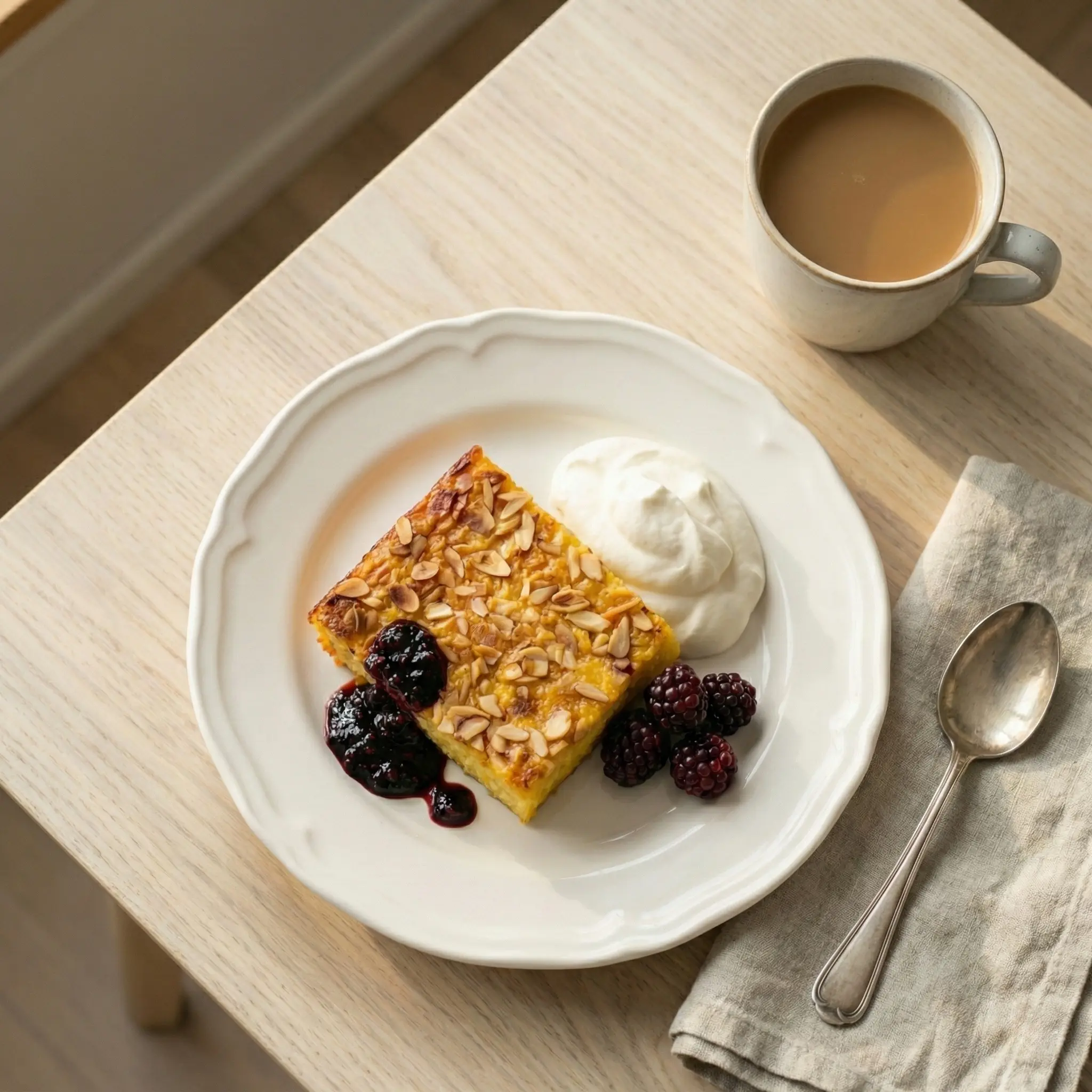
Gotländsk Saffranspannkaka (Swedish Saffron Pancake)
Ingredients
Method
- In a heavy-bottomed pot, combine water, rice, butter, and salt. Bring to a boil.
- Reduce to low, cover, and simmer about 10 minutes, until water is mostly absorbed.
- Add milk and the cinnamon stick. Bring to a gentle simmer (avoid aggressive boiling).
- Lower heat to the smallest whisper. Cook 30–40 minutes, stirring every 5–10 minutes to prevent scorching, until the rice is fully tender and porridge is thick.
- Remove cinnamon stick. Transfer porridge to a bowl and cool completely (room temp).Tip: This is ideal done the day before.

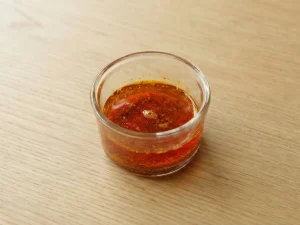
- Grind saffron threads with a pinch of sugar to a fine powder (mortar & pestle helps).
- Stir into 1 Tbsp warm cream or 1 Tbsp vodka/brandy. Let stand 15–20 minutes until deeply orange-red.

- Heat oven to 400°F (200°C). Butter a 9×13-inch (23×33 cm) baking dish (or similar shallow dish).
- In a bowl, whisk eggs + sugar + bloomed saffron + almond extract.
- Fold the egg mixture and heavy cream into the cooled porridge until combined. It should be looser than oatmeal, thicker than batter.
- Stir in ⅔ of the chopped almonds.
- Pour into dish and sprinkle remaining almonds on top.
- Bake 35–45 minutes, until the center is set (a slight jiggle is fine) and the top is golden with a lightly chewy “skin.”

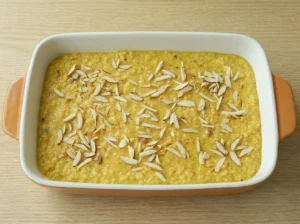
- Let cool at least 30 minutes. Slice and serve lukewarm or room temp with whipped cream and tart jam.
Notes
- Make-ahead: The porridge can be made 1–2 days ahead; bake the pancake the next day.
- Rice choice: Short-grain “sushi rice” gives the best porridge structure.
- Jam: Tartness matters—choose a jam that pushes back against the creamy richness.
FAQ + Troubleshooting
Your porridge rice wasn’t fully tender before baking. The oven sets custard; it won’t magically finish stubborn rice. Cook the porridge longer next time, keeping the heat low and the milk plentiful.
Most commonly: (1) you added eggs to warm porridge, or (2) you used low-fat milk/cream substitutes. Cool the porridge completely and use whole milk + heavy cream for proper setting and texture.
Either your saffron is old, or you didn’t bloom it properly. Grind threads and steep them so the aroma compounds disperse through the batter instead of sitting in stubborn little strands.
You can, but it can behave differently (bigger grains, different starch release). Short-grain “sushi rice” is the most reliable match for the classic porridge texture.
If you want that authentic floral-marzipan edge, yes—especially since traditional bitter almonds aren’t typically available in many countries. Use a light hand; it should whisper, not shout.
Boysenberry jam is the best easy stand-in, or choose a tarter “wild” blackberry jam rather than very sweet commercial blackberry. You want acidity to balance the creaminess.
Look for a set center (like a baked custard) and a golden, slightly chewy top. If it sloshes, give it more time. If it’s browning too fast, lower the oven a touch next bake.
Refrigerate leftovers covered for up to 3–4 days. Serve cool-to-lukewarm. (It’s not trying to be hot pudding; it’s trying to be sliceable fika.)