
This post contains affiliate links and paid product placements. I may earn a commission if you make a purchase.
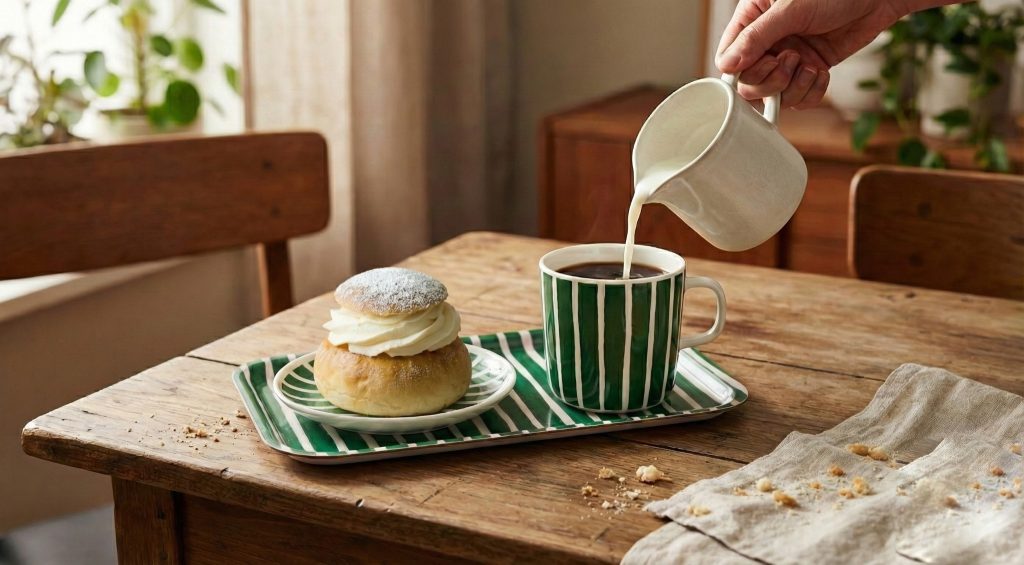
There’s a particular kind of cheer that arrives in Sweden while winter is still very much doing its thing: bakery windows fill with semlor—soft cardamom buns, stuffed with almond filling and a proud swirl of whipped cream. While the Swedish Kanelbulle is the undisputed star of daily fika, the Semla is the seasonal treat we wait for all year. Officially, semla is tied to Fettisdagen (Shrove Tuesday), which falls on February 17 in 2026, but in practice it tends to become a whole-season affair.

The Bun That Toppled a King
In 1771, Sweden’s King Adolf Frederick famously “ate himself to death” after consuming 14 Semlor following a massive feast. This fatal digestive collapse earned the pastry its enduring nickname: “The Killer Bun.”
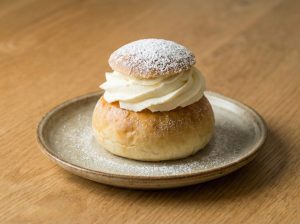
If you’ve never had one, picture this: a tender, lightly sweet bun perfumed with cardamom; a rich almond center (made even better by mixing it with the bun’s own crumbs); and whipped cream so fresh it practically announces itself. It’s indulgent, yes—but also oddly balanced. The spice keeps it from tasting cloying, and the almond filling brings depth rather than pure sugar. Semla is one of those Nordic pastries that feels both festive and familiar—like it’s always belonged on your table, even if you’re meeting it for the first time.
What makes a “real” semla?
A classic Swedish semla (also called fastlagsbulle) has three non-negotiables:
- A cardamom bun (soft and fluffy, not dry)
- An almond filling (traditionally almond paste, loosened with a little milk and bun crumbs)
- Whipped cream (generously piped, assembled close to serving)
Everything else—how fancy the lid looks, how tall the cream swirl gets—falls under personal style and bakery bravado.
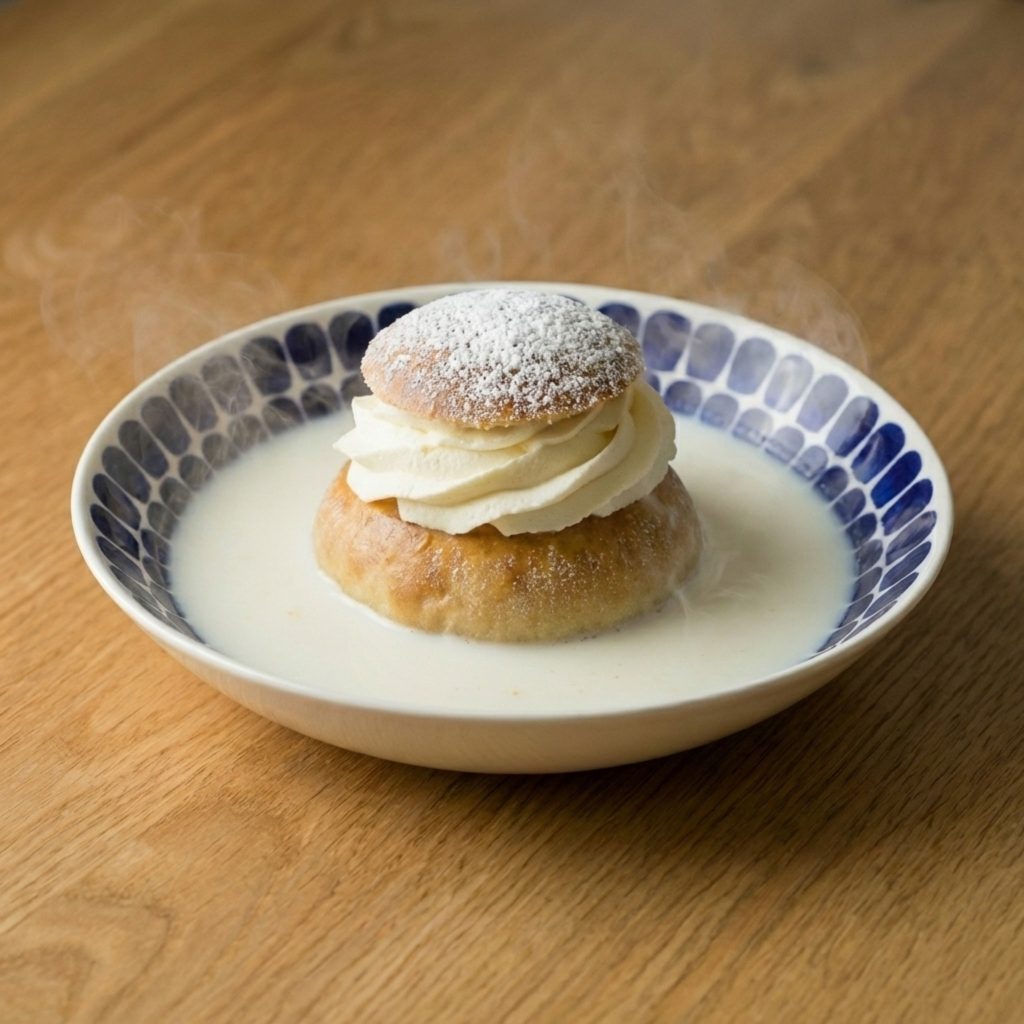
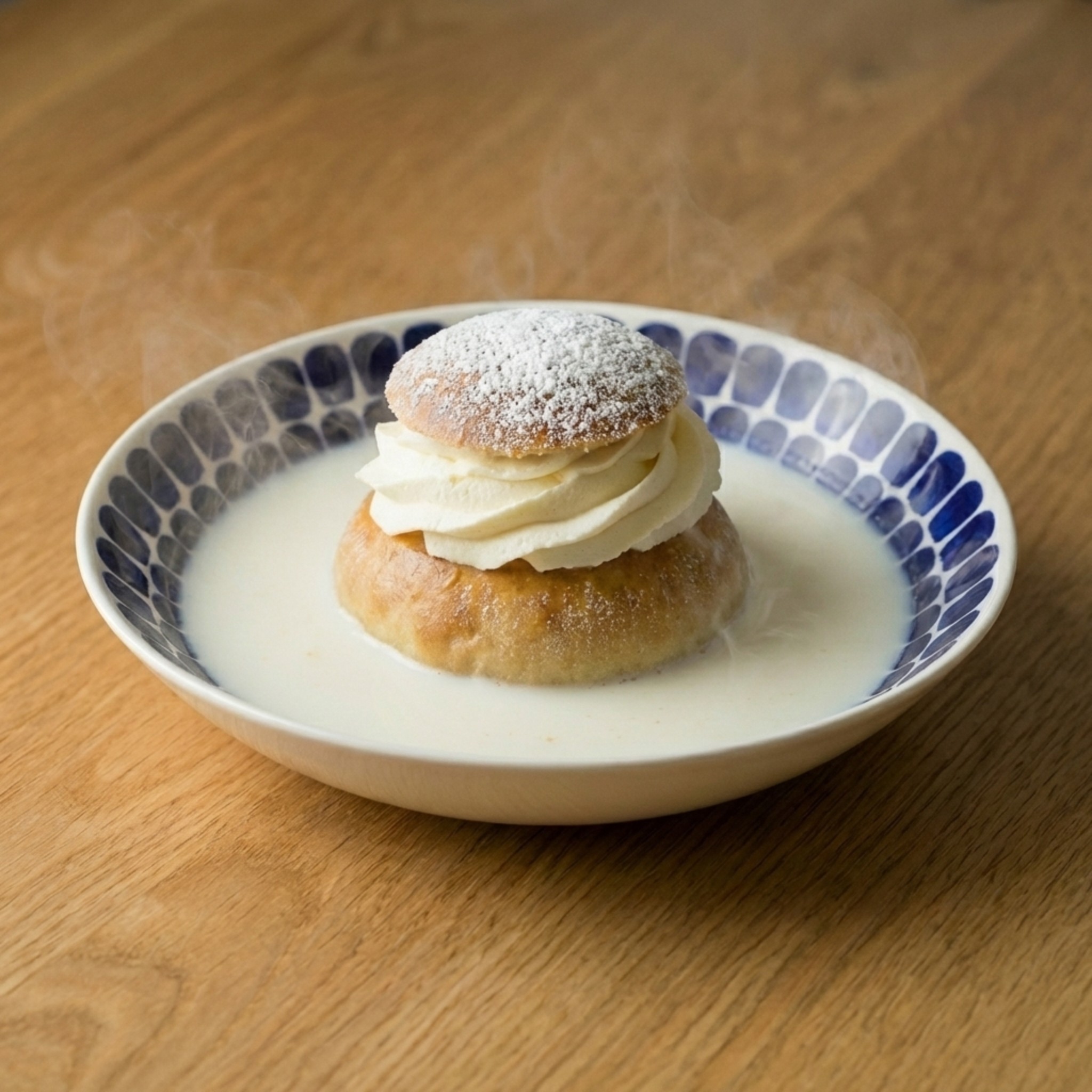
A classic hetvägg: a cream-filled semla served in warm milk on an Arabia Tuokio plate.
The tablware featured in this article are available for purchase at NordicNest.com
The small details that make semla bakery-level
- Go easy on extra flour. A slightly sticky dough bakes into a softer bun.
- Don’t overbake. Semla buns should be pale golden, not deeply browned.
- Assemble close to serving. Filled buns soften over time (still delicious, but less “cloud-like”).
- Salt the almond filling. A pinch makes the almonds taste more like almonds.
Swedish Cardamom Buns (Semla)
Ingredients
Method
- Warm the milk until lukewarm (not hot). Stir in yeast and a pinch of the sugar. Let stand 5–10 minutes until lightly foamy (skip this step if using instant yeast).
- In a mixing bowl, combine milk/yeast mixture, sugar, egg, salt, and cardamom.
- Add flour and mix until a rough dough forms.
- Add softened butter in pieces and knead 8–10 minutes (stand mixer) or 10–12 minutes by hand, until smooth and elastic. The dough should feel soft and slightly tacky.
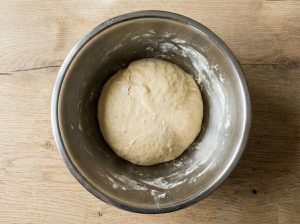
- Cover and let rise until doubled, about 60–75 minutes (depending on room temperature).
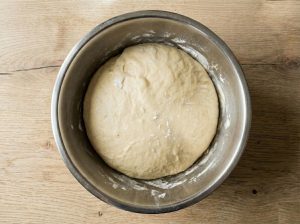
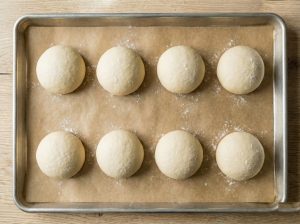
- Divide into 8 equal pieces. Shape into smooth balls and place on a parchment-lined baking sheet with space between.
- Cover and proof 30–45 minutes, until puffy.
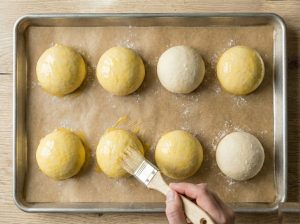
- Whisk together the egg and milk (or water). Gently brush a thin, even layer over the proofed buns, taking care not to deflate them.
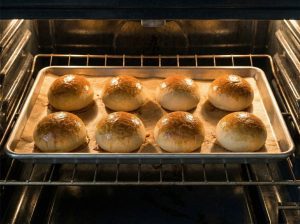
- Heat oven to 400°F/200°C.
- Bake 12–15 minutes, until lightly golden on top (don’t overbake). Cool completely.
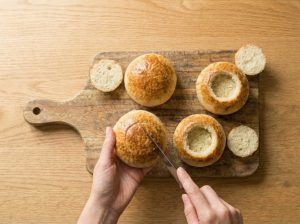
- Cut a small “lid” from the top of each bun (like a hat). Scoop out a teaspoon or two of soft crumb from the center.
- In a bowl, mix almond paste with bun crumbs, a pinch of salt, and enough milk to make a thick, pipeable paste (think soft peanut butter).
- Whip cold cream with powdered sugar (and vanilla if using) to medium-stiff peaks.
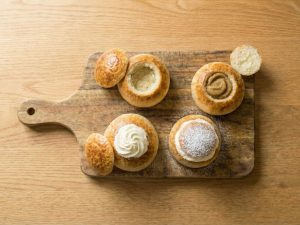
- Spoon or pipe almond filling into each bun.
- Pipe whipped cream on top, then set the lid back on at an angle. Dust generously with powdered sugar.
- Enjoy the bun as is or with milk.
Notes
Serving note (very Swedish)
For a cozy old-school variation, try hetvägg: place a semla in a bowl and pour over warm milk. It’s equal parts dessert and comfort.Usually overbaking or too much flour. Bake just until pale golden, and measure flour by spooning into the cup and leveling (or use grams for best accuracy).
Yes—bake the buns 1–2 days ahead and store airtight. Make the almond filling ahead too. Whip cream and assemble close to serving for the best texture.
Absolutely. Freeze the plain baked buns (unfilled) for up to 2 months. Thaw at room temperature, then refresh for 3–5 minutes in a low oven (150°C / 300°F) before filling.
Raspberry jam works really nicely, in fact in Finland it’s a more popular filling for Semla than almonds.
Assembled semlor are best the same day. If needed, refrigerate up to 24 hours—expect the bun to soften slightly (still delicious, just less fluffy).
Looking for more fika inspiration? Explore our full collection of Desserts & Baking for more traditional cakes, buns, and sweet Nordic treats.