
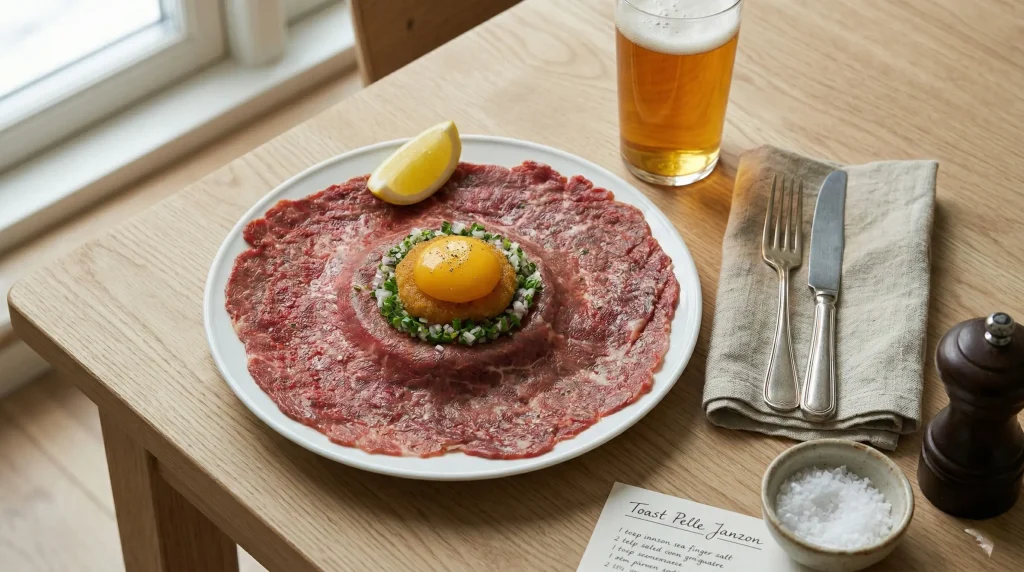
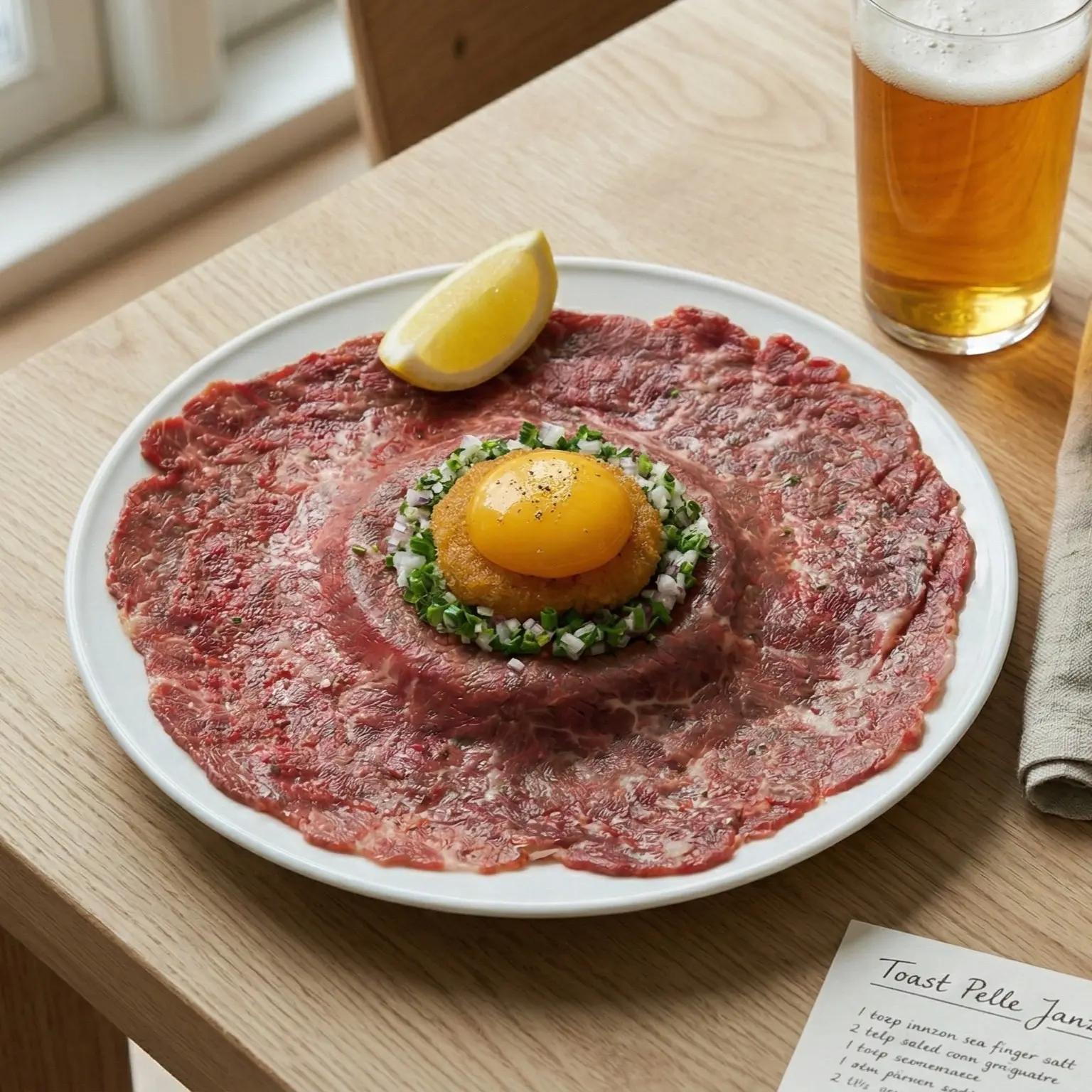
A Decadent Swedish Classic
Toast Pelle Janzon is perhaps Sweden’s most confident culinary secret. It is a decadent, open-faced sandwich that layers paper-thin raw beef tenderloin, a silky raw egg yolk, and a generous heap of Löjrom (vendace roe) onto a disc of crisp, butter-fried bread.
You might hear it described as “rustic,” but let’s be honest: in the precise taxonomy of Swedish food culture, this is emphatic not rustic home cooking (husmanskost). This is what we call a Grosshandlarmiddag—a “Wholesaler’s Dinner”. It belongs to a tradition of indulgent, protein-heavy dishes designed for the wealthy merchant class of the late 19th century—food meant to display status and stand up to large amounts of schnapps.
It is a “luxury sandwich” (lyxmacka) that bridges the gap between 19th-century bourgeois indulgence and mid-century restaurant refinement. Whether you are looking to impress guests or just want to treat yourself to a “bon vivant” evening, here is the deep dive into the history—and the strict “gold standard” recipe—of the Toast Pelle Janzon.
The Myth, The Man, and The “Singer’s Diet”
Legend has it that the dish was invented by the opera singer Per “Pelle” Janzon (1844–1889) himself, who would whip it up for friends after performances. While Pelle was indeed a celebrated bass-baritone at the Royal Theatre in Stockholm and a known socialite , food historians suggest the toast itself is likely a posthumous tribute, codified into its modern form by legendary restaurateur Tore Wretman in the 1950s.
However, the dish does perfectly reflect the “Singer’s Diet” of that era. 19th-century vocalists often avoided heavy cooked meals before singing, preferring raw beef and yolks post-performance to coat the throat and replenish energy without the lethargy of a cooked stew.
So, while Pelle didn’t leave us a written recipe, this toast is the spiritual successor to his late-night habits—a “Raw, Maritime” cousin to the cooked “Bookmaker Toast” found in classic beer halls.
What is Toast Pelle Janzon?
At a glance, it looks like Steak Tartare, but the architecture is fundamentally different.
- The Cut: Unlike tartare, which is minced, Pelle Janzon requires the beef to be sliced wafer-thin, carpaccio-style. It forms a “carpet” over the bread rather than a mound.
- The Foundation: The bread isn’t dry-toasted; it is fried in butter. This isn’t just for flavor—the lipids create a hydrophobic barrier that keeps the bread crunchy (or frasighet) even after you lay down the raw meat.
Precision Matters
Because this dish is essentially raw, there is no cooking to hide behind. The quality of your ingredients is everything.
The Beef: Tenderloin (Oxfilé)
The recipe requires oxfilé (beef tenderloin), specifically the center cut. This is structural, not just snobbery. The tenderloin is a non-weight-bearing muscle, meaning it has low connective tissue. If you try this with a tougher cut like round or flank, the long collagen fibers will make the thin slices unchewable. You need meat that melts away.
- Pro Tip: Freeze the meat for 20–30 minutes before prep. This firms it up, making it easier to slice millimeter-thin.
The Roe: Kalix Löjrom
The soul of this dish is Löjrom—the roe of the Vendace fish. In Sweden, the gold standard is Kalix Löjrom, which has a Protected Designation of Origin (PDO) status. It has a distinct mineral flavor and small, dry grains that don’t burst too aggressively.
- Substitutes: If you can’t find Kalix, look for other fine-grained whitefish roe.
- Warning: Try to avoid lumpfish roe (the cheap, dyed jarred stuff). It lacks the subtlety required here and turns a fine-dining dish into a basic snack.
The Great Horseradish Debate
The original, purist version of this dish likely contained only beef, yolk, roe, and onion. However, if you visit Stockholm’s elite institutions like Tranan or Grand Hotel Marstrand today, you will almost always find fresh horseradish.
- Our Verdict: Use it. The sharp pungency of fresh horseradish cuts through the extreme richness of the egg yolk and beef fat, balancing the dish perfectly.
How to Serve
This is a dish of high contrast: crispy bread vs. soft meat, warm toast vs. cold toppings. It must be eaten immediately!
The Drink Pairing:
- The Elegant Choice: Champagne. The acidity cuts the fat and matches the luxury status of the roe.
- The Traditional Choice: A cold lager and a shot of chilled Aquavit. This leans into the Grosshandlare tradition—salty, fatty food meant to stabilize strong spirits.
How to Eat:
Break the yolk with your fork. Let it run into the roe and over the beef, creating a rich, emulsified sauce right on the plate. Ensure every bite has a bit of everything: crunch, meat, salt, and fire.
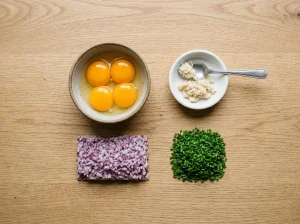
Ingredients
Method
- Start by getting all the little components ready. Finely mince the red onion and chop the chives, and set them aside.
- If using fresh horseradish, grate a teaspoon or two and set aside (cover it with plastic wrap so it doesn’t dry out).
- Separate your egg yolks from the whites. It helps to do this one at a time: crack each egg and catch the yolk in your clean hand or an egg separator, letting the white fall away. Gently place each yolk in a small ramekin or cup – this makes it easier to transfer onto the toast later. Keep the yolks cold until assembly.
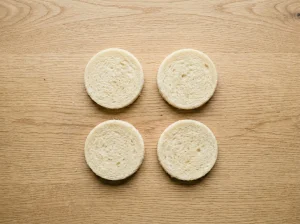
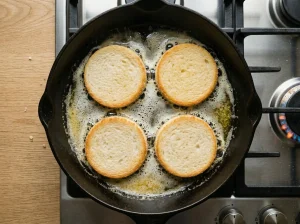
- Heat a skillet over medium heat and add a generous pat of butter (about 1–2 tablespoons for starters).
- While it melts, trim the crusts off your bread slices. You can leave the slices whole (about 3-inch squares) or cut them into 3-inch diameter circles for a classic look. (Don't throw the extra bread away – you can use that to make homemade croutons for a salad or breadcrumbs for meatballs).
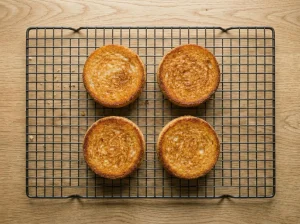
- Once the butter is foamy, lay the bread slices in the pan. Fry for about 2 minutes per side, or until the bread turns golden brown and crispy. Add more butter as needed – the bread should absorb some and sizzle; you want that gorgeous golden color.
- When done, transfer the fried toast to a wire rack so they stay crisp.
- This is the only part that requires a bit of technique, but it’s straightforward. If you haven’t already, place your beef tenderloin in the freezer for about 20–30 minutes – this firms it up slightly, making it easier to slice thinly.
- Using your sharpest knife, slice the beef against the grain into very thin slices. Aim for slices about 1/8-inch thick or even thinner if you can.
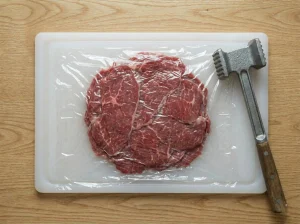
- Lay a slice or two between pieces of plastic wrap and gently pound with a meat mallet (or the bottom of a heavy saucepan) to flatten it further, about 1–2 mm thin. The beef will almost take on a carpaccio-like texture – delicate and nearly translucent.
- Work in small batches and be gentle so you don’t tear the meat. If the slices are large, you can cut them into smaller pieces that will fit nicely on the toast. Keep the prepared beef slices on a cold plate or on the plastic wrap until you’re ready to assemble.
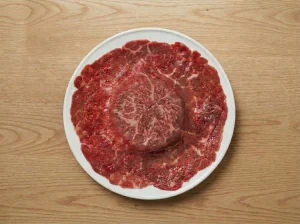
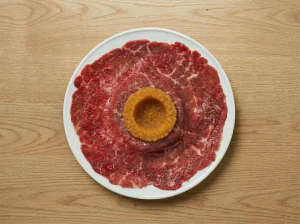
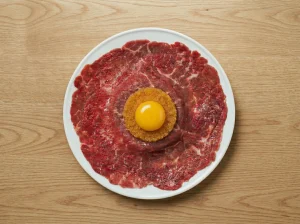
- Now for the fun part! Take a piece of the butter-fried toast and lay it on a serving plate. Cover the entire top of the toast with your thin slices of beef. You can overlap the slices slightly like shingles, or lay a single piece if it’s big enough – there’s no bread visible when you’re done, it should be completely blanketed in beef.
- Lightly sprinkle a pinch of flaky salt and a crank of black pepper over the beef.
- Next, add the löjrom (fish roe). Spoon a generous dollop of roe right on the center of the beef. For a small round toast, about a heaping tablespoon (20–30 g) of roe is great – you want a nice pile. Using the back of your spoon, make a small well or indent in the mound of roe. This little nest will hold the egg yolk.
- Now carefully slide one raw egg yolk into the well of the roe on the toast. (If you kept the yolk in a ramekin, you can tip it out gently; or use half an eggshell to cradle it and place it.) The roe should cuddle around the yolk, keeping it in place like a cushion.
- Sprinkle a teaspoon or so of the finely chopped red onion all over the top of the toast, distributing it around the yolk and roe.
- Do the same with a pinch of chopped chives.
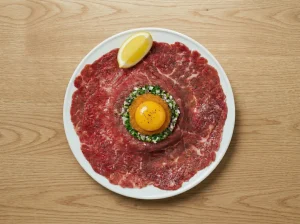
- If you’re adding horseradish, now’s the moment – sprinkle a tiny pinch of freshly grated horseradish on top of the beef (a little around the yolk, perhaps).
- Finally, if you like, add a small dollop of crème fraîche either on top of the toast (off to the side) or on the plate next to it. Tuck a lemon wedge on the plate for squeezing.
- Repeat this assembly for each toast. You’ll end up with a gorgeous little open sandwich: it looks like an artwork, with the bright yolk and orange roe on crimson beef over a golden toast.
- Toast Pelle Janzon waits for no one! This dish is at its absolute best the moment it’s assembled. The toast is still crunchy, the beef is cool, and the yolk is beautifully intact. As it sits, the salt will start drawing moisture from the beef and roe, and the toast can get soggy, so don’t delay.
- Serve each person their toast and encourage them to break the egg yolk and maybe give everything a gentle mix/press with a fork to get the flavors mingling. When you cut through it, try to get a bit of toast, beef, roe, yolk, and onion in each bite – the harmony of all those elements is what it’s all about.
- Enjoy! Or as we say in Swedish, Smaklig måltid! (Bon appétit!)
Notes
FAQ (Frequently Asked Questions)
When handled properly, yes – but you do need to take precautions. Food safety is important here. Use the freshest beef you can get, ideally a piece meant for raw consumption (tell your butcher you plan to serve it raw; they might give you a very fresh cut or even offer to grind it tartare-style). Keep the beef cold, and only take it out of the fridge when slicing and serving. As for eggs, there’s a slight risk with raw yolks (salmonella, etc.), so it’s best to use pasteurized eggs or eggs from a source you trust. Always check that your eggs have no cracks and are within their expiration date. If you’re uncomfortable with raw egg, you can actually cure the yolks in a mixture of salt and sugar for an hour or two – this will firm them up and kill some surface bacteria (though in traditional Toast Pelle Janzon, the yolk is used fresh and runny). Another option: use a quail egg yolk; they are often considered safer raw and are commonly used in steak tartare in restaurants. Ultimately, thousands of people eat steak tartare and related dishes daily without issue, but you should be aware of the risks and make the choice that’s right for you. If proper ingredients aren’t available or you have a compromised immune system, it’s okay to sear the beef or skip the raw egg (see next question). When in doubt, err on the side of caution.
You won’t have Toast Pelle Janzon in the classic sense, but you can create a safer approximation. For the beef, one approach is to make a quick seared carpaccio: take your beef tenderloin and sear it very briefly on all sides in a hot pan – just until the outside is browned but the inside is still rare. Then chill the meat thoroughly (this is important for slicing) and slice it thin. You’ll get a similar tender texture with a bit more flavor from the seared edges, and it eliminates surface bacteria on the meat. For the egg, if you don’t want to use a raw yolk, you could soft-boil a quail egg and place that on top (it will be firmer but still soft in the center), or even top the toast with a tiny fried quail egg for a playful twist. It changes the experience (as the runny raw yolk is a big part of the “sauce”), but it can still be delicious. You could also simply omit the egg yolk and maybe add a small spoonful of creamy sauce made of mayonnaise or crème fraîche mixed with a bit of Dijon mustard as a stand-in for richness. It won’t be quite the same, but hey, you’ll have a tasty beef and caviar crostini of sorts!
Löjrom, the traditional vendace fish roe, is indeed a specialty ingredient mostly from Sweden (specifically from the Kalix region). If you’re not in Sweden or near a Scandinavian market, it’s perfectly fine to substitute. Great alternatives include salmon roe (also known as ikura, those larger bright orange pearls you find in Japanese cuisine), trout roe (similar small orange eggs, often from France or the US), or whitefish caviar (golden small eggs, commonly available in jars). Even lumpfish roe, which is inexpensive and sold in jars in many supermarkets (often labeled as “black caviar” or “red caviar” but it’s actually salted lumpfish eggs), can do the trick – it’s what a lot of Swedish home cooks use as a budget-friendly stand-in. The main thing is to get that briny, salty pop to season the toast. In a pinch, you could finely chop some capers and sprinkle them on instead, to mimic a bit of briny saltiness (this veers more into steak tartare flavor, but it would still be good). So don’t let lack of löjrom stop you – use what you have. Each variation of roe will give a slightly different character, but all will be tasty in their own way.
Beef tenderloin (from the center cut, aka coeur de filet) is the classic and best choice. The reason is that tenderloin is, as the name suggests, extremely tender – it has very little connective tissue and a very fine grain, so when served raw it has a soft, buttery texture. It’s also quite mild in flavor, which lets the egg and roe shine without the beef tasting “bloody” or iron-heavy. If you cannot get tenderloin, the next best option is something like a top-quality sirloin or striploin (New York strip) – basically, a lean cut that you could imagine eating as carpaccio. Some have used top round or eye of round for beef carpaccio or tataki; these cuts are lean and slice well, but they aren’t as tender, so you’d definitely want to marinate or pound them more. Avoid tough cuts like flank, chuck, or brisket here – even if you slice them razor thin, they won’t have the same mouthfeel raw. And definitely avoid anything with a lot of fat or gristle raw. If you must use a less tender cut, one trick is to freeze it and then shave it very finely against the grain with a sharp knife or mandoline – almost like beef “sashimi.” But for the true experience, splurge on a nice piece of tenderloin. You don’t need a lot of it per person, since each toast uses only a few ounces of meat.
Sogginess usually comes from either the toast not being crisp enough initially or the assembled toast sitting too long before eating. A few tips to keep things crispy:
Make sure you really crisp the bread when frying. It should be deeply golden and crunchy on the outside. The butter-frying not only adds flavor but also creates a bit of a moisture barrier. If your toast was just light brown or still soft in the middle, it will absorb liquids faster. Don’t be shy to fry it a little longer (without burning) to get a proper crunch.
Assemble at the last minute. This dish isn’t make-ahead (at least, not assembled). Have your guests or family ready at the table, then do the assembly and serve. The longer the toast sits with the wet toppings (beef, roe, yolk), the more it will inevitably soften. Even 5-10 minutes can make a difference.
Drain and pat ingredients if needed. If your beef slices are very wet (sometimes beef can weep a bit after slicing, or if you thawed it from frozen), gently pat them with paper towels before placing on the toast. Likewise, ensure your roe isn’t too liquidy (some jarred roes have brine – try to drain the brine off). By reducing extra moisture, you’ll keep the toast crisp longer.
Eat promptly: This sounds obvious, but once served, dig in! It’s not a dish to linger on the plate. The first bite should have that contrast of textures – crunchy toast and soft toppings. If you follow these steps, you should get that perfect bite. And if it’s any consolation, even if a Toast Pelle Janzon gets a tad soggy… it’s still delicious (just a bit messier).
Properly done, the beef should be very tender and easy to bite through (almost like sashimi). If you found yours chewy, consider these factors:
Cut quality: As mentioned, tenderloin is best. If another cut was used, it might inherently be chewier.
Slice against the grain: Make sure you identified the grain (the direction of muscle fibers) in your beef and sliced perpendicular to it. Slicing with the grain can leave long muscle fibers that feel stringy.
Slice thinly: Really thin slices are key. Even tenderloin can feel chewy if cut too thick. Next time, slice as thin as you possibly can – you can even almost shave it. If needed, do the plastic wrap pounding step to get it super thin.
Serve at the right temperature: Very cold beef can feel firmer. Conversely, you don’t want it warm (for safety and flavor). A good middle ground is to let the pre-sliced beef sit out for maybe 5–10 minutes so it’s not fridge-cold when you eat it. That can soften the mouthfeel.
Lightly cure/season: Sprinkling a bit of salt on the beef just a minute or two before serving can subtly tenderize it (salt will start to break down proteins and also draw a little moisture). Don’t do it too far ahead, or you’ll end up curing the meat (which changes the texture entirely). But just before assembly, a pinch of salt on the slices can be nice. Some chefs even brush the beef slices with a tiny bit of olive oil or truffle oil for a luxurious tenderness and flavor – that’s not traditional, but it’s an option if you really want a soft feel.
You can do some prep in advance, but you’ll want to assemble last minute. Here’s a game plan if you’re making these for guests:
A few hours ahead: Chop the red onion and chives. Keep the red onion in a small container of cold water in the fridge (this keeps it crisp and mild). Drain and pat dry before using. Keep chives in a damp paper towel or little ziplock in the fridge. Separate your egg yolks and keep them submerged in water in covered containers in the fridge (water keeps them from drying or breaking). Or keep them in the eggshell halves sitting in an egg carton for short-term (cover with plastic wrap).
Up to an hour ahead: Butter-fry the bread. Frying too far ahead isn’t ideal (they might lose some crispness), but an hour is okay. After frying, let the toasts cool completely, then you can keep them in a 150°F (65°C) oven to stay warm and dry, or just at room temp on a rack. Don’t cover them or they’ll steam and soften.
Up to an hour ahead: Slice the beef. You can slice and even pound the beef up to an hour or two before serving. Layer the slices between parchment or plastic wrap so they don’t stick, and keep them in the refrigerator. (I’ve done this – it’s fine.) Just make sure to take them out 10 minutes before assembly so they aren’t too cold. Also, if they released any juices, pat them dry gently.
Right before serving: Set up an assembly line with all your components: toasts, beef slices, roe (drained), yolks, onion, chives, horseradish, crème fraîche, lemon wedges, salt, pepper. Then assemble each toast as described. It will take you maybe 1-2 minutes per toast once you get the hang of it. If making a lot, you could enlist a helper – one person plates the beef on toasts, another adds roe and yolks, etc. The key is to serve soon after. You can assemble maybe 5-10 minutes in advance at most, but any longer and the quality diminishes. If you absolutely need to pre-plate (say, you want to surprise guests with plates ready), you could try placing the beef and roe on the toast without the egg, and then add the yolk at the very last second. The egg yolk is the most time-sensitive part because it can start running or drying. But honestly, it’s best to do it fresh. In summary: prep everything you can, but save the final construction for go-time.
Since it’s typically an appetizer, you don’t need heavy side dishes with it. However, a few light accompaniments can round it out. In restaurants, it’s often served just on its own on a small plate, possibly with a bit of fresh green garnish (like a sprig of dill or some microgreens) for presentation. You could serve a simple green salad alongside if you want to turn it into a slightly larger first course – something like peppery arugula dressed with lemon and olive oil would complement the richness well. As mentioned in the serving suggestions, the beverage pairing is a big part of the experience for many. A dry sparkling wine or champagne is a classic choice. If you prefer beer, a light lager cuts through the fat nicely. For a non-alcoholic option, consider a crisp sparkling apple cider or even a tart homemade lemonade – something with acidity to balance the dish. And don’t forget to say Skål! (cheers) before you dig in, if you’re enjoying it in good company.
With its rich history and even richer flavor, Toast Pelle Janzon is a truly special dish that brings a touch of Scandinavian indulgence to your table. It’s cozy yet elegant, the kind of recipe that invites you to slow down and savor each bite (and maybe tell the tale of Pelle Janzon as you do). Whether you stick to the traditional preparation or put your own modern spin on it, I hope you find this classic as delightful as generations of Swedes have. Happy cooking, and enjoy your Nordic feast! Smaklig måltid!