
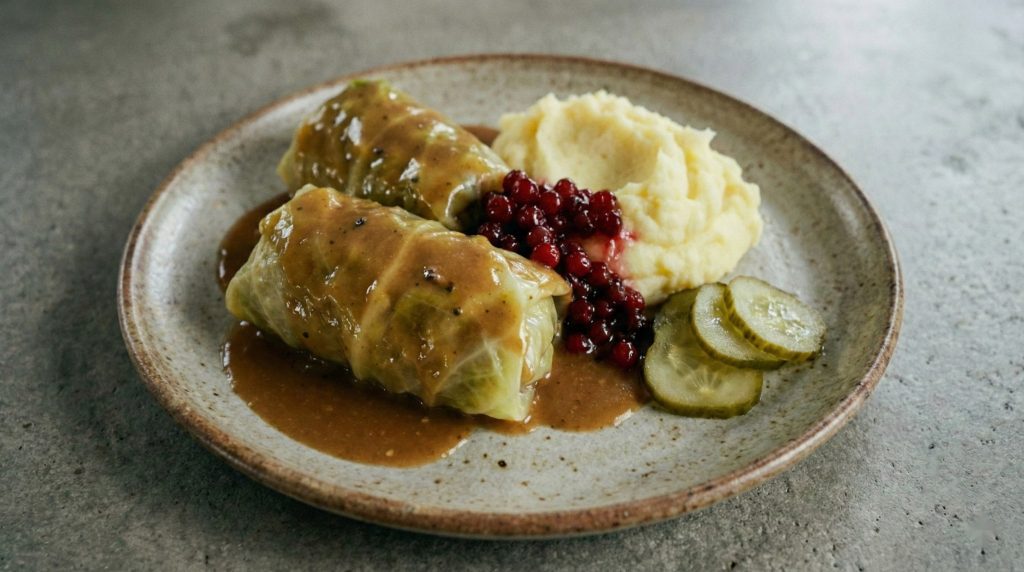
Swedish Cabbage Rolls (Kåldolmar) are the kind of dish that has fed Swedish families for generations — tender cabbage leaves wrapped around a spiced meat-and-rice filling, baked under a blanket of rich, glossy gravy with a spoonful of tart lingonberry jam on the side.
Sweden’s deep love of cabbage has given rise to a whole family of comforting classics — kållåda takes the same beloved filling and bakes it as a no-fuss layered casserole, while kålmaja skips the rolling altogether for a quick, stovetop one-pot — Each has earned its place in the Swedish kitchen — and today, it’s kåldolmar’s turn.
A Fairytale Journey to Sweden
The story of Swedish Cabbage Rolls (kåldolmar) reads like a historical saga. In 1709, King Charles XII of Sweden suffered a crushing defeat at Poltava and fled east to Bender in the Ottoman Empire (modern-day Moldova). He spent years among the Turks and Tatars, and when he finally returned home around 1715 he wasn’t empty-handed. Ottoman chefs came along too — bringing with them dolma, the vine-leaf–wrapped relatives of our Nordic rolls. Swedish kitchens fell in love with the idea.
Cookbook author Cajsa Warg (the Julia Child of 18th-century Sweden) included a recipe for a lamb-and-rice dolma in 1765 — and crucially, she noted that if you couldn’t find grape or vine leaves, you could simply blanch cabbage leaves and use those instead. Over time, cabbage — a hearty Nordic staple — became the default wrapper. What was once an exotic foreign dish had become the classic Swedish kåldolmar we know today.
The connection to Charles XII runs so deep that Sweden celebrates Kåldolmarens Dag — Day of the Cabbage Roll — every year on November 30th, the anniversary of his death in 1718. It’s a fittingly bittersweet tribute to the king who, perhaps unknowingly, brought one of Sweden’s most beloved comfort foods home.was once an exotic foreign dish grew into the classic Swedish kåldolmar we know today.
Cabbage Rolls Across the Nordics
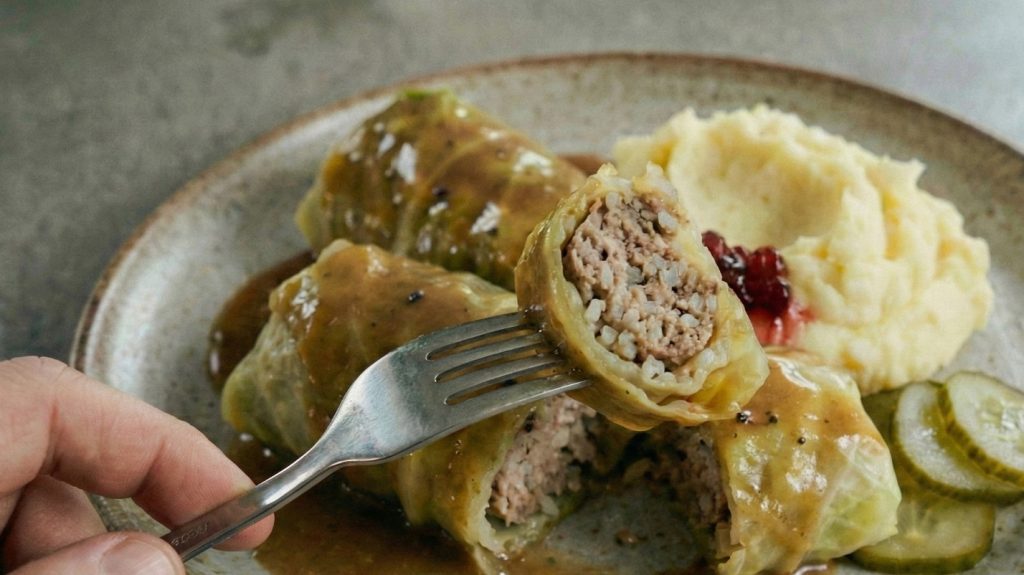
Variants of stuffed cabbage appear throughout Scandinavia. In Finland — a Swedish province until 1809 — kaalikääryleet follow almost the same formula. Ground meat is mixed with rice (often barley or shredded cabbage), lightly spiced, and brushed with a touch of sweet syrup before baking.They too are traditionally served with either boiled or mashed potatoes and lingonberry jam.
In Norway, kålruletter — literally “cabbage rolls” — use Savoy cabbage and ground pork, served with a creamy white sauce.
No matter the name, the contrast of tender cabbage, savory filling, a hint of sweetness (from syrup or sugar), and a tart berry on the side is the common Nordic magic.
Swedish Cabbage Rolls (Kåldolmar)
Ingredients
Method
- Prepare the cabbage. Cut out the tough core of the cabbage and place the head in a large pot of boiling salted water. Cook for 5–8 minutes until the outer leaves soften, then carefully peel off 12–14 intact leaves. Continue boiling until you have enough soft leaves; drain and reserve some of the cooking water.
- Cook the rice. In a small saucepan combine the rice and milk. Simmer gently for about 20 minutes until the grains are tender and most of the milk is absorbed. Let cool.
- Make the filling. In a skillet melt a dab of butter and sauté the chopped onion until translucent but not browned. In a large bowl mix the ground beef, ground pork, egg, cooked rice, cream, salt, white pepper and allspice/marjoram until you have a smooth mixture. If the mixture feels too thick, stir in a few spoonfuls of the reserved cabbage water.
- Assemble the rolls. Lay a cabbage leaf flat with the rib side down. Place a generous tablespoon of filling near the stem end. Fold the sides over the filling, then roll up tightly. Repeat with the remaining leaves and filling.
- Brown the rolls. Preheat the oven to 200 °C (400 °F). Melt the butter in a large frying pan over medium heat and brown the rolls on all sides. Transfer the seared rolls seam‑side down to a greased baking dish. Deglaze the frying pan with a splash of water or broth, scraping up browned bits, and reserve this liquid
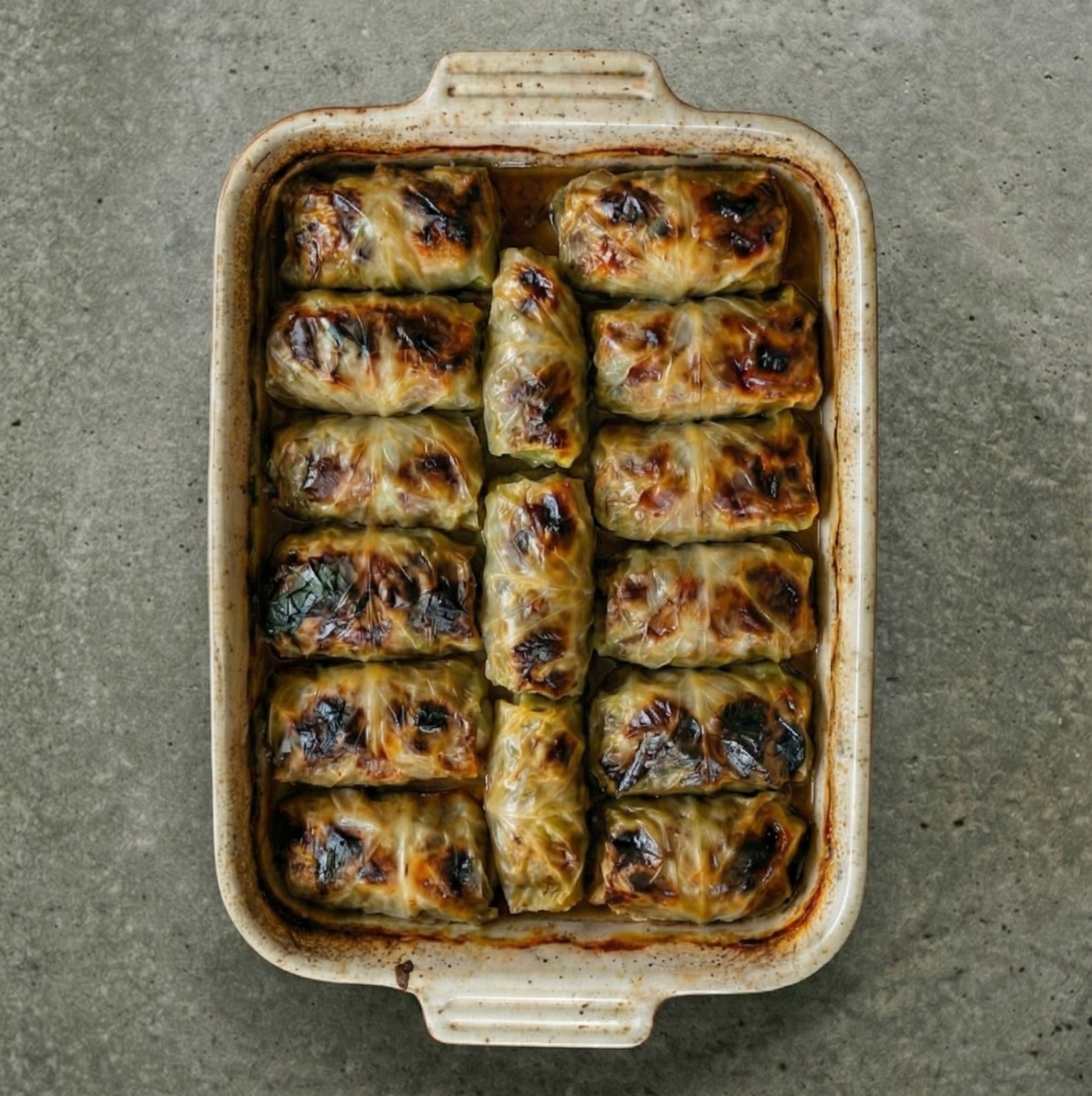
- Bake. Drizzle the syrup over the cabbage rolls. Pour the reserved deglazing liquid and about 200 ml of beef broth around the rolls. Bake for 30–40 minutes, basting occasionally with the pan liquid or reserved cabbage water. Cover the dish with foil if the rolls are browning too quickly. The syrup will caramelise the leaves and give them a golden sheen.
- Make the gravy. While the rolls bake, sauté the chopped onion and carrot in butter until golden. Add the broth and cream; simmer until thickened. Season with soy sauce, salt and pepper. For extra flavour, add a few tablespoons of the pan juices from the baked rolls. Strain the sauce before serving for a silky texture.
- Serve. Arrange the baked cabbage rolls on a platter, pour over some gravy and serve with boiled or mashed potatoes and a generous spoonful of lingonberry jam or purée. Leftovers reheat beautifully and can also be frozen.
FAQ & Troubleshooting
Kåldolmar is Swedish for “cabbage dolmas.” The name comes from the Ottoman dolma (stuffed grape leaves), brought back to Sweden by King Charles XII after his time in the Ottoman Empire in the early 1700s. Over time, hardy Nordic cabbage replaced grape leaves as the wrapper.
They are almost identical — my version has ground meat and rice wrapped in blanched cabbage, baked and served with lingonberry jam and potatoes. The Finnish version sometimes uses barley instead of rice, may include a touch of syrup brushed on top, and is occasionally served with a creamy white sauce rather than a rich gravy.
Yes. The recipe uses a 50/50 blend of ground beef and ground pork for the best flavor and texture, but you can use all beef for a leaner roll or all pork for a richer, juicier result. Ground turkey also works as a lighter alternative.
Cooking the rice in milk (2 dl / 1 cup) makes the filling creamier and helps bind it together, giving the finished rolls a softer, more cohesive texture. If you don’t have milk, you can substitute with a mix of cream and water.
I recommend Short-grain or Arborio rice because their higher starch content helps hold the filling together. Long-grain rice like basmati can make the filling crumbly and harder to roll.
The dark or golden syrup drizzled over the rolls before baking caramelizes during roasting, giving the cabbage leaves a beautiful golden sheen and a subtle sweet depth that balances the savory filling. This is a hallmark of the classic Nordic flavor profile.
Absolutely — they reheat beautifully and can also be frozen. Assemble and brown the rolls a day ahead, refrigerate, then bake the next day. The flavor often improves overnight.
Yes. Freeze fully baked rolls in an airtight container for up to 3 months. Thaw overnight in the fridge and reheat in the oven at 180 °C (350 °F), covered with foil to retain moisture. Freeze the gravy separately.
The traditional serving is boiled or mashed potatoes, creamy gravy, and a generous spoonful of lingonberry jam. The tart jam is not optional — it’s the signature Nordic contrast to the rich, savory rolls.
Yes, with one important caveat: Cabbage rolls (kåldolmar) are traditionally baked in their gravy, which keeps them moist and flavourful — and you can’t pour liquid gravy into an air fryer basket. The workaround is to place your prepared rolls seam-side down in a small oven-safe dish that fits inside your air fryer, pour the gravy over them, and cook at 175°C (350°F) for 25–30 minutes, checking that the filling reaches at least 70°C (160°F) internally. The result is slightly less saucy than the oven version, so be generous with the gravy before cooking. Alternatively, air fry the rolls without gravy at 180°C for about 12 minutes for a crispier exterior, then serve the gravy on the side.