
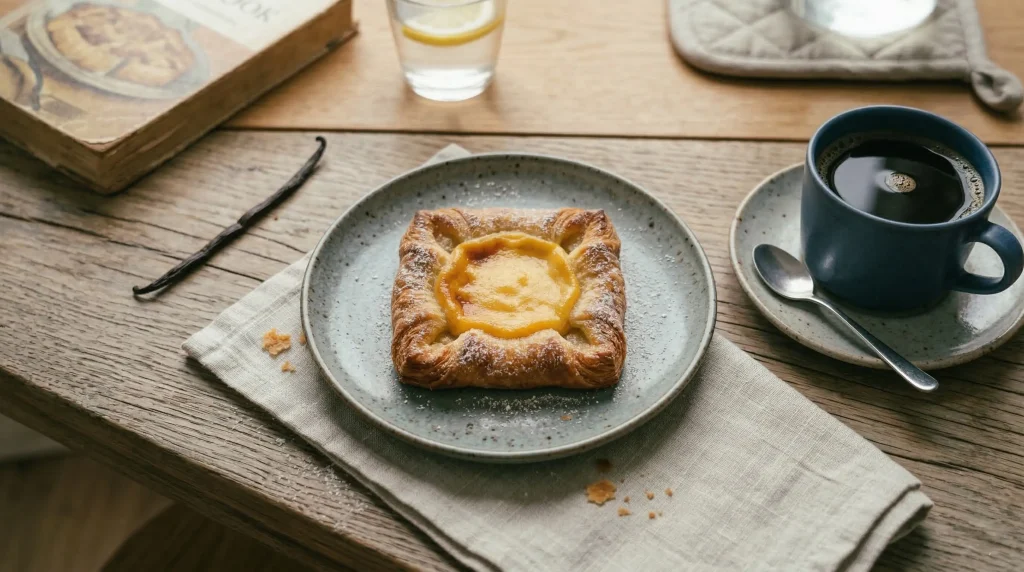
There’s a bakery smell that’s almost unfair. It drifts out of Danish konditorier (pastry shops) early in the morning — warm butter, caramelized sugar, a whisper of cardamom — and it makes every reasonable plan you had for breakfast completely irrelevant. That smell is wienerbrød (pronounced vee-nuh-bruhd) — and yes, this is exactly what you’ve been ordering at the coffee shop counter your whole life. What most people simply call “a Danish Pastry” has a real name, a real homeland, and a real recipe that puts the plastic-wrapped gas station version to a well-deserved shame.
Here’s a delightful twist: wienerbrød literally translates to “Viennese bread,” which means the pastry isn’t originally Danish at all. Back in 1850, a labor strike among Danish bakery workers forced bakery owners to hire Austrian bakers as replacements. These Austrians arrived with a revolutionary lamination technique — layering cold butter into yeasted dough and folding it repeatedly to create 27 paper-thin, shatteringly flaky layers. The Danes were so smitten that when the strike ended, they kept the method, tweaked it with more butter and eggs, and quietly claimed it as their own. The rest of the world called it Danish anyway. Honestly, everyone won.
What Makes a Wienerbrød
The secret is in the layers — literally. Wienerbrød is made from laminated dough, which means cold butter is folded into a yeasted dough repeatedly, creating dozens of paper-thin alternating sheets of fat and dough. In the oven, the water in the butter turns to steam and puffs each layer apart, giving you that signature honeycomb of flake and air that shatters delicately when you bite in. It’s distinct from puff pastry (no yeast) and closer to a croissant in technique — but richer in egg, more tender in crumb, and decidedly more generous in filling.
And the filling is where wienerbrød really introduces itself. Remonce — unique to the Danish culinary lexicon despite its faux-French ring — is simply equal parts butter and sugar creamed into a rich paste that caramelizes deep inside the dough as it bakes. Fold in marzipan and it becomes borgmestermasse (“Mayor’s Mass”), named after Copenhagen master baker and magistrate Jacob Marstrand. Golden, glazed, scattered with sliced almonds or pearl sugar — and impossible to eat slowly.
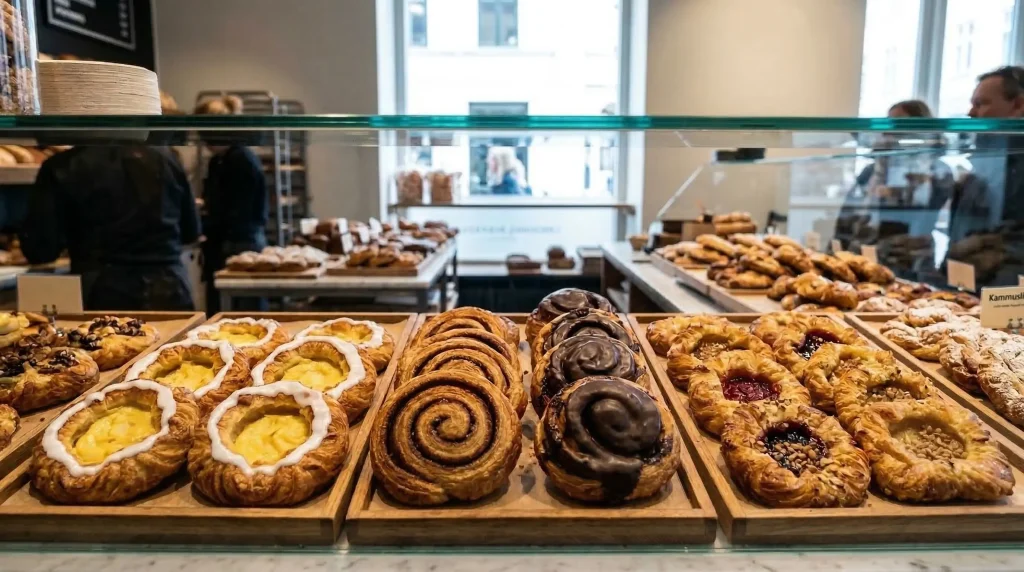
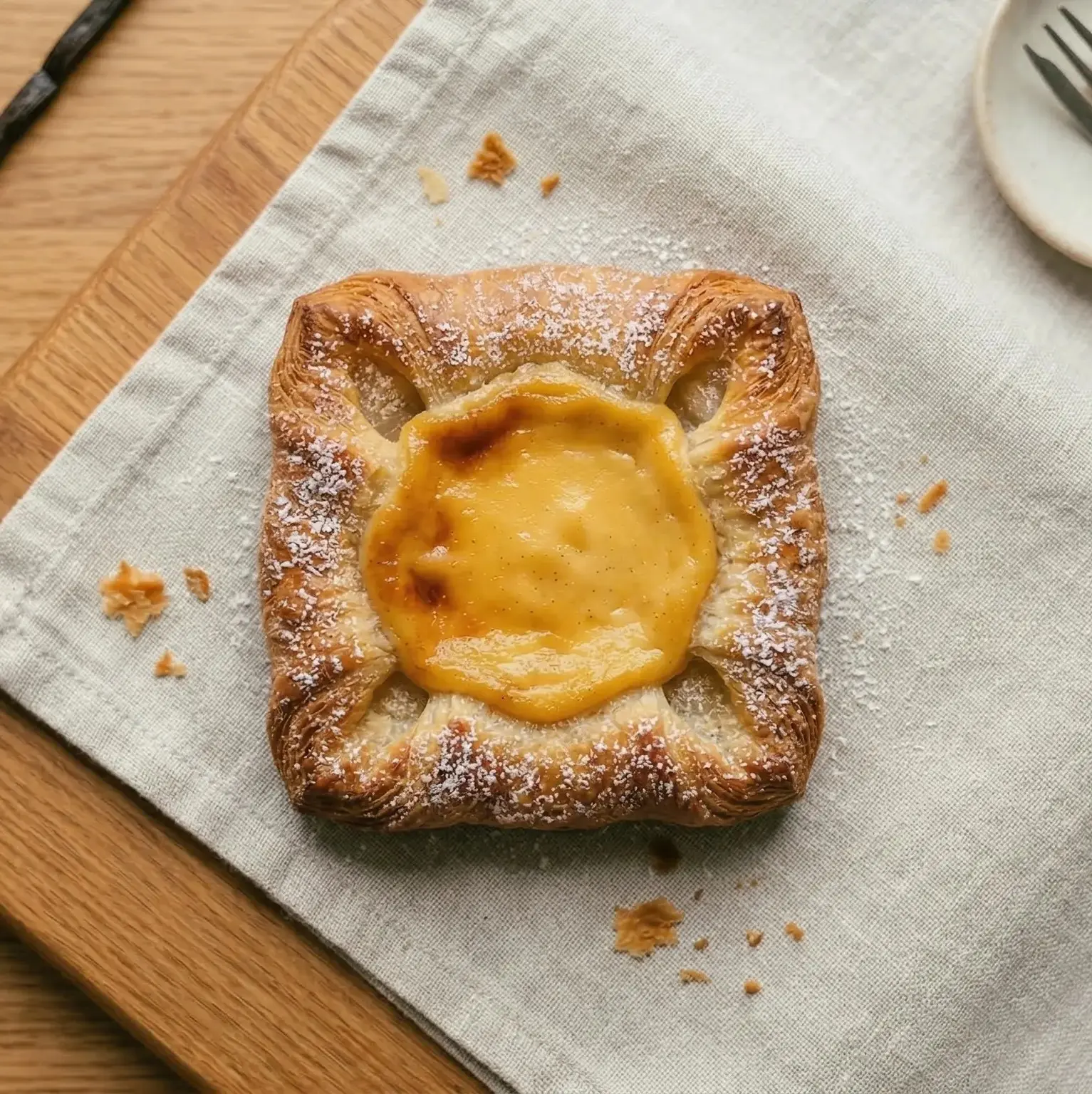
Beyond the classic, Danish bakeries offer a tempting roster of true wienerbrød variations — all built from the same laminated dough. The spandauer is perhaps the most recognizable: a square with its corners folded to the center, filled with vanilla custard or apple jam. The tebirkes is generously coated in poppy seeds with a remonce filling — flaky and slightly nutty in every bite. And the simple glazed braid, scattered with sliced almonds and drizzled with almond icing, is the purest expression of what the dough can do on its own. Once you’ve mastered the base, the whole pastry case opens up.

Wienerbrød Across the Nordics
The laminated pastry tradition didn’t stop at the Danish border — it spread across the entire Nordic region, picking up local names and beloved fillings along the way. In Sweden, it goes by wienerbröd (same word, Swedish spelling) and is a familiar fixture in bakeries and café cases across the country — the glazed braid dusted with pearl sugar is a particular favorite, soft and buttery with that distinctly Scandinavian unhurried elegance. Norway calls it wienerbrød too, and the most iconic shape in Norwegian bakeries is the spandauer — also nicknamed kovolutter for the way its corners are folded — filled with remonce and a generous dollop of vanilla custard in the center. The hanekam (“rooster’s comb”), a snipped pastry with vanilla remonce and a topping of sugar and nuts, is another Norwegian classic.
Finland has taken the pastry entirely to heart under the name viineri — and the Finns have strong opinions about their favorites. The pitkäviineri (literally “long wiener” — yes, that’s what it’s called) is a rectangular pastry filled with vanilla custard and a bright stripe of raspberry jam — sweet, creamy, and just tart enough to feel balanced. The kampaviineri (“comb wiener”) is shaped like a comb or fan and typically filled with apple jam, its folded edges fanning out like little golden petals. Both are a staple of Finnish bakeries and coffee break rituals in equal measure.
Iceland rounds out the Nordic picture with vínarbrauð — “Viennese bread” in Icelandic, keeping true to the pastry’s origins. The most popular forms are the lengja (a simple long Danish) and the umslög (meaning “envelope”), a square pastry folded around a custard or jam center — essentially Iceland’s answer to the spandauer. Different regions even have their own names for it, which tells you everything about how deeply the pastry has embedded itself into daily Icelandic life.
How to Make Wienerbrød at Home
Homemade wienerbrød looks impressive — and it absolutely is — but the process is by far easier than one could imagine. There are no advanced techniques, no special equipment, and nothing that a little patience can’t handle. The work breaks down into three simple stages: making the dough, laminating the butter in, and shaping and baking. The active hands-on time is probably less than an hour; the rest is the refrigerator doing its thing. A good schedule is to make the dough and complete the lamination folds in the afternoon, let it chill overnight, then shape and bake on the following morning. Two things matter above all else: keep your butter cold, and never skip a chill. Everything else is just folding and waiting. The reward — shatteringly flaky, golden, marzipan-sweet pastry straight from your own oven — is, frankly, disproportionate to the effort.
Danish Wienerbrød
Ingredients
Method
- In a stand mixer bowl (dough hook) or a large mixing bowl, combine flour, sugar, and salt.
- Add the cold eggs and ice-cold water. Mix just until a rough dough forms.
- Add your yeast and mix only until the dough is almost cohesive.
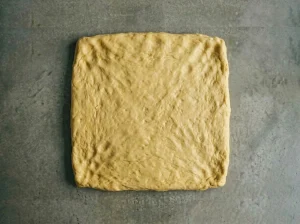
- Pat dough into a thick square (about 1 inch / 2.5 cm thick). Wrap and refrigerate 20–30 minutes.
- Place cold butter between parchment sheets. Pound/roll into a square about 6×6 inches (15×15 cm).
- Refrigerate 15 minutes so it’s cold but still bendable (not rock-hard).
- On a lightly floured counter, roll dough into a square large enough to wrap the butter block (about 9×9 inches / 23×23 cm).
- Place butter in the center.
- Fold dough corners over butter to fully encase; pinch seams closed.
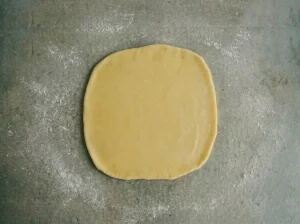
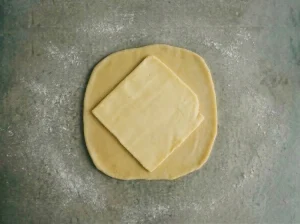
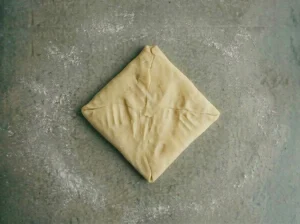
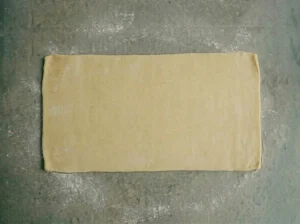
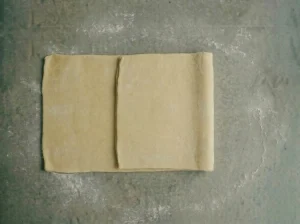
- Turn 1: Roll to a long rectangle (~12×24 inches / 30×60 cm). Brush off flour. Fold into thirds (letter fold). Wrap and chill 15–30 minutes. (Layers: 3)
- Turn 2: Rotate 90°. Roll again to ~12×24 inches / 30×60 cm. Letter fold. Chill 15–30 minutes. (Layers: 9)
- Turn 3: Rotate 90°. Roll again, letter fold. Chill 30–60 minutes (or overnight). (Layers: 27)
- Heat the milk: In a medium saucepan, bring the milk and the pinch of salt to a gentle simmer over medium heat. Do not let it come to a rolling boil. (Note: If using vanilla bean paste, add it to the milk now. If using vanilla extract, wait until the end).
- Whisk the base: While the milk is heating, whisk the egg yolks, granulated sugar, and cornstarch together in a heat-proof bowl until the mixture becomes smooth, thick, and pale yellow.
- Temper the eggs: Once the milk is simmering, very slowly pour about half of it into the egg yolk mixture while whisking constantly and vigorously. This "tempers" the eggs, bringing their temperature up slowly so they don't scramble.
- Cook until thickened: Pour the tempered egg mixture back into the saucepan with the remaining milk. Place it back over medium heat, whisking constantly. The mixture will begin to thicken. Once you see large bubbles popping at the surface, whisk vigorously for 1 more minute to cook out the raw cornstarch flavor.
- Add vanilla and chill: Remove the pan from the heat and stir in the vanilla extract (if you didn't add paste earlier). Transfer the custard to a clean bowl. Press a piece of plastic wrap directly against the surface of the custard to prevent a rubbery skin from forming. Chill the custard in the fridge until completely cold and firm before spooning onto your pastries.
- Mix almond paste/marzipan, sugar, butter, and a pinch of salt until smooth. (A fork, hand mixer, or food processor all work.) Keep cool room temp—spreadable, not melted.
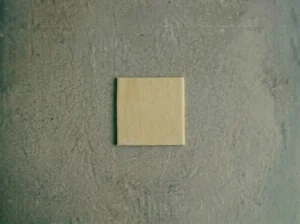
- Roll laminated dough to about 1/8 inch (3–4 mm) thick.
- Cut into 4×4 inch (10×10 cm) squares.
- Place ~1 Tbsp filling in the center of each square.
- Fold all four corners toward the center to form an “envelope.” Press to secure.
- Place on parchment-lined baking sheets with space between pieces.
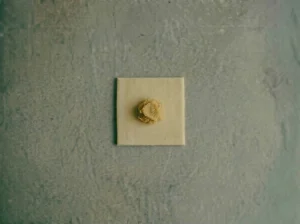

- Proof at 75–80°F (24–27°C) until puffy and slightly jiggly, typically 60–90 minutes.
- Preheat oven to 375°F (190°C) (or 350°F / 175°C convection).
- Whisk egg + water + salt. Brush lightly on pastries.
- Add the Custard: Spoon about 1 Tbsp of the chilled vanilla custard in the center of the "envelope".
- Optional: sprinkle with slivered almonds.
- Bake 18–22 minutes until deep golden and cooked through.
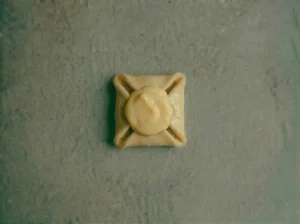
- Cool 10–15 minutes. Mix confectioners’ sugar with enough water (or milk) to drizzle. Spoon or pipe over pastries.
Storage, Freezing, Troubleshooting & Serving: Wienerbrød FAQ
Wienerbrød is best enjoyed the day it’s baked — the layers are at their crispiest and the filling at its most luscious within hours of coming out of the oven.
Yes! You have two solid options:
Refrigerate overnight (unbaked): Shape your spandauere, place them on parchment-lined trays, cover, and refrigerate. Bake them straight from the fridge in the morning — no need to bring them to room temperature first.
Freeze and bake from frozen: This method is popular in commercial kitchens. Freeze shaped pastries on a sheet pan until solid, then transfer to an airtight freezer bag. When ready, bake directly from frozen in a preheated oven (add a few extra minutes to your usual bake time). You can also thaw them overnight in the fridge and bake the next morning.
Stop rolling immediately. Dust off any excess flour, wrap the dough tightly, and chill it. This is one of the most emphasized lessons in Danish pastry teaching — cold rests between turns are what keep the lamination intact. Don’t skip them.
Your butter was too cold and rigid when you started. Before locking it into the dough, pound the butter block with a rolling pin until it reaches the same pliability as your dough. Avoid warming the butter with your hands, as that introduces uneven softness.
The proofing environment was too warm or the proof time was too long. Temperature control is everything with laminated dough. Keep your dough cold throughout the entire process, and proof at a cool room temperature rather than near a warm oven.
This usually comes down to one of three things: the dough got too warm and was overworked, the layers got compressed during rolling, or you skipped the resting periods between turns. The “chill between turns” rule is non-negotiable for that signature flaky texture.
I didn’t see custard prep. Just standard right?
Oops, my bad. It’s there now. Thanks!