
Introduction
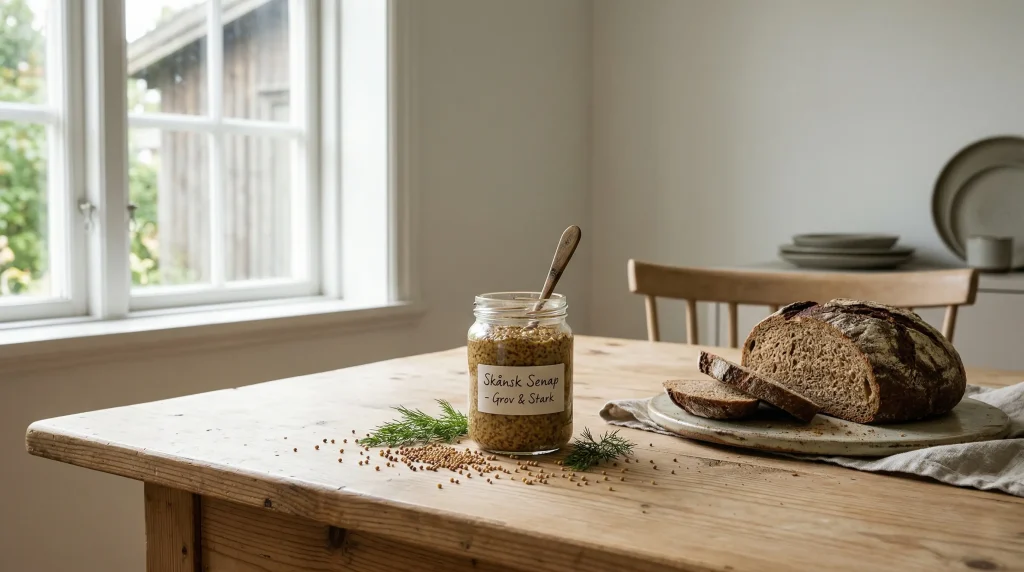
In the south‑Swedish province of Skåne (Scania), mustard is more than a condiment – it is part of the region’s culinary identity. Coarse Skåne mustard (Skånsk senap) is a rustic blend of roughly crushed mustard seeds, water, vinegar and sugar. The result is a sweet‑savory condiment with a grainy texture and a pronounced heat that sets it apart from many international mustard styles. This article explores its history and ingredients, compares it to other mustards, provides a step‑by‑step recipe, and offers inspiration on how to use it in classic Swedish dishes as well as creative new applications.
History and Origin
The word “mustard” comes from the Latin mustum ardens (“burning must”) – a reference to the heat produced when mustard seeds are mixed with grape must. In Scandinavia, mustard has long been prized for its warming properties and ability to enhance rich winter dishes. Coarse Skåne mustard, sometimes called grov senap or Skånsk senap, originated in southern Sweden. It traditionally uses a mixture of yellow (white) and dark seeds, ground coarsely and sweetened with sugar or honey. Black mustard seeds give the classic version its sharp, spicy bite. In response to contemporary tastes some producers use brown seeds instead, which provide warmth without the intense burn.
Ingredients and Characteristics
Skåne mustard is characterised by three elements:
- Mixed seeds – most recipes blend white (yellow) mustard seeds with brown or black seeds. Yellow seeds are mild while dark seeds contain more pungent glucosinolates that release heat when crushed.
- Coarse texture – instead of grinding the seeds into a paste, the mixture is left crunchy, which gives the mustard a rustic mouthfeel. Whole or crushed seeds also mellow the heat because less surface area is exposed.
- Sweet and tangy flavour – sugar or honey balances the bite of the seeds while vinegar adds acidity. Commercial brands often include water, vinegar, mustard seeds, sugar, salt and spices.
This combination produces a mustard that is sweet, slightly sour and peppery with a bit of crunch. It typically has a deep brown colour from the dark seeds and caramelised sugar.
Comparison: Skåne Mustard vs. Other Mustard Types
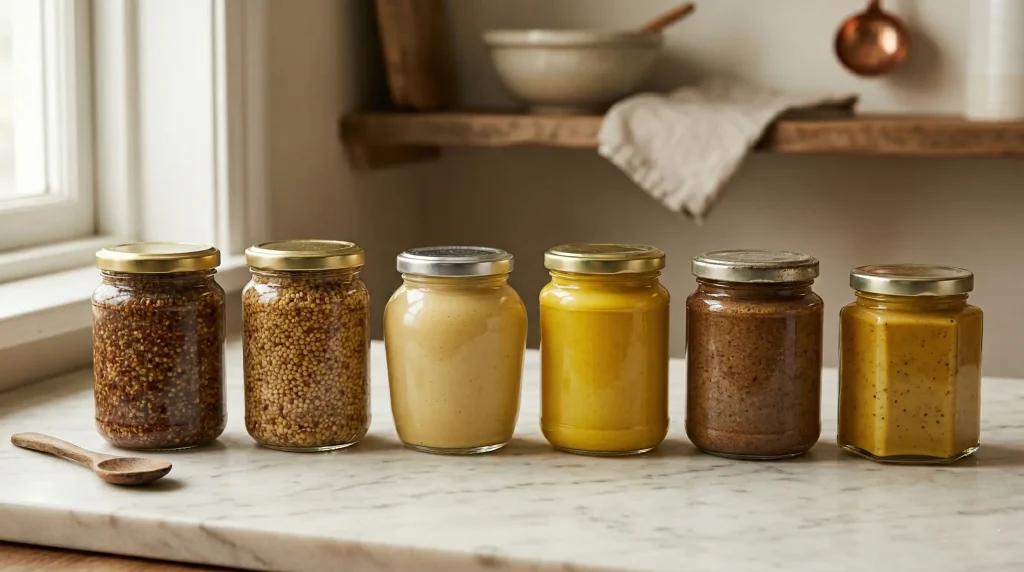
| Mustard type | Seeds & texture | Heat level and flavour | Typical uses |
|---|---|---|---|
| Coarse Skåne | Mix of yellow & brown/black seeds, coarsely ground | Sweet‑tangy with a robust, grainy bite | Swedish dishes like pea soup and julskinka (Christmas ham), sandwich spread |
| Whole‑grain | Seeds left whole or coarsely crushed | Mellow heat; crunchy texture | Ham, sausage, cheese boards, sandwiches |
| Dijon | Brown seeds finely ground, often with wine or verjus | Smooth paste, moderate heat with lingering acidity | Salad dressings, sauces, sandwiches |
| American yellow | White seeds ground; coloured with turmeric | Mild heat; bright yellow colour | Hot dogs, burgers, potato salad |
| Brown/spicy | Brown seeds ground; sometimes includes warm spices | Hotter and coarser than yellow mustard | Pastrami, corned beef, marinades |
How to Make Coarse Skåne Mustard at Home
Homemade Skåne mustard is surprisingly easy to make and can be customised to your preferred sweetness and heat. Below is a classic recipe.
Coarse Skåne Mustard – Sweden’s Rustic and Sweet Condiment
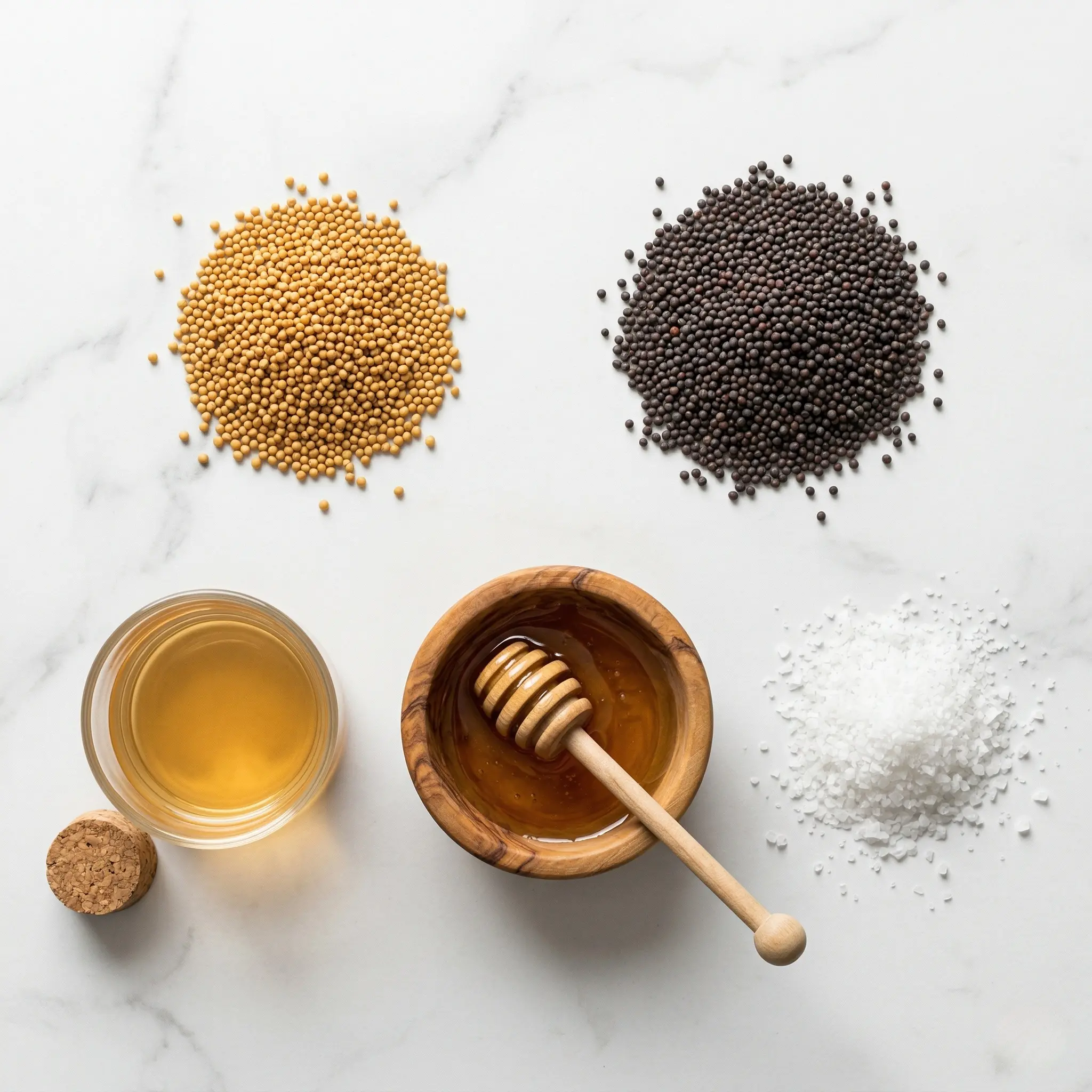
Ingredients
Method
- Soak the seeds – Combine the yellow and dark mustard seeds in a bowl. Pour in enough water to cover them and let soak for 6–12 hours. Soaking softens the seeds and reduces bitterness.
- Drain and blend – Drain any excess water. Transfer the soaked seeds to a food processor or mortar and pestle. Add about 100 ml (slightly under 1/2 cup) of fresh water and pulse until you have a coarse, crunchy mixture. If you prefer a smoother mustard, blend longer.
- Season – Add vinegar, sugar (or honey) and salt. Taste and adjust the sweetness or acidity to your liking. (Omitting vinegar entirely yields a milder mustard that some traditionalists prefer)
- Optional flavours – Stir in oil for a silkier texture. For a herbaceous note add dried tarragon; a spoonful of whisky or cognac adds warmth.
- Mature the mustard – Transfer the mixture to a sterilised jar, cover and refrigerate. Let it sit for at least 12 hours before using; mustard mellows as it rests. Homemade Skåne mustard keeps for up to six months in the refrigerator.
Classic Ways to Use Skåne Mustard
1. Traditional Swedish Pea Soup (Ärtsoppa)
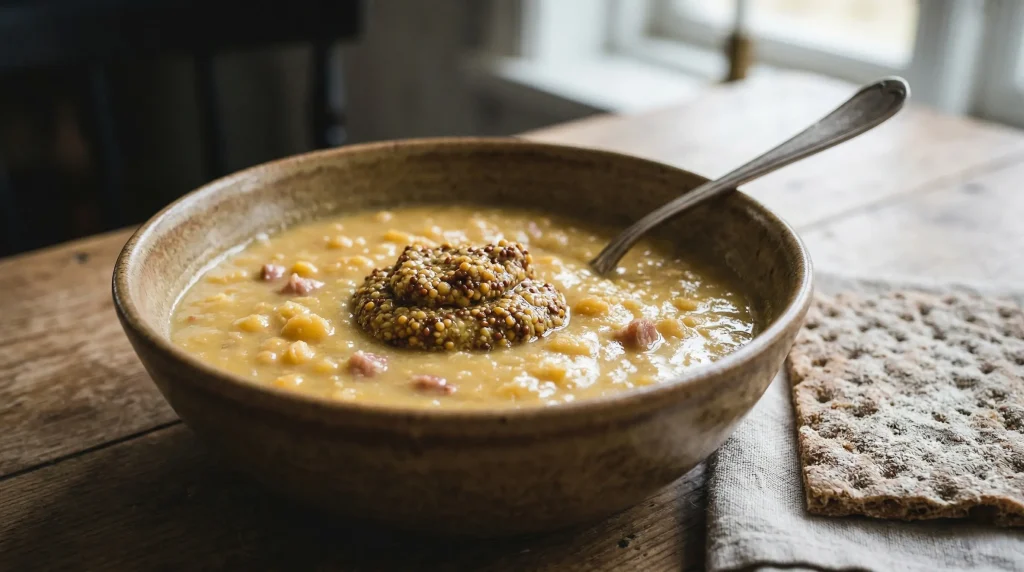
Swedes often enjoy yellow pea soup on Thursdays, accompanied by a dollop of strong grainy mustard. Coarse Skåne mustard provides texture and a sweet‑savory kick that balances the creamy soup. Serve with crisp bread (knäckebröd), pancakes and warm punsch for a classic Swedish meal.
2. Mustard Crust for Christmas Ham (Julskinka)
At Christmas, Swedish families bake a cured ham (julskinka) and coat it with a mustard‑breadcrumb crust. Skåne mustard is the most common choice for the crust because its coarse texture adheres well and adds sweetness. Brush a layer of mustard over the ham, sprinkle with breadcrumbs and bake until golden.
3. Dill‑Mustard Sauce (Hovmästarsås) for Gravlax
Another Swedish classic is hovmästarsås – a sweet mustard and dill sauce served with cured salmon (gravlax). It is made by whisking strong sweet mustard with vinegar and sugar, then slowly drizzling in oil before stirring in chopped dill. Using Skåne mustard instead of a smooth mustard gives the sauce a rustic texture. Enjoy it with gravlax, pickled herring or new potatoes.
4. Sandwich Spread and Condiment
The crunchy seeds and sweet‑savory profile make Skåne mustard an ideal spread for sandwiches, burgers and hot dogs. It pairs especially well with ham, sausages and smoked fish, and can be served on cheese boards. Spread a thin layer on rye bread with roast beef or turkey for a Scandinavian‑style sandwich.
Creative Ways to Use Skåne Mustard
While Skåne mustard shines in traditional dishes, its complex flavour invites experimentation. Here are some inventive ideas:
- Salad Dressings and Vinaigrettes – Mix a spoonful of coarse mustard with olive oil, lemon juice, honey and fresh herbs for a rustic vinaigrette. The seeds provide texture and the sweetness balances bitter greens like endive and kale.
- Roasted Vegetable Glaze – Combine Skåne mustard with maple syrup, soy sauce and garlic. Brush onto carrots, Brussels sprouts or winter squash before roasting. The caramelised glaze adds depth and a Scandinavian twist.
- Mustard‑Seed Crusted Meat or Fish – Press mustard seeds from the jar onto salmon fillets or pork chops before baking. The seeds form a crunchy crust that seals in juices and imparts a mild peppery heat.
- Baking and Breads – For a savoury surprise, swirl a few tablespoons of Skåne mustard into bread dough or savoury muffins. The sweet‑savory flavour pairs well with rye or whole‑wheat flour and cheese.
- Cocktail Ingredient – Add a teaspoon of mustard to a Bloody Mary or savoury cocktail. The heat and texture complement tomato juice and spices.
- Dips and Marinades – Stir Skåne mustard into hummus or yogurt‑based dips for extra tang, or combine it with cider vinegar, maple syrup and herbs as a quick marinades for chicken.
Conclusion
Coarse Skåne mustard is a testament to Sweden’s culinary heritage. Its combination of mixed mustard seeds, coarse texture and sweet‑tangy flavour makes it distinct from other mustard varieties. Whether you enjoy it in traditional pea soup, spread on Christmas ham, whisked into a dill sauce or in an innovative glaze, this rustic condiment can elevate everyday dishes and inspire creative cooking. By making it at home and experimenting with new uses, you can bring a taste of Skåne into your own kitchen.