
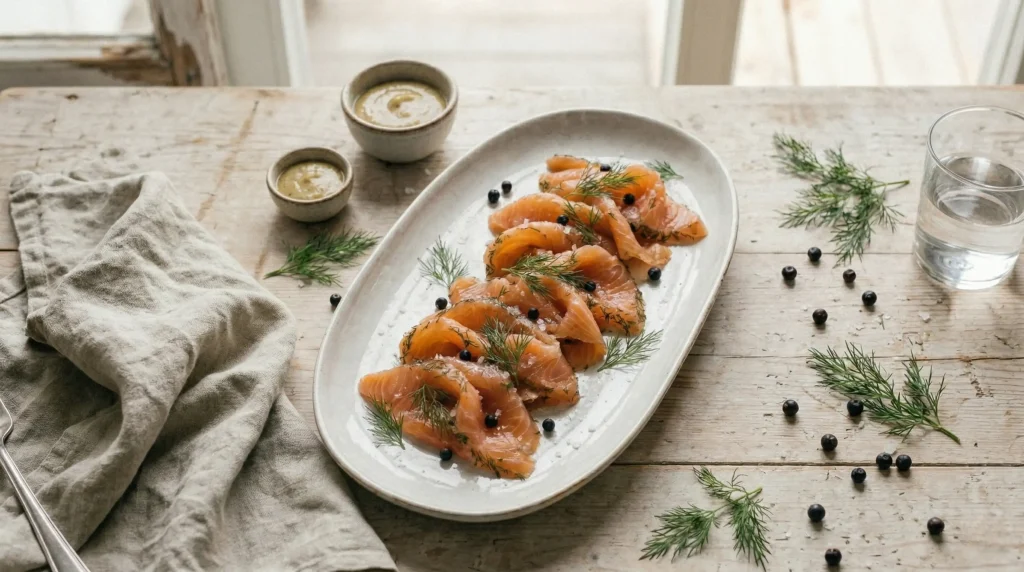
Gravlax — or gravad lax — is one of Scandinavia’s most beloved culinary gifts: fresh salmon cured with nothing more than salt, sugar, dill, and time. The name means “buried salmon,” a nod to a centuries-old preservation technique that has since evolved into one of the most refined and approachable dishes in Nordic cuisine. Whether you’re preparing it for a festive smörgåsbord or a quiet weekend brunch, homemade gravlax is far simpler than it looks — and the result is extraordinary.
A Dish Born of Necessity
The story of gravlax begins in 14th-century northern Sweden, where coastal fishermen faced a familiar challenge: too much salmon, too little time, and no refrigeration. Their solution was ingenious — they buried the fish in the ground, packed with a small amount of salt, bark, and herbs, letting it gently ferment in the cool earth until it could be safely transported through winter. The word grav literally means “grave” or “trench.”
This early gravlax was pungent and funky, closer in spirit to surströmming (fermented herring) than the silky, delicate dish we know today. Over the following centuries, fermentation gave way to dry-curing with more salt, sugar, and the fragrant dill that defines the modern version. By the 17th century, Swedish statesman Axel Oxenstierna was serving thin slices of cured salmon accompanied by a mustard-oil-vinegar sauce — a precursor to the hovmästarsås that still accompanies gravlax today.
How to Make Gravlax at Home
Making gravlax requires minimal equipment and almost no active cooking time — the salt and sugar do all the work. Plan for roughly 36 hours of curing in the fridge, and you’ll be rewarded with silky, paper-thin slices of salmon that taste like something from a Scandinavian restaurant.
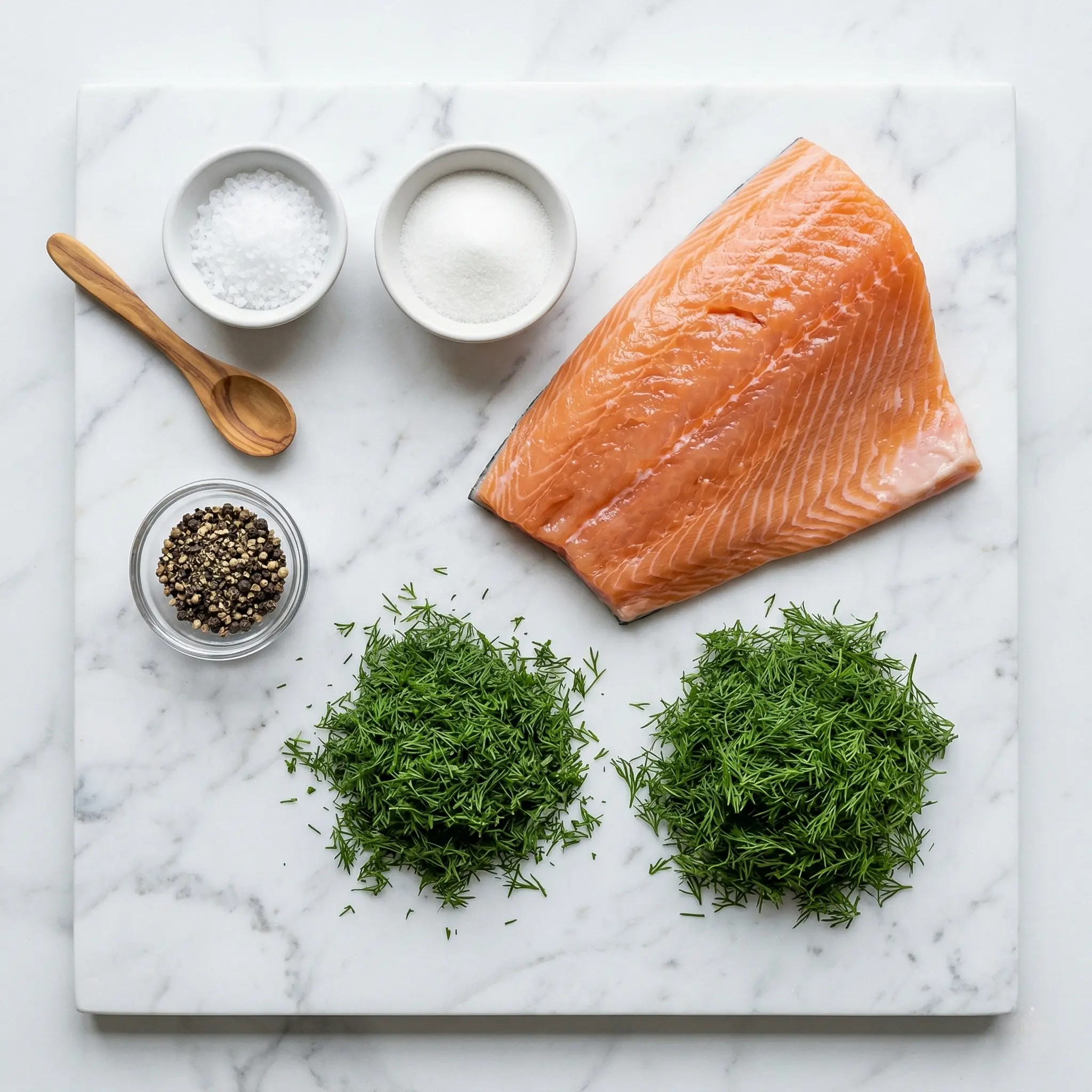
Classic homemade gravlax
Ingredients
Method
- Prepare the cure: Crush peppercorns and combine with kosher salt and brown sugar.
- Check the salmon: Remove any pin bones with tweezers. Pat the fish dry.
- Season with alcohol: Place the salmon skin‑side down on parchment; drizzle aquavit (or your chosen spirit) over the flesh and rub it in.
- Apply cure and herbs: Spread the salt‑sugar mixture evenly over the flesh and top generously with chopped dill.
- Wrap and weight: Wrap the salmon tightly in plastic, place it in a dish and lay a cutting board or plate on top, weighed down with cans or jars. Refrigerate for 12 hours.
- Flip and baste: After 12 hours, unwrap the salmon, baste it with the accumulated juices, flip it over, rewrap and refrigerate for another 12 hours. Repeat once more; total curing time is ~36 hours.
- Finish and slice: Unwrap, gently scrape off excess cure and dill, pat dry and slice very thinly at an angle. Use a long, sharp knife for the cleanest slices.
Food Safety: What You Need to Know
Gravlax is cured but still raw, so food safety matters. Fresh salmon can harbour parasites such as Anisakis worms or bacteria like Clostridium botulinum. To make it safe:
- Use sushi-grade or previously frozen salmon
- Freeze the fish at −20 °C (−4 °F) for at least 7 days before curing to kill any parasites
- Keep gravlax refrigerated throughout the curing process at no more than 3 °C (37 °F)
- Keep the finnished graxlax refrigerated at no more than 3 °C (37 °F) and consume within 3 days of finishing, or freeze sliced portions for longer storage
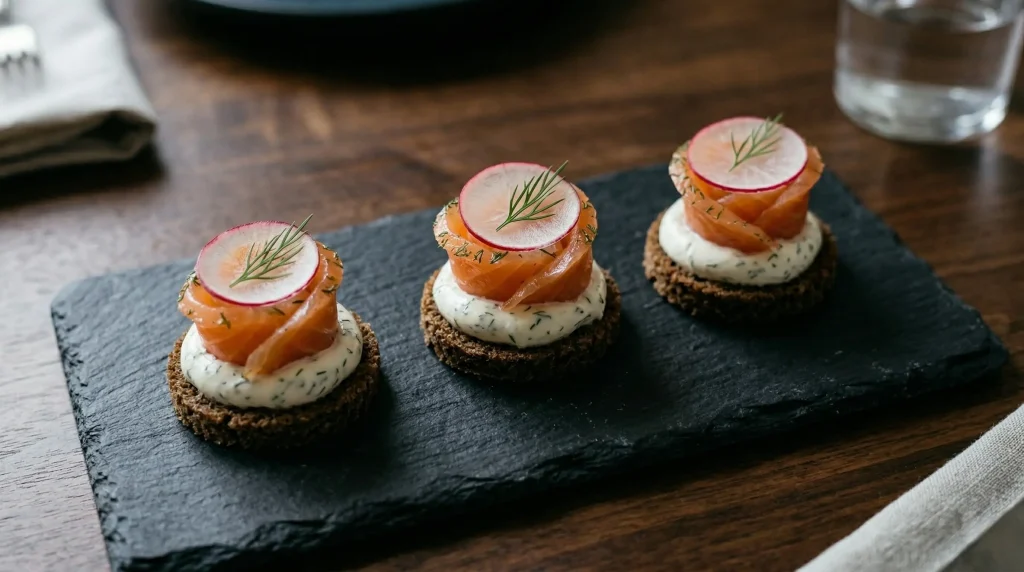
Serving Gravlax
Once sliced, gravlax is remarkably versatile. Here are the best ways to enjoy it:
- Classic smörgåsbord style — arranged on a platter with lemon wedges, dill sprigs, and a bowl of hovmästarsås (mustard-dill sauce), alongside rye bread or crispbread
- Open-faced sandwiches — Archipelago rye bread topped with gravlax, pickled cucumber, radish, and a drizzle of mustard sauce
- Canapés — rolled around herbed crème fraîche or cream cheese and speared with toothpicks
- Brunch boards — alongside blinis, soft-boiled eggs, and fresh herbs
- Modern bowls — gravlax works beautifully in sushi, poke bowls, or over warm new potatoes
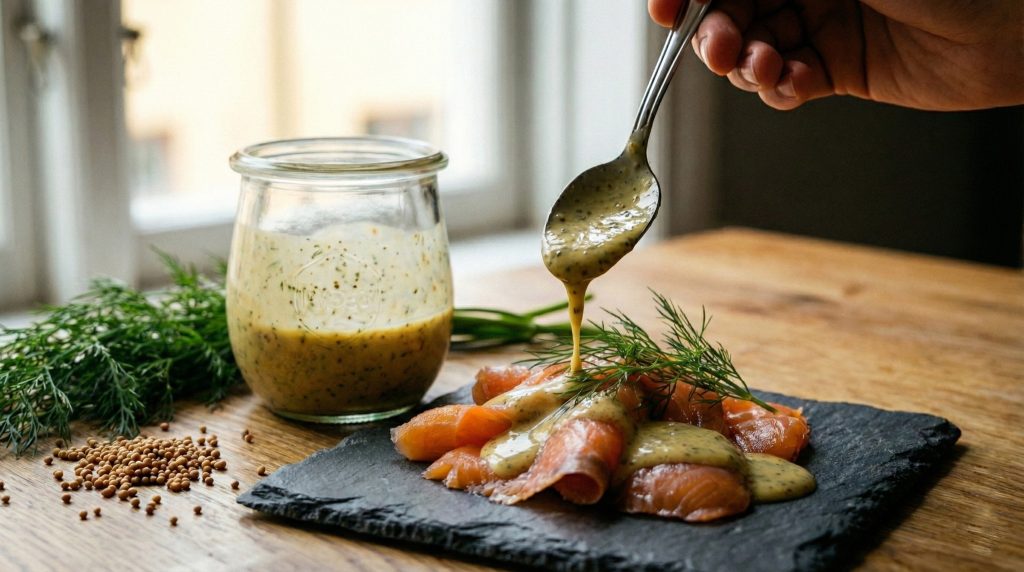
Mustard-Dill Sauce (Hovmästarsås)
No gravlax is complete without hovmästarsås — literally “butler’s sauce.” This sweet, tangy condiment is made from Swedish mustard, honey, vinegar, and fresh dill. It keeps for up to a month in the fridge and pairs just as well with other cured fish or as a dip for vegetables.
My hovmästarsås recipe is available here!
Tips for the Best Gravlax
- Use the center cut — it cures more evenly than the tail end
- Don’t rush it — 36 hours gives a better result than 24; flavour develops with time. It will also give time for the salt to propely absorb enhancing food safety.
- Go heavy on the dill — you can’t really overdo it
- Experiment with botanicals — beetroot and gin, citrus zest and juniper, or even fresh horseradish all make excellent variations on the classic. Click here for my gin-infused gravlax recipe!
- Slice cold — freeze briefly before slicing for cleaner, thinner cuts