
A complete guide to the history, etiquette, dishes, and occasions behind Sweden’s most celebrated culinary tradition.
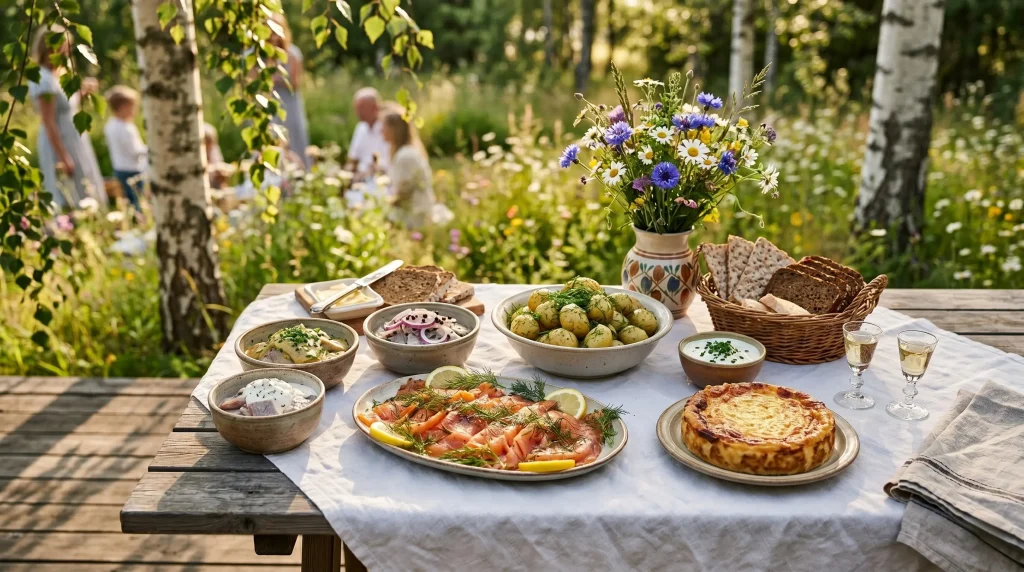
There’s a moment at every Swedish smörgåsbord that tells you everything you need to know about it. You’re on your third small plate, you haven’t even touched the hot dishes yet, and someone across the table is already singing a drinking song. Loudly. The herring has barely been finished.
That’s the smörgåsbord. Not a buffet. Not a concept. A full-on event.
If you’ve ever wondered what separates Sweden’s smörgåsbord from a generic hotel breakfast spread — or if you want to actually host one at home without embarrassing yourself — this guide covers everything: the real history, the dishes, the unwritten rules, and the seasonal variations that make it one of the most thoughtfully structured eating traditions in the world.
What “Smörgåsbord” Actually Means
The word itself is worth unpacking before anything else.
Smörgåsbord combines two Swedish words: smörgås and bord. Bord simply means table. Smörgås, however, has a more interesting origin. It breaks down into smör (butter) and gås (goose) — but not because gooses were involved. The word gås also referred to the small lumps of butter that float to the surface when cream is churned, which early Swedes thought resembled little geese bobbing on water. Those butter lumps got spread on bread, and smörgås became the word for a buttered slice of bread.
So a smörgåsbord is, literally, a table of buttered bread. It just happens to also come with pickled herring, meatballs, a potato gratin, and several shots of aquavit.
A History Worth Knowing
The Brännvinsbord: Where It All Began
The smörgåsbord didn’t start as a meal. It started as a pre-dinner ritual among Swedish and Finnish merchant and upper-class households in the 16th century, where a small snack table — called a brännvinsbord (literally, a “brännvin table”, brännvin being a type of distilled spirit) — was set out before the main meal.
Guests would stand around this side table, helping themselves to bread, butter, cheese, herring, and a few types of liqueur while the kitchen finished preparing dinner. Men and women sometimes stood in separate rooms. It was, essentially, sophisticated pre-drinking with something to absorb the alcohol.
By the mid-17th century, the food had migrated from the side table to the main table, and hot dishes started appearing alongside the cold ones. The brännvinsbord had become something more substantial — a full meal in its own right.
From Aristocratic Ritual to National Tradition
Through the 18th and 19th centuries, the smörgåsbord grew both in scale and social reach. What began in elite homes gradually filtered into restaurants, inns, and middle-class households. The 19th century is when the name smörgåsbord became established, and the format we’d recognise today — multiple rounds, herring first, aquavit alongside — solidified into a genuine cultural institution.
1939: America Discovers the Smörgåsbord
The moment the word entered the English-speaking consciousness came at the 1939 New York World’s Fair in Flushing, Queens, where the Swedish delegation served an elaborate smörgåsbord at their pavilion’s Three Crowns Restaurant. Americans were entranced, the word entered English dictionaries, and “smorgasbord” became a metaphor for any overwhelming abundance — a usage that, frankly, underestimates the original.
The Five Rounds: How a Smörgåsbord Actually Works
This is where most non-Swedes go wrong. A smörgåsbord is not a free-for-all. It has a structure, and respecting that structure is what separates a Swedish feast from a Vegas buffet.
The traditional smörgåsbord is eaten in five separate rounds, each requiring a fresh plate. You don’t pile everything together. You don’t rush. You go back to the table multiple times, moving through the courses in order.
Here’s how the rounds break down:
Round 1 — Herring and Aquavit
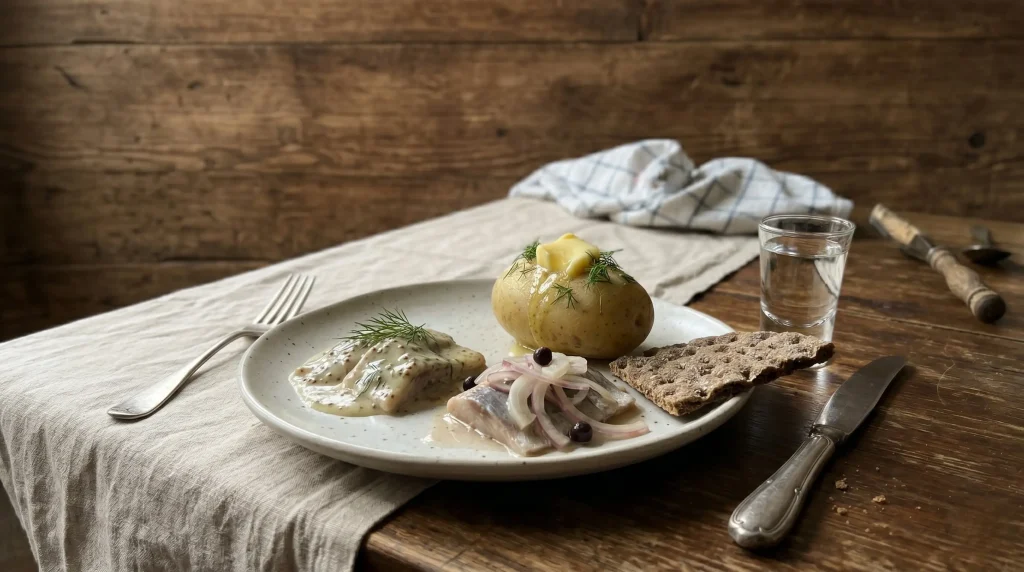
Always start here. Pickled herring (sill) is the backbone of the smörgåsbord — ask any Swede and they’ll tell you a smörgåsbord without herring is unthinkable. There will typically be several varieties: onion herring, mustard herring, dill herring, sometimes curry, sometimes a Swedish-style matjes. Take a small selection, put them on their own plate (the brine is strong and will contaminate everything else), and pour yourself a cold aquavit.
The aquavit is not optional. You sing a snapsvisa — a drinking song — before the shot. There are hundreds of these songs, ranging from dignified to distinctly undignified. The herring and the aquavit are a flavor pairing that’s been refined over centuries; the anise and dill notes in a good aquavit cut through the salt and acid of the herring in a way that nothing else quite does.
Boiled potatoes and crispbread belong in this round too. Keep it simple.
Round 2 — Cold Fish and Seafood
After the herring, you move to the rest of the cold fish table. This round includes:
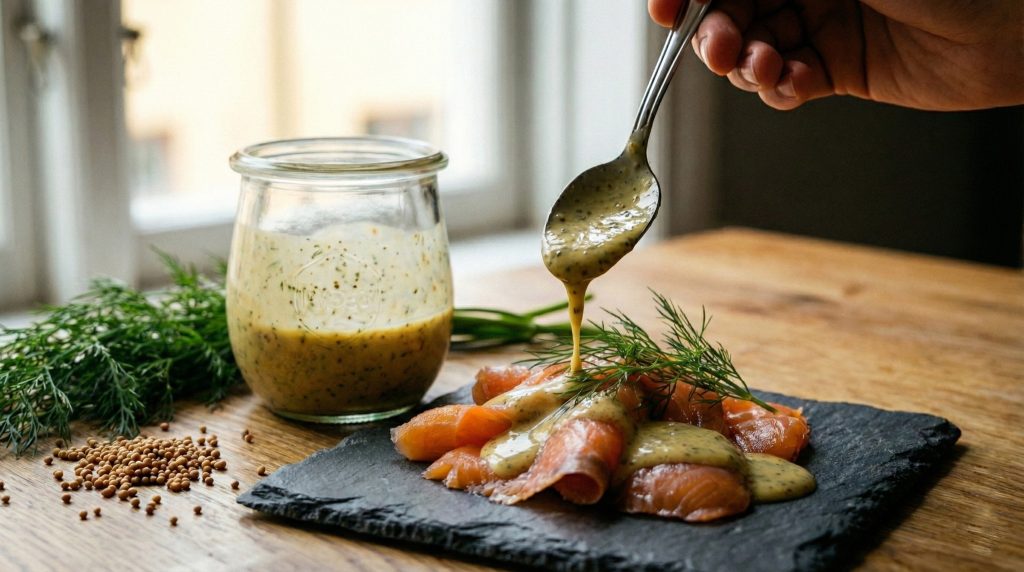
- Gravlax — cold-cured salmon with dill, served with a sweet mustard sauce (hovmästarsås). This is non-negotiable at any serious smörgåsbord.
- Smoked salmon or mackerel — served with lemon and dill on the side.
- Skagenröra — a creamy prawn salad with mayonnaise, dill, and a squeeze of lemon, usually piled onto toast or crispbread. Named after the town of Skagen at the northern tip of Denmark.
- Gubbröra — an egg-and-anchovy salad, sharp and intensely savory, sometimes called “old man’s mix.” A classic that deserves more international attention.
- Hard-boiled eggs, creamed cod roe, lumpfish roe — the cold fish table should feel generous.
Cucumber salad (inlagd gurka) fits here as a clean, acidic counterpoint to the rich fish.
Round 3 — Cold Cuts and Pâté
The third round is the charcuterie course, Scandinavian-style. Sliced cold meats, pâté, and pickles take center stage:
- Cold-smoked ham, roast beef, or rolled rullepølse sausage
- Liver pâté (leverpastej) — firmer and more assertive than French-style pâté, served with pickled beetroot and cornichons
- Pickled cucumber and beetroot salad (rödbetssallad)
- Plenty of rye bread and crispbread (knäckebröd) — always with proper butter, never margarine
This is also when Swedish cheeses make an appearance. Västerbotten is the essential one: aged, granular, with a sharp, almost parmesan-like intensity. Prästost, Havarti, and a blue cheese round out the board. Bring a proper cheese slicer (osthyvel) — using a knife is acceptable, using your fingers is not.
Round 4 — Hot Dishes
By now you have eaten three plates of food and drunk at least one aquavit. This is not the time to rush.
The hot course is where the smörgåsbord reaches its most substantial point:
- Swedish meatballs (köttbullar) — smaller than the IKEA version, pan-fried in butter until properly browned, served with lingonberry jam and cream sauce. These are the meatballs people come back for.
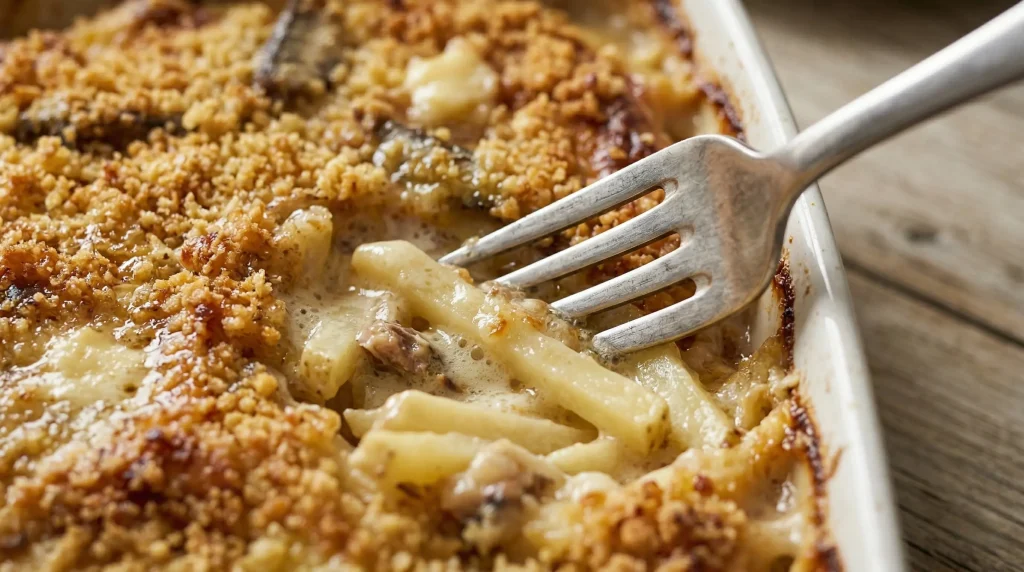
- Jansson’s Temptation (Janssons frestelse) — layers of julienned potato, onion, and ansjovis (a type of Swedish sprat cured in brine and spices, sweeter than Mediterranean anchovies) baked in cream until golden and bubbling. Rich, warming, deeply savory.
- Prinskorv — small cocktail sausages, especially at Christmas
- Kålpudding — a cabbage roll stuffed with ground pork and beef, a proper Swedish winter classic
- Roasted or braised lamb or pork, depending on the season
Boiled new potatoes with dill belong here too, especially in summer.
Round 5 — Dessert and Coffee
The final round should feel like a gentle landing after a long journey. Swedish smörgåsbord desserts are not elaborate. They’re comforting:
- Ris à la Malta (rice pudding with whipped cream and orange) — at Christmas, an almond is hidden inside; whoever finds it is said to marry next
- Cinnamon buns (kanelbullar), saffron buns (lussekatter) at Christmas
- Strawberry cake or berry tart in summer
- Knäck (butterscotch toffee) and ischoklad (chocolate confections) at Julbord
- Strong coffee — always
Seasonal Smörgåsbords: Three Tables, Three Moods
Julbord — The Christmas Table
The Julbord is the grandest smörgåsbord of the year, served on Christmas Eve (julafton). Everything described above appears in its fullest, most lavish form, but the true centerpiece is the julskinka — Christmas ham, boiled and then glazed with mustard, breadcrumbs, and egg, then browned in the oven.
Jansson’s Temptation is perhaps most at home here. The Julbord also gets julmust — a dark, spiced soft drink that sells in volumes that rival Coca-Cola during the Swedish holiday season — and the table is lit with candles and laden with red accents.
One practical note: a proper Julbord in a Swedish home can run four to five hours. This is not hyperbole. Plan accordingly.
Påskbord — The Easter Table
Easter marks the arrival of spring in Sweden, and the påskbord reflects that shift in mood. The table is decorated with yellow napkins, birch twigs painted with feathers (påskris), and painted eggs.
Pickled herring and gravlax anchor the cold table, Jansson’s Temptation makes another appearance, and lamb replaces Christmas ham as the main hot dish. Gubbröra — the egg-and-anchovy salad — shines at Easter in a way it doesn’t at other times of year. The soft drink swap: julmust becomes påskmust, same drink, different label, endlessly debated by Swedes.
Midsommar — The Midsummer Table
Midsummer (midsommar), celebrated near the summer solstice in late June, is Sweden at its most exuberantly alive. After dancing around the maypole (midsommarstången), the smörgåsbord is lighter, fresher, and built almost entirely around cold food and the season’s first produce.
Herring remains the star — often in mustard, onion, or dill variety — alongside new potatoes with dill and butter, sour cream and chives, crispbread, and a Västerbottenpaj (Västerbotten cheese pie). The cheese itself is only produced in the Västerbotten region of northern Sweden in limited quantities, giving midsommar cheese pies an almost ceremonial status.
For midsommar, a gin-cured gravlax with juniper and lemon zest makes a stunning centerpiece — the botanicals in the gin echo the wild herbs of a Swedish summer.
Dessert is strawberries with cream. Always strawberries with cream.
Hosting Your Own Smörgåsbord
You don’t need to be in Sweden or celebrate a major holiday to put together a smörgåsbord. The format works beautifully for a dinner party, a summer gathering, or any occasion where you want people to eat well and linger for hours.
A few practical notes:
On scale: You don’t need 40 dishes. A scaled-down home smörgåsbord might offer two herring varieties, gravlax, skagenröra, a pâté and cold cuts platter, meatballs, Jansson’s Temptation, one or two cheeses, and a dessert. That’s already a generous, authentic spread.
On timing: Prepare cold dishes the day before. Herring keeps well and actually improves overnight. Gravlax should be cured 24–48 hours ahead. On the day, all you need to manage are the hot dishes.
On table layout: Set the table in order of the rounds — cold fish at one end, hot dishes in the middle or in the kitchen, desserts last. Use small plates, not dinner plates. The whole point is to encourage multiple trips.
On aquavit: Serve it ice-cold, in small glasses. Learn one snapsvisa — even a short one — and teach it to your guests. It will change the atmosphere of the table completely.
On vegetarian guests: Modern Swedish smörgåsbords handle this well. Plant-based meatballs are widely available, vegan gubbröra substitutes mushrooms for egg, and the cheese and bread table is naturally vegetarian. Just make sure the Jansson’s Temptation is labeled clearly — those Swedish sprats catch people off guard.
The Etiquette in Brief
- Never mix the rounds. Herring on its own plate, always first.
- Small portions, multiple trips. A smörgåsbord is a marathon, not a sprint.
- Use a fresh plate for each round. Mixing fish brine with meatball gravy is not the move.
- Aquavit with herring. Not before, not after — with.
- Pace yourself. The people who stack their first plate six inches high are always the ones who miss dessert.
Dishes to Learn Before You Host
If you’re building toward hosting a full smörgåsbord, these are the dishes worth mastering first — roughly in order of importance:
- Pickled herring — start with a classic onion variety, work up from there
- Gravlax — easier than it looks, requires only salt, sugar, dill, and patience
- Swedish meatballs — the ratio of pork to beef matters; so does the pan temperature
- Jansson’s Temptation — find real Swedish ansjovis, not Mediterranean anchovies
- Västerbottenpaj — if you can source the cheese, the recipe is simple
- Skagenröra — five minutes to make, always impressive
- Ris à la Malta — the Christmas rice pudding that ends the Julbord on a quiet, sweet note
Have you hosted a smörgåsbord at home, or eaten at a proper Swedish one? I’d love to know which dishes you’d never skip — leave a comment below.