
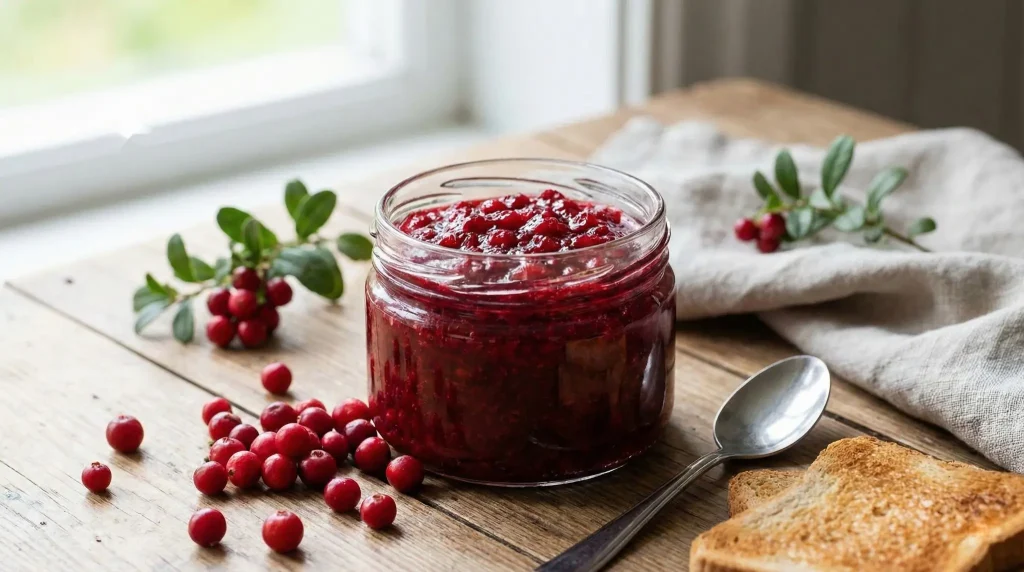
If there’s one jar that earns permanent residency in every Nordic refrigerator, it’s lingonberry jam. Swedes call it lingonsylt. Finns call it puolukkahillo. And most people elsewhere have their first taste at an IKEA meatball lunch — then spend a quiet, determined afternoon trying to figure out how to make it at home. Here’s the thing: it’s almost embarrassingly easy.
What Is a Lingonberry?
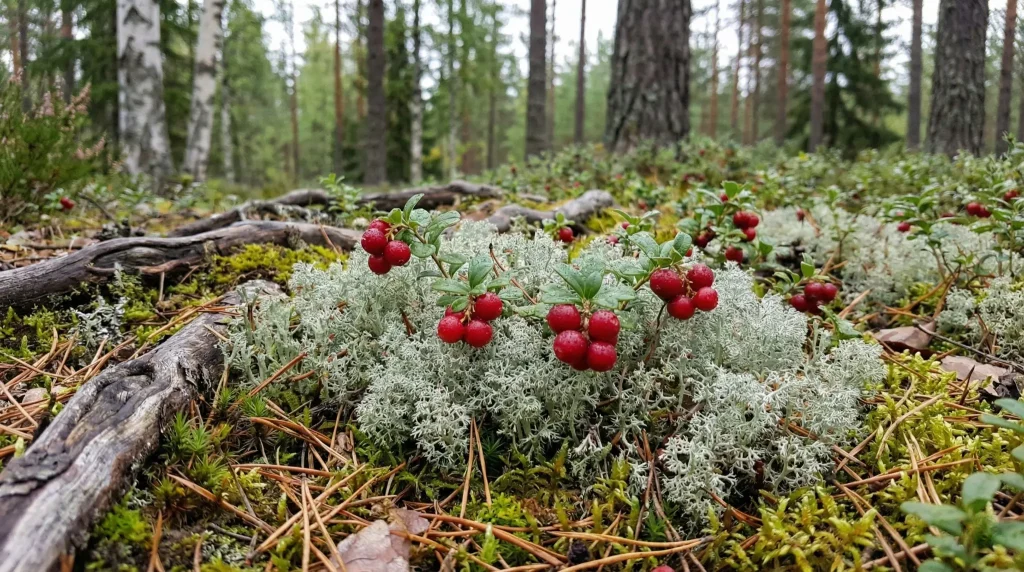
The lingonberry (Vaccinium vitis-idaea) is a small, intensely tart red berry that grows wild across Scandinavian forests, bogs, and hillsides. Think of it as the cranberry’s sharp-tongued Nordic cousin — similar acidity, smaller size, and a flavor that’s simultaneously bitter, bright, and deeply complex. Fresh lingonberries are rarely found outside of Scandinavia, but frozen ones are widely available at IKEA’s food market, Scandinavian specialty stores, and online retailers across North America. They work beautifully in this recipe — sometimes even better than fresh.
Why Make Your Own?
Because the store-bought version doesn’t come close to the homemade one. Fresh-made lingonberry jam has a more vivid, alive flavor — less cloying, more interesting. You control the sweetness. You can tweak the texture. And the whole process takes about 30 minutes and three ingredients. There’s also something quietly satisfying about producing a jar of something so essentially Nordic. It feels like a small, edible act of cultural preservation. Highly recommended.
How to Use It: Serving Suggestions
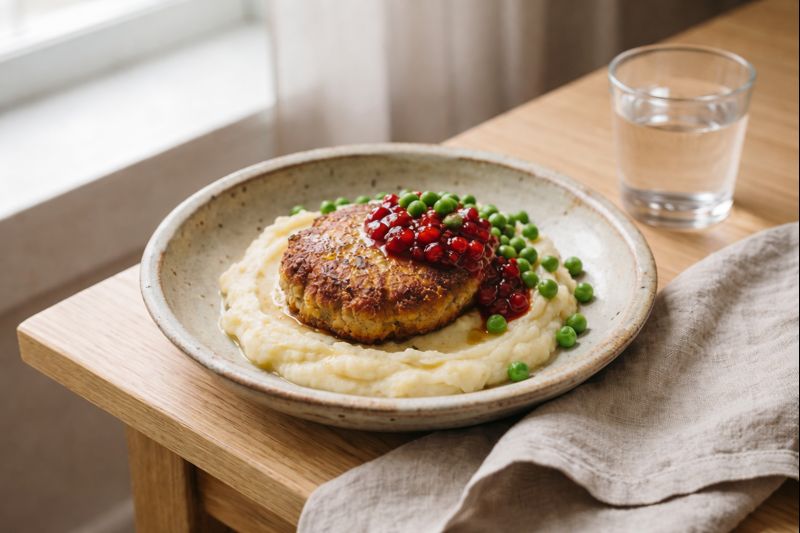
Lingonberry jam is the great Nordic multi-tasker. It belongs equally on the breakfast table and the dinner table, and it earns its keep at both. Here are the best ways to put it to work:
- Swedish Meatballs: The undisputed classic. The jam’s tartness cuts right through rich, creamy gravy in the most satisfying way imaginable. Try it with our Swedish Meatballs with Cream Sauce →
- Beef Lindström (Biff à la Lindström): These crimson-flecked beef patties are already packed with pickled beets and capers. A spoonful of lingonberry jam alongside them is an absolute must. See our Beef Lindström →
- With Ribbe (Pork Rib Roast): The crown jewel of the Nordic Christmas table. The jam’s bright acidity is the perfect counterpoint to slow-roasted, crackling-crusted pork. Try our Ribbe →
- With Jansson’s Temptation (Janssons Frestelse): This creamy, anchovy-laced potato gratin sounds surprising, but a small side of jam balances its salty richness beautifully. See our Jansson’s Temptation →
- With Swedish Cabbage Rolls (Kåldolmar): Lingonberry jam is the traditional accompaniment to these tender, rice-and-meat stuffed rolls — never skip it. Find our Kåldolmar →
- With Karelian Hot Pot (Karjalanpaisti): This slow-braised Finnish meat stew is deeply savory and warming. A dollop of tart lingonberry jam on the side brightens the whole bowl. See our Karjalanpaisti →
- With Spinach Pancakes: Savory green pancakes are a beloved Nordic lunch staple, and lingonberry jam is their natural partner — sweet, tart, and just a little unexpected. Try our Spinach Pancakes →
- With Beef Wallenberg (Wallenbergare): These delicate, cream-enriched veal patties are one of Sweden’s most elegant dishes. Lingonberry jam is the classical garnish — always. See our Wallenbergare →
- With Cabbage Casserole (Kållåda): A humble, comforting baked casserole that transforms completely with a spoonful of jam on the side. Find our Kållåda →
No Pectin? Correct. You Don’t Need It.
Lingonberries are naturally high in pectin — the substance responsible for making jam set. The berries do the work themselves, no commercial pectin required. If you want a firmer set, add a tablespoon of fresh lemon juice. It boosts the natural pectin and adds a pleasant brightness. Slightly underripe berries also carry more pectin naturally, so if your berries look very soft and deeply red, that squeeze of lemon is smart insurance.
Fresh vs. Frozen: Which Is Better?
Fresh lingonberries have a brief season in late summer and early autumn, and outside Scandinavia they’re nearly impossible to find fresh. Frozen berries are the practical everyday choice — and they cook down faster because freezing breaks down the cell walls slightly, releasing liquid more readily. If you use frozen berries, reduce or skip the added water entirely. The berries will release plenty of their own juice as they cook.
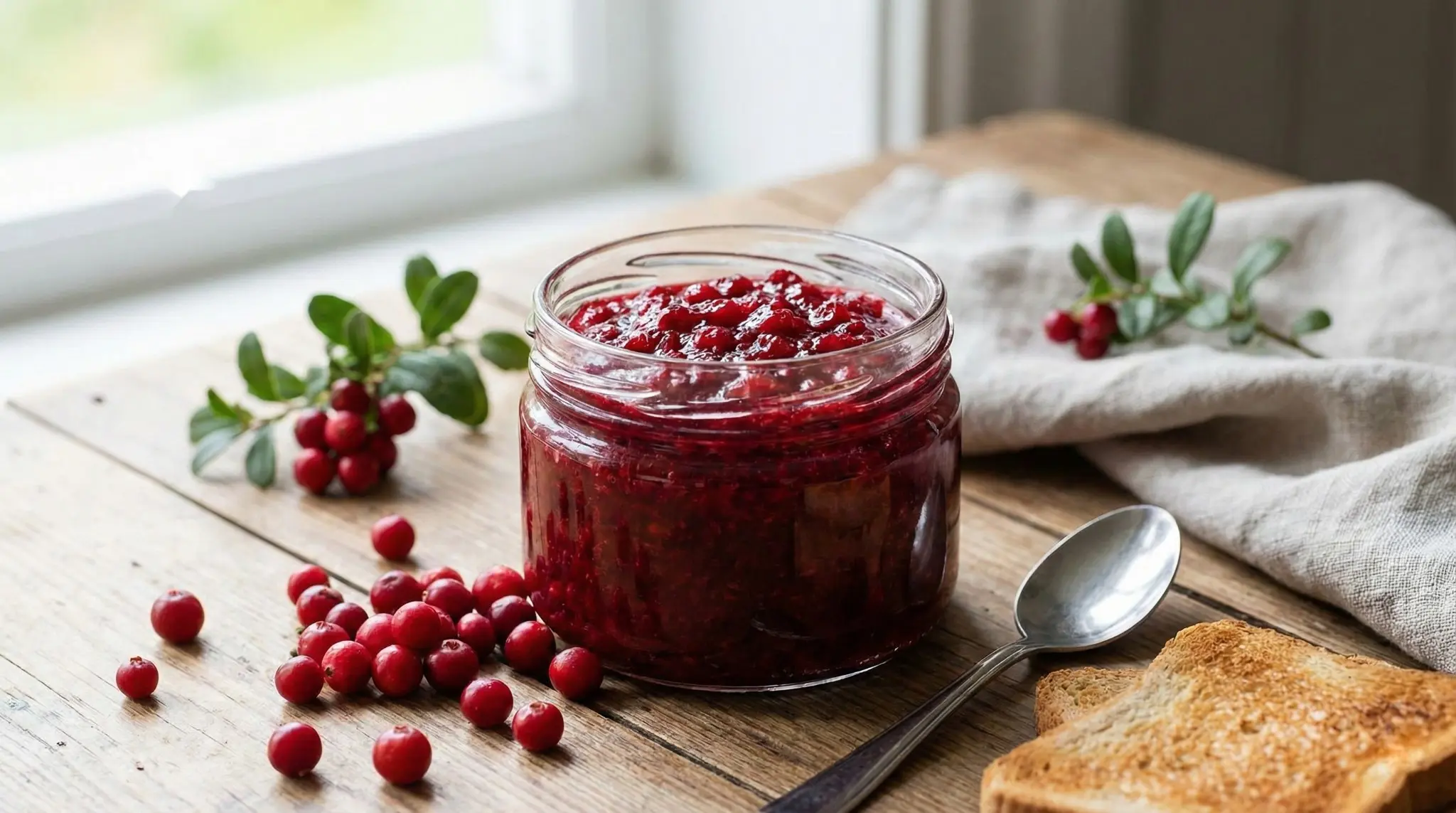
Homemade Lingonberry Jam
Ingredients
Equipment
Method
- Sterilize your jar. Wash your jar and lid in hot soapy water, rinse well, and place upright in a 250°F / 120°C oven for 15 minutes. Remove with tongs and set aside.
- Prepare the berries. If using fresh berries, rinse under cold water and pick out any leaves or stems. If using frozen berries, add them directly to the pot — no need to thaw first.
- Combine and heat. Place the berries, water, and lemon juice (if using) in a large saucepan. Bring to a boil over medium heat, stirring gently. The berries will begin to soften and release their juice within a few minutes.
- Add the sugar. Once the berries are boiling and starting to break down, add the sugar gradually, stirring until fully dissolved. Bring the mixture back to a rolling boil.
- Simmer until thickened. Reduce the heat slightly and let the jam simmer for 20–30 minutes, stirring regularly. The berries will turn translucent and the mixture will thicken noticeably. Skim off any foam with a spoon as it forms.
- Test for set. Drop a small spoonful of jam onto your cold plate. Wait 30 seconds, then push it with your fingertip. If it wrinkles, the jam is ready. If it slides freely, simmer for another 5 minutes and test again.
- Blend (optional). For a smoother jam, use a metal immersion blender directly in the pot. Blend to your preferred consistency — fully smooth or partially chunky both work beautifully. Use caution: the jam is very hot, plastic blender might melt.
- Jar the jam. Pour the hot jam carefully into your sterilized jar. Seal immediately. Allow to cool completely at room temperature before refrigerating.
Notes
- Storage: Keeps in the refrigerator for up to 4 weeks in a sealed jar.
- Freezer: Freeze in small portions for up to 6 months.
- Sugar level: This recipe is designed to be pleasantly tart. Increase sugar to 1 cup / 200g for a sweeter, more traditional style.
- Scaling up: This recipe doubles and triples easily. Use a wide, heavy pot for best results.
- Canning: For longer shelf life, process filled jars in a boiling water bath for 10 minutes using standard water bath canning method.
FAQ & Troubleshooting
The most common culprit is undercooking. Simmer for a few more minutes and repeat the cold plate test. Also remember: jam always thickens significantly as it cools. Don’t panic while it’s still warm in the pot.
Reduce the sugar to ½ cup / 100g and add a tablespoon of lemon juice. The tartness will come forward beautifully.
Totally normal — just skim it off with a spoon as you go. Stirring in a very small knob of butter near the end also helps reduce foam significantly.
A gentle background bitterness is natural in lingonberries and very much part of their character. If it feels too strong, add a touch more sugar or a small splash of apple juice during cooking. It will mellow.
Yes, but be aware that sugar acts as a preservative. Lower-sugar jam should be used within one week of opening and kept refrigerated.
Absolutely. Just use a wider, heavier pot to ensure even cooking and proper evaporation. A narrow, tall pot will slow down the process considerably.
You can substitute honey, though it will change the flavor profile noticeably — darker, floral, and less clean. Use about the same quantity by weight.
Made this recipe? Tag us on Instagram @thenordicdish — we love seeing your jars.