
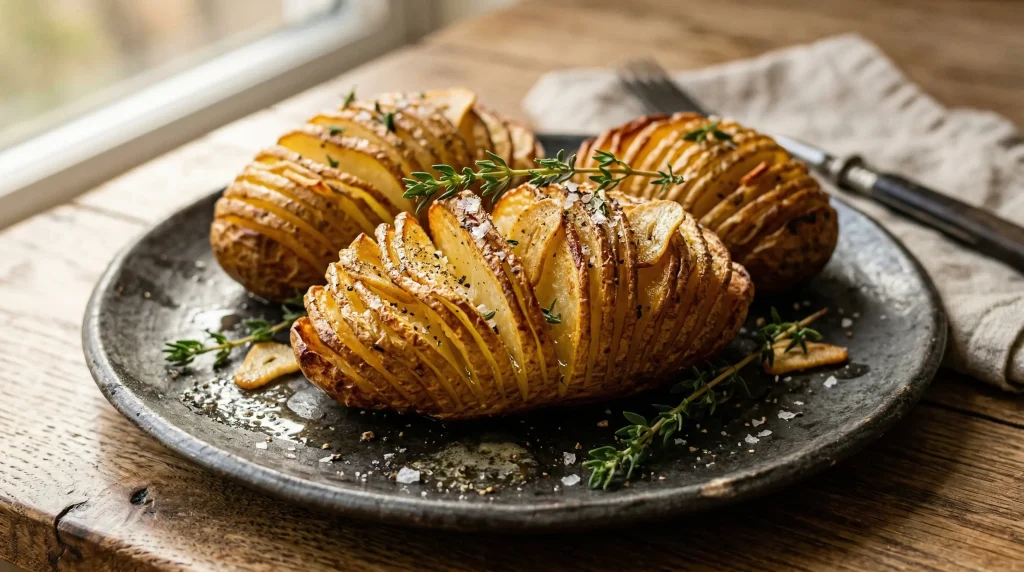
There’s a moment at the dinner table when a dish arrives and everyone just goes quiet. Not because something is wrong — quite the opposite. Hasselback potatoes have that effect. Fanned out like golden accordion keys— earning them the nickname accordion potatoes — shatteringly crisp on the outside and pillowy-soft in the middle, they look like you spent hours laboring away. The secret? You really didn’t.
This humble Swedish classic has been turning heads since the 1950s. Once you learn the simple technique behind those gorgeous layered edges, you’ll wonder why you ever served a plain baked potato again.
A Stockholm Legend (No, Really)
The Hasselback potato was born at Hasselbacken, a historic restaurant and hotel in Stockholm’s Djurgården district, where it first appeared on the menu in the 1950s, and the name simply stuck — as the best names tend to do. It’s essentially a baked potato with a clever twist: thin slices cut almost all the way through, so the potato fans open during roasting — a visual that’s earned it the affectionate nickname accordion potatoes in kitchens far beyond Sweden.
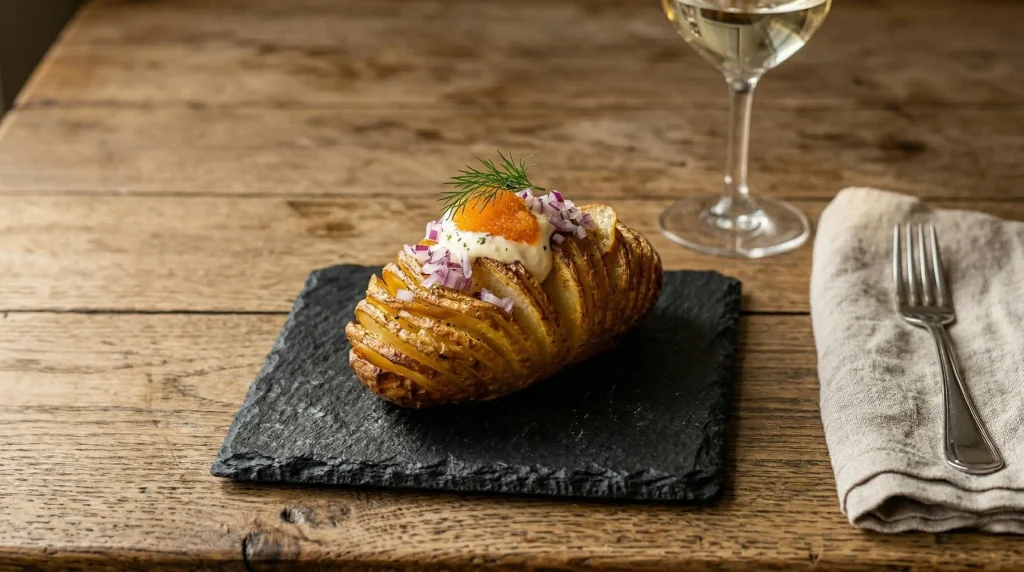
What’s particularly wonderful is that at Hasselbacken itself, the potato has never been just a side dish. It’s served as an appetizer in its own right — crowned with crème fraîche, finely chopped red onion, fresh dill, and Kalix löjrom, the intensely orange vendace roe harvested from the Bothnian Bay in northern Sweden.
Löjrom holds a PDO (Protected Designation of Origin) status — Sweden’s first food product to receive it — and is a regular fixture at Nobel Prize banquets and royal dinners. In other words, the humble Hasselback potato has been keeping rather extraordinary company since the very beginning.
What Makes Hasselback Potatoes Different From the Rest
The magic is all in the technique. By slicing the potato nearly through, you dramatically increase its surface area. More surface area means more contact with hot butter and oil — which means more crispy, golden edges. Each thin slice crisps up individually while the base stays creamy and soft. It’s simple physics, and it’s absolutely delicious. Choosing the right potato matters here. You want a medium-sized potato, roughly uniform in shape — neither too waxy nor too starchy.
What You Will Need
- Potatoes — Yukon Gold is the top pick for its naturally buttery flavor and golden skin. Russet potatoes work great if you prefer a fluffier, airier interior.
- Unsalted butter — Butter gives Hasselback potatoes their rich, nutty depth. Unsalted keeps the seasoning in your hands.
- Olive oil — Blending butter with oil raises the smoke point and prevents burning. Extra virgin olive oil adds a light fruitiness.
- Garlic — Tuck garlic slices between the fans for sweet, roasty flavor woven through every layer.
- Fresh thyme — Thyme is a natural companion to potato and butter. Its earthy, slightly floral notes feel genuinely Nordic.
- Flaky sea salt — Finishing salt is non-negotiable. It adds crunch and little bursts of seasoning in every single bite.
- Freshly ground black pepper — Simple, essential, perfect.
- Optional: Finely grated Parmesan or Gruyère — Tucking cheese into the layers turns this side dish into the main event.
The Technique: Getting That Perfect Fan
The slicing step sounds intimidating, but it’s genuinely forgiving. Place each potato on a cutting board between two wooden chopsticks or wooden spoon handles. These act as stoppers so your knife can’t slice all the way through. Then cut across the potato at roughly ⅛-inch (3mm) intervals. That’s honestly it. The chopstick trick is your very best friend here.
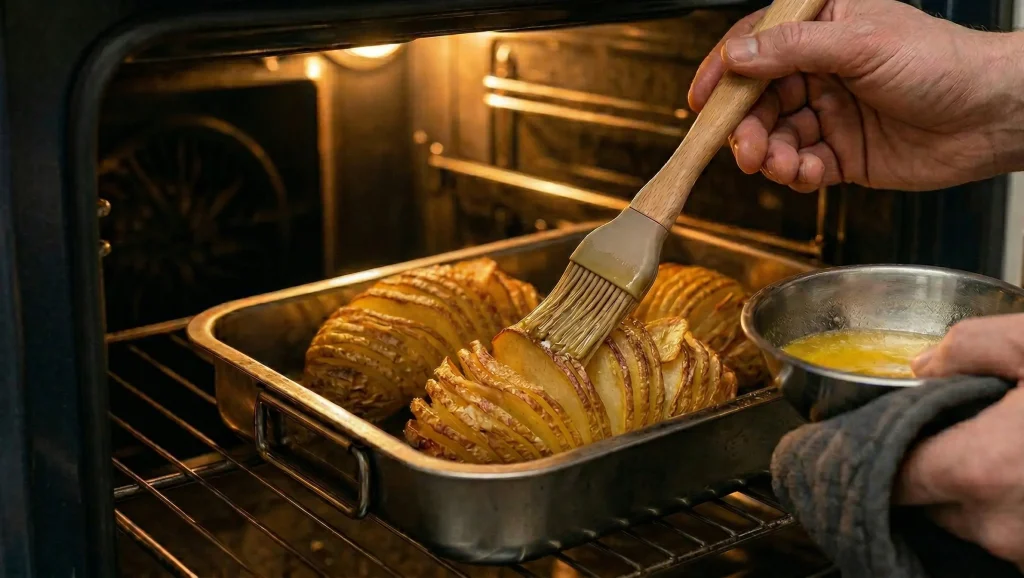
Once sliced, the potatoes go into a hot oven — and this is where patience pays off. Basting them with the butter-oil mixture partway through helps the layers separate and crisp up beautifully. Don’t rush the temperature. A steady 425°F (220°C) oven does all the heavy lifting for you.
Tips for the Best Hasselback Potatoes
- Dry your potatoes thoroughly before roasting — surface moisture is the enemy of crispiness
- Start basting about 30 minutes in, so the layers have time to fan open and absorb all that butter
- Add cheese in the final 15 minutes if you want it golden rather than burnt
- Rest for 5 minutes before serving — the outer layers firm up slightly as they cool, giving you the best texture
Michelin-Star Hasselback Potatoes: Is It Possible?
The standard recipe featured below is already a showstopper as is. But if you want to push things into truly extraordinary territory — for a special dinner, a celebration, or simply because you feel like it — a few small upgrades make a remarkable difference.
Start with the fat
Swap the butter-oil mixture for pure duck fat or ghee. Duck fat produces a crust that is almost incomprehensibly crispy, with a savory richness that tastes like something a French grandmother has been guarding for decades. Ghee — clarified butter with the milk solids removed — brings all the depth of butter with a higher smoke point and a clean, nutty finish. Either way, use the same quantity as the recipe calls for. You will notice the difference immediately.
Then think about the skin
Here is a little secret step from some of the finest restaurant kitchens: before slicing, parboil your potatoes for 8–10 minutes in well-salted water with a generous pinch of baking soda added. The baking soda raises the alkalinity of the water, which breaks down the potato’s surface ever so slightly, roughening it into a wonderful, almost fluffy texture.
Once drained, spread them on a wire rack and refrigerate uncovered for at least 30 minutes — or overnight if you’re planning ahead. The cold, dry surface is what gives you that truly extraordinary crust. Dust lightly with all-purpose flour or cornstarch just before your first brush of fat. That thin coating transforms the outer layers into something genuinely shatteringly crisp — the kind of crunch you can actually hear.
Finally, the salt.
Don’t reach for the regular table salt to finish. This is the moment for something special. Fleur de Sel — hand-harvested from French salt marshes, faintly moist, with a mineral delicacy that no other salt quite matches — dissolves gently against the warm, buttery surface of the potato and makes every bite taste considered and complete. A small pinch right before serving is all it takes. These are the details that turn a very good side dish into the one your guests ask about long after the plates are cleared.
What to Serve With Hasselback Potatoes
Hasselback potatoes are a generous side dish — they pair beautifully with almost anything that deserves a proper, celebratory accompaniment. But it’s worth remembering that at their birthplace, Restaurant Hasselbacken in Stockholm, they were never a side dish at all — they arrived as a starter, topped with crème fraîche, red onion, fresh dill, and Kalix löjrom, that glorious PDO-protected vendace roe from northern Sweden sometimes called the Nordic caviar. If you can get your hands on löjrom, serving your Hasselback potatoes this way is a deeply special experience — and a genuine piece of culinary history on a plate.
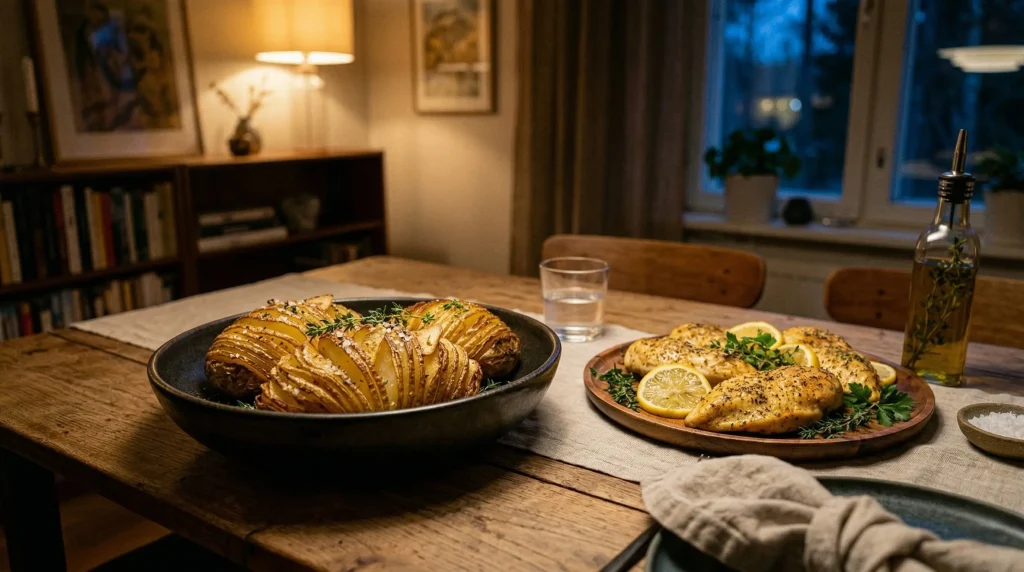
For a more everyday pairing, a simple lemon pepper chicken breast is a brilliant match, its bright, citrusy crust playing off the rich, buttery potato layers in a way that feels both effortless and considered. They’re equally wonderful alongside a slow-roasted leg of lamb, a thick-cut ribeye finished with a herb butter, or a honey-glazed pork tenderloin with mustard. For a Scandinavian-leaning dinner, try them with warm-smoked salmon — or better yet, a Finnish loimulohi, that glorious flame-roasted salmon slow-cooked against an alder plank — finished with either a sharp horseradish sauce or a bright, fresh lemon cream on the side.
The potato holds its own in very good company.
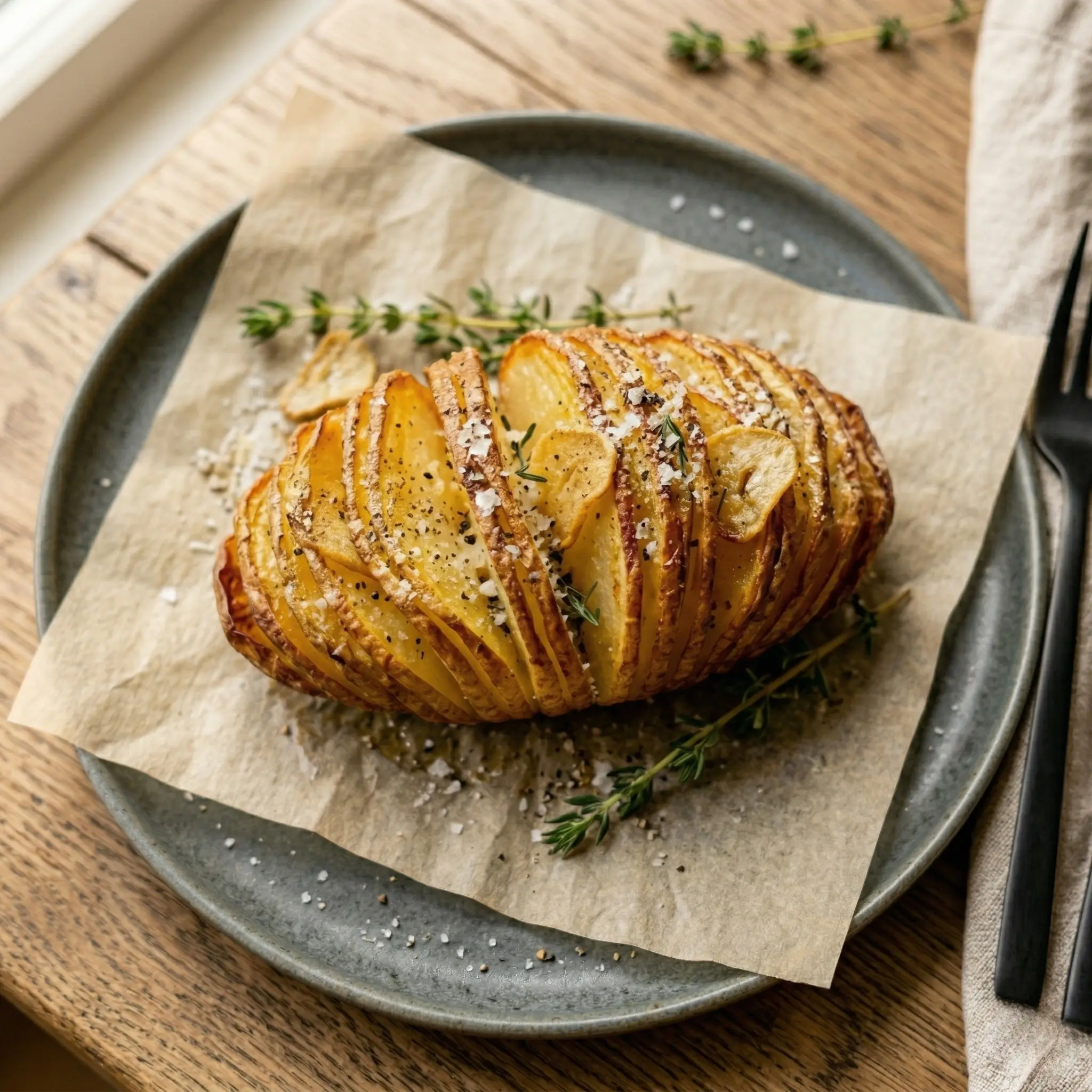
Crispy Hasselback Potatoes / Accordion Potatoes
Ingredients
Method
- Preheat your oven to 425°F (220°C). Line a baking dish or sheet pan with parchment paper.
- Place one potato on a cutting board between two wooden chopsticks or spoon handles. Slice crosswise at ⅛-inch (3mm) intervals, letting the chopsticks stop your knife before cutting through. Repeat with all potatoes.
- In a small bowl, whisk together the melted butter and olive oil. Season with salt and pepper.
- Place the potatoes cut-side up in the prepared baking dish. Brush generously with half the butter-oil mixture, working it down into the slices.
- Roast for 30 minutes. Remove from the oven and brush again with the remaining butter-oil mixture. Use a fork or your fingers to gently fan the slices open a little further.
- Tuck thin garlic slices and small thyme sprigs down between the potato fans. Return to the oven.
- Roast for another 20–25 minutes, until the edges are deeply golden and crispy and the centers are tender when pierced with a knife.
- If using cheese, scatter it over the potatoes in the final 10–15 minutes of cooking.
- Remove from oven and rest for 5 minutes. Finish with an extra pinch of flaky sea salt and serve immediately.
Notes
- Russet potatoes can be substituted for Yukon Gold — they yield a fluffier interior.
- Dried thyme works in a pinch; use ½ tsp in the butter-oil mix instead of fresh sprigs.
- Leftovers reheat well in a 400°F (200°C) oven for 10 minutes.
FAQ & Troubleshooting
It happens to everyone at least once. Next time, use chopsticks or wooden spoon handles as cutting guides — they physically stop the knife. If you do cut a slice off, just press it back; it’ll roast just fine.
A few things could be at play. Make sure the oven is fully preheated before the potatoes go in. Pat your potatoes completely dry before slicing — any surface moisture creates steam instead of crispiness. Also check that the potatoes aren’t crowded in the pan; give them room to roast, not steam.
Add garlic in the second half of roasting, not from the start. Thin garlic slices tucked in around the 30-minute mark will turn sweet and golden rather than bitter and dark.
You can slice the potatoes up to a few hours ahead and keep them in cold water to prevent browning. Dry them very thoroughly before roasting, as soaking adds extra moisture you’ll need to drive off.
Yes! Yukon Gold and Russet are the best choices. Avoid very waxy potatoes like fingerlings or red potatoes — their dense texture doesn’t fan open as beautifully and they take longer to cook through.
Absolutely. Swap the butter for more olive oil, or use a good vegan butter. The potatoes will still crisp up beautifully.
You can, but it’s worth knowing what you’re getting. Pre-grated Parmesan — especially the shelf-stable kind in a green shaker — often contains anti-caking agents like cellulose that prevent it from melting smoothly. It also tends to be drier and less flavorful. For a weeknight side dish, it’ll do the job. For a dinner party showstopper, buy a small wedge and grate it yourself. The difference is genuinely noticeable.
“Parmesan” is a broad, unprotected term used for hard, aged cheeses made in the style of the Italian original — produced anywhere in the world. Parmigiano Reggiano is the real deal: a PDO (Protected Designation of Origin) cheese made exclusively in specific regions of northern Italy, under strict traditional methods. It’s nuttier, more complex, and noticeably more savory. For roasted potatoes, either works — but Parmigiano Reggiano brings a depth of flavor that makes the dish taste genuinely special.
It does, and it’s a lovely thing to think about. Parmigiano Reggiano is aged for a minimum of 12 months, but the most common grades you’ll find are 24-month (sweeter, milkier, excellent for melting into hot food) and 36-month (drier, more granular, intensely savory with crunchy tyrosine crystals).
For Hasselback potatoes, a 24-month is ideal — it melts beautifully into the layers and caramelizes without turning grainy. Save the 36-month for your cheese board, where its complexity can really shine.
Both are wonderful finishing salts, and either will elevate this dish well beyond a standard table salt finish. Maldon, from the Essex coast of England, has large, distinctive pyramid-shaped flakes with a clean, mild flavor and a satisfying crunch. Fleur de Sel — traditionally harvested by hand from French salt marshes, most famously in Guérande — is finer, slightly moist, and carries a subtle mineral complexity that is genuinely extraordinary on roasted vegetables.
For Hasselback potatoes specifically, Fleur de Sel is the more elegant choice, its delicate flavor melting gently into the warm butter and crispy edges. Maldon gives you more drama and crunch. Honestly? Keep both in the pantry. You’ll find a reason to use them.
Absolutely — and this is where you can have a lot of fun. Thyme is the classic Nordic choice, earthy and quietly elegant, but it’s far from the only option. Rosemary is bold and aromatic; tuck small sprigs between the fans and it perfumes the whole oven in the most wonderful way. Fresh sage crisps up beautifully in the butter and turns almost nutty — a particularly good match if you’re serving these alongside roast pork or chicken.
Dill, that most Scandinavian of herbs, works surprisingly well too, though add it after roasting rather than during, as heat kills its delicate flavor. A light scatter of fresh dill over the finished potatoes is both pretty and delicious. For something a little bolder, try a pinch of smoked paprika stirred into the butter-oil mixture — it won’t replace the herbs, but it adds a gentle warmth and a gorgeous deep color to the crispy edges. Mix and match freely. The Hasselback potato is a generous canvas.
Yes — accordion potatoes and Hasselback potatoes are the same dish. The name “accordion potatoes” comes from the way the thin slices fan out during roasting, resembling the folds of an accordion. The original name, Hasselbackspotatis, comes from Hasselbacken, the Stockholm restaurant where the technique was first served in the 1950s. “Accordion potatoes” is simply the nickname the dish picked up as it spread beyond Sweden.