
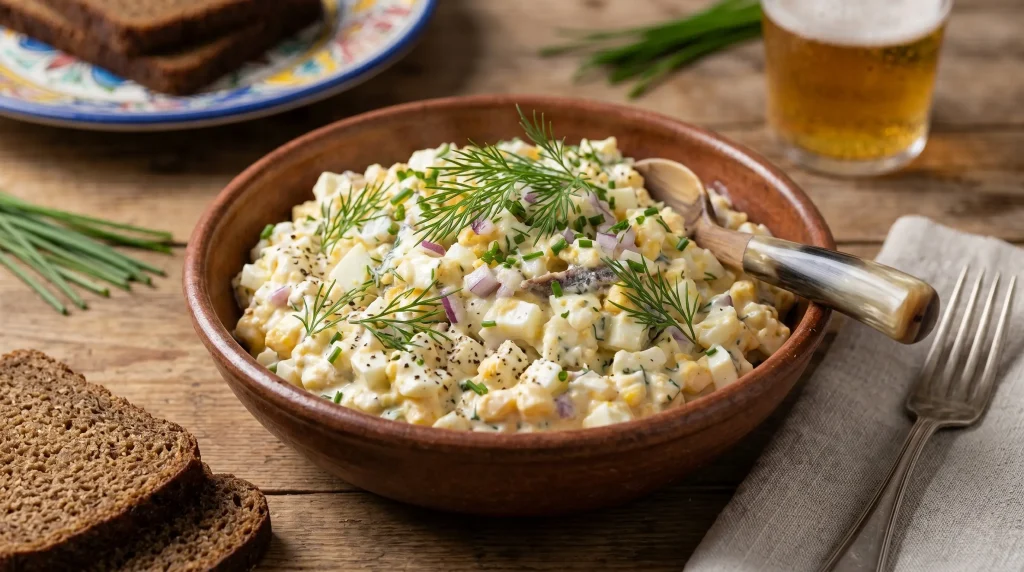
Some dishes earn their reputation quietly. Gubbröra (goob-RÖR-ah) is one of them. It shows up reliably on every Swedish Easter table, every Midsummer spread, and every respectable Christmas buffet — yet it never needs to announce itself. It just sits there, creamy and golden, smelling faintly of dill and something beautifully briny, waiting for someone to reach for the crispbread.
The name translates roughly as “old man’s mix,” and yes, that is exactly as charming as it sounds. According to Swedish culinary legend, the name evokes a vivid image: old men lurking hopefully near the smörgåsbord, eyes locked on the salty, schnapps-friendly bites. It has been a fixture of Swedish social life since at least the 1920s, when it was popularized as a late-night snack after an evening of drinking. It paired with cold lager and a shot of akvavit then, and it still does today.
This is a five-ingredient dish that rewards a little technique and punishes exactly one mistake — using the wrong fish. More on that in a moment.
What Is Gubbröra, Exactly?
Gubbröra is a creamy, cold Swedish salad built from hard-boiled eggs, spice-cured sprats (ansjovis), red onion, fresh dill, and chives — bound together with crème fraîche or a crème fraîche-and-mayonnaise blend. It is served cold, typically on crispbread or dark rye bread, and it is one of those dishes that is simultaneously humble and deeply craveable.
It is not a fancy dish. It is not trying to be. Think of it as the Nordic answer to egg salad — except with a secret weapon of sweet, spiced, umami-rich cured fish stirred through every bite. It belongs to the proud Swedish tradition of husmanskost, which translates as “traditional home cooking” and means, in practice, simple ingredients treated with great respect.
The Anchovy Question (Important!)
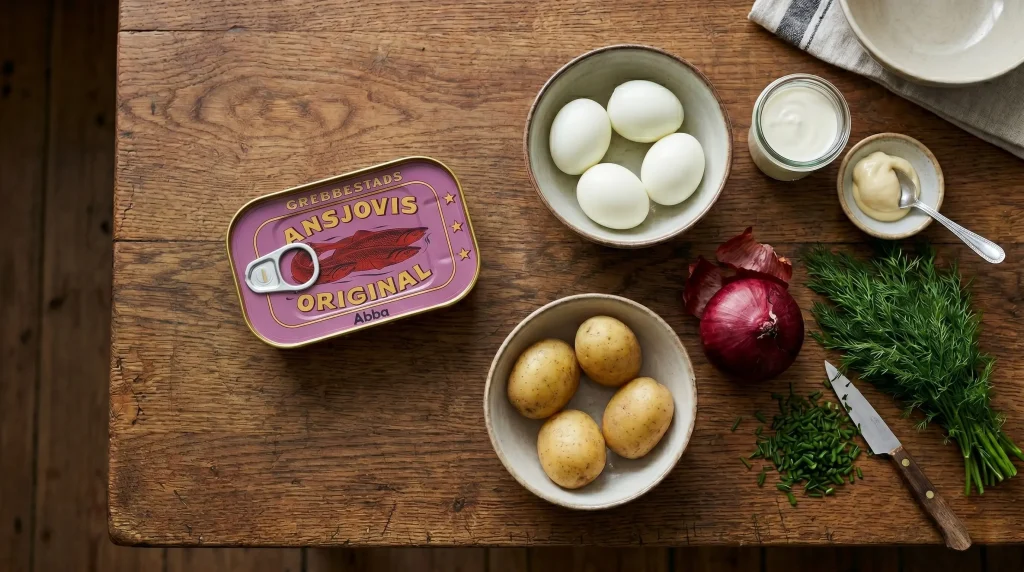
Here is where things get interesting — and where many first attempts go sideways. The key ingredient is Swedish ansjovis, and it is emphatically not the same as the Mediterranean anchovy sitting in oil in your pantry right now.
Swedish ansjovis is actually made from sprats (Sprattus sprattus), a small relative of the herring. They are cured in a brine of salt, sugar, cinnamon, cloves, ginger, and allspice — a warm, aromatic, gently sweet profile that is nothing like a salty Italian anchovy. If you substitute Mediterranean anchovies in this recipe, the result will be intensely, almost unpleasantly salty, and will taste nothing like the Swedish original.
Look for Swedish-style sprats or the brand Grebbestads Ansjovis at Scandinavian specialty stores or IKEA’s food section. Save one tablespoon of the brine from the tin; it is the secret depth charge of this recipe
Technique Tips for a Perfect Gubbröra
Great gubbröra is about texture as much as flavor. Follow these tips closely.
- The potatoes (if using): Pull them off the heat when a small, firm core remains. Residual heat finishes the cooking. Fully soft potatoes turn mushy when mixed.
- The onion: Add the red onion just before serving. Raw onion left in crème fraîche for more than a few hours can develop a sharp, unpleasant edge.
- Make it ahead: Mix everything except the onion the day before. The flavors meld and deepen beautifully overnight.
- The brine: Stir in a tablespoon of the sprat canning liquid. It adds aromatic depth without extra bulk.
- Chop, don’t mash: Dice the eggs into rough cubes rather than mashing them. You want distinct pieces of egg and fish in every bite.
How to Serve Gubbröra
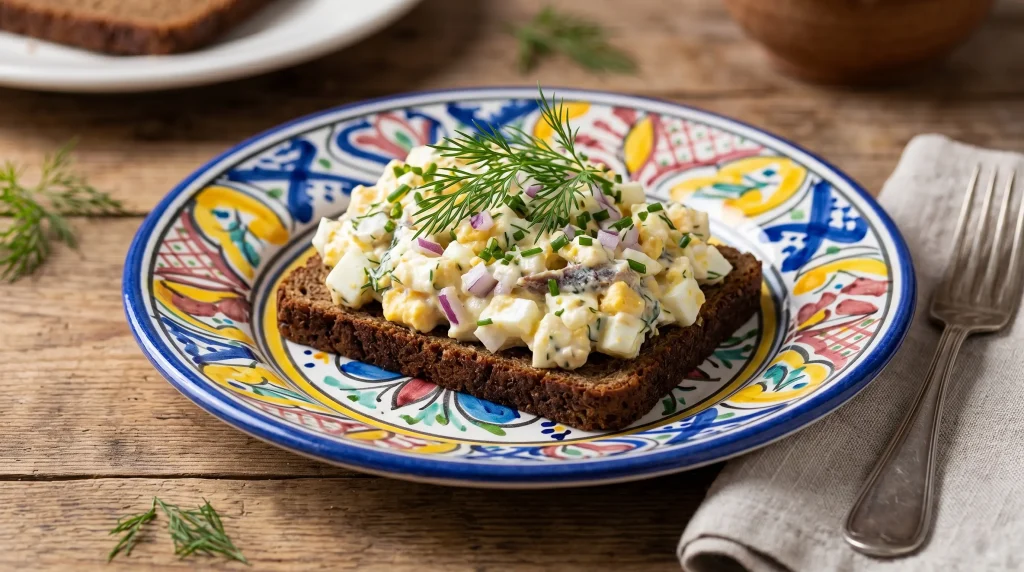
Gubbröra belongs on a smörgåsbord — that glorious Swedish buffet tradition built on variety, communal eating, and at least one dish that makes everyone hover hopefully near the table. Serve it on slices of dark rye bread for a sturdy, malty base, or pile it onto knäckebröd (crispbread) for a satisfying crunch.
For a full Nordic spread, pair it with laxröra (smoked salmon spread) and skagenröra (shrimp salad) alongside pickled herring and boiled new potatoes. The three röror together make a beautiful, color-contrasted trio of Nordic spreads that works equally well for a brunch table or a festive holiday buffet.
Traditionally, gubbröra is served at Easter, Midsummer, and Christmas — but honestly, any gathering is improved by its presence.
Gubbröra Recipe
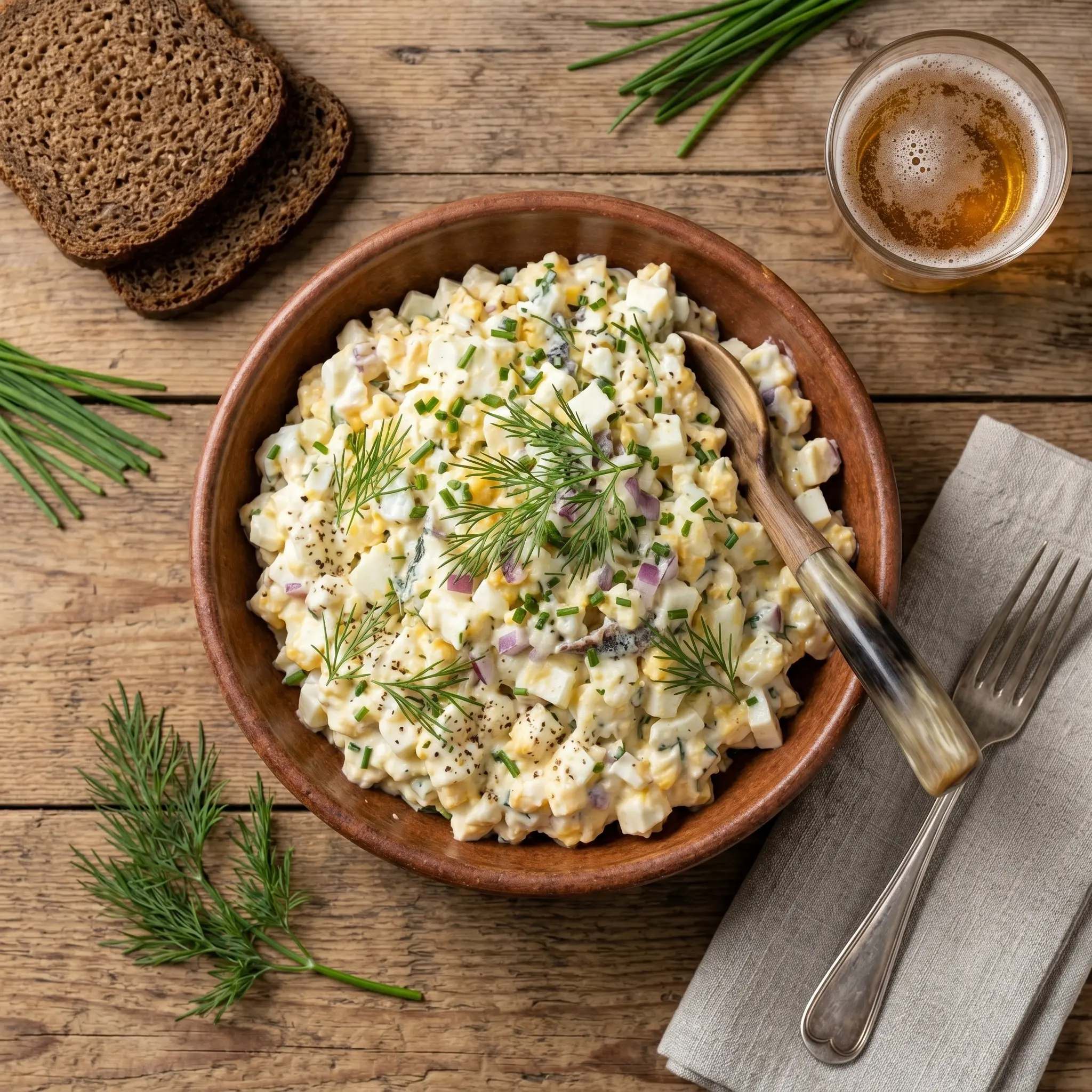
Gubbröra (Swedish Egg & Sprat Salad)
Ingredients
Method
- Boil the eggs. Place eggs in cold water. Bring to a boil, then cook for 9 minutes. Transfer immediately to ice water for 5 minutes. Peel and set aside.
- Cook the potatoes (if using). Boil in salted water until almost tender — about 12–15 minutes. A small firm core should remain. Drain and cool completely. Dice into ½-inch (1 cm) cubes.
- Dice the eggs. Chop the peeled eggs into rough ½-inch (1 cm) pieces. Do not mash them.
- Chop the sprats. Roughly chop the drained sprat fillets into small pieces.
- Make the dressing. In a large bowl, combine the crème fraîche, mayonnaise, and the reserved tablespoon of sprat brine. Stir until smooth.
- Combine. Fold in the eggs, sprats, potatoes, dill, and chives gently. Season with white pepper and a pinch of salt — the sprats are already salty, so taste before adding more.
- Chill. Cover and refrigerate for at least 30 minutes. For best results, chill overnight.
- Add onion just before serving. Stir in the diced red onion immediately before serving to keep it crisp and fresh-tasting.
- Serve on dark rye bread, crispbread, or as part of a smörgåsbord.
Notes
- Luxury upgrade: Stir in a tablespoon of lumpfish roe or vendace roe (löjrom) just before serving for a salty, elegant finish.
- Storage: Keep refrigerated (without the onion) for up to 2 days.
FAQ & Troubleshooting
Almost certainly a fish issue. Mediterranean anchovies in oil are packed in heavy salt and have a completely different flavor profile from Swedish spice-cured sprats. They will make the dish aggressively salty. Use Swedish ansjovis (cured sprats) only.
Absolutely. Many traditional Swedish recipes skip them entirely. The potato version is more of a filling salad; without them, gubbröra is lighter and more intensely flavored — better as a crispbread topping.
The onion was likely mixed in too early. Raw onion develops an unpleasant, slightly acrid edge after sitting in a creamy dressing for more than a few hours. Always add the onion right before serving.
Yes, though crème fraîche has a slightly higher fat content and milder acidity. Full-fat sour cream is the closest substitute. Avoid low-fat versions — the texture will be watery.
Make it up to 24 hours in advance — without the onion. The overnight rest actually improves the flavor significantly. Add the onion and give it a gentle stir just before the guests arrive.