
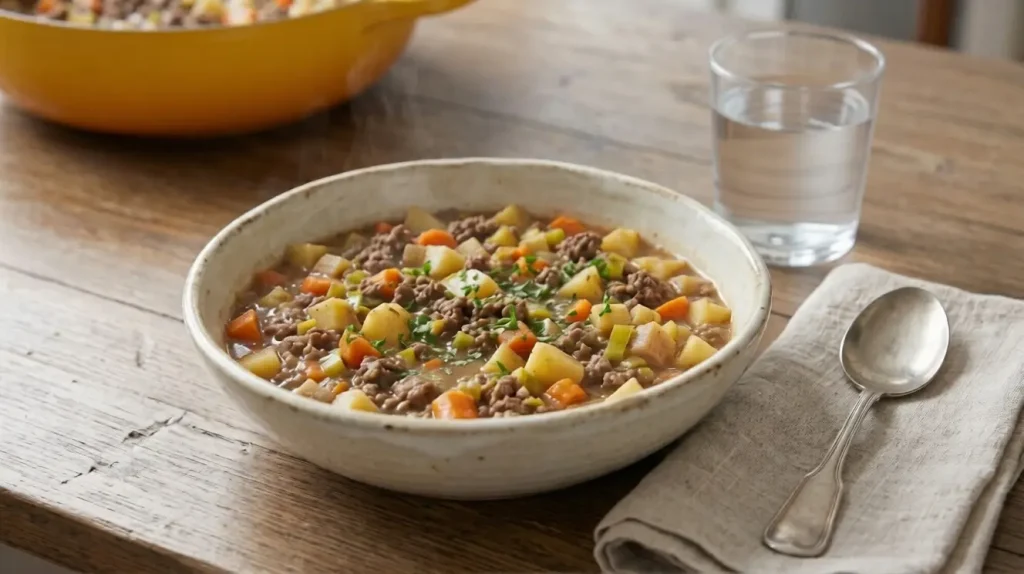
Some recipes carry a little guilt in their name—and jukselapskaus wears it proudly. In Norwegian, jukse means “to cheat.” Classic lapskaus is a slow-simmered sailor’s stew of beef chunks, root vegetables, and patience. Jukse lapskaus throws patience out the window and swaps in ground beef. The result? A deeply savory, stick-to-your-ribs one-pan dinner ready in 30 minutes. Nobody needs to know.
Lapskaus itself has centuries of history along the Nordic coast. Sailors and dockhands lived on it—cheap, filling, warming against the grey Atlantic wind. The traditional version is wonderful, but on a Tuesday night after a long day, “wonderful” needs to be fast. Enter the cheat. Jukselapskaus keeps all the soul of the original: soft potatoes, sweet carrots, savory broth, and that quiet, deeply comforting flavor that only Scandinavian home cooking seems to nail.
This is genuinely weeknight cooking. One pan, 30 minutes, ground beef from the fridge, and a handful of root vegetables. Scandinavian grandmothers everywhere are probably shaking their heads—but they’d clean their plates.
What Is Lapskaus, Exactly?
Lapskaus is Norway’s answer to the humble stew. It’s a close cousin to the Danish labskovs and has distant relatives in the British “lobscouse” (yes, that’s where Liverpool got the nickname “Scousers”). The dish traveled with sailors across Northern Europe, picking up local flavors along the way.
The Norwegian version traditionally uses salt beef or slow-braised beef with potatoes, rutabaga, and carrots cooked until everything melts together into a thick, gravy-like stew. It’s hearty, minimalist, and deeply satisfying—the kind of food that makes a cold evening feel survivable.
Jukselapskaus modernizes the concept. Ground beef cooks in minutes and absorbs the broth beautifully. The vegetables soften into the sauce, giving you that classic creamy-thick texture without hours on the stove. It’s not cutting corners—it’s smart cooking with the same Nordic spirit.
What You’ll Need
The ingredient list is refreshingly short. Root vegetables are the backbone here, so don’t skip them or substitute with anything too exotic—the stew gets its character from that classic Nordic trio of potato, carrot, and onion.
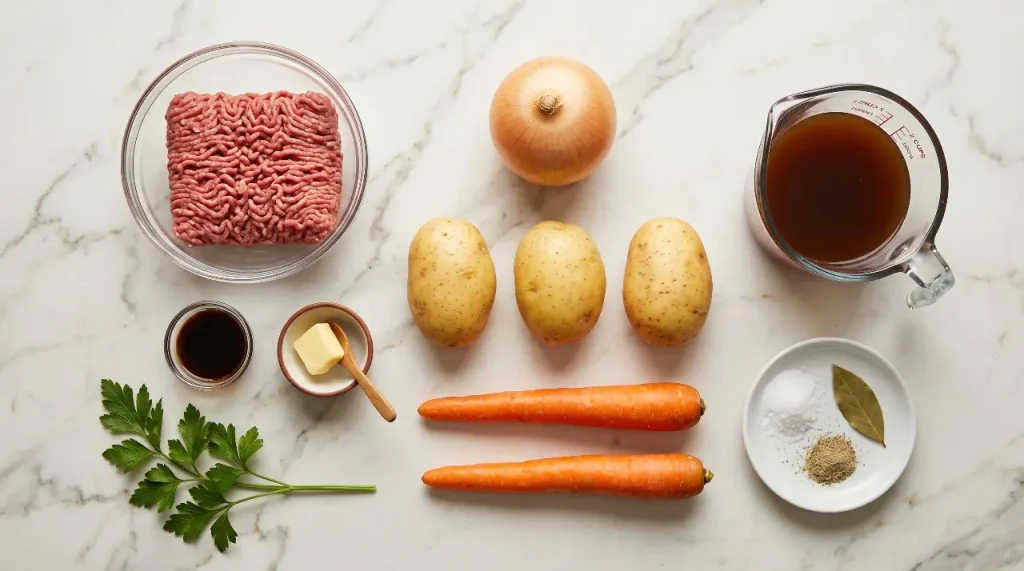
- Ground beef — 80/20 works best for flavor; leaner cuts can make the stew feel dry
- Potatoes — waxy varieties like Yukon Gold hold their shape better than russets
- Carrots — sweet, everyday carrots; nothing fancy needed
- Onion — yellow or white, diced
- Beef broth — the flavor foundation; use a good-quality broth
- Worcestershire sauce — a small but mighty addition that deepens the savory notes
- Bay leaf, thyme, white pepper — the classic Nordic spice trio; keep it simple
- Butter — for finishing; this is Scandinavia, butter is non-negotiable
How to Make Jukselapskaus
The whole process happens in one pan. Start with a wide, heavy-bottomed pot or deep skillet—something with enough room to stir without launching potatoes across the kitchen.
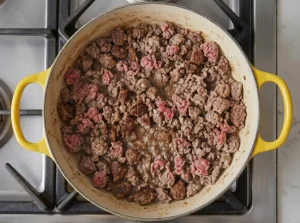
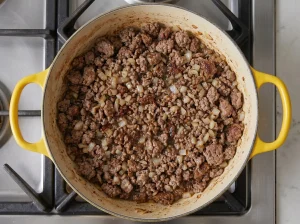
Brown the ground beef first over medium-high heat. Don’t rush this step; a proper sear builds the flavor base for everything that follows. Drain excess fat if needed, but leave a little—it carries flavor. Add your onion and cook until soft and translucent, about 3 minutes.
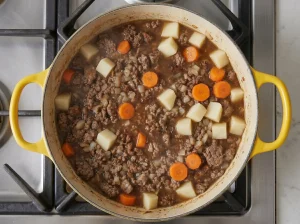
Next, in go the potatoes and carrots. Pour over the beef broth, add your seasonings, and bring everything to a lively simmer. Cover and cook for 15–18 minutes, until the potatoes are completely tender. The magic happens here: as the potatoes soften, they release starch that naturally thickens the broth into a silky, gravy-like sauce.
Finish with a knob of butter stirred in at the end. It sounds simple—because it is. Taste, adjust seasoning, and serve straight from the pan. A little fresh parsley on top makes it look like you actually tried.
Tips for the Best Jukselapskaus
- Cut vegetables evenly. Aim for roughly ¾-inch pieces so everything cooks at the same rate.
- Don’t overcook the potatoes. You want them tender, not dissolving. Check at 15 minutes.
- Season at the end. Broth saltiness varies widely, so always taste before adding extra salt.
- Add a splash of cream for a richer, more indulgent version—totally optional but lovely on cold nights.
- Leftovers thicken overnight. Add a splash of broth when reheating.
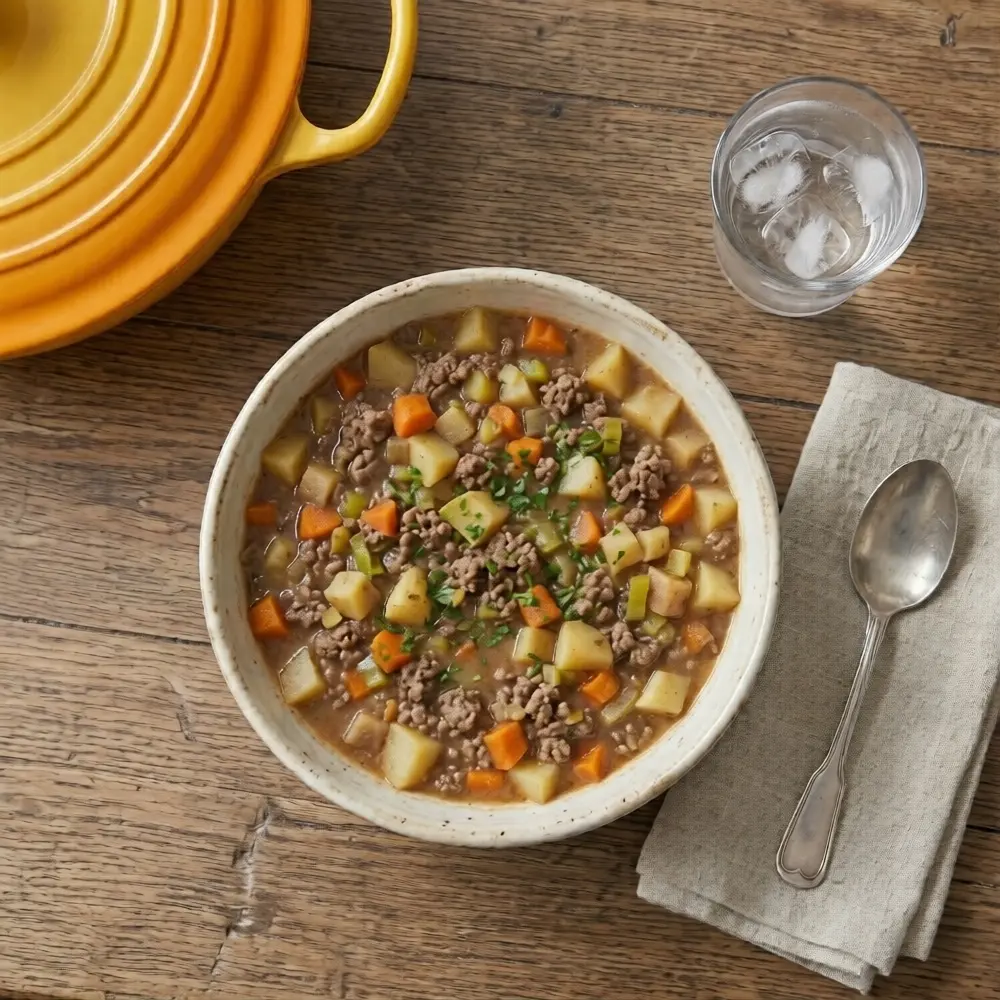
Jukselapskaus (Norwegian Cheater’s Stew)
Ingredients
Method
- Brown the beef. Heat a large, heavy-bottomed pot or deep skillet over medium-high heat. Add ground beef and cook, breaking it up with a spoon, until browned and cooked through, about 5–6 minutes. Drain excess fat, leaving about 1 tablespoon in the pan.
- Soften the onion. Reduce heat to medium. Add the diced onion and cook, stirring occasionally, until soft and translucent, about 3 minutes.
- Add vegetables and broth. Add the potato cubes and carrot rounds to the pot. Pour in the beef broth and Worcestershire sauce. Add the bay leaf, thyme, and white pepper. Stir to combine.
- Simmer. Bring the stew to a gentle boil, then reduce heat to medium-low. Cover and simmer for 15–18 minutes, or until the potatoes are completely tender when pierced with a fork.
- Finish and season. Remove the bay leaf. Stir in the butter until melted. Taste and adjust salt as needed.
- Serve. Ladle into bowls and top with fresh parsley if desired. Serve with crusty bread or flatbread on the side.
Notes
- Thicker stew: Mash a few potato pieces against the side of the pot to thicken naturally, or stir in 1 tsp of cornstarch mixed with 1 tbsp cold water.
- Richer version: Stir in ¼ cup / 60 ml heavy cream in the last 2 minutes of cooking.
- Storage: Keeps in the fridge for up to 3 days. Stew thickens as it sits—add a splash of broth when reheating.
- Freezer-friendly: Freeze for up to 2 months. Thaw overnight in the fridge before reheating.
FAQ & Troubleshooting
Yes! Ground pork is actually quite traditional in some Norwegian households. Turkey works too, though the flavor will be lighter. If using turkey, consider adding an extra splash of Worcestershire to compensate.
Simmer uncovered for an extra 5 minutes to reduce the liquid. Alternatively, mash a few potato cubes directly into the broth—this is the classic Nordic trick for thickening without adding flour or cornstarch.
Probably, yes. Yukon Golds are forgiving, but they will eventually dissolve. If this happens, don’t panic—stir gently and you’ll end up with a thicker, more porridge-like stew that is still completely delicious. Next time, check at the 15-minute mark.
Absolutely. Diced rutabaga (swede) is very traditional and adds a subtle sweetness. Parsnips work beautifully too. Avoid watery vegetables like zucchini—they’ll make the broth thin and bland.
They’re close cousins. All three share the same sailor-stew ancestry. Norwegian lapskaus tends to be thicker and uses less salt than the Danish version, which traditionally uses heavily salted meat. The spirit is the same: honest, filling, unpretentious food.
Yes, and it often tastes better the next day. The flavors deepen overnight. Just store it in an airtight container in the fridge and add a little broth when reheating on the stove over medium-low heat.
Crusty bread is the classic choice—you need something to mop up the broth. Norwegian flatbread (lompe or knekkebrød) is traditional. A simple cucumber salad on the side adds a nice fresh contrast to the richness of the stew.
Jukselapskaus is proof that the best food doesn’t have to be complicated. It just has to be honest, warm, and made with a little Nordic common sense. Which, it turns out, includes knowing when to cheat.
It took a bit of searching to find the ground beef version of Lapskaus, which I was served while visiting Norway. Thanks for posting. It’s quick and easy and the perfect comfort food.