
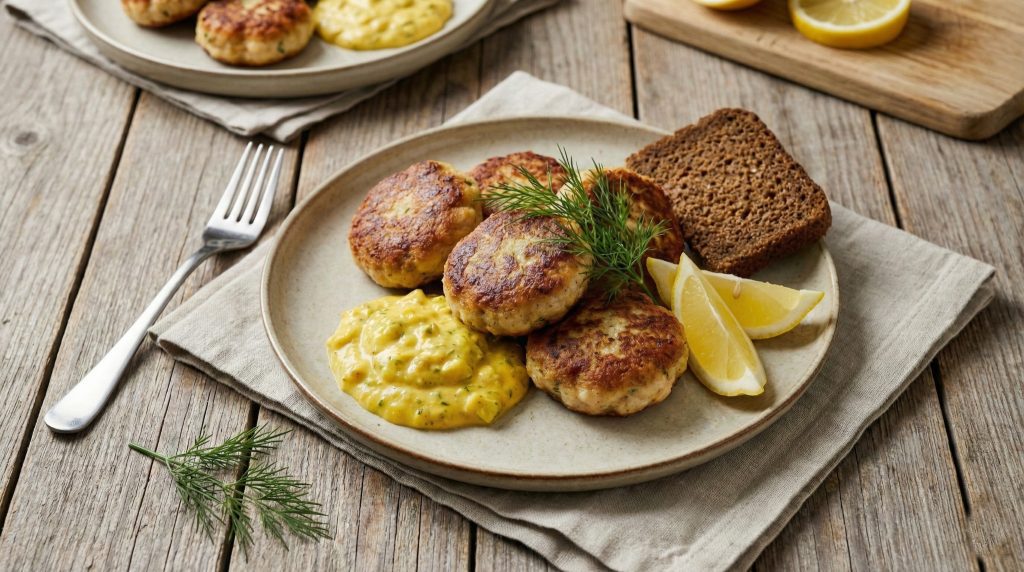
Don’t throw away those cod trimmings! In Scandinavia, we turn humble scraps into a luxury meal. Imagine a plate of golden-brown fiskefrikadeller sizzling in butter, ready for their favorite Danish companions: a generous spoonful of remoulade, a thick slice of seeded rugbrød, and a tangle of quick-pickled cucumbers for that bright, crunchy snap. These cozy fish cakes are simple home-cooking at its best—mostly white fish with a little onion, parsley, egg, and cream—pan-fried until crisp at the edges and tender in the middle. A hint of lemon lifts the flavor, and suddenly your kitchen smells like the sea in the gentlest possible way.
Fiskefrikadeller (literally “fish frikadeller”) nod to the classic Danish meatball (“frikadelle”), but the emphasis is on fish, not filler. In fact, Danish cooks take pride in keeping these cakes mostly fish – just enough flour or breadcrumbs and egg to bind it, plus maybe a splash of milk or cream to keep them moist. The result is a patty that’s all about the sea: light, subtly seasoned, and never heavy.
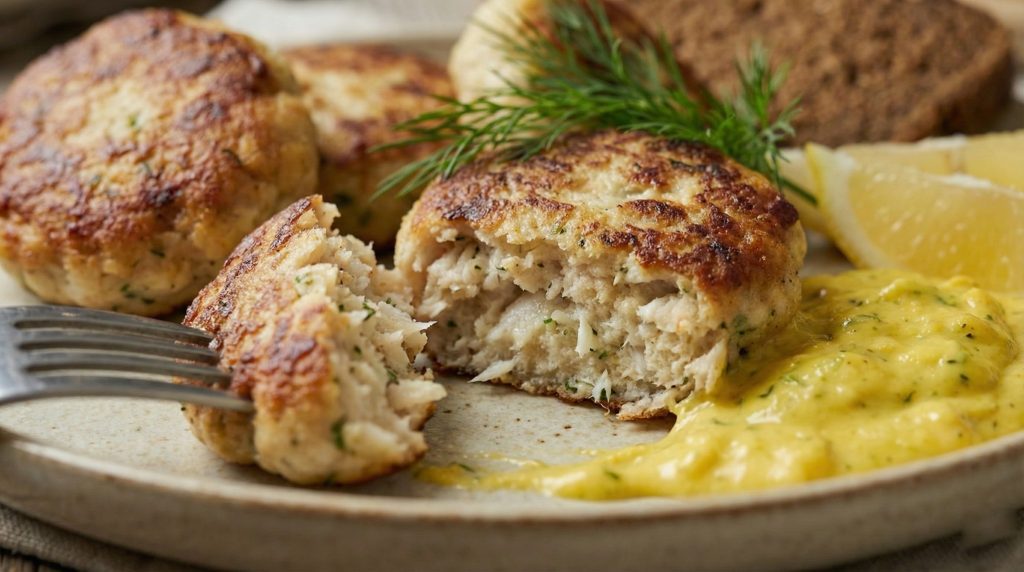
They’re decidedly Danish, yet also reminiscent of crab cakes or other fish patties you might know – but ours are simpler, herbier, and best enjoyed straight from the pan.
When you make them at home, the method is pleasingly easy. Roughly chop or pulse your fish, mix in the binding ingredients and seasonings, and chill the loose batter for a bit so it firms up (this helps when shaping). Then heat a skillet with butter (or a mix of butter and oil) and spoon out the mixture by the handful. Use wet hands to gently pat each into a round patty or flat oval – rustic shapes are fine. In the pan they start slightly translucent and end up an opaque white inside.
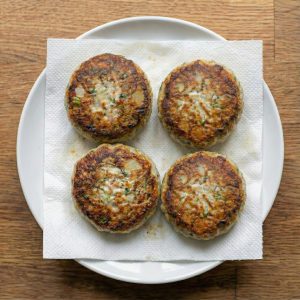
The sizzle of these fish cakes in the pan is pure kitchen poetry. As they fry, their edges turn golden-brown and crisp, giving way to a soft, flaky center. The contrast of crunchy crust and tender fish is irresistible. Don’t worry if the first ones fall apart or look uneven – these are rustic family fare. Each piece should take just a few minutes per side to cook through. Once done, you’ll have a skillet of warm, herby cakes that practically beg to be plated.
Fiskefrikadeller serving Suggestions: Beyond the Plate
Traditionally in Denmark, fiskefrikadeller are served with tangy condiments and hearty sides—and there’s a smart reason for that: the acidity isn’t just garnish, it cuts through the richness of butter-frying and refreshes your palate between bites. A dollop of Danish remoulade is almost mandatory, that cool, pickle-bright sauce that makes the golden patties taste even juicier (it’s the classic mustard-and-pickle mayo Danes spoon onto fried fish).
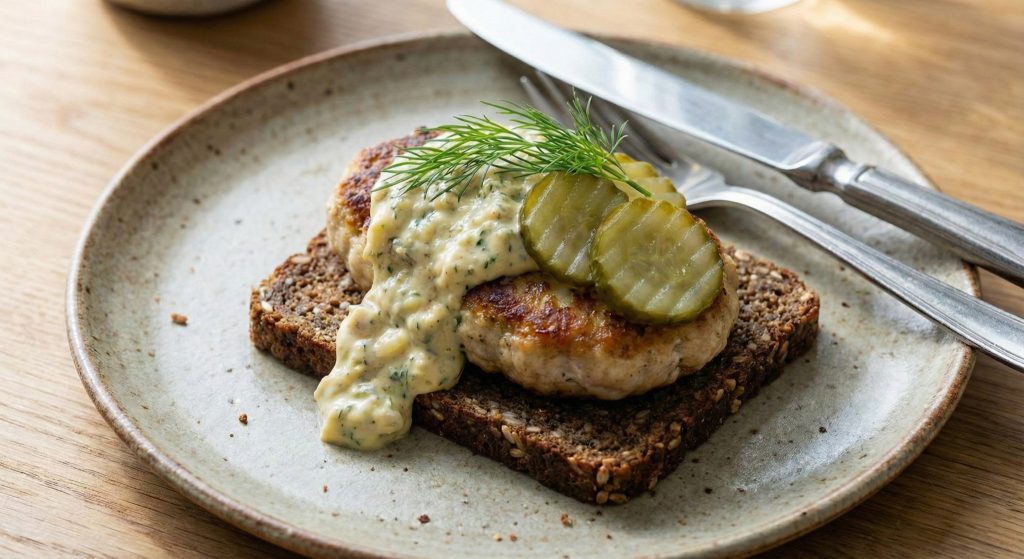
Equally at home beside the fish cakes is rugbrød, Denmark’s dense, seed-studded rye—what I like to call “a brick of health wrapped in crust.” Thick, buttered slices are sturdy enough to hold a fish cake and soak up extra sauce, so try serving them open-faced with a swipe of remoulade and a squeeze of lemon or a few quick-pickled cucumbers.
And here’s the bonus for busy weeks: make a little extra, because cold leftovers are fantastic on rugbrød the next day—dinner tonight, lunch tomorrow, no extra effort. These fish cakes are fast and family-friendly; kids and grown-ups both love how mild and juicy they are, and once the fars has had its quick chill, they cook in about 15 minutes.
They’re perfect for a cozy weeknight dinner or a simple lunch—and after one batch, you’ll understand why fiskefrikadeller have been a Danish favorite for generations.
How to Make Authentic Fiskefrikadeller (Pro Tip)
A common failure point for home cooks making fish cakes is a rubbery, dense texture—and knowing how to prevent it is what separates “pretty good” from truly authentic, bouncy Danish fiskefrikadeller. The key is temperature control: keep everything ice cold (fish, cream/milk, eggs, even the bowl), because the friction of a food processor can warm the fars and break the emulsion, leading to heavy, tight cakes; a simple pro tip is to chill the processor bowl and blade for 10–15 minutes before mixing.
Next, be intentional about starch selection: regular flour can make the mixture (fars) feel heavier and more breaded, while potato starch—a Scandinavian pantry staple—creates a lighter, springier texture and is naturally gluten-free friendly, which is a small tweak with a big payoff.
Finally, don’t skip the resting phase: let the fars sit in the fridge for 30 minutes before frying so the starch can fully hydrate and the flavors can meld; this not only improves the final texture, it also helps the cakes hold together in the pan, saving you from the classic “fish cake collapse” scenario.
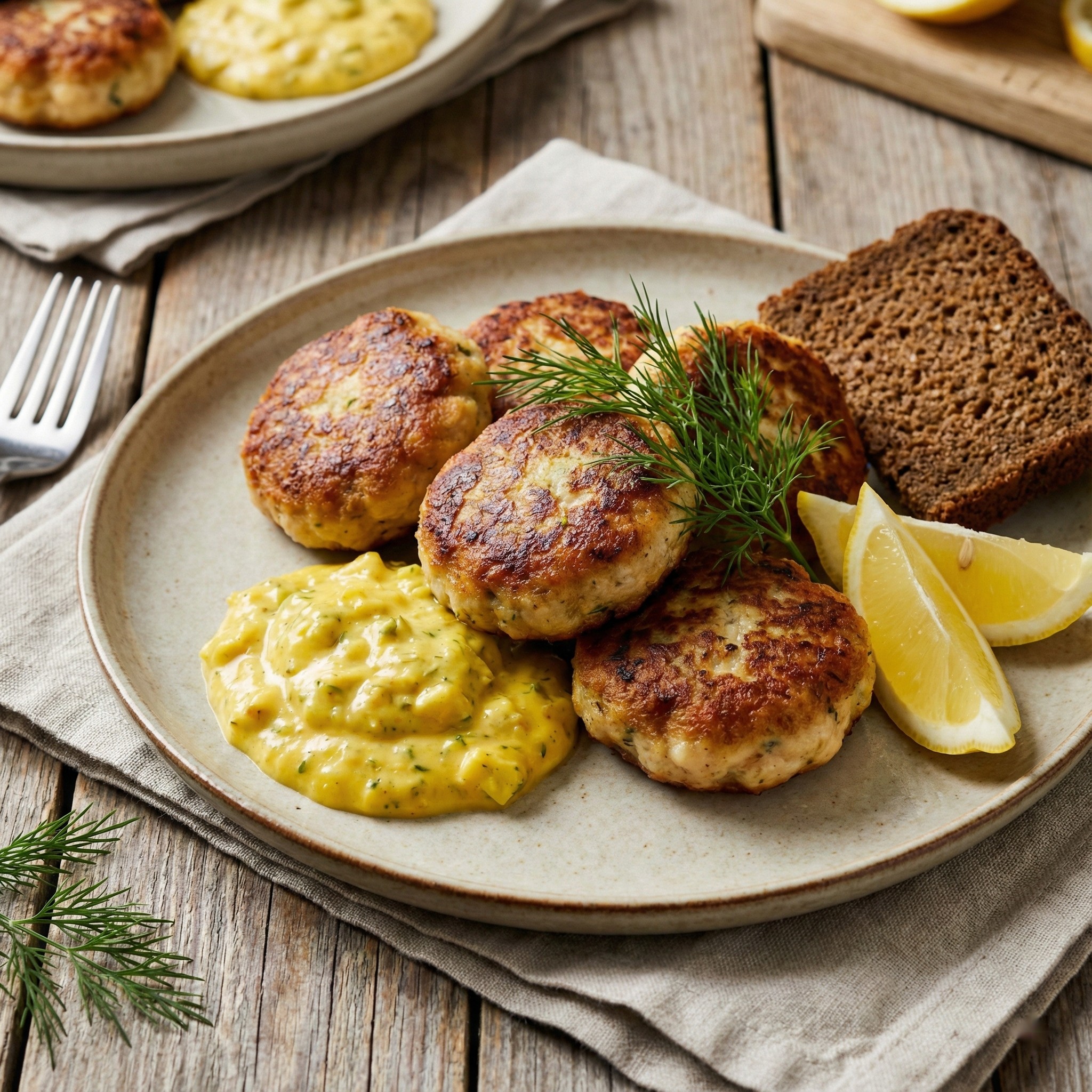

Danish Fish Cakes (Fiskefrikadeller)
Ingredients
Method
- Chop or pulse the fish into small chunks.
- In a bowl, combine the fish, salt, pepper, onion, parsley, lemon zest, eggs, milk (or cream), and flour.
- Stir until well mixed. The batter will be quite soft.
- Cover and chill for 20–30 minutes – this helps it firm up so the patties hold their shape.
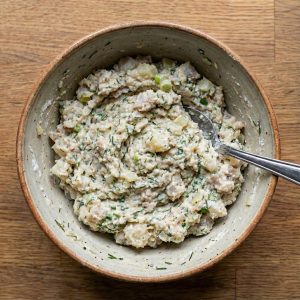
- Place a frying pan over medium heat with about 1 tablespoon butter and 1 tablespoon oil (to prevent burning).
- Wet your hands (or use a spoon) and scoop a heaped tablespoon of the mixture.
- Gently shape it into a roundish patty (about 2–3 cm / 1 inch thick).
- Place directly into the hot pan. Repeat, adding cakes but not overcrowding the pan.
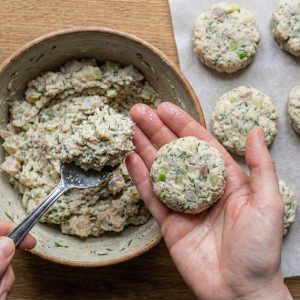
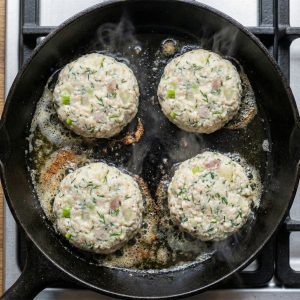
- Fry each fish cake about 4–5 minutes on the first side, until the underside is golden. Carefully flip and fry another 3–4 minutes, until both sides are golden brown and the fish is cooked through.
- (If the cakes are thick, you can also cover the pan briefly or finish in a low oven to ensure they cook inside without burning.)
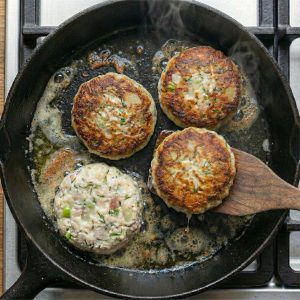
- Remove the cooked cakes to a plate lined with paper towels to drain any excess oil. Fry any remaining mixture in batches.
- Dish out the fiskefrikadeller hot, ideally with lemon wedges and a side of our Danish Remoulade sauce for authenticity. The creamy remoulade cuts the richness of the fish perfectly
Notes
Pro-Tip: The Ultimate Next-Day Lunch
Don’t let leftover fiskefrikadeller go to waste! In Denmark, these are a staple for a traditional Smørrebrød (open-faced sandwich).- The Base: Start with a thick slice of buttered rugbrød (dense Danish rye bread).
- The Star: Slice your cold fish cakes in half and layer them across the bread.
- The Toppings: Add a generous dollop of Danish remoulade sauce and a few slices of quick-pickled cucumbers (agurkesalat).
- The Finish: Garnish with a sprig of fresh dill or a pinch of cracked black pepper for a café-style lunch at home.
FAQ
Fish cakes usually fall apart for two reasons: not enough binding and a mixture that’s too warm. Fiskefrikadeller rely on a gentle “set” created by protein + starch + egg. The egg helps hold the mixture together as it cooks, and a small amount of flour, breadcrumbs, or potato starch stabilizes it without turning the cakes dense.
Temperature matters just as much as ingredients. Keep the mixture cold before frying (and return it to the fridge between batches if your kitchen is warm). Cold batter helps maintain the emulsion—that cohesive, slightly springy structure that forms when fish proteins, egg, and liquid are mixed properly. If the mixture warms up, it loosens, weeps moisture, and the cakes can crumble when flipped.
If you want an especially reliable binder without heaviness, use potato starch. It’s a classic Scandinavian trick: it firms the mixture and improves crisping, while keeping the interior light and tender.
Yes—fiskefrikadeller freeze very well, which makes them ideal for meal prep. For best results, cook them fully first, then cool completely. Freeze in a single layer on a tray until firm, then transfer to a freezer bag or airtight container (this prevents them from sticking together).
To reheat and re-crisp:
Oven method (best): Heat oven to 150°C / 300°F. Place fish cakes on a baking sheet and warm for 12–18 minutes (from frozen) until hot throughout.
For extra crisp edges, finish with 2–3 minutes at 200°C / 400°F, keeping a close eye so they don’t dry out.
Avoid microwaving if possible—it reheats the center but tends to soften the crust.
Cod is the classic choice for fiskefrikadeller: mild flavor, clean texture, and it binds beautifully. That said, you can absolutely use other lean white fish such as haddock or pollock with excellent results. The key is choosing fish that’s not too watery and not too fatty—lean fish gives you that traditional Danish bite: tender, cohesive, and light.
Try to avoid using oily fish like mackerel as the base. It changes both flavor and texture, making the cakes heavier and richer than intended—and it can interfere with the delicate, “bouncy” structure you want in classic fiskefrikadeller.
It can be—very easily. If you use potato starch (a traditional Danish technique) instead of flour or regular breadcrumbs, the fish cakes are naturally gluten-free, as long as any breadcrumbs are substituted with gluten-free breadcrumbs or omitted entirely.
Potato starch is especially helpful here because it binds and tightens the mixture without making the cakes heavy, so you don’t feel like you’re choosing between “gluten-free” and “good texture.” It’s a win-win—light interior, crisp edges, and a wider audience can enjoy the recipe.