
From a bold 2004 manifesto to a global movement — how the Nordic countries reinvented their food identity.
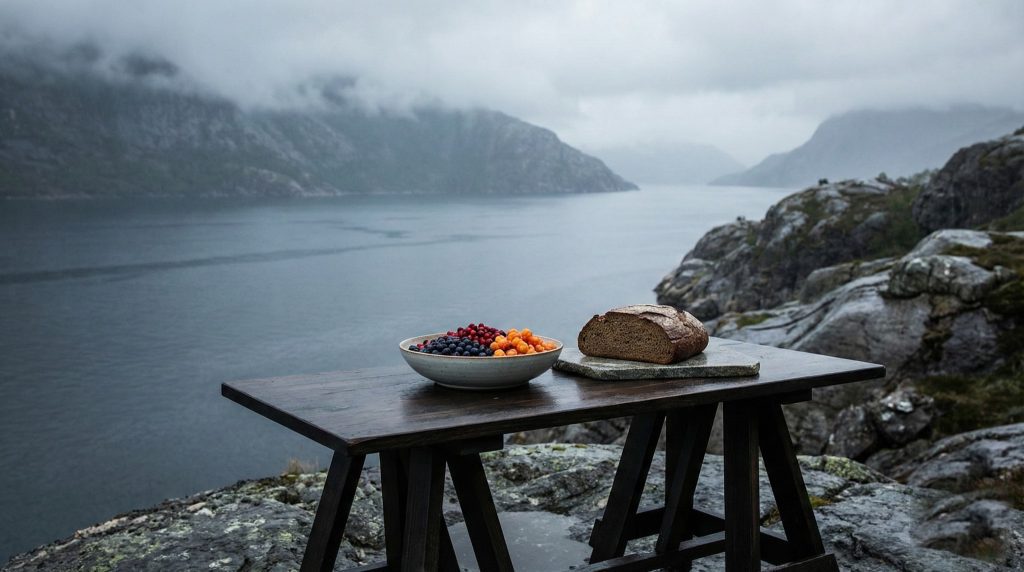
The Spark: A Manifesto for the North (2004)
Twenty years ago, the Nordic countries were famous for many things — stunning fjords, Viking lore, cozy hygge — but fine dining wasn’t one of them. Restaurant menus across Denmark, Sweden, and Norway leaned heavily on meat-and-potato staples or imitations of French haute cuisine. There was little pride in local ingredients; gourmet chefs looked abroad for inspiration.
That changed in November 2004, when chefs and food professionals from across the Nordic region gathered in Copenhagen with a bold ambition: to reinvent their food identity from the ground up.
The result was the New Nordic Kitchen Manifesto — a 10-point declaration that read like a recipe for revolution. Its core principles:
- Cook with seasonal ingredients that follow the natural flow of Nordic weather
- Celebrate what grows in the region’s unique climate, landscapes, and waters
- Revive traditional preservation methods — pickling, smoking, fermenting — with creative modern twists
- Prioritize local and sustainable produce over imported delicacies
- Commit to animal welfare and regional cooperation, from farm to fork
- Develop “new applications of traditional Nordic food products” — rethink rye bread, lingonberries, dried fish
This blend of old and new is the heart of New Nordic Cuisine: look inward to Nordic terroir and heritage, while thinking forward about health, environment, and flavor. It was more than a menu philosophy — by 2005, Nordic ministers had launched a formal “New Nordic Food” program, investing millions to back the vision. The culinary renaissance of the North had officially begun.
The Engine of Change: Noma
If the manifesto was the theory, Noma was the proof.
Co-founded in 2003 by chef René Redzepi and food entrepreneur Claus Meyer, Noma was named after “nordisk mad” — Danish for “Nordic food.” In an era when upscale European restaurants revolved around truffles and foie gras, Noma boldly served sea buckthorn berries, foraged herbs, and obscure shellfish from cold Nordic waters. Redzepi’s own friends and closest allies mockingly called it a “blubber restaurant.” Redzepi soon changed their minds.
Noma’s approach was radical yet rooted in simplicity. Menus featured:
- Wild mushrooms on a bed of moss
- Razor clams in parsley jelly
- Beef tartare speckled with ants for acidity
- Bone marrow custard garnished with beach roses
- Deep-fried reindeer moss from Arctic tundra
Every plate told a story of place — often served on rustic pottery with rocks, leaves, or twigs to accent the natural mood. Redzepi and his team foraged beaches, forests, and farms daily, embodying the local-sourcing ethos absolutely.
The world took notice. Noma earned three Michelin stars and was crowned World’s Best Restaurant four times during the 2010s, then a fifth time in 2021. Copenhagen transformed from a culinary backwater into a global foodie destination — and an entire generation of Nordic chefs trained in Noma’s kitchen before fanning out to start their own projects.
Noma Today: A New Chapter
In January 2023, Redzepi announced Noma would close its regular restaurant service by end of 2024, citing the “unsustainable” economics and human cost of running an ultra-high-end kitchen. But Noma hasn’t disappeared — it has evolved:
- A pop-up in Kyoto (late 2024)
- A residency in Los Angeles (Spring 2026)
- A members-only season in Copenhagen (late 2026), accessible only to “Taste Buds” subscribers
- An ongoing focus on food innovation, fermentation research, and the Noma Projects product line
The model — nightly dinners for the public — is giving way to intellectual property, product lines, and episodic high-ticket experiences. It may well be the future of fine dining at this level.
Philosophy on the Plate
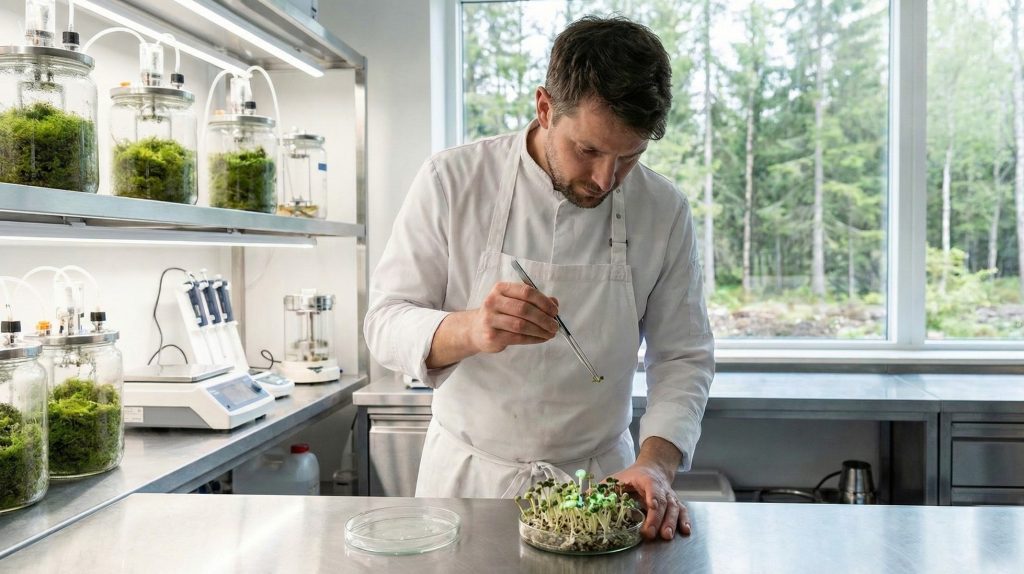
At its core, New Nordic Cuisine is less about extravagant recipes and more about a philosophy of food connected to nature. Three ideas run through everything:
1. Sustainability as a foundation
Restaurants source from nearby farms and coastlines, support organic producers, and often grow their own herbs. At the acclaimed Danish restaurant Relæ, over 90% of ingredients were organic, many from its own farm. Vegetables and grains aren’t sides — they’re stars.
2. Foraging as an art form
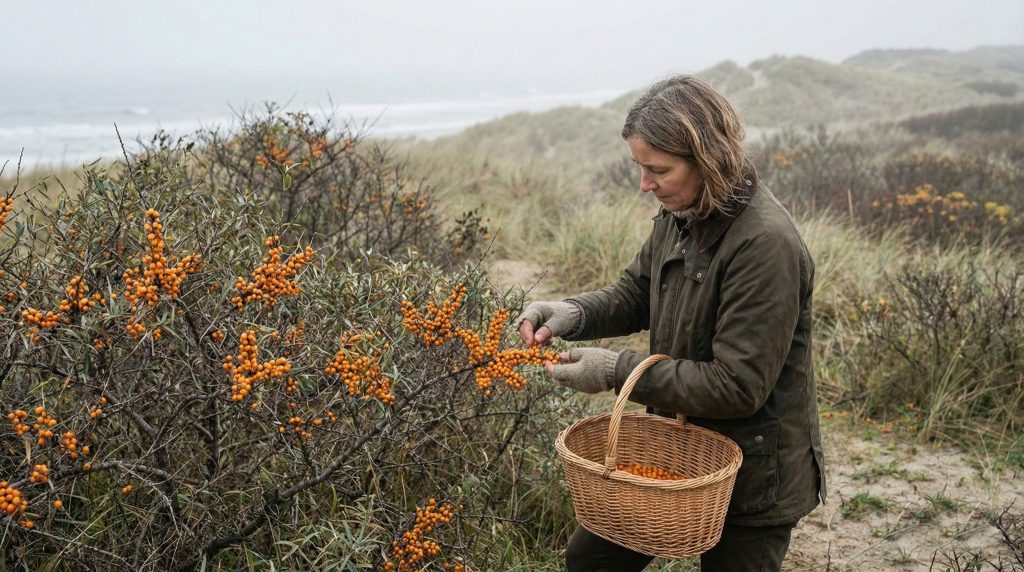
Chefs venture out to gather wild berries, spruce tips, seaweed, nettles, and mushrooms, bringing the untamed Nordic landscape directly into the kitchen. Menus shift constantly with the seasons. In Finland, this has even sparked a wave of “foraging tourism,” with locals picking berries and mushrooms as a weekend ritual.
3. Reviving old preservation techniques
Nordic winters historically demanded food be saved — pickled, dried, cured, fermented. New Nordic chefs have made these methods central again. A dab of fermented barley sauce deepens umami; tangy pickled vegetables brighten a plate; traditional smoked fish is reimagined rather than forgotten.
The social impact has been just as significant. By championing local producers, the movement forged stronger ties between chefs, farmers, fishers, and foragers. Nordic ingredients once considered rustic or boring were reframed as treasures. That pride has trickled down to home cooking, farmers’ markets, and even school cafeterias — one spinoff manifesto declared that every Nordic child has the right to learn to cook wholesome local food.
Beyond Copenhagen: A Regional Renaissance
New Nordic didn’t stay in Copenhagen. Across Scandinavia, a new generation of restaurants carried the torch, each with its own local identity:
| Restaurant | Country | Notable for |
|---|---|---|
| Geranium | Denmark | Three Michelin stars; multi-time World’s Best |
| Kadeau | Denmark | Flavors of Baltic island Bornholm |
| Fäviken (closed 2019) | Sweden | Remote subarctic foraging; foraged pine shoots |
| Oaxen Krog (closed 2022) | Sweden | On-site farm produce; 28-year run |
| Maaemo | Norway | Hyper-local tasting menus; name means “Mother Earth” |
| Olo | Finland | Seasonal Finnish ingredients, tasting journey format |
| Juuri (closed 2020) | Finland | Invented “Sapas” — Suomi-style small plates |
| Koks (temporarily closed) | Faroe Islands, later Greenland | Two Michelin stars; fermented lamb and sea urchins |
| PAZ | Faroe Islands | Opened April 2025 by former Koks chef; two Michelin stars by June 2025 |
The ripple effect extended far beyond Scandinavia. Kitchens from London to Los Angeles, Bangkok to São Paulo adopted elements of the New Nordic aesthetic — local sourcing, minimalist plating, bold seasonal vegetables at center stage. Gastronomic tourism to the Nordic region surged; food lovers began making pilgrimages to Copenhagen, Stockholm, and even the Faroe Islands. In Sweden, food tourism revenue jumped 50% in just a few years, with over half of international visitors citing cuisine as a draw.
The “New” Normal
For all its acclaim, New Nordic Cuisine comes with a dose of self-aware humor. Ask a Scandinavian what they had for dinner, and it probably wasn’t foamed elderflower soup or reindeer moss crackers. Swedish meatballs, Danish smørrebrød, Finnish salmon soup — everyday classics are very much alive and loved.
New Nordic has always been about balance. It took the humble ingredients of grandmothers’ kitchens and wild landscapes and treated them with an artist’s touch. It didn’t replace traditional Nordic cooking — it shone a spotlight on it in a way that made the world sit up and pay attention.
As the Danish saying goes: “ude er godt, men hjemme bedst” — out is good, but home is best.
The Road Ahead: New Nordic in 2026
Twenty-two years after the Manifesto, New Nordic has ceased to be “new” — it has become the establishment. The movement is now entering an institutional phase, and the questions driving it have shifted:
- How does foraging remain viable as climates change?
- Can fine dining uphold New Nordic ideals while treating staff ethically?
- What does “local sourcing” mean in a world of regenerative agriculture?
On the plate, expect continued evolution: unfamiliar seaweeds, wild plants, heirloom grains, and plant-forward menus reflecting both global trends and Nordic love of nature. Tomorrow’s talked-about Nordic dish might be a composition of coastal seaweed, fermented root vegetables, and cultivated mushrooms — tradition, technology, and terroir in a single bowl.
Most importantly, what was once avant-garde is becoming everyday culture. In Copenhagen, former Noma chefs now teach fermentation to hobby cooks. Across Scandinavia, casual eateries and cafeterias are embracing local sourcing. The line between restaurant food and home food is blurring — and that cozy Scandinavian tradition of enjoying simple, honest ingredients is being kept alive for the next generation.
Legacy: The End of “New,” The Beginning of “Nordic”
The movement’s legacy isn’t defined by any single restaurant. It’s defined by a permanent shift in the global culinary consciousness — the proof that “terroir” isn’t the exclusive property of the Mediterranean, but a universal idea that belongs just as much to the sub-Arctic.
New Nordic showed the world that humble ingredients, handled with skill and conviction, can be extraordinary. The “New” may have faded. The Nordic spirit endures.