
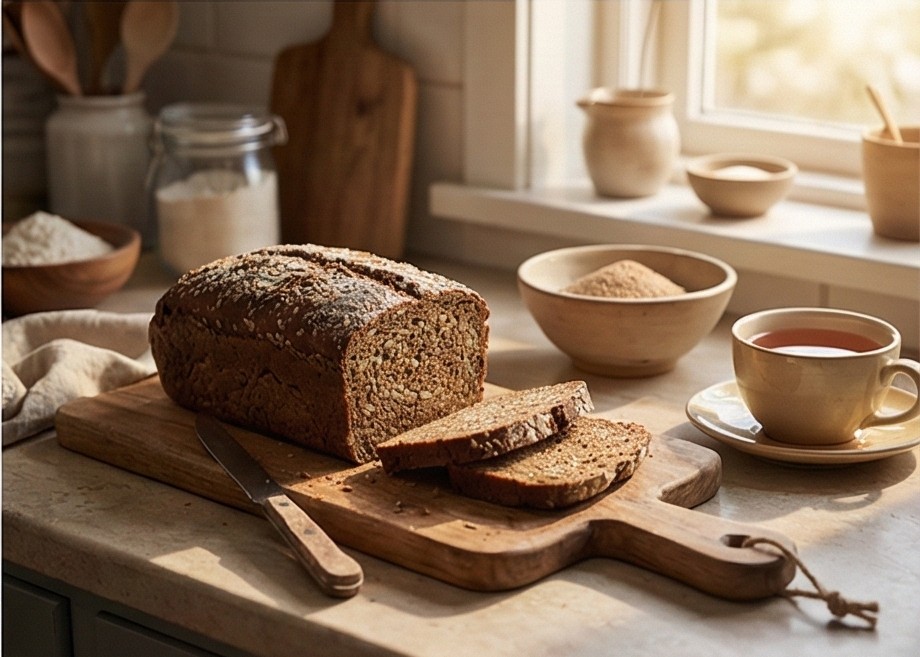
Imagine a slice of bread so sturdy and rich, it feels like a brick of health wrapped in crust. That’s Danish rugbrød for you: a dense, dark rye loaf shot through with cracked rye kernels and seeds, emanating a faintly toasty, earthy aroma. This is not your soft sandwich bread – rugbrød is chewy and substantial, deeply caramel-brown from a bit of molasses or malt, and threaded with sunflower and flax seeds (plus any whole rye groats you like) for extra crunch. It’s the kind of bread that makes a bowl of soup or a schmear of butter suddenly feel like a hug at breakfast. This hearty rye bread is the perfect base for a classic Danish smørrebrød lunch. For the full experience, try it topped with our traditional Frikadeller or fresh Fiskefrikadeller.
Rugbrød was born of practicality as much as flavor. In older times it was the everyday bread of Danish kitchens, hearty enough to last through long winter weeks. The loaf is rectangular (often baked in a tall pan), usually about 4–5″ high, and just heavy enough that one slice can stand up on its own. Its structure is all about fiber and heft: traditionally made with mostly whole-rye flour (occasionally 1/3 of the dough is cracked rye), little or no fat, and just a touch of barley malt syrup or dark sugar for depth. That means rugbrød is rich in fiber and protein, but not sweet – the only sweetness comes from that hint of dark molasses, and sometimes a pinch of salt, in the dough. Long, slow fermentation (usually a sourdough starter) gives it a mild tang and tender moisture; in fact, industrial yeast usually isn’t acidic enough for true rugbrød, so sourdough is “almost always used” to get the chemistry right.
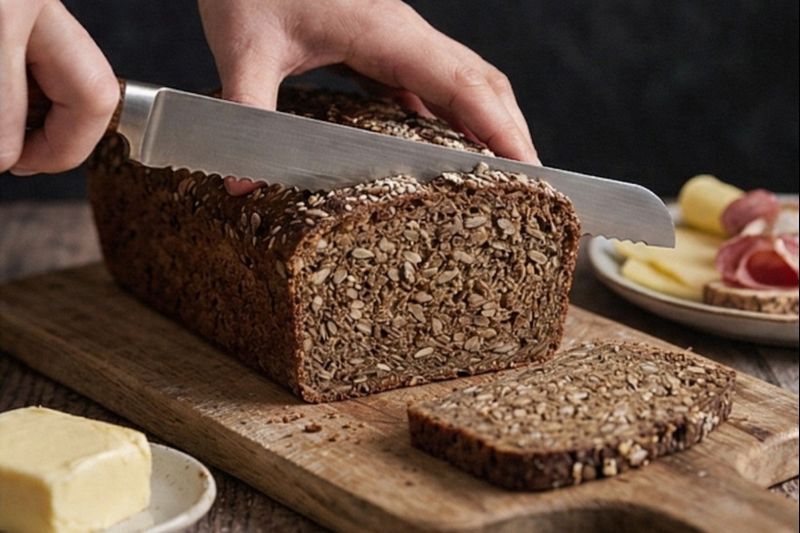
But don’t let the stern look fool you – rugbrød is a comforting loaf. It’s often called “the plate” of Danish lunches. In Denmark, rye bread literally is the lunch; slice off a piece, spread on butter (and maybe liver pâté or cheese), or top it high with smoked salmon, pickles, roast beef and remoulade – the classic open-faced smørrebrød sandwiches. (Note: we’ll save the full smørrebrød story for another post, but rugbrød’s role is simply to hold those skyscraping toppings with composure.) And after all that topping, nothing should go to waste – day-old rugbrød is perfect cut into cubes, tossed with oil and toasted into croutons for hearty soups and salads. It’s a thrifty tradition: stale rugbrød is just happy rugbrød!
If all of this has whetted your appetite, it’s easy to bake at home. Our recipe below uses familiar pantry staples (rye flour, a bit of wheat or bread flour for lift, instant yeast or sourdough starter, seeds, and molasses) and makes one large pullman-style loaf. You’ll see we give both metric and U.S. measures for convenience, and don’t worry if you don’t have rye chops – an all-grain hot cereal mix works as well for the seed “soaker.” Give it time (Danish rye likes a long rest and even improves overnight), then slice thick. Spread a bit of butter and you’ll taste why this bread still feels like home in a hundred Danish kitchens.
For a deeper look at rye breads across the Nordic countries – from Finnish ruisleipä to Swedish knäckebröd – check out our Rye Belt guide. But for now, let’s get baking with this cozy Danish rye loaf!
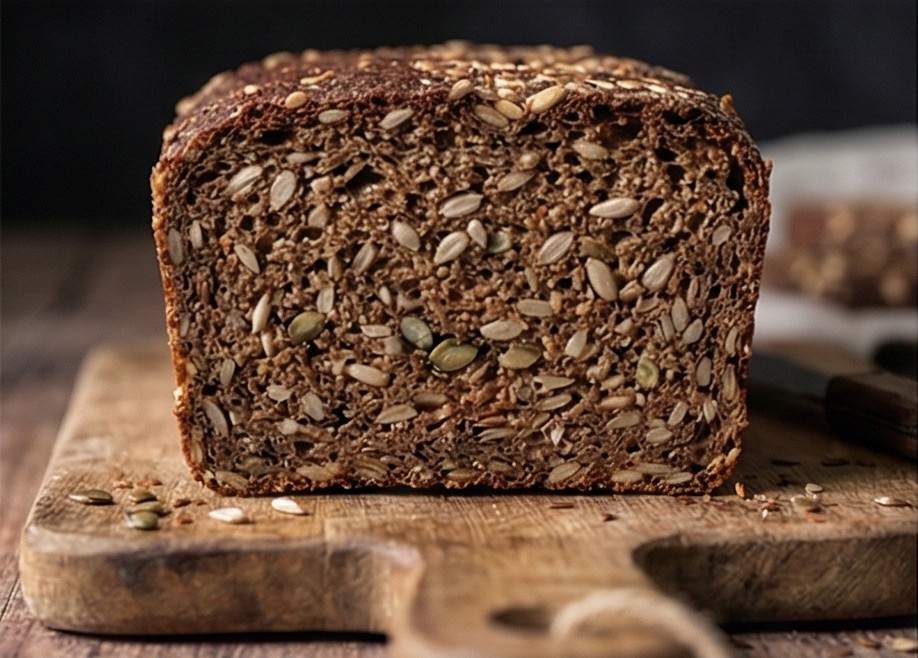

Danish Rye Bread (Rugbrød) – A Dense, Seed-Studded Danish Loaf
Ingredients
Method
- In a bowl, combine the 7-grain cereal, sunflower seeds, pumpkin seeds, flax seeds, and 2⅔ cups cold water.
- Stir, then cover and let it soak overnight (8–12 hours) at room temperature.
- The grains and seeds will plump up as they absorb the water.
- In a second large bowl, stir together the rye flour, bread flour, yeast, and 1½ cups cold water. The mixture will be very stiff and shaggy.
- Knead it briefly by hand (or with a dough hook) just until it comes together; it needn’t be smooth.
- Cover the bowl and let this dough rest overnight as well (8–12 hours at room temp). This long resting period (a kind of autolyse) helps the rye flour hydrate and develop a milder flavor.
- Butter or oil a 9×4 inch loaf pan (with lid if available). In the bowl with the dough, add the soaked grains and seeds with all their water. (There’s no draining – the extra liquid will be absorbed.)
- Add the salt and molasses
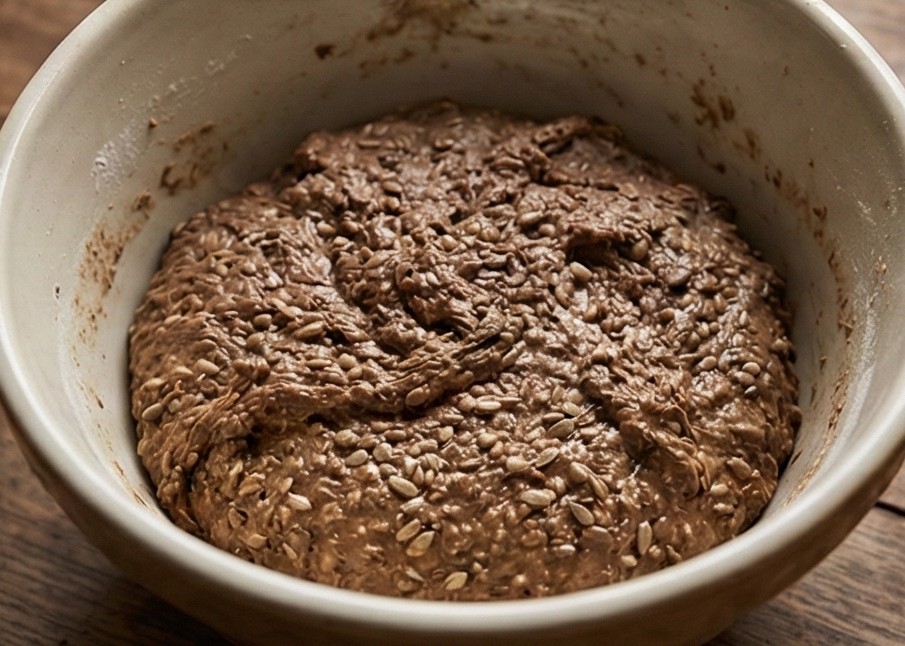
- Mix thoroughly with a sturdy spoon or paddle on low speed for 2–3 minutes, scraping down the sides. Then mix another 2–3 minutes on medium speed, until the mixture is cohesive.
- The dough will be very thick and sticky – almost like porridge.
- Transfer the dough into the prepared pan. Use a wet spatula or lightly floured hands to smooth the top. If using a lid, place it on the pan. Otherwise, tent the pan with lightly greased foil.
- Let the dough rise in a warm place until it puffs up slightly (about 1–2 hours; it should rise to about ½ inch below the rim). It won’t double like a wheat dough, but it should feel aerated.
- About 20 minutes before baking, preheat your oven to 260°C (500°F).
- Bake the covered loaf for 15 minutes at 260°C (500°F).
- Reduce oven to 175°C (350°F). Remove the lid or foil, and bake uncovered for another 50–60 minutes, until a skewer inserted into the center comes out clean and the internal temperature reaches about 98–100°C (210–212°F).
- (If you only have a 230°C/450°F-safe pan, start at 230°C/450°F and add a few extra minutes at that stage.) The crust will darken beautifully.
- This step is crucial. Immediately turn the loaf out onto a cooling rack (remove pan bottom if using Pullman).
- Let it cool uncovered on the rack for at least 4–6 hours, ideally overnight. During this time the crumb will finish cooking and set up (if you cut it too soon, the bread may seem gummy).
- Once fully cooled, slice the rugbrød into thick slices. It’s now ready for butter, cheese, or any favorite topping.
- For best flavor and texture, wait a day before eating – the gentle tang and moistness develop over time.