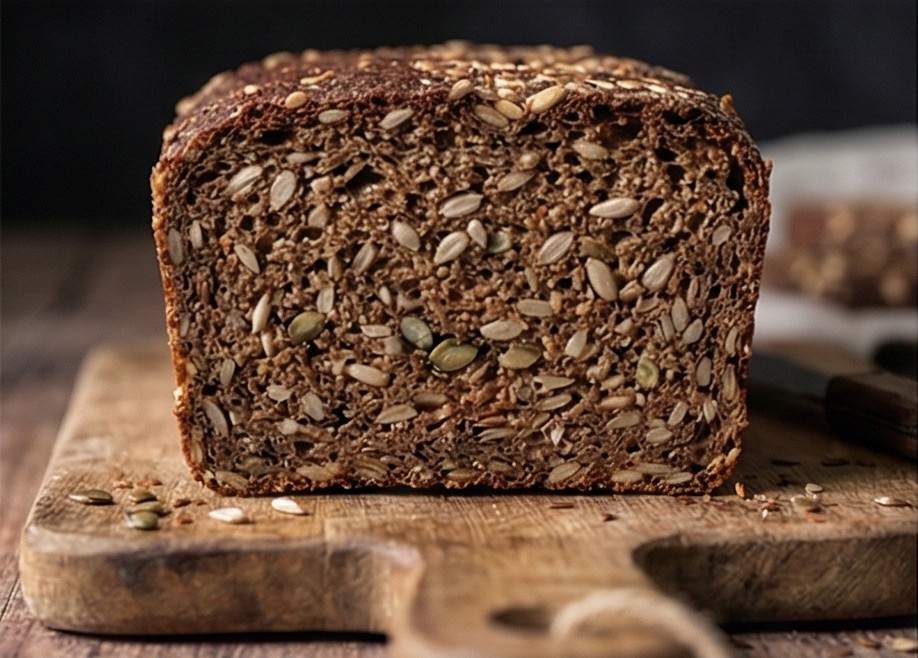
Ingredients
Method
Make the soaker (night before baking):
- In a bowl, combine the 7-grain cereal, sunflower seeds, pumpkin seeds, flax seeds, and 2⅔ cups cold water.
- Stir, then cover and let it soak overnight (8–12 hours) at room temperature.
- The grains and seeds will plump up as they absorb the water.
Pre-mix the dough (night before):
- In a second large bowl, stir together the rye flour, bread flour, yeast, and 1½ cups cold water. The mixture will be very stiff and shaggy.
- Knead it briefly by hand (or with a dough hook) just until it comes together; it needn’t be smooth.
- Cover the bowl and let this dough rest overnight as well (8–12 hours at room temp). This long resting period (a kind of autolyse) helps the rye flour hydrate and develop a milder flavor.
Combine soaker and dough (next morning):
- Butter or oil a 9×4 inch loaf pan (with lid if available). In the bowl with the dough, add the soaked grains and seeds with all their water. (There’s no draining – the extra liquid will be absorbed.)
- Add the salt and molasses
- Mix thoroughly with a sturdy spoon or paddle on low speed for 2–3 minutes, scraping down the sides. Then mix another 2–3 minutes on medium speed, until the mixture is cohesive.
- The dough will be very thick and sticky – almost like porridge.
First rise:
- Transfer the dough into the prepared pan. Use a wet spatula or lightly floured hands to smooth the top. If using a lid, place it on the pan. Otherwise, tent the pan with lightly greased foil.
- Let the dough rise in a warm place until it puffs up slightly (about 1–2 hours; it should rise to about ½ inch below the rim). It won’t double like a wheat dough, but it should feel aerated.
Bake the bread:
- About 20 minutes before baking, preheat your oven to 260°C (500°F).
- Bake the covered loaf for 15 minutes at 260°C (500°F).
- Reduce oven to 175°C (350°F). Remove the lid or foil, and bake uncovered for another 50–60 minutes, until a skewer inserted into the center comes out clean and the internal temperature reaches about 98–100°C (210–212°F).
- (If you only have a 230°C/450°F-safe pan, start at 230°C/450°F and add a few extra minutes at that stage.) The crust will darken beautifully.
Cool completely (patience!):
- This step is crucial. Immediately turn the loaf out onto a cooling rack (remove pan bottom if using Pullman).
- Let it cool uncovered on the rack for at least 4–6 hours, ideally overnight. During this time the crumb will finish cooking and set up (if you cut it too soon, the bread may seem gummy).
Slice and serve:
- Once fully cooled, slice the rugbrød into thick slices. It’s now ready for butter, cheese, or any favorite topping.
- For best flavor and texture, wait a day before eating – the gentle tang and moistness develop over time.
Notes
Rye chops vs 7-grain mix: Traditional Danish recipes call for rye chops (coarsely ground rye grain). These can be hard to find. A convenient substitute is a 7-grain hot cereal mix or any coarsely milled whole grains (as the ingredient list suggests). You can even use a bit of rolled rye or cracked wheat – just adjust the water if it looks dry.
Lift the lid: A metal lid traps steam in the first part of baking, which helps soften the seeds and crust. If you don’t have a pullman pan, covering with foil (or a slightly smaller pan) for the first 15 minutes mimics this.
Using sourdough: If you have an active rye sourdough starter, you can omit the instant yeast. Use about 150–200 g of starter (100% hydration), decrease the added water by the same amount, and allow longer fermentation (up to 3–4 hours for final rise).
Storage: Wrap the cooled loaf tightly in foil. It keeps at room temperature for 4–5 days (even better on day 2). You can also freeze slices for later – they toast beautifully straight from the freezer.