
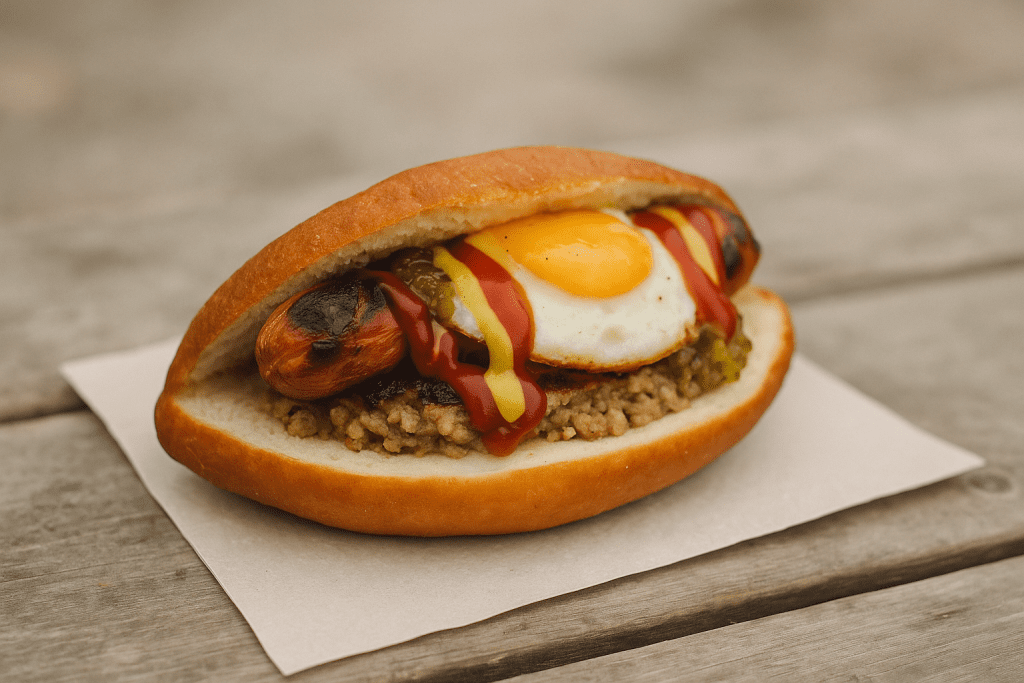
Finland has a wealth of comforting baked goods, from munkki (sugar‑coated doughnuts) to savoury pies stuffed with fish or berries. One of the most satisfying snacks you can find at a Finnish grillikioski is the lihapiirakka, literally “meat pie.” While pies in many cultures are flaky and baked, lihapiirakka takes its cue from doughnuts: the hand‑sized pastry is made from a sweetened yeasted dough, deep‑fried until golden and filled with minced meat and rice. After a late night out or a long train journey, nothing beats queueing at a kiosk for one of these warm, soft pies stuffed with your choice of fillings.
Street‑food legend
Finnish meat pies are sold in supermarkets and, more famously, at grill kiosks (grillikioski or nakkikioski) across the country. They share a dough recipe with munkki—a rich, yeasted dough that yields a pillowy, slightly sweet crust. Traditionally the filling is a mixture of minced meat (usually beef or a beef–pork blend), sautéed onions and pre‑cooked short‑ or medium‑grain rice. Short‑grain rice stays tender when the pies cool, making them ideal to eat at room temperature. Once fried, the pies can be split open and generously topped with condiments like ketchup, mustard and Finnish cucumber relish (kurkkusalaatti).
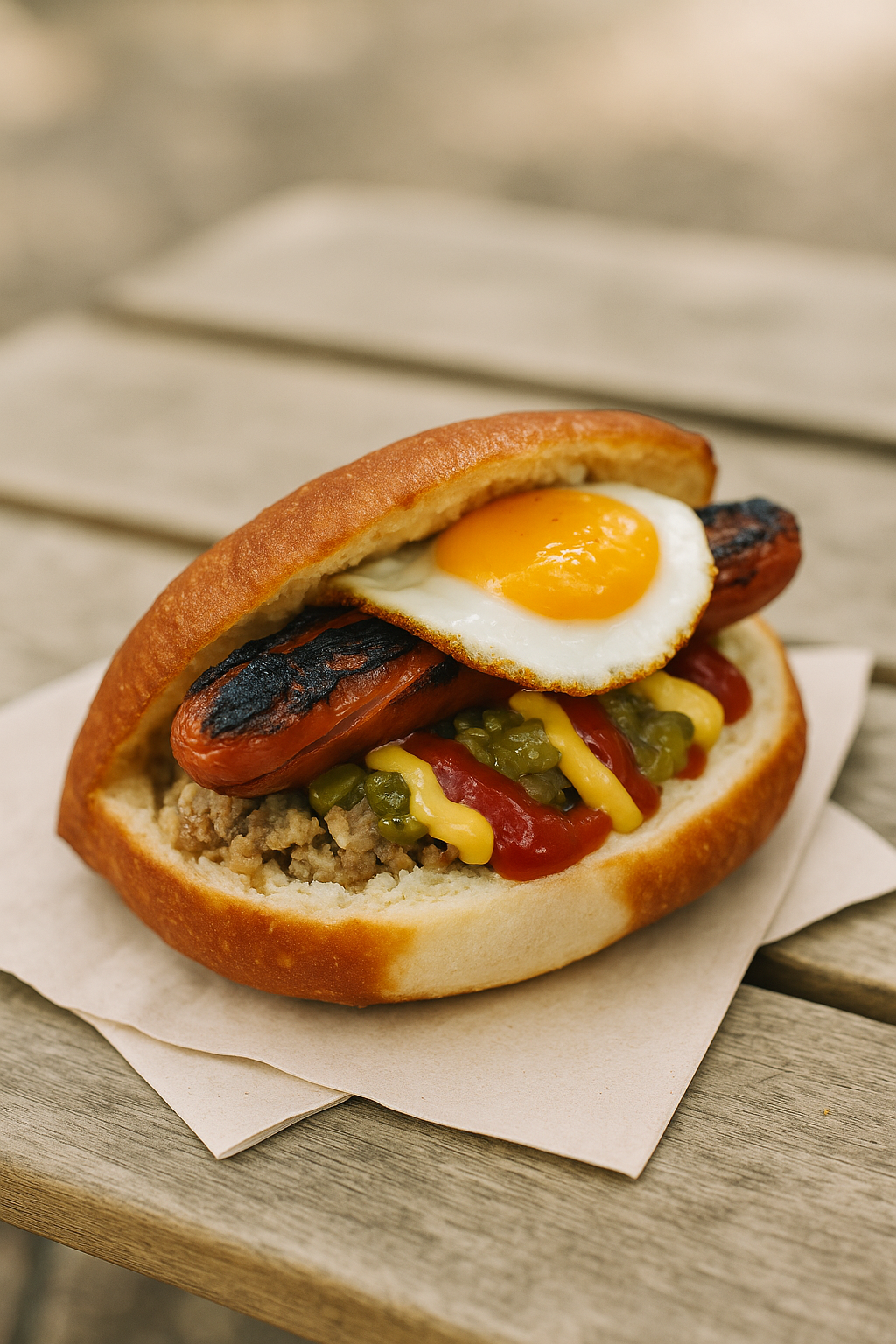
Lihapiirakka isn’t just a guilty pleasure; it’s a part of Finnish culinary identity. Food stands often keep them warm on racks and customers order them stuffed with hot dogs, kebab meat or fried eggsthedailymeal.com. Anthony Bourdain helped popularise the snack worldwide when he ordered a late‑night lihapiirakka at Jaskan grilli in Helsinkihelsinkitimes.fi. The convenience of a portable, filling pie makes it a favourite of travellers, night‑owls and anyone craving comfort food.
History and cultural roots
The concept of wrapping dough around a savoury filling has ancient roots, from Egyptian pastries to Russian pirozhki. Finnish cuisine reflects both German and Russian influences; kiisseli (kissel) and lihapiirakka are similar to their German and Russian counterparts. Unlike Western meat pies made with flaky pastry, lihapiirakka uses a doughnut‑like dough and is deep‑fried, giving it a soft, slightly chewy texture. The combination of meat and rice likely arrived from eastern influences; rice was a festive import ingredient in Finland for centuries and appears in several savoury pies.
Regional creativity has produced numerous variations. In Lappeenranta, close to the Russian border, locals developed the atomi and vety versions: atomi contains either ham or a boiled egg, while vety contains both. These names playfully reference sub‑atomic particles (“atom” and “hydrogen”). Helsinki markets sell a möttönen, a supersized meat pie for extra hungry customers, while Riihimäki’s riihimäkeläinen adds a burger patty and a fried egg. In Rovaniemi, the ropsilainen honours the local football team with a similar filling. These regional spins underline how deeply embedded lihapiirakka is in Finnish food culture.
A doughnut‑like crust with a savoury filling
Making lihapiirakka at home is a labour of love. The dough is milk‑enriched and lightly sweetened. You dissolve yeast in warm milk, add sugar and butter, then knead in flour until smooth. Let the dough proof until doubled. Meanwhile, cook short‑grain rice, sauté minced beef and onions with salt, pepper and perhaps allspice. Combine the cooled meat filling with the cooked rice and sometimes chopped hard‑boiled eggs. After the dough has risen, roll it into circles, brush the edges with water, spoon in the filling and fold into half‑moons. Let them rest briefly, then deep‑fry at 170–175 °C until deep golden. Drain on paper towels and serve warm.
Because the pies are fried rather than baked, the crust develops a gentle crunch on the outside while staying soft inside. Classic condiments include mustard, ketchup and sweet‑sour cucumber relish. Grill kiosks sometimes stuff the split pies with hot dogs, burger patties, cheese or even grilled pineapple. For an authentic Helsinki snack, top your pie with Bostongurka, a Scandinavian relish of diced pickled cucumber, peppers, onions and mustard seeds.
Lihapiirakka – Finland’s Deep‑Fried Meat Pie
Ingredients
Method
- Make the dough. Dissolve the yeast and sugar in the warm milk and water. Add the melted butter, egg and salt. Mix in half of the flour, then gradually add the rest, kneading until you have a smooth, elastic dough. Cover and let rise in a warm place for about an hour, until doubled in size.
- Prepare the filling. Cook the rice according to package instructions and let it cool. Sauté the ground beef and onion in a skillet until the meat is browned. Season with salt, white pepper and caraway or allspice. Stir in the cooled rice and, if using, chopped hard‑boiled eggs. Allow the mixture to cool.
- Shape the pies. Punch down the dough and divide it into 8–10 balls. Roll each ball into a circle about 15 cm in diameter. Place 2–3 tablespoons of filling in the center, leaving the edges clean. Brush the edges with water, fold the circle in half and pinch the seam firmly to seal.
- Fry. Heat oil in a deep pot to 170–175 °C (340-350 °F). Fry the pies two at a time, turning once, until they are deep golden brown. Remove with a slotted spoon and drain on paper towels.
- Serve. Enjoy the pies hot. Split them lengthwise and add mustard, ketchup and cucumber relish. For atomi and vety, slide in a slice of ham and/or a boiled egg; for a heartier meal, add a hot dog.
Final thoughts
Lihapiirakka is more than a “meat pie” – it’s a symbol of Finnish ingenuity and comfort. By combining a soft, doughnut‑like crust with a savoury filling, Finns created a portable snack that fuels everyone from late‑night revellers to railway passengers. Regional twists like atomi, vety and möttönen showcase local pride and creativity, while modern adaptations keep the tradition alive through vegetarian fillings and lighter cooking methods. Whether you’re at a Helsinki street corner watching the snow fall or in your own kitchen, frying up lihapiirakkas is a delicious way to experience Finland’s street‑food soul.