
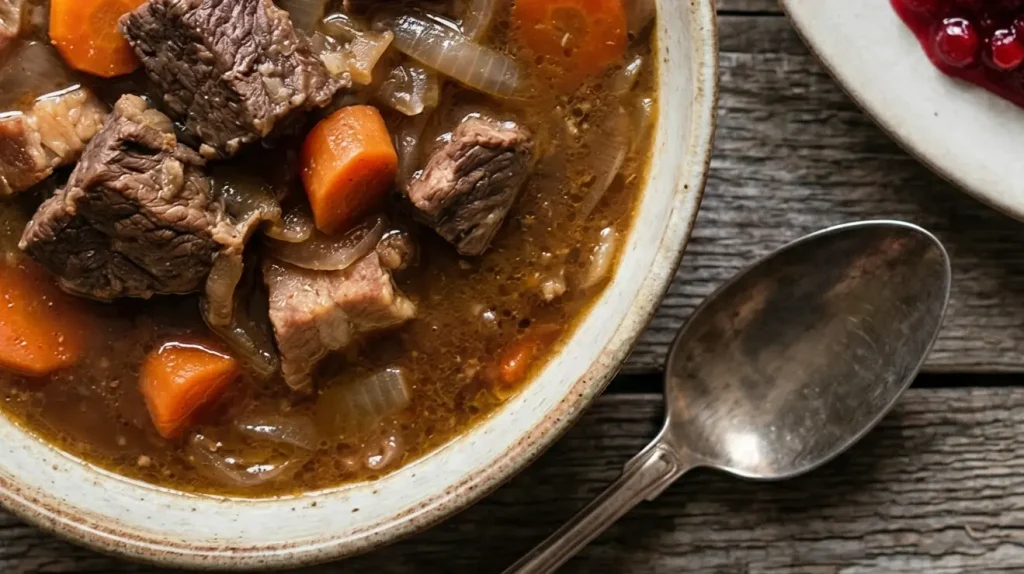
Few dishes capture the spirit of Finnish comfort food like karjalanpaisti, also known as the Karelian hot pot or Karelian stew. This slow‑braised meat stew hails from the Karelia region in Eastern Finland and western Russia, where it was originally prepared for holidays and special occasions because meat was scarce. Today it is a beloved everyday meal that can be found on family tables and in restaurants across Finland. In 2007, readers of the Finnish newspaper Iltalehti even voted it Finland’s national dish. This post explores the stew’s history, how wartime evacuees helped spread it across the country, fun facts and urban legends, why it’s such a perfect comfort food, and a step‑by‑step guide for making the best karjalanpaisti.
A Taste of Karelia: Origins and History
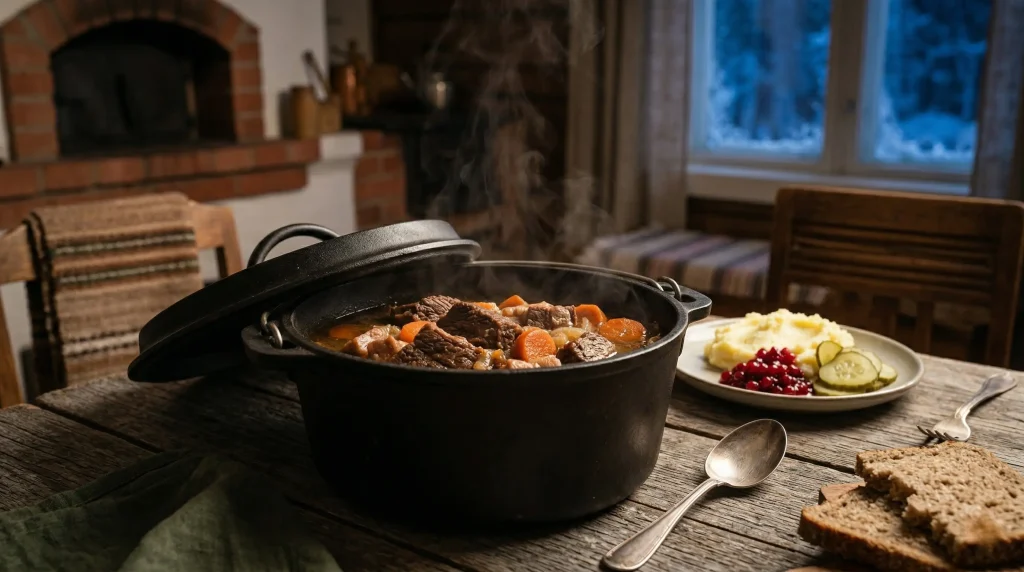
Karjalanpaisti originates in Karelia, a cross‑border region with a rich mix of Finnish, Russian and Nordic influences. Historically the stew was a festive dish because most households couldn’t afford large amounts of meat; it was made only for important occasions. Traditionally the hot pot combines pork and beef, although elk or lamb can also be used. The seasonings are simple but aromatic – whole black peppercorns, allspice and bay leaves. The ingredients are layered in a pot and slow‑cooked in the oven so that the meat becomes meltingly tender and infused with the spices. When served, the stew is often accompanied by mashed or boiled potatoes, pickled cucumbers and lingonberry jam for a sweet‑tart contrast.
From Refugees to National Dish
The stew’s journey from regional specialty to national favourite is intertwined with Finland’s modern history. After the Second World War, Finland ceded parts of Karelia to the Soviet Union, and roughly 400 000 Karelians were evacuated to other parts of Finland. Food traditions travelled with them and karjalanpaisti became a staple all around Finland as evacuees shared their recipes and food culture with their new neighbours. As Karelians settled into new communities, their pot roast gradually lost its regional anonymity and gained a descriptive name – karjalanpaisti, literally “Karelian roast”.
By the 1950s it was a common feature at village events and tribal feasts across Finland. The dish even topped a national survey of favourite foods in 2007 and finished second in a 2016 poll, underscoring how deeply it has embedded itself in Finnish identity.
Fun Facts & Folklore
Bones make the broth. Traditional karjalanpaisti is built around pork with plenty of bone and cartilage — and that’s no accident. As the meat braises low and slow, the bones release collagen that gives the broth its signature silky, full-bodied texture. Modern everyday versions sometimes skip the bones and throw in potatoes and carrots, but purists will tell you, firmly, that vegetables have no place in the authentic pot.
It goes by many names. In Karelia itself, the dish was simply called paisti (roast) or uunipaisti (oven roast) — no fuss, no fanfare. But dig a little deeper and the regional variations get interesting. Sakkolanpaisti was made with a whole salted pork blade, while Terijoen sukunapaisti brought lamb and offal into the mix for an even richer, more complex result. Every village had its own interpretation, and every cook was convinced theirs was the right one.
Whole joint or chunked meat? Ethnographic records show that Finnish cooks have long disagreed on this too — some cut the meat into generous pieces before braising, others drop in a whole joint and let it do its thing. Either way, the method is the same: low heat, a long time, and patience.
A dish with national bragging rights. In a 2007 newspaper poll, karjalanpaisti claimed the top spot as Finland’s national favourite dish. By 2016, it had slipped to second place behind rye bread — a result that sparked the kind of cheerful, opinionated debate only Finns can sustain over food.
Always better the next day. Ask any Finnish home cook and they’ll tell you: karjalanpaisti is good on day one, but genuinely great on day two. Overnight, the collagen continues to break down, the flavours deepen and meld, and the sauce becomes richer and more unctuous. Make it ahead — you won’t regret it.
Why Karjalanpaisti Is the Perfect Nordic Comfort Food
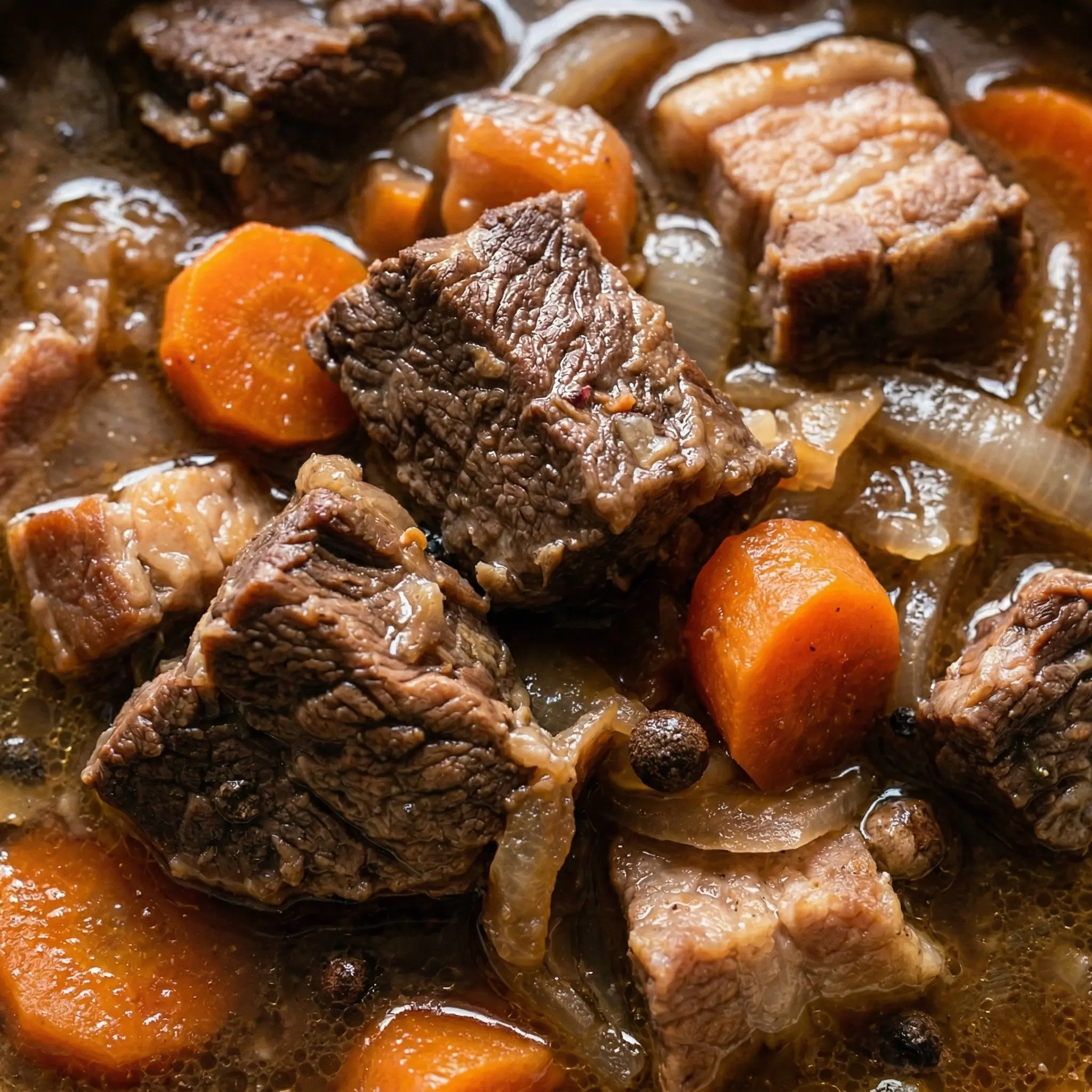
What makes this stew more than the sum of its parts? First, the combination of two or three kinds of meat adds complexity. Beef brings deep flavour and chewy collagen; pork supplies fat and sweetness; lamb or venison, when used, lends a gamey note. Second, the low‑and‑slow cooking method breaks down tough connective tissues and allows the spices to permeate every bite. Originally hot pot was cooked overnight in the gentle after‑heat of a wood‑fired oven. Modern recipes still call for 2–3 hours at 175–200 °C, resulting in fork‑tender meat. Finally, the stew’s simplicity makes it a canvas for memory and tradition. Families tweak the basic recipe, adding carrots and onions for colour or bay leaves for fragrance, yet the flavour remains unmistakably Karelian. On a cold Nordic evening nothing is more comforting than a bowl of this hearty stew with fluffy potatoes and tangy lingonberries.
Karelian Hot Pot – The Hearty Stew That Warmed Finland’s Heart
Ingredients
Method
- Prepare the ingredients. Peel the onions and carrots and cut them into large chunks (about 3 cm / 1 in pieces). Cut the beef and pork into roughly 3 cm (1 in) cubes. If using bone‑in cuts, keep the bones attached.
- Brown the meat. Heat a heavy skillet over medium‑high heat and melt a knob of butter or lard. Brown the meat cubes in batches until nicely coloured on all sides. Do not crowd the pan, and avoid adding salt at this stage so moisture doesn’t leach out.
- Layer the pot. Grease a large oven‑safe casserole dish or Dutch oven. Arrange the meat, onion and carrot chunks in layers, scattering allspice berries, peppercorns and the bay leaf between layers.
- Deglaze and add water. After browning, pour a small amount of cold water into the skillet to loosen the browned bits and pour this liquid over the meat. Add more cold water or beef stock until the contents of the pot are almost covered but not submerged.
- Slow‑cook in the oven. Cover the pot with a tight‑fitting lid or foil. Cook in a preheated oven at 175 °C (350 °F) for about 2 hours. Reduce the heat to 150 °C (300 °F) and continue cooking for another 1 hour until the meat is tender and pulls apart easily. If the top starts to brown too much, cover with foil.
- Season and serve. Taste the broth and add more salt if necessary. Serve the stew with boiled or mashed potatoes, a spoonful of tart lingonberry jam and crunchy pickled cucumbers. The broth is delicious soaked up with rye bread on the side.
- Enjoy the leftovers. Karjalanpaisti tastes even richer the next day as the flavours meld. Reheat gently on the stovetop or in the oven with a splash of water to loosen the sauce.
Serving Suggestions
Traditional accompaniments elevate karjalanpaisti from hearty stew to full meal. Finns often serve it with boiled new potatoes or buttery mashed potatoes. A dollop of lingonberry jam adds a tangy sweetness that cuts through the richness, while pickled cucumbers provide crunch and acidity. Fresh rye bread is perfect for mopping up the savoury broth. For a festive spread, consider pairing the stew with a simple green salad or pickled beets. And don’t forget to save leftovers – karjalanpaisti tastes even better after a night in the fridge.
FAQ & Troubleshooting
Absolutely. All-beef or all-pork versions are common and delicious. The classic mix of two or three meats simply creates more complexity in the broth.
The water quantity and cook time both affect this. Make sure you’re not adding too much water upfront — meat should be about ¾ submerged, not fully covered. If the broth is still thin after cooking, simmer uncovered for 10–15 minutes to concentrate it.
Yes — it freezes beautifully. Store in airtight containers for up to 3 months. Reheat gently on the stovetop, adding a splash of water if needed.
You can, though it moves away from the traditional recipe. Root vegetables like parsnip or rutabaga work well if added in the last 1–2 hours of cooking so they don’t disintegrate.
Ground allspice will work in a pinch, but use it sparingly — about ¼ tsp for the whole recipe. Whole berries are easy to find in the spice aisle and worth seeking out.
Conclusion: A Bowl of History and Heart
Karjalanpaisti is more than just a meat stew; it’s a dish woven into Finland’s history and identity. Born in the ovens of Karelia, carried across Finland by evacuees after World War II, and crowned a national favourite by popular vote, this hot pot embodies resilience and home‑cooked comfort. Its simple list of ingredients belies the depth of flavour achieved through slow cooking, bones and spices. Whether you stick to the purist’s meat‑only version or add carrots and potatoes, preparing karjalanpaisti is an invitation to slow down and savour. Try the recipe above and bring a taste of Karelia to your own kitchen.