
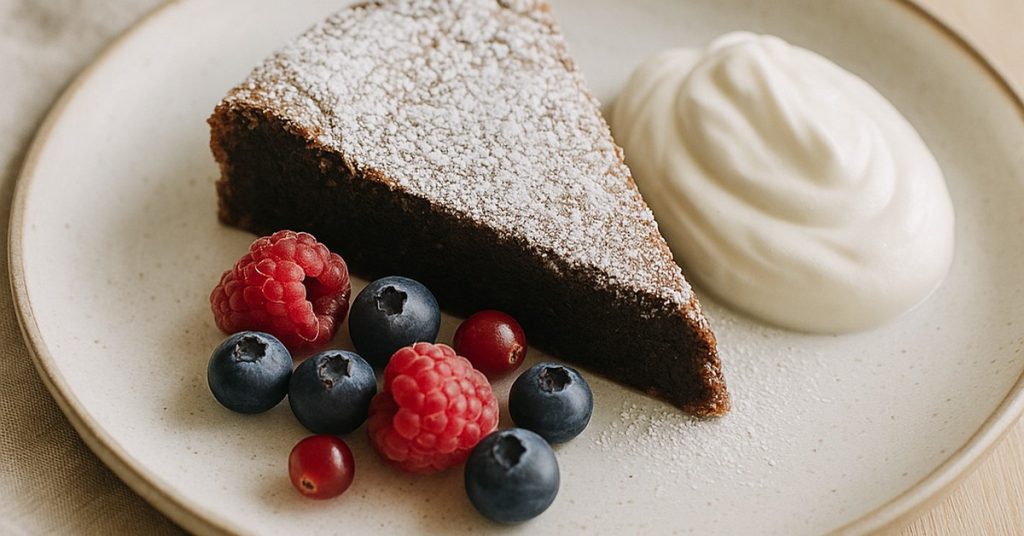
Nothing says fika like a slice of kladdkaka, the gooey chocolate cake that holds a special place in Nordic hearts. This Swedish dessert resembles a rich brownie but with a crackly top and a molten‑like interior. Its name comes from the Swedish word kladdig, meaning “sticky,” and that texture is exactly what makes it irresistible. In this post we explore the history of kladdkaka, how it differs from brownies and lava cakes, fun facts, serving ideas, contemporary twists and—most importantly—how to bake the perfect version at home.
What Is Kladdkaka?
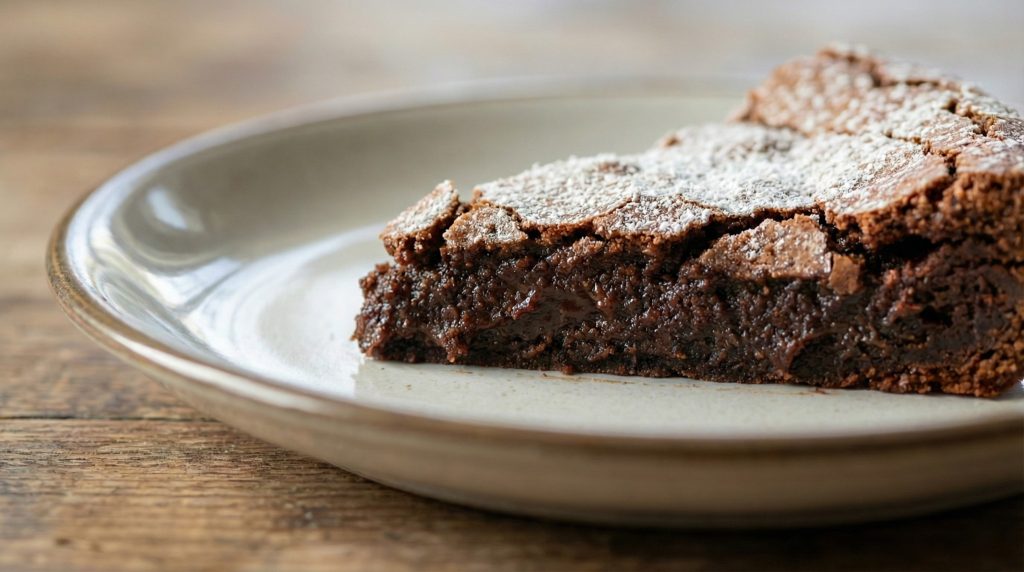
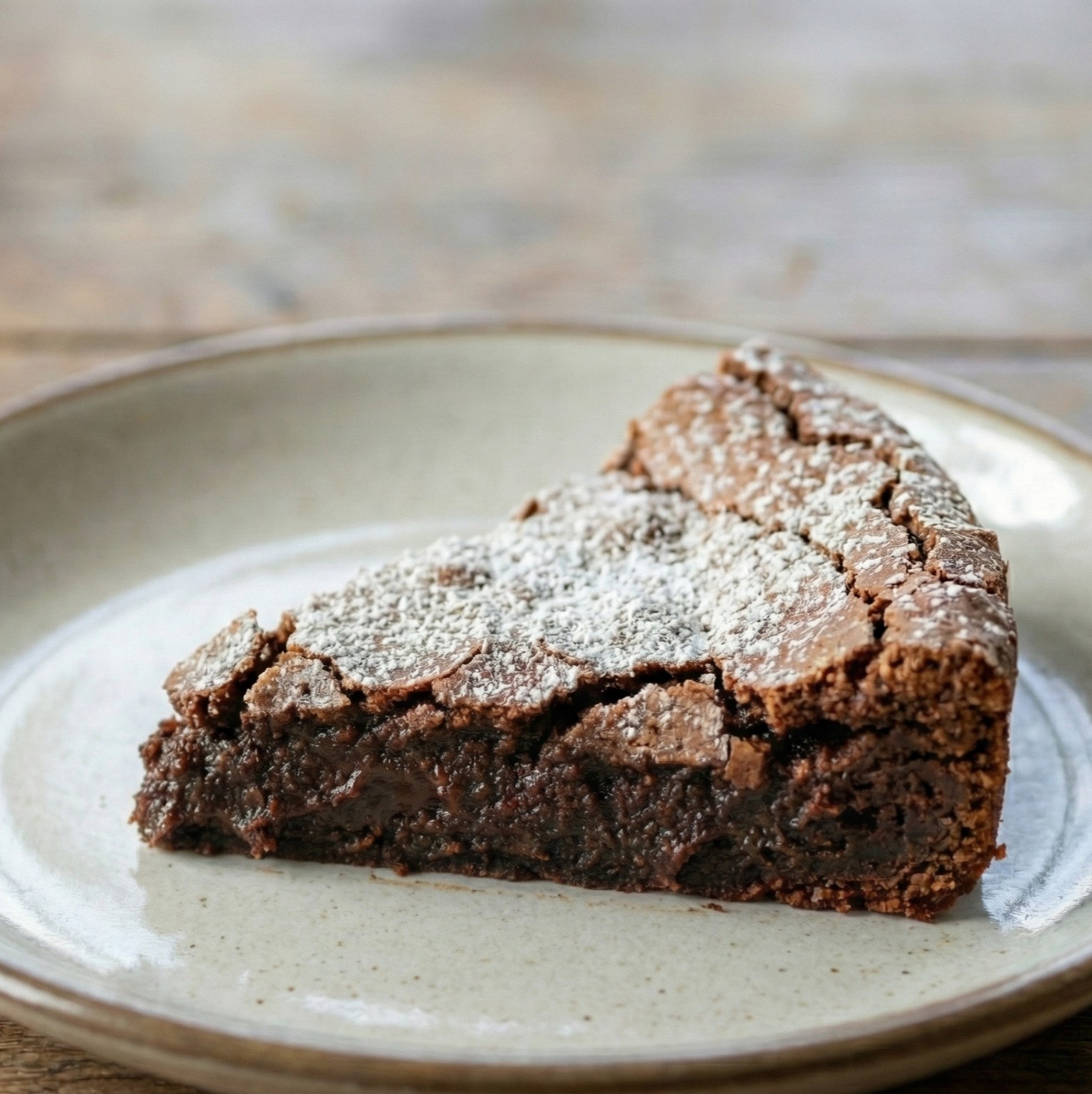
Kladdkaka is essentially Sweden’s answer to the brownie, but with a unique twist. The cake is flat, crusty on top and notoriously gooey and chewy inside. It’s made from pantry staples—eggs, butter, sugar, a small amount of flour, cocoa and vanilla—without any leavening agent. The absence of baking powder or soda keeps the cake dense and ensures the centre remains soft; in fact, many bakers intentionally underbake the cake to achieve its signature kladdig texture. The resulting dessert is a thin cake with a crisp, almost crackly crust and a molten, fudge‑like middle—a contrast of textures that sets it apart from typical American brownies and French molten cakes.
Characteristics at a glance
- Texture: crisp top with a gooey, almost underbaked center; edges are chewy and dense.
- Ingredients: melted butter, eggs, sugar, cocoa powder, a small amount of flour and vanilla sugar or extract; no baking powder.
- Size & shape: baked in a single round pan (8–9 inches) or springform; thin and flat compared with brownies.
- Serving: usually dusted with powdered sugar and served with whipped cream, vanilla ice cream or berries.
History and Origins
The origins of kladdkaka are surprisingly recent and a bit murky. There are two popular stories:
- World War II baking‑powder shortage: Some Swedish food historians suggest the cake emerged during the 1930s–40s when baking powder was scarce, leading bakers to omit the leavening from their chocolate cakes; the resulting “flat brownie” became known as kladdkaka.
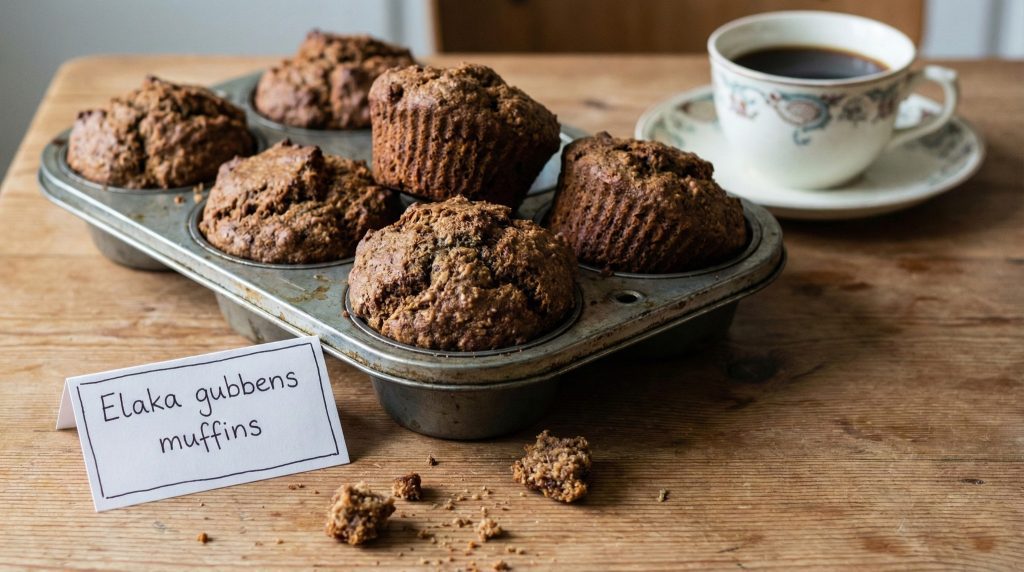
- Parisian inspiration: A widely‑told tale credits Swedish baker Margareta Wickman, who reportedly ate a sticky chocolate cake in Paris in the late 1960s, then published a similar recipe in a Swedish magazine in 1968. Swedish pastry chef Mia Öhrn notes that an early version called Elaka gubbens muffins (the “mean old man’s muffins”) was popularized in the early 1970s and quickly became a household favourite.
Regardless of which story you believe, kladdkaka became a national obsession by the late 1970s. Today Swedes celebrate “Kladdkakans dag” (Kladdkaka Day) every year on 7 November. Millions of slices are eaten on this day, and bakeries, cafés and home cooks compete to perfect the stickiest version.
Kladdkaka vs. Brownies & Lava Cake
Although kladdkaka is often described as Sweden’s version of the brownie, it has distinct differences:
- Brownies: Traditional American brownies can be cakey or fudgy depending on the ratio of flour to fat and whether leavening is used. Brownies typically contain more flour and often include baking powder, resulting in a slightly raised, chewy crumb. By contrast, kladdkaka contains little flour and no leavening, which creates a flat cake with a crackly crust and a moist, almost molten center. A cold kladdkaka might resemble a chewy brownie, but it remains less structured and more gooey. Brownies also come in numerous flavours (nutty, caramel‑swirled, blondies, etc.), whereas kladdkaka traditionally stays pure and chocolatey—although modern versions are beginning to innovate.
- Lava cake (chocolate fondant): French molten cakes, sometimes called lava cakes, are individual desserts with liquid chocolate centers. They rely on a high proportion of chocolate and under‑baking so the center oozes out when cut. Kladdkaka shares the underbaked concept but is baked in one pan rather than individual molds. Its interior is fudgy rather than runny—there’s no liquid chocolate river—making it more like a dense brownie with a molten heart. Molten cakes are often served warm right out of the oven; kladdkaka can be enjoyed warm or at room temperature and will firm up if chilled.
Fun Facts & Trivia
- Name: Kladdkaka literally translates to “sticky cake” in Swedish.
- A national day: Sweden celebrates Kladdkakans dag on 7 November, when supermarkets and cafés sell countless pieces of the cake.
- First cake many kids bake: The recipe is so forgiving that Swedish children often learn to bake it before any other cake; it’s considered a rite of passage and a staple at children’s parties.
- International fame: IKEA’s cafés serve kladdkaka outside Sweden, introducing it to customers worldwide.
- Regional twists: Some regions top the cake with salty liquorice (salmiakki) or mix in crushed candy; other variations incorporate chili, licorice or coffee.
Serving Suggestions & Pairings
Kladdkaka’s rich chocolate flavour benefits from accompaniments that cut through its sweetness or complement its texture. Popular ways to serve it include:
- Dusting with powdered sugar: A light snowfall of confectioners’ sugar over the crackled surface is traditional.
- Whipped cream or vanilla ice cream: The cool, airy texture balances the dense, warm cake Swedish fika often pairs kladdkaka with a spoonful of whipped cream and a cup of coffee.
- Fresh berries or fruit compote: Tangy raspberries, blueberries or lingonberries provide a refreshing contrast. A fruit coulis or jam can also work wonders.
- Dessert wines or coffee: For a sophisticated dessert, pair kladdkaka with a glass of dessert wine or a strong espresso.
Feel free to get creative: salted caramel drizzle, crushed nuts or candied orange zest can all elevate this simple cake. Just remember that kladdkaka’s charm lies in its sticky interior; avoid toppings that will weigh it down.
Modern Twists & Variations
While the classic kladdkaka remains beloved, bakers have started experimenting with flavours:
- Flavoured chocolate: White chocolate kladdkaka with lemon zest or berries has become trendy. A blondie‑like version might swap dark cocoa for caramelized white chocolate.
- Spiced or infused variants: Swirling in chili powder, sea salt, espresso or cardamom creates intriguing sweet‑savory combinations. Coffee and cardamom echo Nordic flavours; chili and lime add a Mexican twist.
- Liquorice & raspberry: Salty licorice combined with raspberry puree is a uniquely Scandinavian combination.
- Gluten‑free & vegan: Replacing flour with almond flour yields a gluten‑free kladdkaka with a nutty flavour. Vegan versions replace butter with coconut oil and eggs with flax or aquafaba.
These variations illustrate how versatile this simple cake can be. Just remember that any additions should not compromise the sticky texture—use minimal dry ingredients.

Swedish Sticky Chocolate Cake (Kladdkaka)
Ingredients
Method
- Prepare the pan: Preheat the oven to 175 °C (350 °F). Butter and line an 8‑ or 9‑inch springform or cake pan with parchment paper. A springform pan makes it easier to remove the sticky cake, but a standard pan works if lined well.
- Mix the batter gently: In a medium bowl, whisk together melted butter and sugar. Let the mixture cool slightly, then add eggs one at a time, whisking just until combined. Stir in vanilla. It’s important not to overbeat; excessive mixing incorporates air and can make the cake cakey rather than dense.
- Add dry ingredients: Sift together cocoa powder, flour and salt. Fold the dry mixture into the wet ingredients using a spatula until just combined. The batter should be glossy and thick.
- Bake with precision: Pour the batter into the prepared pan and smooth the top. Bake for 10–15 minutes until the edges are set and the top is crackly but the centre is still slightly wobbly and sticky. The exact timing depends on your oven and pan; start checking at 10 minutes. Overbaking will result in a dry cake.
- Cool & serve: Remove from the oven and let the cake cool in the pan. The centre will sink slightly as it cools—that’s normal. For chewier edges, refrigerate the cooled cake for an hour or two; chilling firms up the edges while keeping the centre moist. To serve, dust with powdered sugar and accompany with whipped cream, ice cream and berries.
- Underbake deliberately: The hallmark of kladdkaka is its sticky interior, so err on the side of underbaking. The cake should wobble slightly when you shake the pan.
- Use room‑temperature eggs: Cold eggs can cause the butter to seize. Room‑temperature eggs incorporate more smoothly.
- Avoid leavening: Never add baking powder or soda; they will make the cake rise and lose its gooey core.
- Experiment with add‑ins: Fold a handful of chocolate chips or chopped nuts into the batter, or swirl in raspberry jam; just keep the additions minimal to preserve the sticky texture.
Conclusion
Kladdkaka is more than just a cake—it’s a piece of Swedish culinary heritage and a symbol of Nordic comfort. Its simple ingredients, quick preparation and signature gooey center have made it a beloved dessert across Scandinavia and beyond. Whether you stick to the classic recipe or experiment with white chocolate, chili or salted caramel, the key is to maintain its sticky soul. Serve it with a dollop of whipped cream and a hot cup of coffee, and enjoy a taste of Sweden in your own kitchen.