
The Spark: A Manifesto for the North (2004)
Twenty years ago, the Nordic countries were famous for many things (think stunning fjords, Viking lore, and cozy hygge vibes), but fine dining was not one of them. Turn-of-the-century restaurant menus in Denmark, Sweden, or Norway often leaned heavily on rich meat-and-potato staples or imitations of French haute cuisine. There was little pride in local ingredients; in fact, gourmet chefs largely looked abroad for inspiration. All that changed in November 2004, when a group of Nordic chefs and food enthusiasts gathered in Copenhagen with a bold idea: to reinvent their region’s food identity from the ground up.
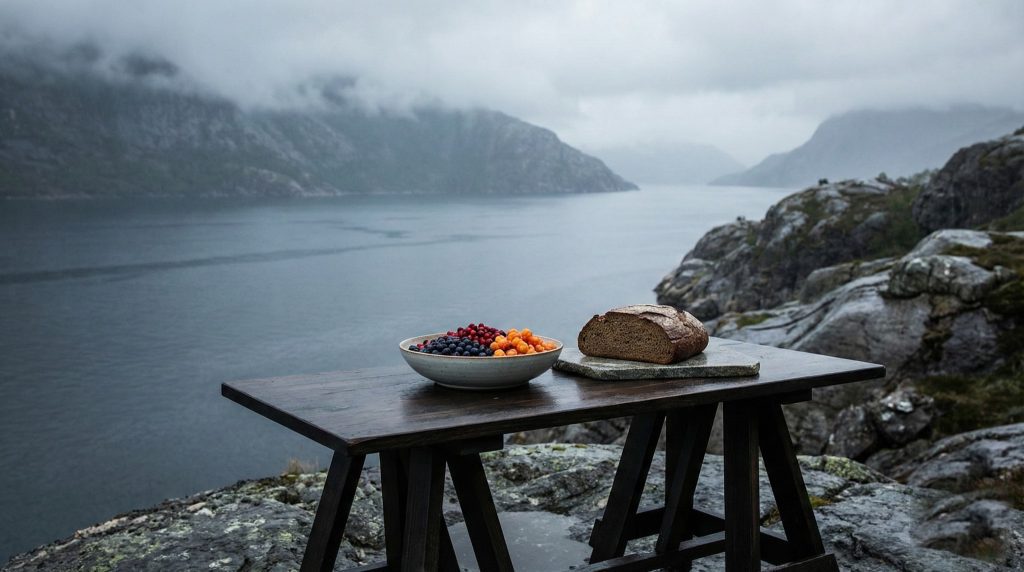
At this 2004 Copenhagen symposium, chefs from Denmark, Sweden, Norway, Finland, Iceland, the Faroe Islands – even distant Greenland and Åland – met with farmers, foragers, and policymakers to sketch out a new vision for Nordic food. The result was the New Nordic Kitchen Manifesto, a 10-point declaration that reads like a recipe for revolution. It championed purity, freshness, simplicity and ethics in cuisine. It urged chefs to celebrate seasonality (cooking with the natural flow of the Nordic seasons) and to spotlight ingredients distinctive to the region’s climate, landscapes, and waters. Local, sustainable produce was paramount – the manifesto envisioned a cuisine where wild berries, root vegetables, mushrooms, and fresh seafood from nearby shores take center stage, rather than imported delicacies. Traditional preservation methods like pickling, smoking, and fermenting would be revived with creativity. Even animal welfare and regional cooperation made the list, reflecting a holistic approach from farm to fork.
Crucially, the manifesto also encouraged innovation: one tenet calls on chefs to develop “new applications of traditional Nordic food products”. In other words, take grandma’s rye bread, lingonberries, or dried fish and reimagine them for a new era. This blend of old and new lies at the heart of New Nordic Cuisine. It’s about looking inward – to Nordic terroir and heritage – while also thinking forward about health, environment, and flavor. With this manifesto as a guiding star, the Nordic food movement gained not just a philosophy but also official backing. By 2005, Nordic ministers had launched a “New Nordic Food” program, investing millions to turn these ideas into reality. The stage was set for a culinary renaissance in the North.
The Engine of Change: Noma’s Evolution
If the manifesto was the theory, Copenhagen’s Noma restaurant was the practice that put New Nordic Cuisine on the world map. Co-founded by an idealistic young Danish chef, René Redzepi, and food entrepreneur Claus Meyer in 2003, Noma set out to prove that Nordic ingredients could rival the world’s finest dining. In fact, the very name “Noma” is a mashup of “nordisk mad,” Danish for “Nordic food”. In an era when upscale European restaurants were still obsessed with truffles, foie gras, and Champagne, Noma boldly served local sea buckthorn berries, foraged herbs, and obscure shellfish from cold Nordic waters. Early skeptics snickered – one critic mockingly dubbed it a “blubber restaurant,” doubting fine dining could revolve around what was seen as a sparse Viking pantry. Redzepi would swiftly change their minds.
Noma’s approach was radical yet rooted in simplicity: nearly 100% seasonal Nordic ingredients, presented in artistic, often surprising ways. Menus featured things like wild mushrooms on a bed of moss, razor clams in parsley jelly, and beef tartare speckled with ants for acidity – dishes that read like passages from a Nordic fairy tale. Redzepi and his team combed beaches, forests, and farms to forage the freshest finds each day, embodying the mantra of local sourcing. They also tapped into ancient Nordic techniques: berries were pickled or fermented into new condiments; meats were cured or smoked using local wood; winter root vegetables were coaxed into surprisingly elegant creations. Diners might be presented with a smooth white bone marrow custard garnished with beach roses, or a crisp snack of deep-fried reindeer moss plucked from Arctic tundra. Every plate engaged the senses and told a story of place – often served on rustic pottery with rocks, leaves, or twigs as props to accentuate the natural vibe.
The world took notice. By the 2010s, Noma had earned two Michelin stars and stunned critics globally by clinching the title of “World’s Best Restaurant” a record five times. In the span of a few years, Copenhagen transformed from a culinary backwater into a foodie mecca, thanks largely to Noma’s influence. Redzepi’s inventive, earthy aesthetic – often described as “witty” and “inventive” by the New York Times – became synonymous with New Nordic cuisine itself. Suddenly, Copenhagen was the place globetrotting diners absolutely had to visit, and “Nordic food” evoked images of lichen-emblazoned plates and smoke-filled test kitchens pushing the boundaries of flavor. Importantly, Noma also served as a training ground: an entire generation of young Nordic chefs passed through its kitchen, absorbing the New Nordic gospel and fanning out to start their own projects.
In January 2023, René Redzepi announced that Noma would cease regular restaurant operations by the end of 2024 to transition into Noma 3.0, a culinary laboratory dedicated to food innovation and e-commerce (Noma Projects).
However, a detailed check of the restaurant’s status in January 2026 reveals a more complex reality than a simple closure: Noma has not vanished but become nomadic. Following a pop-up in Kyoto (late 2024), the organization announced a residency in Los Angeles for Spring 2026. In a move indicating the future economics of fine dining, Noma announced a “members-only” season in Copenhagen for late 2026, accessible only to “Taste Buds” members.
This evolution suggests that the restaurant model—serving dinner nightly—is no longer economically or humanly sustainable for this level of quality. The future of NNC, as pioneered by Noma, lies in intellectual property, product lines (garums), and episodic, high-ticket experiences.
Philosophy on the Plate: Sustainability as Art
At its core, New Nordic Cuisine is less about extravagant recipes and more about a philosophy of food connected to nature. The movement latched onto principles that feel almost poetic in their simplicity: cook with what’s local and in season; let the pure taste of each ingredient shine; innovate while honoring tradition; and above all, tread lightly on the earth. This ethos meshed perfectly with broader trends toward sustainability and wellness, giving New Nordic an appeal far beyond Scandinavia.
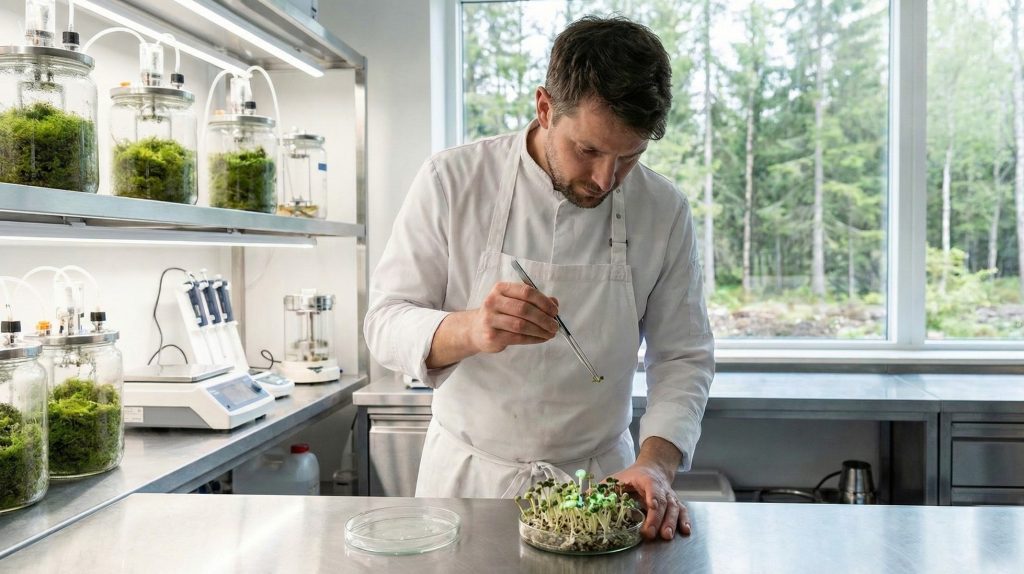
Sustainability isn’t just a buzzword here – it’s baked into New Nordic cooking. Restaurants source from nearby farms and coastlines to reduce their carbon footprint and support regional producers. Chefs prize organic produce and often grow their own herbs and vegetables. At the acclaimed Danish restaurant Relæ, for example, over 90% of ingredients were organic and many were harvested from its own urban garden. Dishes at New Nordic eateries tend to showcase vegetables and grains generously, not only as sides but as stars, reflecting a gentle shift toward plant-forward dining that’s healthier for people and the planet. Foraging – once a necessity for survival in the far North – has been elevated to an art form: chefs venture out to gather wild berries, spruce tips, seaweed, nettles, and mushrooms, bringing a taste of the untamed landscape into the kitchen. The result? Menus change constantly with the seasons, and diners get an authentic “terroir” experience of Nordic forests, fields, and fjords.
Just as important is the resurrection of old techniques. The long Nordic winters historically required food to be preserved and saved, so pickling, drying, curing, and fermenting are age-old practices that New Nordic chefs have enthusiastically revived – with modern twists. You might encounter tangy pickled vegetables adding brightness to a plate, or a dab of fermented barley sauce deepening the umami of a dish. Traditional breads, cheeses, and smoked fish are reimagined rather than forgotten. This blending of past and present creates food that feels comforting and familiar, yet excitingly new. As one of the manifesto’s authors put it, New Nordic aims to “express the purity, freshness, simplicity” of the region in every bite. In practice, that could mean a spoonful of cold, clear cucumber broth that tastes as clean as a mountain spring, or a single perfect scallop smoked lightly over straw to recall a summer campfire. Even the plating and ambiance get the natural treatment – many New Nordic dining rooms favor minimalist designs with raw wood, stone, and earthy ceramics, so the atmosphere itself is warm, Nordic-cozy, and close to nature.
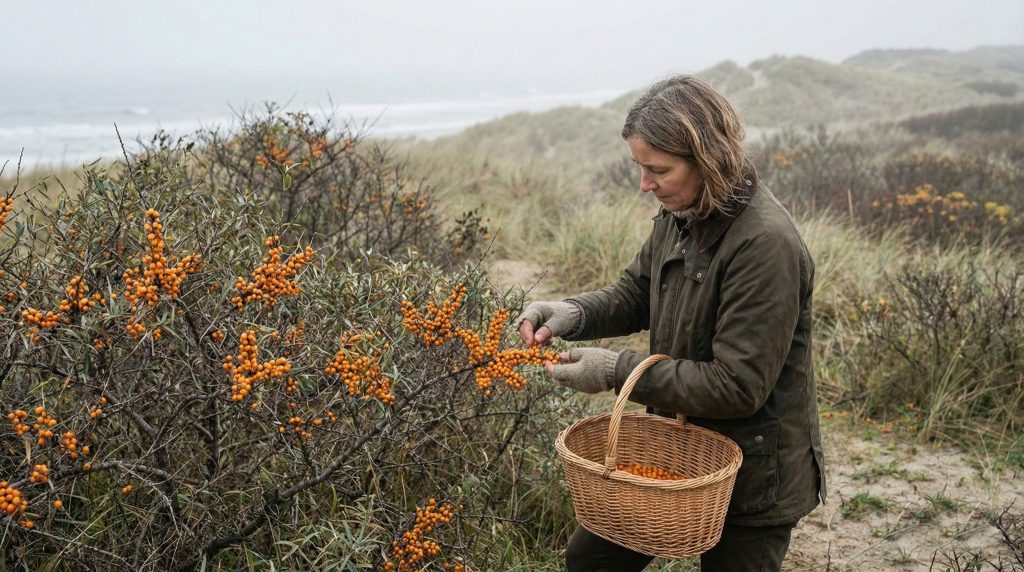
There’s a quietly radical social angle too. By championing local producers and ethical sourcing, New Nordic cuisine forged stronger ties between chefs and farmers, fishers, and foragers. It reframed Nordic ingredients – once considered boring or too rustic – as treasures to be proud of. This pride has trickled down to home cooking as well. Nordic consumers have developed a growing appetite for farmers’ markets, artisanal products, and seasonal eating, inspired by what they see in top restaurants. In Finland, for instance, chefs popularizing wild foods have even led to “foraging tourism” and locals venturing out to pick berries and mushrooms as a weekend activity, basket in hand. The movement’s ideals have even reached school cafeterias and community projects; one spinoff manifesto declared that every Nordic child has the right to learn to cook wholesome local food. In short, New Nordic isn’t just high-end chefs twirling tweezers in fancy kitchens – it’s a broader cultural shift toward reconnecting with the land and eating more mindfully.
Beyond Copenhagen: A Regional Renaissance
What started as a regional renaissance has in many ways become a global trend. In the wake of Noma’s success, a constellation of New Nordic–inspired restaurants bloomed across Scandinavia, each with its own local flair. Denmark continued to lead the pack – places like Geranium in Copenhagen (now crowned with three Michelin stars and its own stint atop the World’s Best list) and Kadeau (championing the flavors of Baltic island Bornholm) carried the torch. Over in Sweden, chef Magnus Nilsson’s remote restaurant Fäviken (before it closed in 2019) drew pilgrims to the frozen north for foraged pine shoots and aged cow’s cheese, encapsulating New Nordic’s rustic romance. Sweden’s capital Stockholm embraced the ethos too – at Oaxen Krog, diners feasted on produce from the restaurant’s own nearby farm, like Jerusalem artichokes paired with local woodland mushrooms. Sadly Oaxen Krog permanently closed on December 21, 2022 after The founders, Magnus Ek and Agneta Green announced that they wished to end on a high note after 28 years. In Norway, Maaemo in Oslo wowed critics with its hyper-local tasting menus (its very name means “Mother Earth”), serving wild-caught seafood and mountain herbs in poetic compositions. Finland’s chefs jumped in as well, putting a modern spin on everything from reindeer to rye. Helsinki’s restaurant Olo, for example, offers a tasting journey of Finnish seasonal ingredients – one course might feature foraged mushrooms with pickles and sour cream, while Restaurant Juuri coined the term “Sapas” (Suomi + Tapas) to describe their small plates based on Finnish roots and traditions. Sapas ceased operations in late-2020, likely due to the pandemic but their contribution of “Sapas” remains a vital part of Finnish culinary lexicon Even tiny Faroe Islands earned global attention after its restaurant Koks earned two Michelin stars for New Nordic cuisine crafted from its rugged terrain (think fermented lamb and sea urchins), a remarkable feat for an isolated archipelago of 50,000 people, however Koks suspended operations in the archipelago in 2022 due to the rejection of a building permit for a new location. From 2022 through 2024, Koks operated as a pop-up in Ilimanaq, Greenland. In a pivotal shift for 2025, former Koks executive chef Poul Andrias Ziska did not wait for the Koks brand to resolve its issues. He opened his own independent restaurant, PAZ, in Tórshavn (the capital of the Faroe Islands) in April 2025 and in June 2025, just months after opening PAZ was awarded two Michelin stars.
This wave of innovation didn’t stay contained in the Nordic region. The “Nordic food revolution” has rippled worldwide. High-end kitchens from London to Los Angeles, Bangkok to São Paulo, have adopted elements of New Nordic style – be it an emphasis on local sourcing, a penchant for minimalist plating, or simply the daring to put unusual seasonal veggies at the center of the plate. If you find yourself in a chic restaurant with pine-wood tables, ceramic bowls made by an artisan, and dishes like hay-smoked meats or desserts spiked with sea buckthorn, you’re likely witnessing New Nordic’s influence at work. This movement also turbocharged gastronomic tourism to Scandinavia. Food lovers from around the globe now flock to Copenhagen, Stockholm, and beyond, essentially eating their way through the North. Over the past decade, the Nordic countries have seen an unprecedented surge in visitors drawn by food festivals, foraging adventures, and reservation slots at those top restaurants. Fifteen years ago, no one traveled to the Faroe Islands for fine dining; now culinary pilgrims venture there for a taste of authentic fermented Faroese fare. In Sweden, food tourism revenue jumped 50% in just a few years, with over half of international travelers saying they came partly for the cuisine. Even across the Atlantic, in U.S. cities like New York and San Francisco, chefs have opened Nordic-inspired eateries and pop-ups, while in areas with Scandinavian heritage (such as Minnesota) the New Nordic ethos has invigorated local food scenes. Clearly, New Nordic Cuisine’s “wild and local” gospel has struck a chord far beyond its birthplace.
The “New” Normal: From Avant-Garde to Everyday
Yet for all its acclaim, New Nordic Cuisine is not without a wink of gentle humor and reality. Ask a Scandinavian on the street what they had for dinner, and chances are it wasn’t a foamed elderflower soup or a plate of reindeer moss crackers. Traditional everyday dishes – Swedish meatballs, Danish open-faced sandwiches (smørrebrød), Finnish salmon soup – are still very much alive and loved in the region. New Nordic Cuisine lives mostly in restaurants and special projects, painting an aspirational image of Nordic food culture. Locals sometimes chuckle at how the world now imagines every Nordic meal to be a lyrical woodland creation. In truth, New Nordic has always been about balance: it took the humble ingredients of grandmothers’ kitchens and wild landscapes, and treated them with an artist’s touch. By doing so, it renewed pride in Nordic culinary heritage. As the Danish saying goes, “ude er godt, men hjemme bedst” – “out is good, but home is best.” New Nordic didn’t replace grandma’s cooking; it shone a spotlight on it in a way that made the world sit up and take notice.
Evolution and Diaspora: The 2026 Landscape
As we venture further into the 21st century, New Nordic Cuisine continues to evolve – proving that it’s more than a fleeting trend. In fact, the movement seems to be circling back to its foundational values with even deeper commitment. One clear focus is sustainability for the long haul. This means not only sustainable ingredients, but also sustainable ways of operating restaurants and food businesses. The industry is reflecting on some hard questions: How can foraging and hyper-local sourcing remain viable as climates change and seasons become less predictable? Can fine dining institutions uphold New Nordic ideals while treating their staff and the community ethically? These questions came into sharp relief when, in early 2023, René Redzepi announced that Noma as we know it would wind down at the end of 2024, citing the “unsustainable” economics and work culture of running an ultra-high-end restaurant. Instead, Redzepi revealed plans to reinvent Noma as a kind of culinary research lab – nicknamed “Noma 3.0” – devoted to food innovation, periodic pop-ups, and product development rather than daily restaurant service. In his words, “being a restaurant will no longer define us,” which sent shockwaves through the food world. While some worried this marked the end of an era, it can also be seen as New Nordic philosophy taking a new form. The future of New Nordic Cuisine may lie in experimentation and education – sharing knowledge about fermentation, farming, and sustainable cooking on a broader scale, rather than simply plating fancy dinners for a lucky few. Redzepi’s MAD symposium – a global food conference he founded – is ramping up again, and other New Nordic veterans are channeling their expertise into initiatives like improving school lunches, reducing food waste, and spreading sustainable practices worldwide. In short, the movement’s spirit is spilling out beyond restaurant walls.
On the plate itself, we can expect New Nordic Cuisine to keep pushing boundaries while staying grounded in its ethos of nature and simplicity. Upcoming Nordic chefs are exploring even more hyper-local ingredients (think unfamiliar seaweeds, wild plants, and heirloom grains) and turning to regenerative agriculture to source their food, ensuring that what they use actually benefits the environment. There’s a growing interest in plant-based creativity, too – perhaps a reflection of global trends and the Nordic love of nature. We might see even greener menus with imaginative vegetable main courses and new proteins like cultivated mushrooms or algae taking a starring role. Don’t be surprised if tomorrow’s talked-about Nordic dish is a brilliant composition of coastal seaweed, fermented root vegetables, and lab-cultured fish – a blend of tradition, tech, and terroir. Yet, the cuisine will likely remain recognizably Nordic in soul: expect the continued presence of the forest and sea in every bite, the celebration of seasonal contrasts (light, fresh dishes in summer; hearty, spiced comforts in winter), and that beautiful minimalist presentation that makes you feel like you’re dining in the middle of nature.
Perhaps the most heartwarming prediction for New Nordic Cuisine’s future is its normalization and accessibility. What was once avant-garde is becoming part of everyday culture. Nordic grandmothers may incorporate a few New Nordic tricks into their Christmas feasts (why not a pickled ramson herb in the herring salad?), and Nordic kids might grow up learning to identify herbs in the woods. The movement’s initial lofty goals – not just to wow diners, but to improve food systems and celebrate local culture for everyone’s benefit – are gradually making headway. In Copenhagen, for instance, there are food hubs where former Noma chefs teach fermentation techniques to hobby cooks. Across Scandinavia, more cafeterias and casual eateries emphasize local sourcing, proving that New Nordic principles can thrive beyond Michelin-starred settings. It’s a future where the line between everyday food and “restaurant food” blurs, and where that cozy Scandinavian tradition of enjoying simple, good ingredients is kept alive for generations to come, albeit with a modern, sustainable twist.
Legacy: The End of “New,” The Beginning of “Nordic”
Twenty-two years after the Manifesto, New Nordic Cuisine has ceased to be “new”—it has become the establishment. The closure of Oaxen Krog and the transformation of Noma into a food laboratory signal the end of the movement’s expansive phase and the beginning of its institutional phase.
The movement’s legacy is not defined by a single restaurant, but by the permanent alteration of the global culinary consciousness. It proved that “terroir” is not the exclusive property of the Mediterranean, but a universal concept applicable to the sub-Arctic. By 2026, the challenge has shifted from defining the cuisine to sustaining it—economically, through new models like memberships and labs, and environmentally, through the regenerative agricultural practices now championed by the movement’s second generation. The New Nordic is dead; long live the Nordic.