
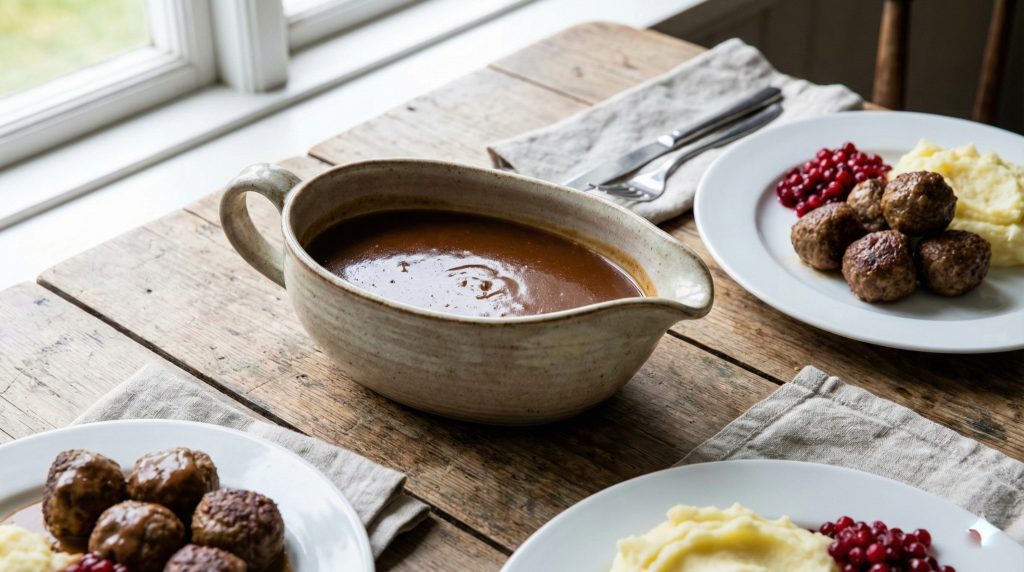
Walk into a Nordic kitchen on a winter evening and you will find a pot of brown gravy bubbling on the stove. It is the quiet hero of home cooking—an unassuming sauce that ties together meatballs, mashed potatoes, roasted meats and winter vegetables. Known by different names—brun saus in Norway, brun sovs in Denmark, brunsås or gräddsås in Sweden and ruskea kastike in Finland—this gravy begins with the same humble technique: butter and flour browned until nutty, thinned with savoury stock and seasoned with the cook’s personal flair.

A Taste of Tradition
The Nordic love affair with brown gravy goes back centuries. Classic Swedish meatballs are often served with thick brown gravy, mashed potatoes and lingonberries, while Danish Christmas lunches would seem incomplete without a generous helping of brun sovs. In Norway, meat patties (kjøttkaker) are simmered in a gravy made from browned butter and flour, sometimes enriched with a slice of sweet brown cheese. Finland’s ruskea kastike has a darker roux and often incorporates cream, soy or mustard for tang.
Despite regional differences, the sauce is always about comfort. Swedish cooks debate whether their meatballs should be served with thick brown gravy or a thin meat juice—proof that everyone has an opinion about what makes the perfect brunsås. That personal touch is what keeps the tradition alive.
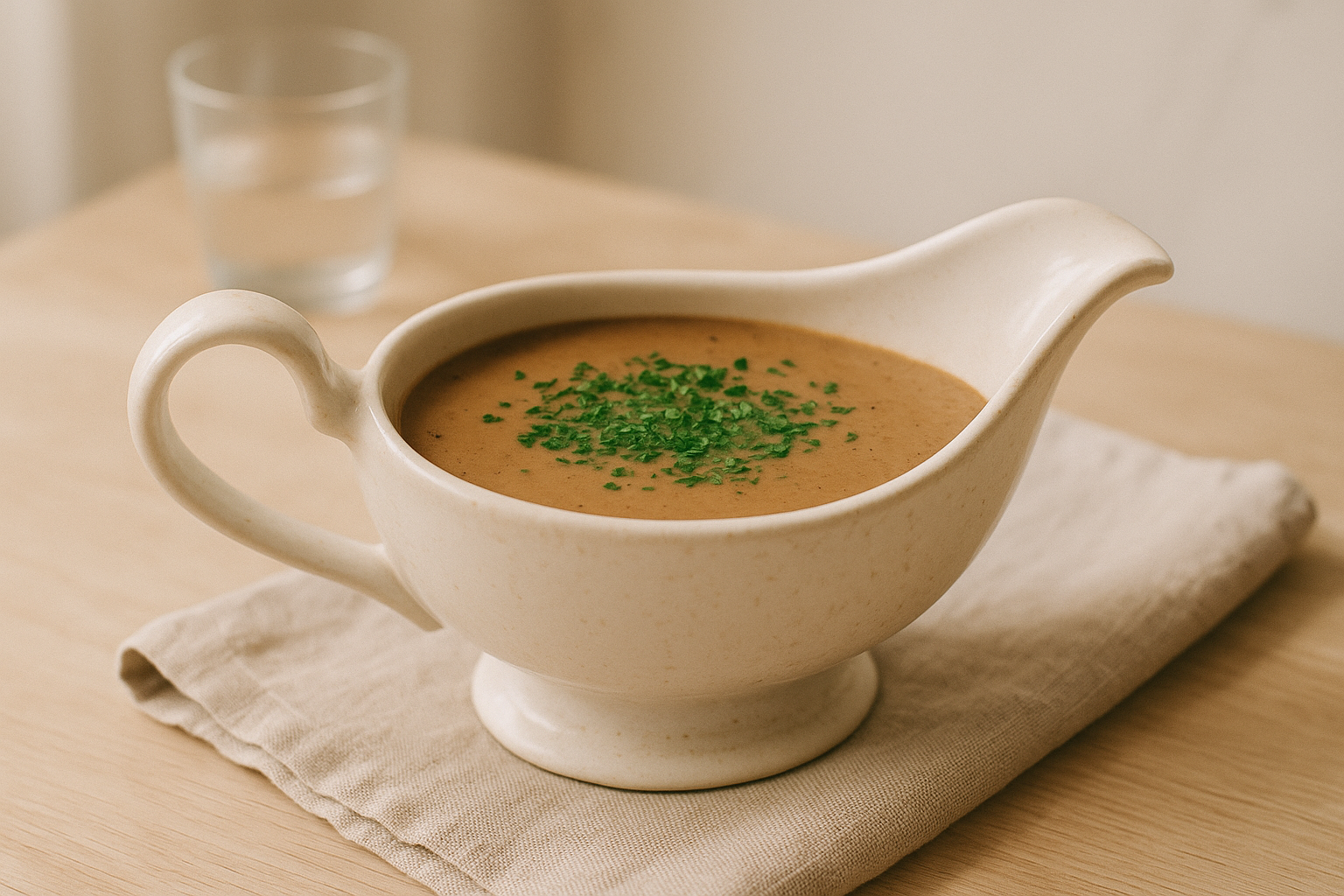
Swedish Meatballs Sauce (Brunsås)
Ingredients
Method
- Brown the butter and flour. Melt the butter in a heavy saucepan over medium heat. Whisk in the flour and keep stirring. The colour should change from pale gold to nutty brown and smell like toasted nuts—this can take 6–10 minutes.
- Splash in the stock. Slowly pour in hot stock, a ladle at a time, whisking constantly. The roux will sputter and hiss before relaxing into a smooth sauce. Keep adding stock until you reach a gravy consistency that coats the back of a spoon.
- Season and customise. Taste the sauce and add salt and pepper. Swirl in cream and soy for a Swedish/Finnish feel, a splash of vinegar and sherry for Danish brun sovs, or a spoonful of brunost for Norwegian richness. Let the gravy simmer gently for 5–10 minutes to marry the flavours.
- Serve warm. If the gravy thickens on the stovetop, whisk in a bit more stock. Refrigerated gravy thickens; reheat gently with a splash of stock or water.
- Brown the roux properly. Patience during the browning stage develops the deep colour and nutty flavour characteristic of brun saus.
- Use good stock. Homemade or high‑quality store‑bought stock enhances the taste. Beef or veal stock works for most recipes; chicken stock gives a lighter flavour.
- Adjust thickness. If the gravy is too thick, whisk in extra stock or cream; if too thin, let it simmer longer or add a slurry of flour mixed with cold water.
- Season to taste. Soy sauce, Worcestershire, black currant jelly or cream can all tweak the flavour to suit your favourite Nordic dish.
Regional Tales
- Norway: Classic Brun saus often begins by browning butter and flour until almost mahogany. A slice of brown cheese melts into the sauce, giving it a caramel note. Norwegians add their meat patties directly to the gravy so that the meat juices flavour the gravy.
- Sweden: A lighter, cream‑rich gravy called gräddsås accompanies Swedish meatballs. It is finished with cream and soy sauce some cooks add apple or blackcurrant jelly for a hint of sweetness.
- Denmark: Brun sovs graces Christmas tables. Danes use butter, flour and beef stock, then stir in vinegar and sherry and sometimes colour the sauce with kulør or soy.
- Finland: Finnish ruskea kastike takes patience. The flour is browned slowly to a dark tone before hot broth is whisked in. Some families enrich it with cream, soy and mustard.
Where to Ladle Your Gravy
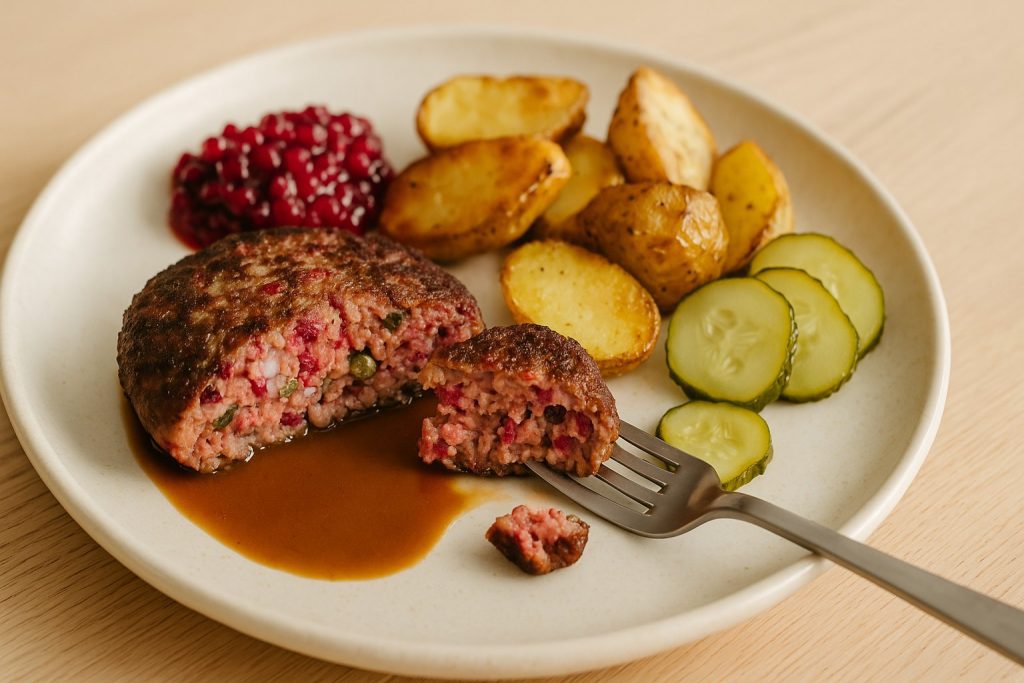
- Swedish meatballs: Meatballs are served with brown gravy, potatoes and lingonberry jam. Try adding pickled cucumber for crunch.
- Norwegian kjøttkaker: Meat patties simmered in brun saus are often served with boiled potatoes, mushy peas and a dollop of lingonberry jam.
- Danish frikadeller and roast pork: Brun sovs is essential at Danish Christmas dinners. Pour it over pork roasts or meatballs and serve with caramelised potatoes.
- Biff à la Lindström: Biff à la Lindström is a classic Swedish beef patty seasoned with pickled beets, capers, and onion for a distinctive tangy flavor.
- Beyond meatballs: Use the gravy with venison or moose steaks, cabbage rolls, boiled sausages or even vegetarian patties. It also elevates roasted root vegetables and rice.
A Final Ladle of Advice
Brown gravy rewards patience. Brown the roux slowly for depth, use hot stock to avoid lumps and add your chosen flavourings near the end. Once you master the base, you can travel across Scandinavia from your kitchen by varying the finish—cream for Sweden, sherry for Denmark, brown cheese for Norway or mustard and soy for Finland.
The next time you crave comfort, whisk up a batch of Nordic brown gravy. It’s more than a sauce; it’s a warm hug from the north and a delicious way to connect with centuries of culinary tradition.