
If Northern Europe had a single “default flavor,” it might be rye: dark, toasty, faintly earthy, and stubbornly practical in the most charming way. While southern Europe built a food identity around wheat and sun, the Nordic countries learned to thrive on a grain that tolerates cold, short summers, and less-than-luxurious soils. That survival story is still baked into the breads we love today—dense loaves, crispbreads that snap like thin ice, and slow-cooked “breads” that land somewhere between cake and pudding. This is the Rye Belt: Finland, Sweden, Denmark, Norway, and Iceland—each with its own rye personality, shaped by climate, trade, and the simple need to make bread last through long winters.
Why rye bread is different (and why it needs a little attitude)
Rye doesn’t behave like wheat. Wheat can build an airy loaf thanks to gluten networks; rye relies more on starch gel and naturally sticky fibers (pentosans). That’s why traditional rye baking leans heavily on sourdough-style fermentation: acidity isn’t just for flavor—it helps prevent a gummy, collapsed crumb when baking high-rye doughs. In other words, rye needs structure and discipline, and sourdough delivers both. The result is a bread culture that prizes keeping qualities: breads made to hang, dry, travel, steam, or sit politely on the counter until you’re ready for another slice tomorrow (and the day after that).
Finland: Sourness as a love language
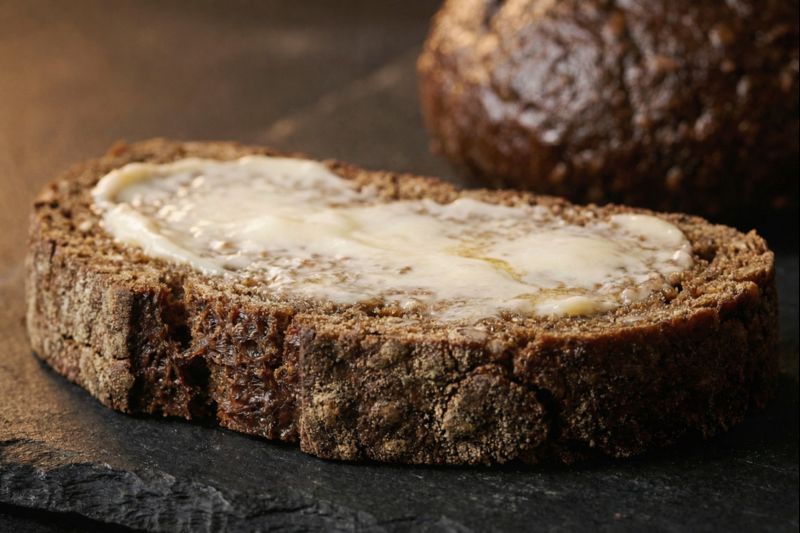
Finnish rye is famously unapologetic—often 100% whole-grain rye, deeply fermented, and proudly unsweetened. It’s so central that ruisleipä (rye bread) was voted Finland’s national food.
Ruisleipä: the archetype
Think dark, tangy, and hearty—the kind of bread that makes butter taste even better. Traditional Finnish starters (leivänjuuri) are maintained for their acidity as much as their leavening power, and the modern everyday format is often pre-cut “rye pieces” made for practical, daily eating.
Reikäleipä: the “hole bread” that hangs around
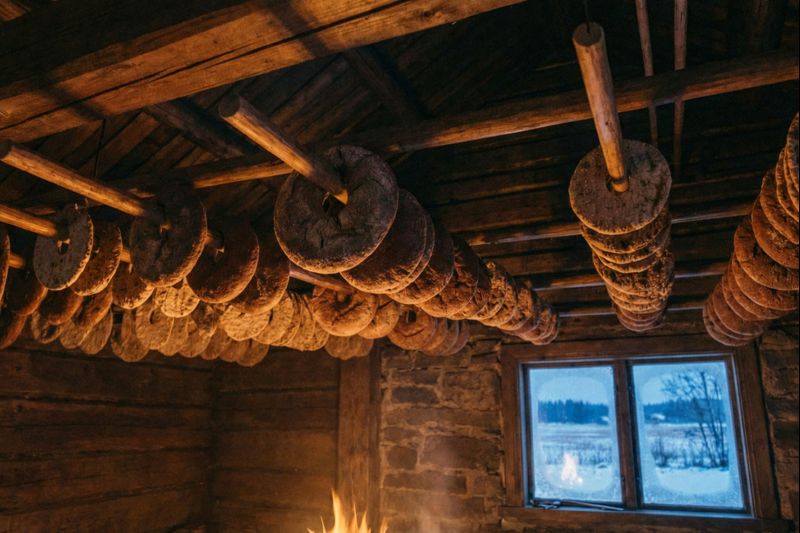
Western Finland perfected a loaf with a literal hole in the center so breads could be threaded onto wooden poles and dried near the ceiling—warm air above, safe from pests below, and bread that could last for months. Functional design has rarely been this delicious.
Saaristolaisleipä: the festive, malty outlier
From the coastal archipelago, this is Finland’s sweeter rye: dark syrup, malt, and a moist, almost sticky slice—built to pair with gravlax and herring at holidays and summer tables alike. If someone tells you they “don’t like rye,” this is often the bread that changes their mind.
For our Saaristolaisleipä recipe, click here!
Sweden: Crispbread royalty and warmly spiced loaves
Sweden’s rye story splits neatly into two lanes: hard bread (crispbread) and soft loaves. Swedish rye often leans sweeter and more aromatic—thanks to historical trade routes that brought in spices and citrus peel to cozy up rye’s deeper notes.
Knäckebröd: the famous snap
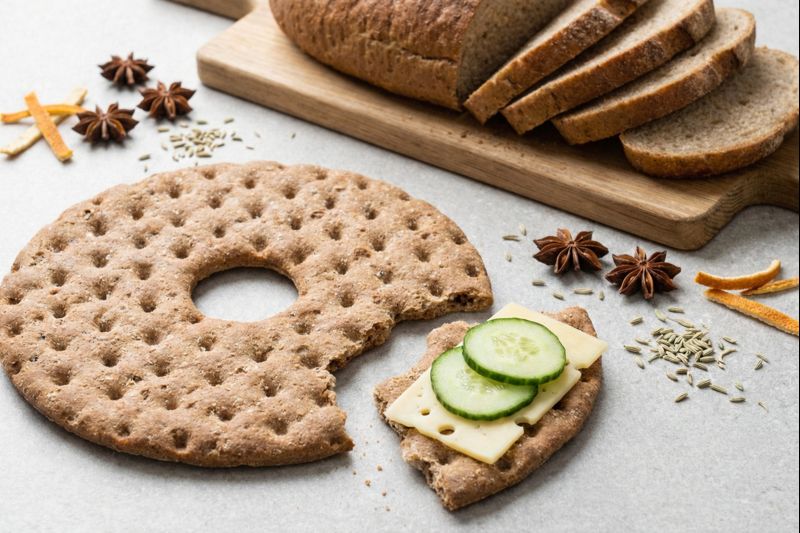
Knäckebröd is Sweden’s global rye ambassador: thin, dry crispbread designed for storage, often with a central hole for hanging and drying—yes, the ceiling makes another appearance. It’s the everyday base for cheese, ham, cucumbers, and anything that benefits from a clean crunch.
Limpa / Vörtbröd: sweet, spiced comfort
Limpa is the soft, slightly sweet rye loaf scented with classic Nordic baking aromatics (often anise, fennel, caraway, and bitter orange peel). Vörtbröd, a seasonal favorite, uses brewer’s wort—making it a natural companion to holiday ham and all things festive.
Kavring: dark, tender, and syrupy
Kavring is the deep-brown loaf that gets its color and sweetness from dark syrup and often a finer, tender crumb than the sour-heavy Finnish styles. It’s a classic choice under seafood salads and pickled herring—where sweet rye and briny toppings get along famously.

Denmark: Rugbrød—the bread that holds your lunch together
In Denmark, rye bread isn’t “served on the side.” It is the plate—especially at lunchtime. Danish rugbrød is engineered to support smørrebrød, the open-faced sandwiches that stack roast beef, remoulade, fried onions, fish, eggs, herbs, and more with composure and dignity.
Want to make rugbrød at home? Click here for recipe.
Rugbrød: the kernel loaf
Dense, rectangular, usually sourdough-based, and often packed with cracked rye kernels and seeds—rugbrød is all about texture and structure. You get sturdy, uniform slices that don’t crumble under toppings (because nobody wants their lunch to collapse mid-bite).
Norway: The practical everyday loaf—and ancient crunch on the side
Norway often meets rye halfway, blending it with wheat (and sometimes oats or barley) into functional, filling breads that suit daily packed lunches.
Kneippbrød: the daily standard
A common Norwegian pan loaf, typically whole-grain focused with a meaningful portion of rye for flavor and fiber, famously tied to the everyday matpakke (packed lunch) culture.
Flatbrød: the wafer-thin classic
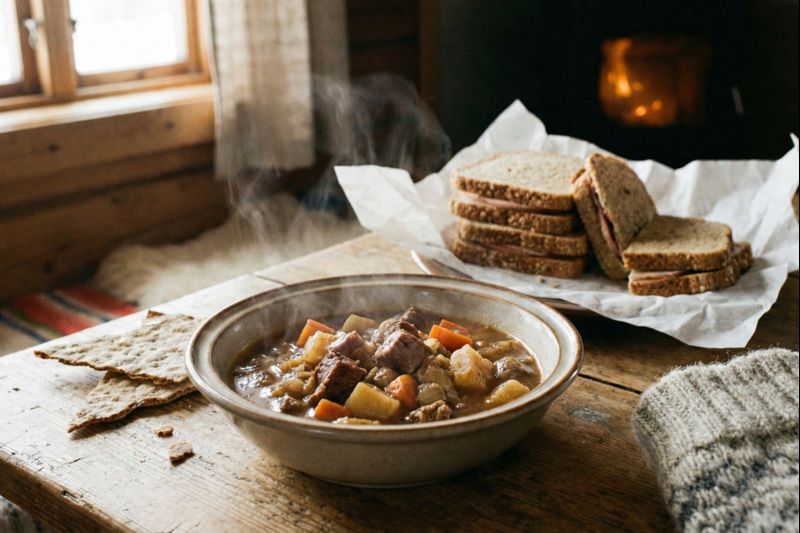
Flatbrød is paper-thin, dry, and snappy—made from simple dough rolled very thin and cooked on a griddle. It’s served alongside soups, stews, and cured meats, adding crunch where you want contrast.
Want to bake flatbrød at home? My Flatbrød Masterclass post has a step-by-step guide and full recipe.
Iceland: Rye bread powered by the earth itself
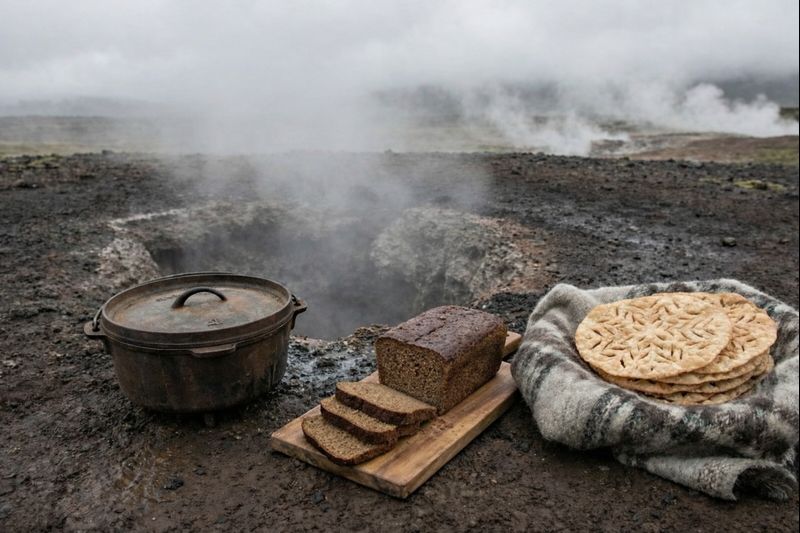
Iceland’s rye traditions are pure resourcefulness. With limited local grain growing and historically scarce fuel, Icelanders turned to geothermal heat to cook rye slowly—creating breads with a unique sweetness and softness.
Rúgbrauð (hverabrauð): hot-spring bread
This dense, crustless rye is traditionally sealed in a pot and buried near hot springs to “bake” (steam) slowly—sometimes for a full day. The long, low heat coaxes deep sweetness and a dark color through slow chemical transformation. It’s also nicknamed “Thunder Bread” for reasons you can probably guess.
Flatkaka and laufabrauð: embers and artistry
Flatkaka is a soft rye flatbread historically cooked on embers or hot stones, leaving charming char-speckles. Laufabrauð is the delicate festive “leaf bread,” rolled wafer-thin and intricately cut before frying—proof that even scarcity can produce beauty (and crunch).
How to start eating rye like a Nordic local
If you’re rye-curious, here’s the easy path:
- For sandwiches: look for a dense seeded rye (Danish-style rugbrød is ideal).
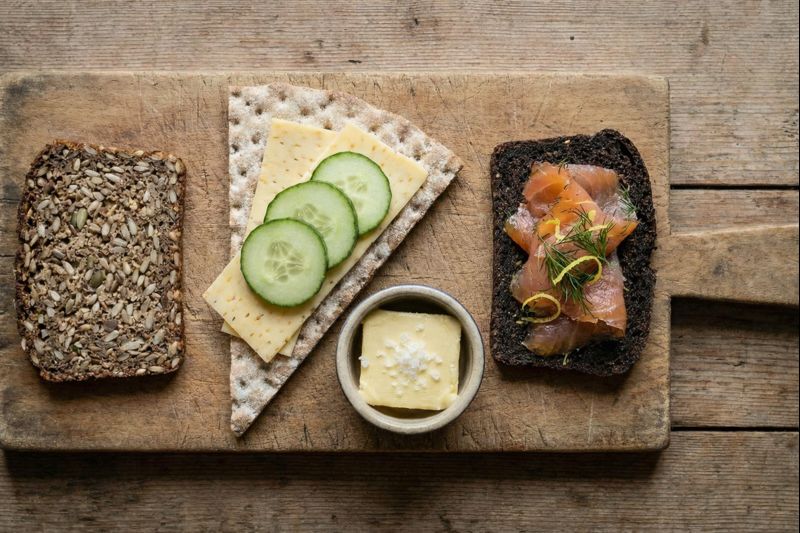
- For breakfast/snacking: crispbread (knäckebröd or sour Finnish-style crisp) with butter, cheese, cucumbers, smoked fish, or eggs.
- For holiday vibes: choose a dark, malty, slightly sweet loaf (archipelago-style or kavring-style) with cured salmon, herring, or ham.
Rye doesn’t shout—it stays. It’s the kind of bread that feels quietly competent, slightly dramatic in flavor, and always ready to hold something delicious on top. Which, frankly, is an excellent life philosophy.
The takeaway: one grain, five cultures, endless character
Across the Nordic region, the same humble basics—flour, water, salt, time, and heat—produce wildly different breads because each place solved a different problem: preservation, trade, lunch culture, mountain pragmatism, or geothermal ingenuity. That diversity is what makes rye bread such a perfect Nordic story: resilient, resourceful, and far more charming than it has any right to be.