
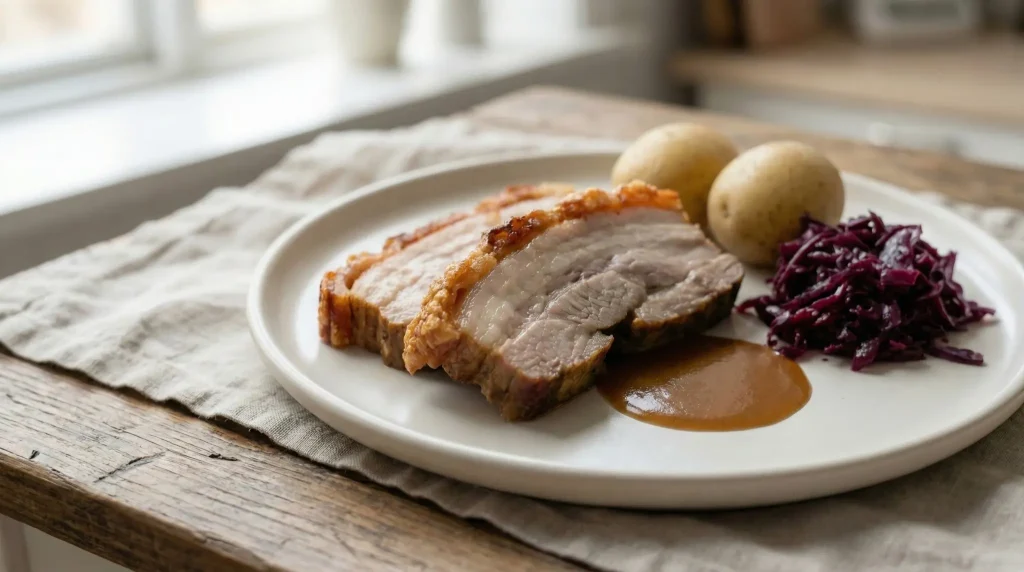
Ribbe doesn’t need an introduction. It introduces itself — through the walls, down the hallway, from the moment it hits the oven. Seasoned pork belly roasting low and slow is one of the most unmistakably good smells a kitchen can produce.
In Norway, ribbe (pronounced RIB-beh) is the Christmas Eve dish for nearly half the population. That’s not a small thing in a country where holiday food is practically a national sport. And once you’ve heard the deeply satisfying crack of a perfect crackling under a knife blade, you’ll understand exactly why this dish inspires such fierce loyalty.
How Ribbe Came to the Table
Ribbe is not Norway’s oldest dish — it’s more of a confident latecomer, arriving around the 18th century and most likely crossing over from Denmark. It settled quickly into the eastern regions, where flat agricultural land made pig farming practical and productive. The potato deserves some credit here: when it arrived in Norwegian farming in the mid-1700s, it freed up grain that had previously fed people. That grain fed pigs instead. Those pigs became ribbe.
What started as practical peasant cooking has become something much harder to define. It’s the sound of a knife cracking through a perfect skin at the dinner table. It’s the smell drifting from the kitchen an hour before anyone sits down. It’s the quiet, slightly smug satisfaction of the cook who got the crackling right. In the annual Norwegian debate between ribbe and pinnekjøtt — the country’s two great Christmas contenders — ribbe consistently wins the popular vote.
The Secret Lives in the Skin
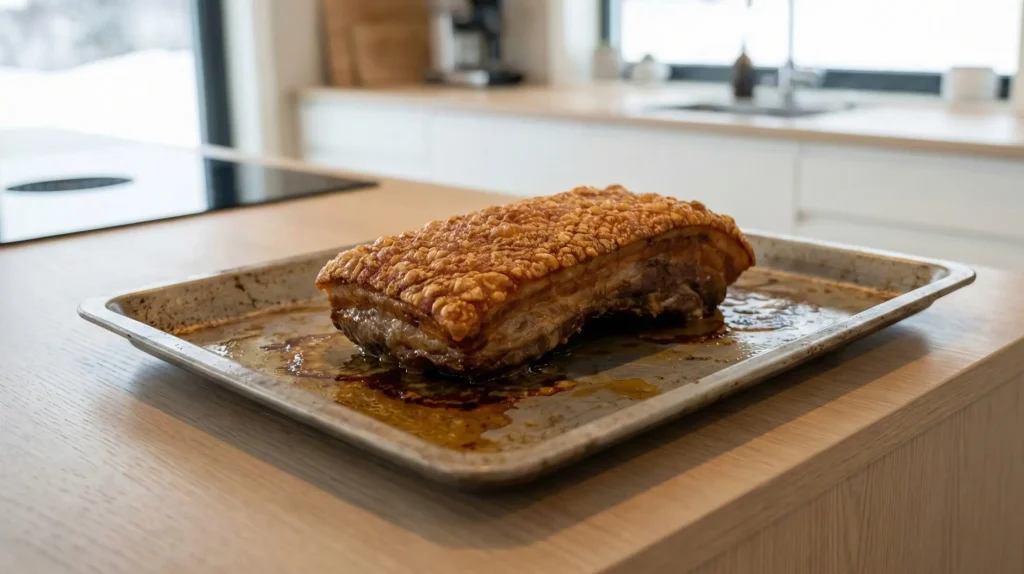
Here’s what separates a good pork roast from a legendary ribbe: the crackling. That’s the crispy, puffed, shattering pork rind on top — and it’s the entire point of the dish. Norwegians have been known to negotiate at the Christmas table over who gets the crispiest piece. Nobody argues over the soft piece. That tells you everything.
Perfect crackling requires a two-stage cooking method. First, you steam the belly covered at high heat, which tenderizes the meat and softens the skin. Then you blast it with fierce dry heat to puff and crisp the rind into something magnificent. Score the skin deeply, salt it generously, and give it a few quiet days in the refrigerator. That’s the entire secret — time, preparation, and temperature.
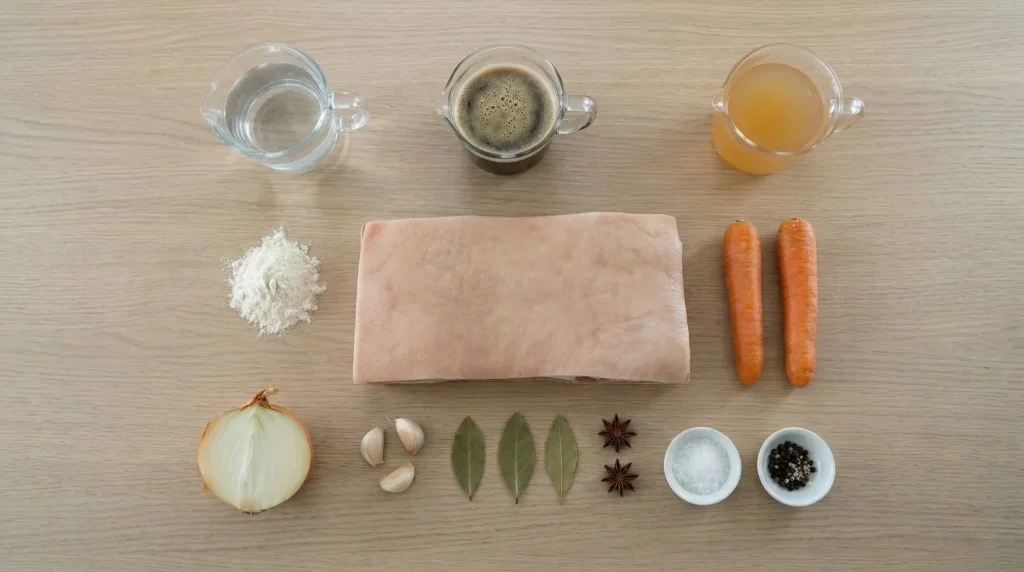
What You Will Need
Bone-in pork belly with skin intact — The star of the show. Ask your butcher specifically for a piece with the skin on. Some counters label it “pork side ribs” or “fresh side pork.” Bone-in stays juicier through the long roast.
Yellow onion — Think of it as a natural roasting rack that also happens to make your gravy taste better.
Carrots — Aromatics for the braising base; they quietly build the backbone of your gravy.
Garlic cloves — Gentle warmth and earthy depth throughout the cook.
Spices & seasonings — salt, freshly ground black pepper , bay leaves, star anise — The salt seasons deeply, drawing moisture out and pulling it back in. The pepper adds a clean, simple bite. The bay leaves bring a subtle herbal earthiness that’s very traditional. The star anise adds a quietly festive warmth that blends into the background without announcing itself. Together, they do a lot of quiet, important work.
Water — For the initial steam. The pork will contribute its own drippings generously from there.
Dark beer or low-hop ale — Optional, but warmly recommended. It deepens the braising liquid and makes a spectacular gravy base. Replace with extra stock or water if you prefer.
All-purpose flour — For thickening the pan gravy into something worth pouring over everything.
Beef or pork stock — Rounds out the gravy alongside those rich, golden drippings.
Setting Up for Success
Ribbe rewards the patient cook — and most of the real work happens before the oven ever turns on. At least one day ahead (ideally two to three), score the skin in a tight crosshatch grid with squares roughly ¾ inch / 2 cm across. Cut firmly through the skin and fat, but stop just before the meat.
Rub salt and pepper firmly all over, pressing well into those score lines, and refrigerate uncovered, skin-side up. That dry, cold air is doing important work: the drier the skin going in, the crispier the crackling coming out.
On cooking day, let the pork sit at room temperature for about 30 minutes before it goes into the oven. It’s a small step that helps the meat cook more evenly.
How to Serve It
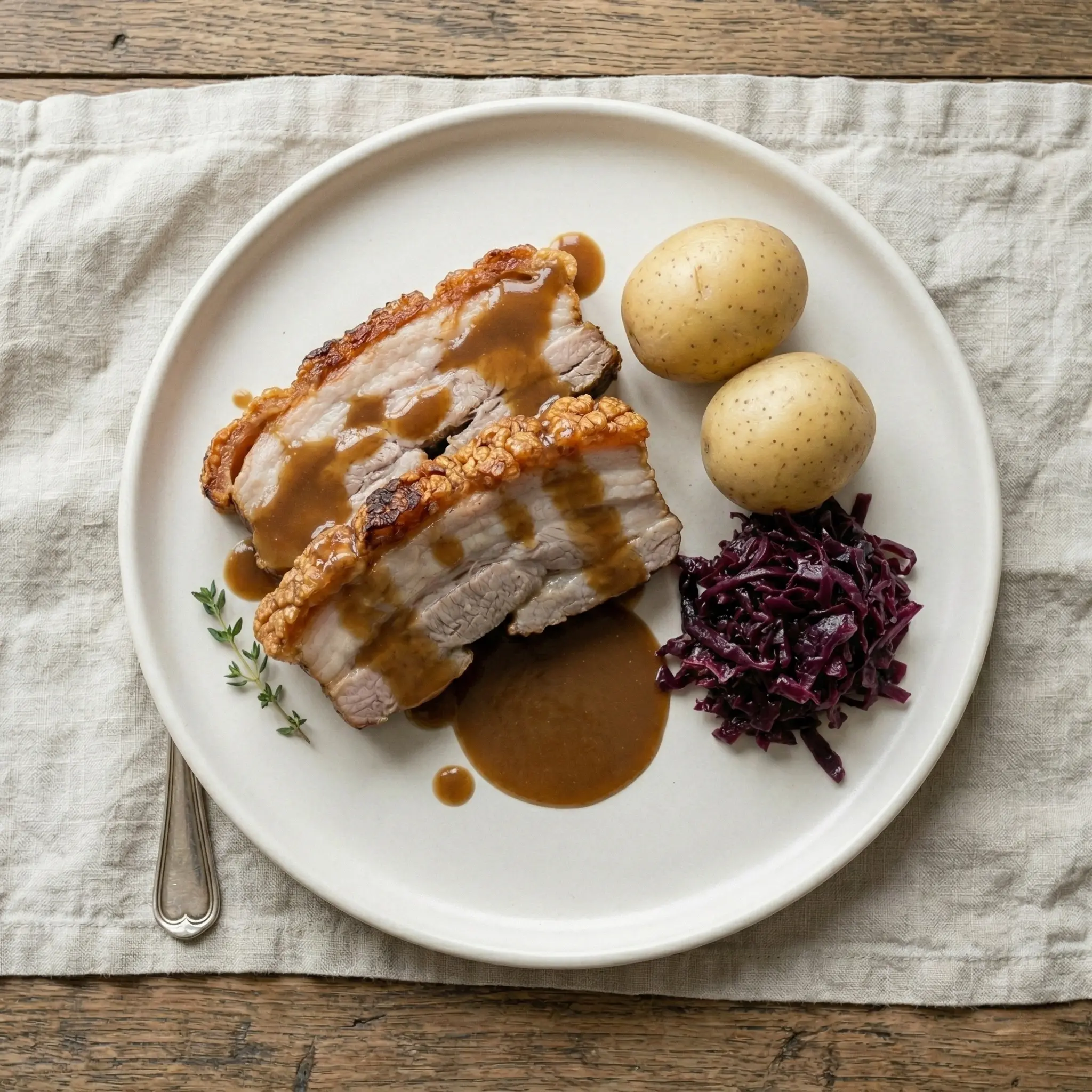
Ribbe is a full celebration on its own, but traditional Norwegian sides make it truly sing:
- Boiled or mashed potatoes — creamy, buttery, and beautifully simple
- Braised red cabbage — sweet, tangy, and striking on the plate
- Pan gravy — made from those deeply flavorful drippings
- Lingonberry jam — bright and tart against the richness of the pork
- Medisterkaker (Norwegian pork patties) — optional, but deeply traditional
Ribbe: Norway’s Crispy Pork Belly
Ingredients
Method
- Score the skin. Using a sharp, pointed knife, cut a tight crosshatch pattern into the pork skin — squares about ¾ in / 2 cm across. Cut through the skin and fat, but stop just before the meat.
- Season generously. Rub salt and pepper all over, pressing firmly into the score marks. Refrigerate uncovered, skin-side up, for 1–3 days. Overnight is the minimum; three days is ideal.
- Preheat your oven to 450°F (230°C).
- Build the braising base. Scatter onion, carrots, garlic, bay leaves, and star anise in the bottom of a deep roasting pan. Pour in the water and beer.
- Position the pork. Set the belly skin-side up on top of the vegetables. Cover the pan tightly with aluminum foil.
- Steam-roast. Roast covered at 450°F (230°C) for 45 minutes. The steam tenderizes the meat and begins opening the scored skin.
- Lower and uncover. Reduce oven to 400°F (200°C). Remove the foil and continue roasting for 60–90 minutes, until the skin is golden and crisping. Check every 20 minutes.
- The final blast. Once the meat reaches 160°F (71°C) internally, increase heat to 475°F (245°C). Roast for a final 15–20 minutes until the skin puffs, blisters, and turns deeply golden. Watch closely — crackling can go from perfect to burnt with alarming speed.
- Rest — this is non-negotiable. Remove from the oven and rest uncovered for 20–30 minutes. Do not tent or wrap it. Steam is the enemy of crispy skin.
- Make the gravy. Strain drippings into a small saucepan. Heat over medium, whisk in flour, slowly add the stock, and simmer 5 minutes until thickened. Season to taste.
- Carve and serve. Use your score marks as a cutting guide. Each portion should have both crackling skin and tender, juicy rib meat.
Notes
- Butcher tip: Ask specifically for bone-in pork belly with the skin fully intact. Without skin, there is no crackling — and without crackling, there is no ribbe.
- Beer substitute: Replace with additional stock or water for an alcohol-free version.
- Serving size: Plan for roughly 1 lb (500 g) of bone-in pork belly per person. Holiday appetites tend to surprise everyone.
FAQ & Troubleshooting
This is the most common ribbe heartbreak, and there are usually two culprits. Either the skin wasn’t dry enough before cooking, or the final high-heat blast was too short. Next time, leave the salted pork uncovered in the fridge for the full three days. Also confirm your score marks cut fully through the skin and fat.
You likely need more heat. The final stage should reach at least 450°F (230°C), ideally 475°F (245°C). If stubborn patches persist, carefully use the broiler for 3–5 minutes. Stand in front of the oven. Seriously — this is not a step to wander away from.
The steam phase is your best friend, and it probably wasn’t sealed tightly enough. Make sure the foil covers the pan completely so no moisture escapes during that first 45 minutes. Also, resting the pork fully (20–30 minutes) before carving makes a significant difference in juiciness.
Absolutely. Swap the beer for additional water or unsalted stock. You’ll still get great results — the beer simply adds extra depth to the drippings and gravy.
You can, though bone-in stays juicier and adds flavor. If using boneless, check the internal temperature earlier and reduce total roasting time slightly.
Score and salt the pork up to three days ahead — that’s actually the ideal. The full roast is best done the day of serving. Crackling does not survive overnight in the refrigerator with any dignity.
Cover the already-crispy sections with small pieces of foil and continue roasting the softer spots. A little babysitting results in even crackling across the whole glorious piece.