

In Finland, the arrival of February isn’t marked by Valentine’s Day candy, but by the appearance of a very specific, spice-laden pastry: the Runebergintorttu.
In the world of Nordic baking, few traditions are as fiercely guarded as the Runebergintorttu. While many know the korvapuusti (cinnamon bun), I’ve spent decades exploring the deeper, more seasonal corners of Finnish pastry, and nothing signals the heart of winter quite like this rum-soaked icon.
Traditionally served only from early January until February 5th to honor national poet J.L. Runeberg and baked in special tall, cylindrical molds, this ‘Poet’s Cake’ is a study in resourcefulness.
Its unique base of crushed cookies and breadcrumbs creates a texture you simply won’t find in modern Western cakes—and after years of refining my own recipe, I’m sharing how to master this dense, spice-laden classic at home to work perfectly in a standard muffin tin.

A Sweet Slice of Finnish History and Ingenuity
This delightful pastry draws its name from Johan Ludvig Runeberg, the national poet of Finland. According to legend, Runeberg had quite the sweet tooth. In fact, he was said to enjoy one of these cakes every morning for breakfast – often accompanied by a small glass of Punsch – a Swedish arrack-based liqueur.
But the real hero of the tale is Runeberg’s wife, Fredrika Runeberg, who is credited with inventing the cake. The story goes that one winter day in the 1850s, her husband was craving something sweet, and Fredrika had to improvise with what was on hand. Ever the resourceful home baker, she mixed leftover bread crumbs and crushed cookies with almonds, a bit of flour, sugar, and a splash of Punsch to create a humble yet delectable pastry. She topped it with some jam made from garden berries and a ring of sugar icing – and just like that, a Finnish classic was born.
Fredrika’s make-do creation was a true zero-waste recipe, long before that was a buzzword. (Talk about being ahead of the trend!) Those leftover gingerbread cookies and bits of stale cake from Christmas found new life in her batter. Today, when we talk about sustainable cooking and upcycling food, the Runeberg cake fits right in – a 19th-century example of not letting good leftovers go to waste. Each ingredient had a purpose, and nothing was thrown out needlessly. It’s a tradition that feels surprisingly modern in our era of “waste-not” baking.
The popularity of Fredrika’s creation quickly grew. By the late 1800s, local cafés and bakeries in Finland were selling Runeberg’s tortes every year as February 5th, Runeberg’s birthday (now celebrated as Runeberg Day), approached. What began as a wife’s loving experiment for her poet husband turned into a nationwide beloved treat.
These days, Finns eagerly await the season when Runeberg cakes make their annual appearance. In fact, each year millions of Runeberg tortes are enjoyed in Finland during the Runeberg Day festivities. Traditionally they’re available only from early January through February 5th – though in Runeberg’s hometown of Porvoo, some cafés cheekily serve them year-round.
A One-of-a-Kind Pastry: Flavor, Texture, and Tradition
So, what makes the Runeberg cake so special? First off, its flavor is wonderfully cozy and distinct. The cake is enriched with almonds – usually in the form of ground almonds or almond meal – which gives it a warm nutty taste. Many recipes (including the one below) also call for a few drops of bitter almond extract or oil, which adds a deeper marzipan-like aroma. (Fun fact: Fredrika Runeberg allegedly added a dash of bitter almond oil to the cakes in hopes of deterring her husband’s insatiable sweet tooth; instead, it only made them more delicious. So much for that plan!)
The sweetness in the cake itself is fairly moderate, letting the tangy raspberry jam on top shine. A hint of spice is often present too – some versions include a pinch of cardamom or ginger, especially if using crumbled gingerbread cookies as part of the batter. All these flavors come together in each bite: nutty, a little spicy, buttery, and fruity from the jam.
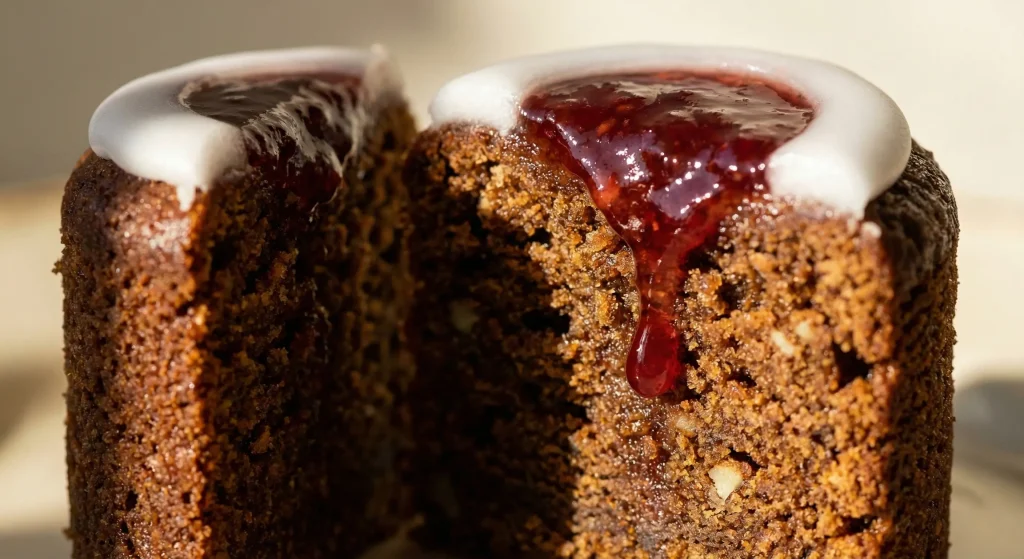
The texture of a Runebergintorttu is quite unique. Thanks to the breadcrumbs and almond flour in the batter, the crumb is dense and slightly coarse – more substantial than a cupcake, but tender and moist when done right. In fact, the original Runeberg tortes were known to be a bit on the dry side (they were meant to be enjoyed with coffee or punch, after all). To counter this, it became customary to brush the cakes with a syrup laced with rum or arrack after baking, adding moisture and a subtle boozy warmth.
Don’t worry if you’re not into alcohol – you can use a simple sugar syrup or even apple juice to moisten the cakes for extra tenderness. With the syrup soak, the cake’s interior turns lusciously moist, contrasting with the slightly crisp exterior edges. It’s a perfect little symphony of textures: the soft cake, the sticky sweet jam, and the smooth icing on top.
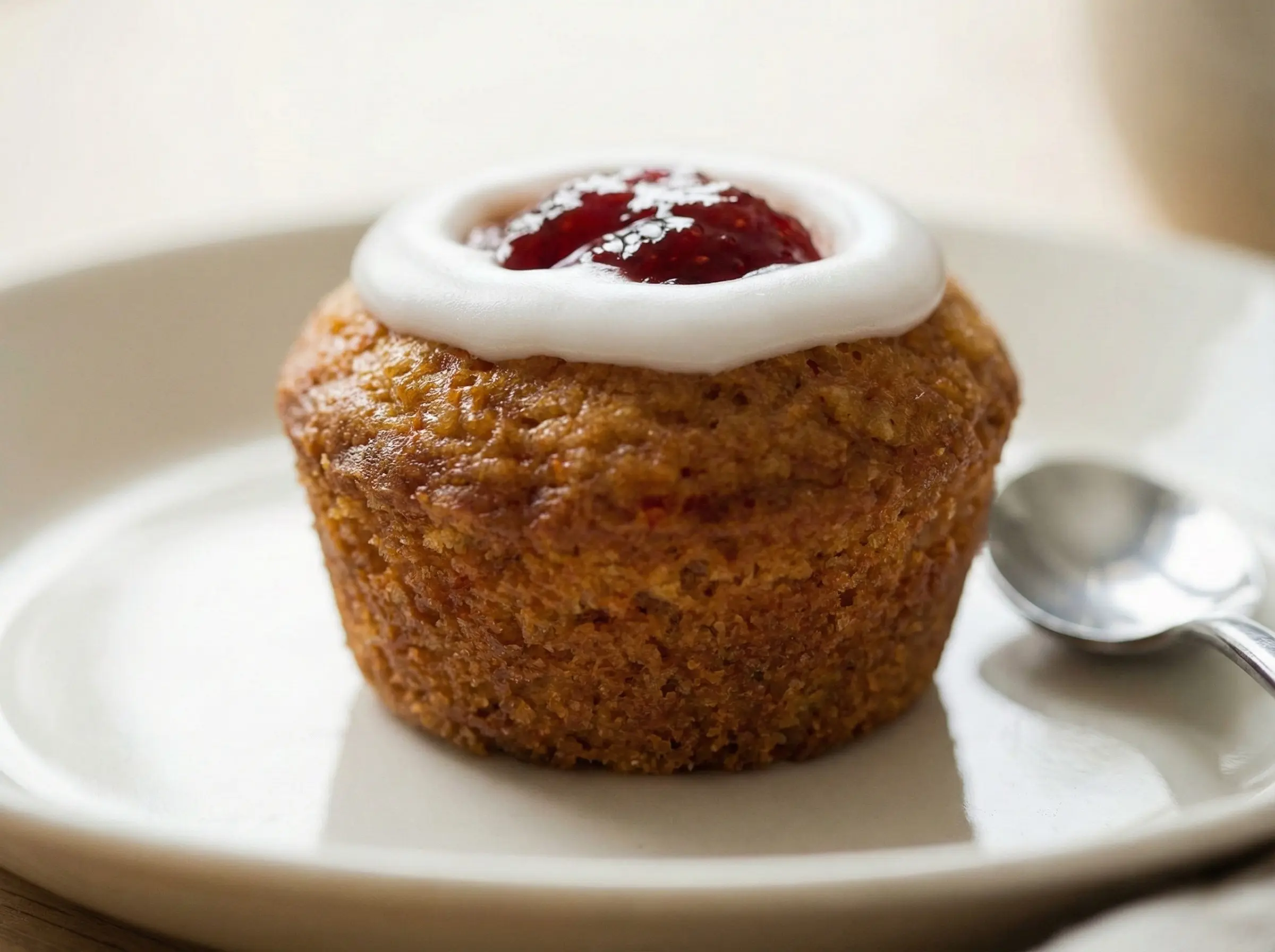
And speaking of that topping – it’s the signature look of a Runeberg cake. Each small cylindrical cake is crowned with a spoonful of bright raspberry jam, which is then circled by a ring of thick white sugar icing. The appearance is so iconic that you’ll recognize a Runeberg torte immediately once you’ve seen one. (It kind of looks like a tiny edible “well” of jam with an icing brim.)
This simple garnish of jam and icing not only adds flavor and sweetness but also pays homage to the original presentation Fredrika came up with. Visually and taste-wise, it’s a treat that feels both homespun and festive at the same time.
Finally, enjoying Runebergintorttu is as much a cultural experience as a culinary one. In Finland, people typically savor these treats with a cup of strong coffee. The cake’s not-overly-sweet, almond-forward profile makes it a lovely companion to coffee or tea – think of it as Finland’s answer to a muffin or coffee cake, but with its own personality. Traditionally eaten in winter, Runeberg cakes somehow capture the essence of cozy Nordic winters: they’re hearty, sweet but not cloying, and utterly comforting.
Whether you’re a history buff intrigued by the tale of the poet’s pastry or just a dessert lover looking for something new, the Runeberg torte is worth a try.
Traditional Molds vs. Muffin Tins
The iconic look of a store-bought Runeberg torte comes from special cylindrical molds. These taller, straight-sided tins give the cakes their signature “top hat” shape. However, unless you are a professional Finnish baker, you probably don’t have these sitting in your cupboard!
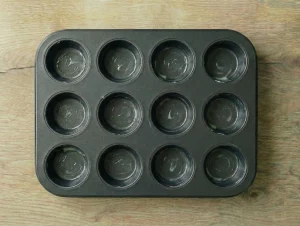
The good news is that you absolutely do not need special equipment to make these. This recipe is designed to work in a standard 12-cup muffin tin.
What’s the difference?
- The Shape: Your cakes will have slightly tapered sides rather than straight vertical walls.
- The Taste: 100% authentic. The dense, almond-crumb texture and the rum-raspberry flavor profile are exactly what you would expect from a bakery.
Baker’s Tip: Because standard muffin cups are shallower than traditional molds, these bake faster. Watch your oven time closely to ensure they stay moist.
Below, you’ll find a recipe to make about a dozen of these Finnish almond cakes with raspberry jam at home. It’s authentic yet accessible – we use common ingredients (no arrack liqueur required, unless you want to be very traditional) and we’ll give tips for substitutes. Time to channel your inner Fredrika and bake a bit of Finnish history!
Ingredients
Method
- Preheat your oven to 200 °C (390 °F).
- Grease a muffin tin (or your Runeberg cake molds, if you have them) with butter and dust lightly with flour or breadcrumbs. This will help the little cakes release easily after baking.
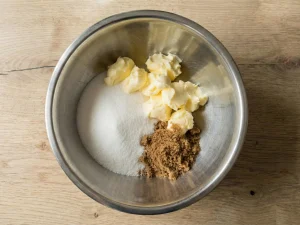
- In a large bowl, cream the softened butter with the sugar (and brown sugar, if using) until the mixture is light and fluffy.
- This should take about 2–3 minutes of vigorous mixing (use a hand mixer or stand mixer on medium speed).
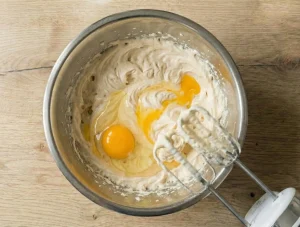
- Scrape down the sides of the bowl as needed. Beat in the eggs one at a time, mixing well after each addition. The batter may look a bit curdled at this stage – that’s okay.
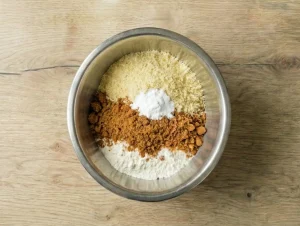
- In a separate bowl, combine the flour, breadcrumbs (or cookie crumbs), almond meal, baking powder, cardamom, and salt, stirring until evenly mixed.
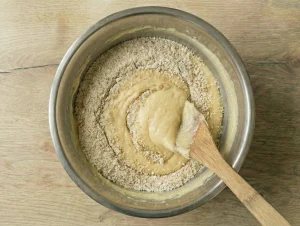
- Add half of these dry ingredients into the butter-egg mixture and stir gently to combine.
- Pour in the sour cream (and if using sour cream, don’t forget to add that ½ tsp baking soda now as well)
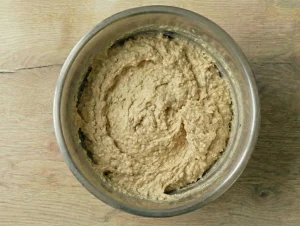
- Add the remaining dry ingredients and continue to mix until everything is just incorporated. Avoid over-mixing – you want a thick, slightly textured batter, not a super-smooth cake batter. (It’s normal that this batter is thicker than typical cake batter due to the breadcrumbs.)
- Mix in the bitter almond or almond extract. This little bit of almond essence gives the cakes their characteristic aromatic note, so don’t skip it unless you absolutely have to.
- At this point, the batter will be quite thick (somewhere between a cookie dough and a muffin batter in consistency). That’s perfect.
- Spoon the batter into your prepared muffin cups. Fill each cup to about 2/3 full (you want to leave room for the cakes to rise).
- If you’re aiming for a more traditional tall shape and you have enough batter, you can fill slightly more to get a bit of a dome – but generally 2/3 is safe to prevent overflow.
- Smooth the tops of the batter gently with the back of a spoon.
- Now, make a small indent in the center of each batter mound with your thumb or a spoon.
- Drop about 1 teaspoon of raspberry jam into each indent. (This is an old trick: some jam baked into the cake infuses it with moisture and flavor. Don’t worry if it sinks a little during baking – we’ll add more jam on top later.)
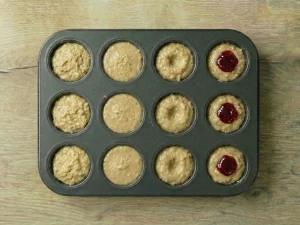
- Place the tin in the preheated oven and bake for 15–20 minutes on the center rack (the time will depend on your oven and the size of your cakes).
- The Runeberg cakes are done when they have risen, turned a lovely golden brown, and a toothpick inserted into the center (avoid the jam pocket when testing) comes out clean or with just a few moist crumbs.
- Do not overbake – because of the low moisture ingredients like breadcrumbs, they can dry out if left too long.
- When done, remove the cakes from the oven and let them cool in the pan for about 5 minutes, then transfer to a wire rack.

- While the cakes are cooling, prepare the rum syrup (if using). In a small saucepan, combine the water and 2 Tbsp sugar. Bring to a boil, stirring until the sugar dissolves. Remove from heat and stir in the rum (or arrack).
- Let this syrup cool for a couple of minutes. Then, using a pastry brush, brush the warm syrup generously over the top of each cake. You can do this while the cakes are still a bit warm. The liquid will soak in and impart wonderful moisture and a hint of rum flavor.
- If you really want extra moist cakes, you can poke a few tiny holes on top of each cake with a toothpick before brushing on the syrup – this helps it seep in. Brush each cake 2–3 times, allowing the syrup to soak in between brushings. (You might not use all the syrup; that’s fine. Or use the extra to brush the sides of the cakes if you like.) This step is optional, but highly recommended to ensure a moist result
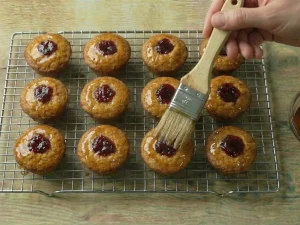
- Once the cakes have fully cooled (and after syrup soaking, if done), it’s time for the signature finish.
- If the jam dollop on top of the cakes has sunk in during baking (often it creates a little crater), add a fresh small spoonful of raspberry jam on top of each cake now.
- Next, prepare the powdered sugar icing by mixing the powdered sugar with just enough water (start with 2 teaspoons and add drop by drop more) to make a thick, opaque icing that barely drips off the spoon. It should be thick enough to hold a shape, but not so stiff that it won’t pipe. Transfer the icing into a piping bag with a small round tip (or a zip-top bag with a tiny corner snipped off).
- Carefully pipe a ring of icing around the jam on each cake. The ring should encircle the jam like a little white frosting halo. (Tip: if you’re not confident with piping, you can also spoon the icing in a ring shape – it might be a bit rustic-looking, but it will taste just as good!)
- Let the icing set for 10–15 minutes until it firms up.

- Your Finnish poet’s cakes are ready!
- Traditionally, Runebergintortut are served at room temperature, alongside a cup of hot coffee or tea. The cakes should be moist, fragrant with almond and spice, and have that delightful jam center in each bite. Enjoy one for fika (coffee break) and you’ll almost feel like you’ve been transported to a snowy Helsinki café. Hyvää ruokahalua – bon appétit!
Notes
Storage:
If you have leftovers (lucky you!), store the cakes in an airtight container. They actually improve in flavor after a day as the flavors meld. Keep them at room temperature for up to 2 days, or in the refrigerator for up to 4–5 days. (They keep well thanks to the syrup and the moisture from the almonds and sour cream.) You can also freeze undecorated cakes (without jam and icing) for up to 2 months; thaw and then add jam + icing before serving for the best texture.FAQ & Troubleshooting
Ground almonds are pretty key for the authentic texture and taste. If you don’t have almond meal, you can make your own by grinding blanched almonds in a food processor until fine (just be careful not to go so long that it turns into almond butter). As a substitute, some have used other nuts like hazelnut or walnut meal, but then it won’t be quite the classic flavor. In a pinch, you could replace the almond meal with an equal amount of flour and a teaspoon of almond extract for flavor – you’ll get a similar texture (though slightly less moist) and still that almond note from the extract.
If you haven’t got a stash of stale gingerbread or cake crumbs (understandable!), you can use plain store-bought breadcrumbs (the unseasoned kind) or grind up some plain tea biscuits/digestive cookies or graham crackers. Even crushed vanilla wafers or shortbread cookies could work. The idea is to have roughly 50 g worth of dry crumbs to give the cake its unique texture. If using plain breadcrumbs and you want that hint of spice, consider adding an extra pinch of cinnamon or ginger to the batter to mimic the spice from gingerbread. The crumbs don’t need to be super fine – a mix of fine and a few slightly larger bits is okay, it adds to the “crumb” texture of the cake.
A few possibilities: (1) They might have been over-baked. Ovens vary, and these small cakes can go from just done to overdone quickly. Next time, check a couple minutes earlier and take them out as soon as a tester comes clean. (2) Not enough moisture in the batter – be sure you included the sour cream or other dairy, which really helps. (3) No syrup soak – the rum (or sugar) syrup brushed on after baking is a key trick to a moist Runeberg torte. If you skipped it, the cakes will definitely be drier. Remedy a dry cake by drizzling a little simple syrup on top even after it’s cooled – it does help. And of course, enjoy them with a hot beverage; a dip in coffee can resurrect even a day-old dryish cake!
Not at all. While authentic Runeberg cakes often include a rum or arrack (punch) flavor, you can absolutely make a non-alcoholic version that’s just as delightful. For the syrup, as mentioned, swap the rum for apple juice or just use a plain sugar syrup to brush on. You can also flavor the syrup with a drop of almond extract or vanilla if you want extra flavor without alcohol. In the batter, there’s no actual liquor – just a tiny bit of bitter almond extract for flavor, which contains no significant alcohol. So yes, you can keep it completely booze-free and still have delicious results.
No piping bag, no problem! You can use a small zip-top plastic bag: spoon the icing in, push it to one corner, and snip a tiny piece off that corner to make a DIY piping bag. Then squeeze to pipe a ring. If that still sounds like too much fuss, you can also take a more rustic approach: use a teaspoon to carefully drizzle or place the icing in a ring shape. It might not be a perfect circle, but it will taste just as good. Another idea: pipe a circle of whipped cream instead of icing for a less sweet but pretty topping, then add the jam – it won’t be traditional, but it’ll be yummy!
Yes – you can adapt this recipe into a single cake (for example, in a 8-inch round pan) and call it a “Runeberg cake”. You’d basically be making a rustic almond crumb cake with jam. Increase the baking time (likely ~25-30 minutes, but check often). Once it’s baked, poke a few holes and pour the syrup over the whole cake. Then spread a thin layer of icing and dollops of jam on top (or get creative with a swirl or pattern). It won’t have the classic look of the individual tortes, but the flavor will be the same and it’s a fun twist for serving a crowd.
With its blend of almonds, jam, and a charming history, the Runebergintorttu is truly a little cake with a big heart. It’s cozy enough for a winter breakfast treat yet elegant enough to serve to guests with coffee. And knowing that it was born from a frugal use of leftovers makes it even more endearing in today’s world of sustainable cooking. Bake a batch of these Finnish poet’s cakes, and enjoy a taste of Nordic tradition – no passport required.