
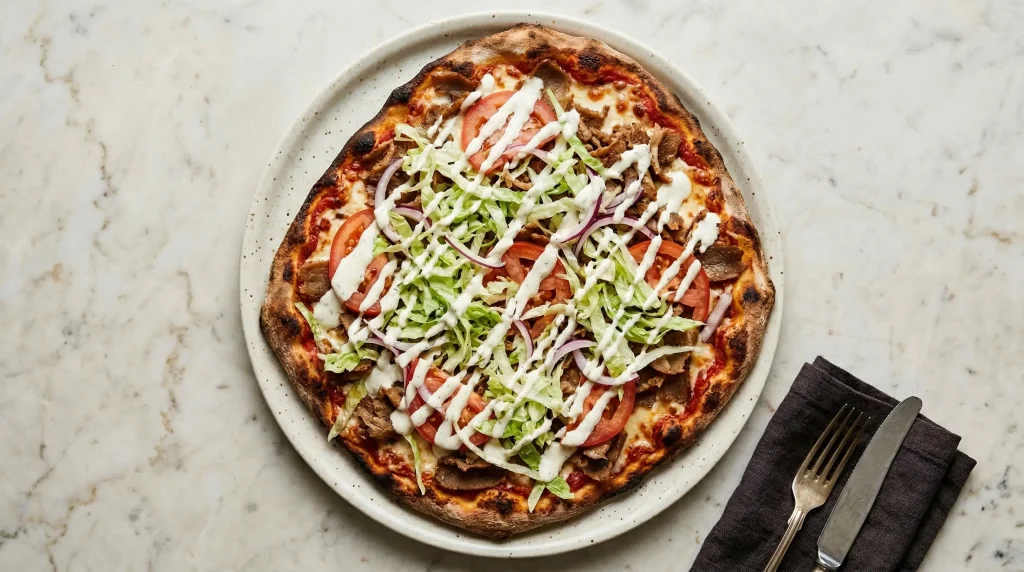
If pizza has a rebellious cousin, it lives in Sweden and goes by kebabpizza.
Forget everything you think a pizza should be. This Swedish icon arrives loaded with warmly spiced döner-style meat and melted mozzarella, then finished with a generous drizzle of cool, garlicky cream sauce. Some keep it beautifully simple — just the meat, pepperoncini, and sauce. Others pile on shredded lettuce, ripe tomatoes, and red onion for that iconic hot-and-cold crunch. Either way, it is a beautiful mess. And it is completely magnificent.
This is kebab pizza, and in Sweden, it is not a novelty. It is a Friday night institution.
Why Kebab Pizza Is Uniquely Swedish
Sweden’s pizza story begins not with a restaurant, but with a factory. In 1947, around 300 Italian guest workers arrived in Västerås to work at the ASEA industrial plant. They brought pizza with them — and for over twenty years, it stayed quietly within their own community. The wider Swedish public had no idea it existed.
That changed in 1968, when pizza finally appeared on a Stockholm menu for the first time. A year later, Italian immigrant Giuseppe Sperandio opened Sweden’s first dedicated pizzeria in Stockholm, and the floodgates opened. As Sweden’s booming economy attracted waves of Southern European immigrants, a new small-business model took shape: independent, neighbourhood pizzerias run by Italian families. No corporate franchises, no chains — just a local guy with a dough hook and an oven. It was the opposite of how pizza spread in the US and UK, and it produced something far more interesting.
Then came the 1980s, and the shift that changed everything. New waves of immigrants arrived from the Middle East, the Balkans, and Turkey. Many were qualified professionals who faced real barriers to traditional employment in Sweden. Many bought the very pizzerias the Italian generation had built. And because these new owners brought deep expertise in Middle Eastern cooking, something delicious and inevitable happened: döner kebab rotisseries started spinning next to pizza ovens in the same small kitchen.
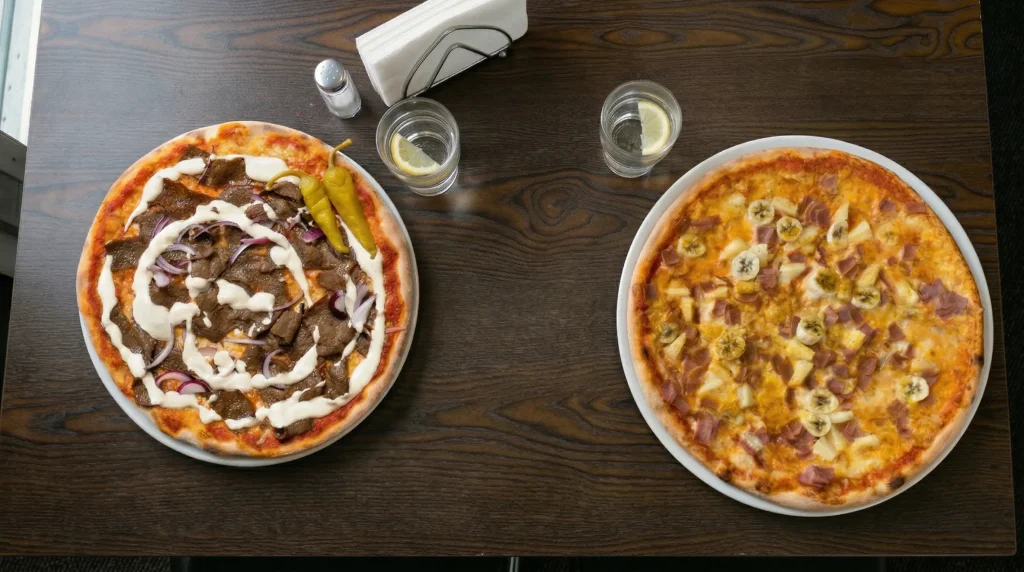
The kebab pizza was not invented. It was a natural collision. Spiced döner meat found its way onto pizza bases, garlic sauce replaced tomato, and an icon was born. They created topping combinations that would make a Neapolitan chef raise a slow, bewildered eyebrow — banana and peanuts on pizza? In Sweden, absolutely, and if you don’t believe me, Swedish banana curry pizza is very much a real and beloved thing. But kebabpizza? That became a national treasure.
Today it is consistently among the most-ordered pizzas in the country. The genius is in the contrast: piping hot, spiced meat against cool, creamy sauce and cold, crunchy toppings. Each bite is a little surprise party in your mouth — and now you know exactly how it got there.
The Three Layers That Make It Work
Kebab pizza is not just about piling things onto a crust. Each component has a specific job to do.
The base is thin and crispy with a simple tomato sauce — just crushed tomatoes, garlic, and a pinch of oregano. Swedish pizza crust tends to be thinner and slightly crispier than the thick American style, with a satisfying chew at the edges.
The meat is döner-style: ground lamb and beef seasoned with cumin, paprika, garlic, and a hint of coriander. It is cooked, crumbled, and scattered over the pizza before baking.
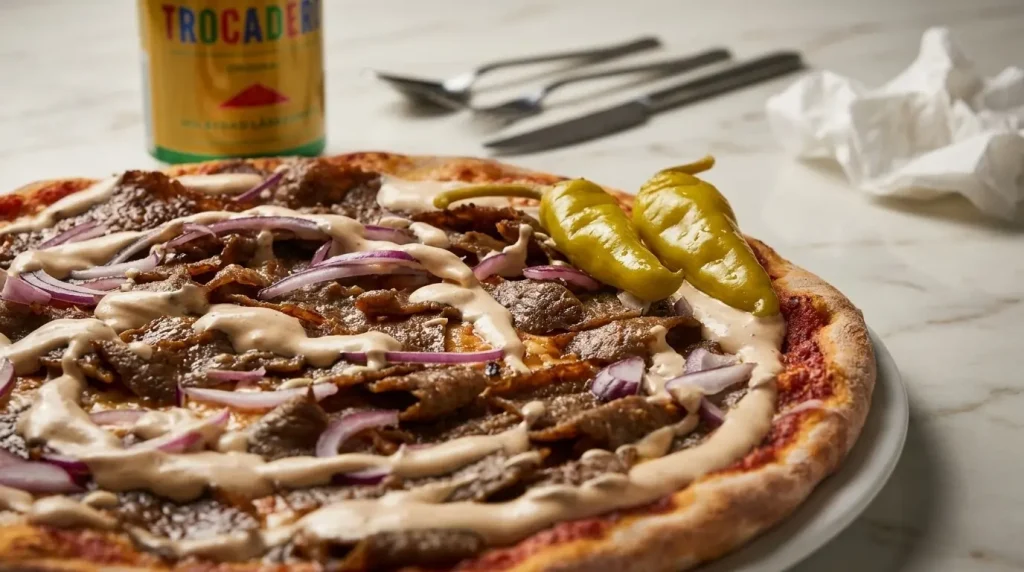
The finishing layer is where the magic lives — and this is where you get to make it your own. The non-negotiables are the creamy kebab sauce and pepperoncini. Beyond that, it is up to you. The classic fully-loaded version adds shredded iceberg lettuce, sliced tomatoes, and red onion for that iconic hot-and-cold contrast. Prefer something simpler? Meat, pepperoncini, and a generous drizzle of garlic sauce is a completely legitimate — and wildly popular — way to eat it.
Some Swedish pizzerias also add sliced mushrooms under the cheese before baking, which adds a lovely earthy depth to the whole thing.
The Kebab Sauce Deserves Its Own Moment
This sauce is not tzatziki. It is not aioli. It is its own glorious, creamy thing — and in Sweden, it is also the subject of fierce regional debate.
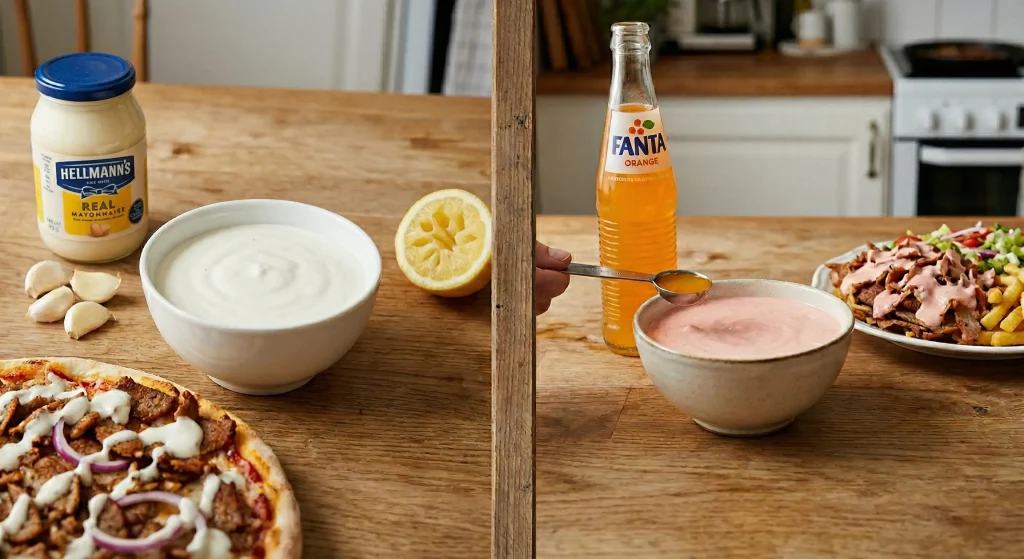
In Stockholm and the eastern parts of the country, the tradition is clean and unfussy: a cool white garlic sauce made from sour cream or yogurt, mayonnaise, fresh pressed garlic, and lemon juice. Garlicky, tangy, and rich with a gentle bite — that is the version we are making here, and it ties the whole pizza together perfectly.
Travel south to Jönköping, however, and you enter entirely different sauce territory. There, the custom is blandsås — a unified, mixed sauce with a soft pink hue and a sweet, complex flavour. Its legendary secret ingredient? Fanta. Yes, the orange soda. Far from a gimmick, the carbonation aerates the heavy dairy base and the citric sweetness balances the spiced meat beautifully. The Jönköping locals are extremely serious about this, and honestly, they have a point.
But for this recipe, we are keeping things Stockholm-simple. Make the white sauce at least 30 minutes ahead so the garlic mellows and the flavours settle into each other. You will want to put it on absolutely everything.
The Döner Meat — Bought, Frozen, or Homemade
The good news is that you have options when it comes to the meat. The easiest route is picking up fresh döner meat from your local kebab shop — just ask for it unsauced. Many grocery stores also carry frozen döner strips that work beautifully once crisped up in a hot skillet. But if you really want to go all in and make it from scratch at home, I highly recommend following MezeMike’s technique. It went viral for good reason — the result is genuinely extraordinary. Watch the video below and see for yourself.
Tips for the Best Kebab Pizza at Home
A few small things make a big difference here:
- Preheat your oven high — at least 475°F (245°C). A screaming hot oven is the secret to a crispy crust.
- Use a pizza stone or a heavy baking sheet preheated in the oven for maximum crispiness on the bottom.
- Never add cold toppings before baking. Wilted, sad lettuce on a hot pizza is a genuine tragedy. Always dress after baking.
- Season your meat generously. The spice blend is what gives this pizza its soul and character.
- Make it your own. The classic fully-loaded version has lettuce, tomatoes, and onion — but meat, pepperoncini, and sauce alone is equally authentic. Sliced mushrooms under the cheese before baking are a popular addition too.
Alright — enough talking. Let’s make kebab pizza.
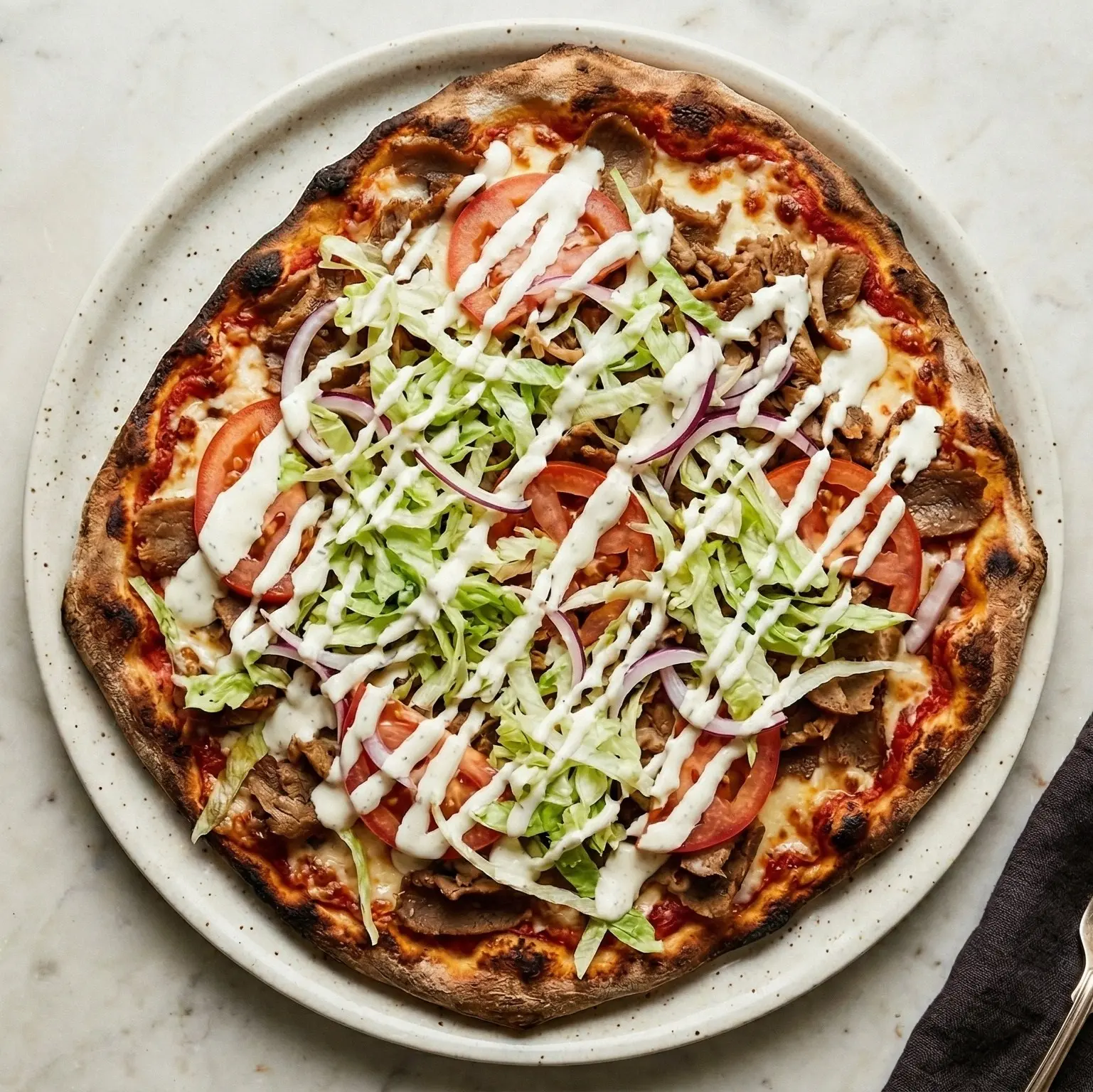
Swedish Kebab Pizza (Kebabpizza)
Ingredients
Method
- Combine warm water, sugar, and yeast in a large bowl. Let sit 5–10 minutes until foamy.
- Add flour, salt, and olive oil. Mix until a shaggy dough forms, then knead on a floured surface for 8–10 minutes until smooth and elastic.
- Place in a lightly oiled bowl, cover, and let rise in a warm spot for 1 hour until doubled in size.
- Blend the onion. Using a blender or food processor, blend the onion to a smooth, paste-like consistency. Transfer to a large mixing bowl.
- Combine the meat and seasoning. Add the ground meat to the bowl with the onion paste. Pour in the olive oil and yogurt, then add the paprika, black pepper, chili flakes, cumin, oregano, and salt.
- Mix thoroughly. Work everything together with your hands until the mixture is completely smooth and well incorporated. It should have an almost paste-like texture.
- Preheat your oven to 400°F (200°C).
- Shape the döner. Scoop portions of the meat mixture onto square sheets of parchment paper. Spread each portion out super thinly — only a few millimeters thick. Roll the parchment up tightly around the meat to form a compact log shape. Repeat with remaining mixture.
- First bake. Place the rolled logs onto a baking tray and bake for 20 minutes.
- Drain and bake again. Remove from the oven and carefully drain any excess liquid from the tray. Return to the oven and bake for a further 15 minutes, or until the parchment paper starts to turn a deep golden brown.
- Unravel and finish. Remove from the oven, carefully unravel the parchment, and squeeze fresh lemon juice over the meat.
- Tear and set aside. Tear the döner into rough, rustic strips and set aside until ready to assemble your pizzas.
- Whisk together sour cream, mayonnaise, garlic, lemon juice, and white pepper. Season with salt to taste.
- Cover and refrigerate for at least 30 minutes before serving, the longer the better.
- Stir together crushed tomatoes, minced garlic, oregano, salt, and pepper in a small bowl. Set aside.
- Place a pizza stone or heavy baking sheet on the center rack. Preheat oven to 475°F (245°C) for at least 30 minutes before baking.
- Divide dough into two equal portions.
- On a lightly floured surface, roll or stretch each portion into a thin round about 11–12 inches (28–30 cm) across.
- Spread a thin, even layer of tomato sauce over each base, leaving a ½-inch (1 cm) border. Scatter the shredded mozzarella evenly over both pizzas, then distribute the döner meat on top of the cheese.
- Carefully transfer one pizza to the hot stone or baking sheet. Bake 10–12 minutes until the crust is golden, the cheese is bubbling, and the edges of the meat are lightly crisped. Repeat with the second pizza.
- Remove from oven. Top with shredded lettuce, tomato, red onion, and pickled peppers. Drizzle the kebab sauce generously over everything. Slice and serve right away.
Frequently Asked Questions
It is a pizza topped with döner-style spiced meat and melted mozzarella, finished with cool creamy garlic sauce and pepperoncini. The fully loaded version also includes shredded lettuce, tomatoes, and red onion — but many Swedes prefer it simple: just meat, pepperoncini, and sauce. It developed as part of Sweden’s unique, wonderfully unapologetic pizza tradition.
Absolutely. Let it come to room temperature for at least 30 minutes before stretching. The toppings are the real star here.
Three likely culprits: the oven was not hot enough, the dough was rolled too thick, or the baking surface was not preheated. Crank your oven to its highest setting, preheat your surface for a full 30 minutes, and roll the dough thin.
Flip a heavy rimmed baking sheet upside down and preheat it in the oven. It works surprisingly well as an improvised baking surface.
Yes — shop-bought and homemade döner both keep in the refrigerator for up to 3 days. The homemade version also freezes well for up to 2 months. Thaw overnight in the fridge before use.
Add a small drizzle of honey or a spoonful more of sour cream. Letting it rest in the fridge for an hour also softens the acidity considerably.
Kebabpizza is genuinely Swedish — a product of Sweden’s own immigrant-influenced, creatively fearless pizza culture. It is as Swedish as midsummer, just considerably easier to explain.
Not at all — the stripped-back version with just döner meat, pepperoncini, and kebab sauce is equally popular and completely delicious. If you want something in between, sliced mushrooms baked under the cheese add great texture and earthiness without the cold toppings.