
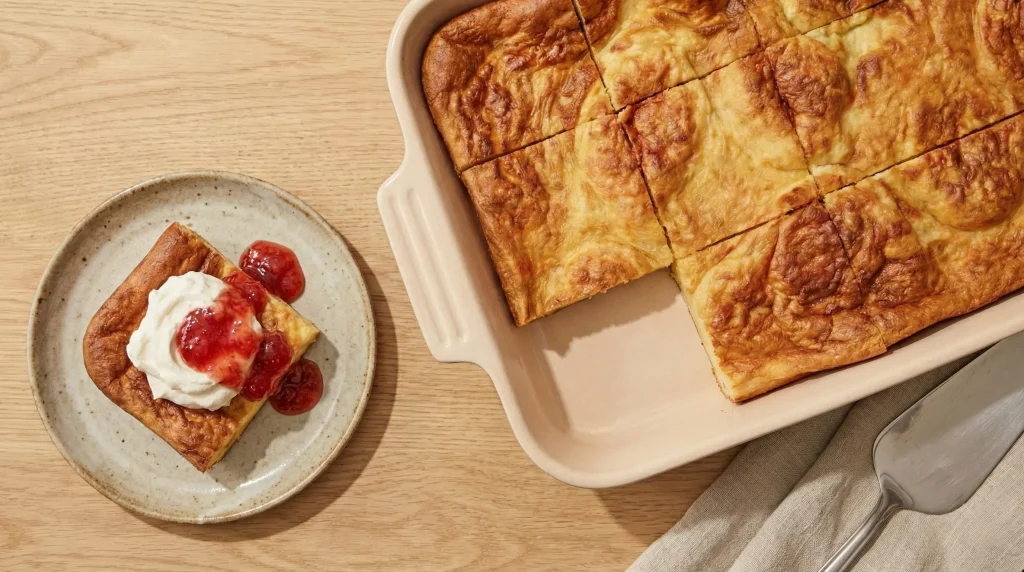
There’s something wonderfully rebellious about Swedish oven pancake. While the rest of the world stands at the stove, carefully monitoring thin crêpes or fluffy American pancakes, Swedes simply whisk everything together, pour it into a pan, and slide it into the oven. 30 minutes later, they’re sitting down with forks in hand, ready to devour something that’s part custard, part pancake, and entirely irresistible.
In Sweden, ugnspannkaka (literally “oven pancake”) occupies a special place in the weekly rhythm. It often appears on Thursdays—traditionally pea soup and pancake day (ärtsoppa och pannkakor)—though the oven version is more likely to show up when you’re feeding a crowd or don’t want to stand over a hot griddle. It’s equally at home as dessert or a sweet main course, because Scandinavians have never been too rigid about these categories anyway.
The beauty of this dish is its democratic nature. Every Swedish household has a version, and no one’s is exactly the same. Some add a splash of beer for extra lift. Others swear by letting the batter rest. Most agree that it should be served immediately, while those edges are still crackling and the center jiggles just slightly when you cut into it.
What is Ugnspannkaka, exactly?
Think of ugnspannkaka as the Nordic cousin of a Dutch baby or Yorkshire pudding—it rises dramatically in the oven, not because of baking powder, but because it’s steam-leavened. The batter is very wet (high hydration), and when it hits a scorching-hot pan, moisture turns to steam fast. That steam inflates the batter while egg proteins and gluten form a flexible structure to hold the lift—especially around the edges where the pan’s heat is most intense.
The result:
- Crispy, browned, ballooned edges
- A soft, custardy center
- A lightly sweet, buttery aroma that makes the kitchen feel like it’s giving you a hug
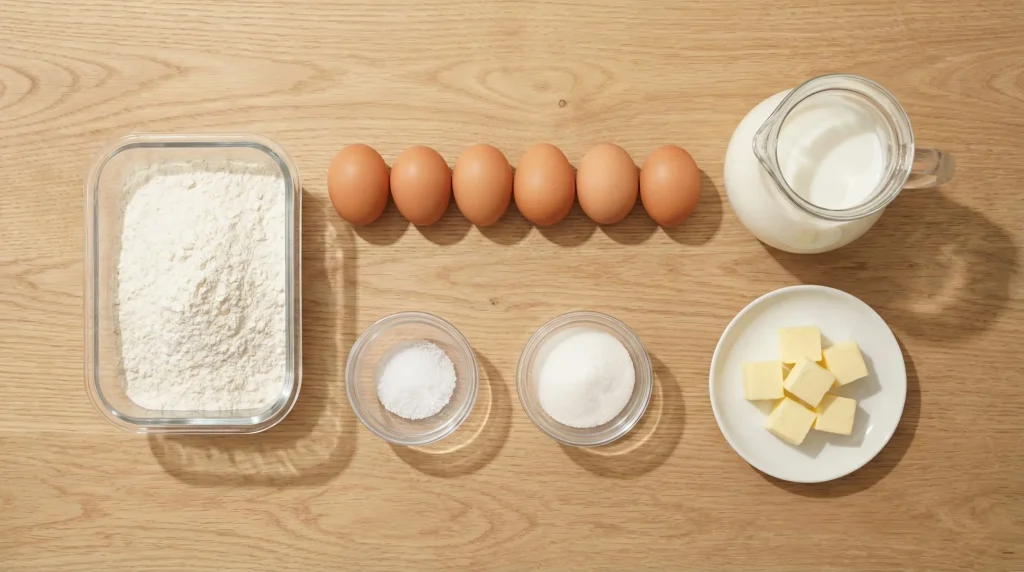
Ingredients that matter (and why)
This recipe is pantry-basic, but a few details make it Swedish cafeteria Thursday instead of sad beige slab:
- Room-temperature eggs + milk: Cold batter steals heat and weakens the initial steam burst (aka: the rise).
- A properly preheated pan: A cold pan is the #1 reason oven pancakes come out flat.
- Enough butter: Butter isn’t just flavor—it’s release insurance and browning fuel.
- Don’t overmix: Over-whisking develops gluten and turns tender into rubbery.
Two Ways to Serve
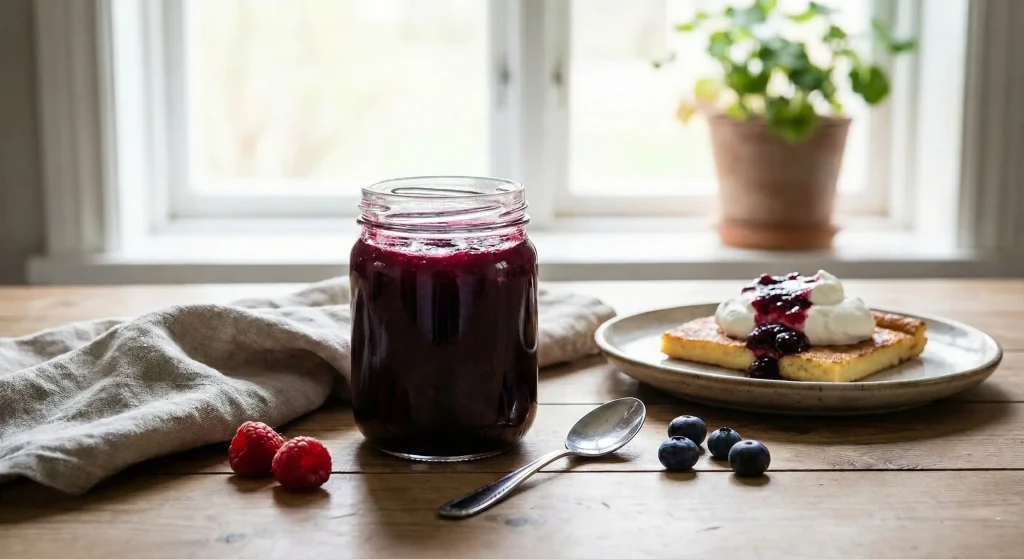
- The Swedish Classic: Serve with lingonberry or “Queen’s jam” and a dollop of whipped cream for that authentic Nordic tartness.
- The “Any-Day” Twist: Keep it simple with cinnamon-sliced apples, powdered sugar and lemon, or go savory by adding crispy bacon.
Variations to Try
- The Savory Dinner (Fläskpannkaka): Transform this into a hearty meal by pouring the batter over cooked bacon or diced pork in a baking dish. Bake until golden and puffy for a salty-sweet masterpiece.
- The “Gotland” Special: For a decadent, rice-pudding style dessert from the island of Gotland, try this Swedish Saffron Pancake.
- Simple Batter Tweaks: Add a teaspoon of cardamom or vanilla extract to the batter for extra warmth, or swap half the milk for beer (a surprisingly common trick!) for lacier, crispier edges.
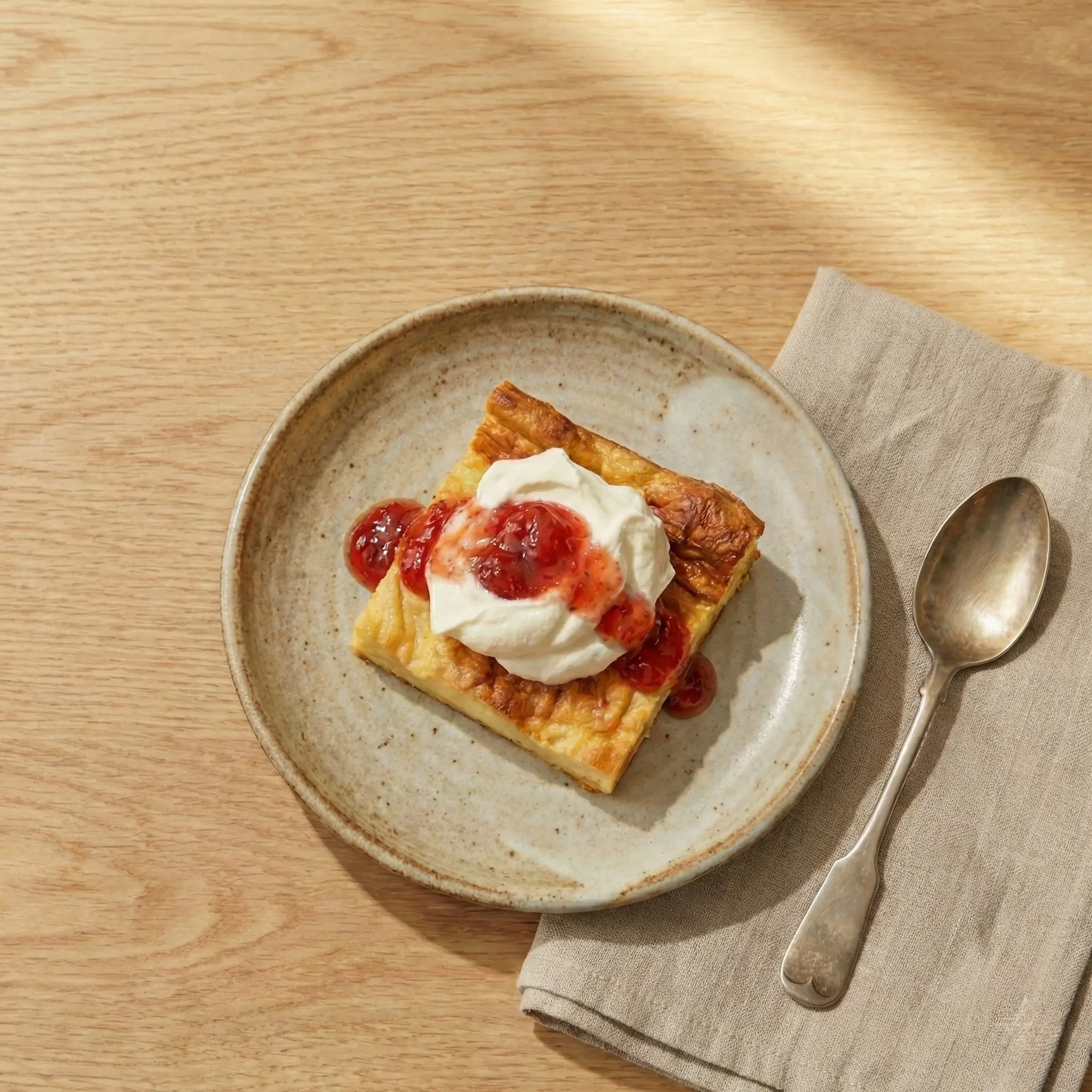
Swedish Oven Pancake (Ugnspannkaka)
Ingredients
Equipment
Method
- Place an oven rack in the center. Put your empty 9×13-inch baking dish in the oven and preheat to 425°F (218°C). Let the dish heat for at least 10–15 minutes after the oven reaches temperature.
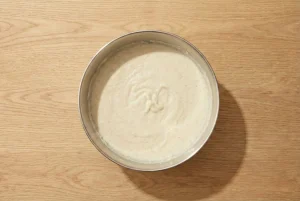
- In a large bowl, whisk together flour, salt, and sugar.
- Pour in about 2 cups (475 ml) of the milk and whisk until you get a smooth, thick paste—no dry flour hiding in corners.
- Whisk in the eggs one at a time, mixing well after each. Add remaining milk and vanilla. The batter will be thin—more like heavy cream than “pancake batter.”
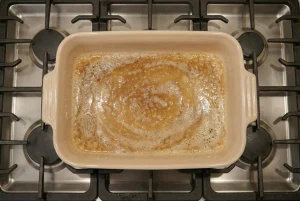
- Carefully remove the hot baking dish from the oven. Add the butter cubes and swirl until melted and bubbling (a little nutty browning is welcome).
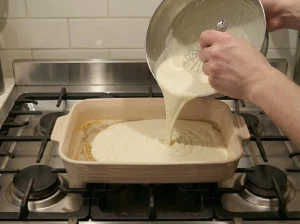
- Pour batter into the hot, buttered dish and return to oven immediately. Bake 30–35 minutes, do not open the oven door for the first 25 minutes.
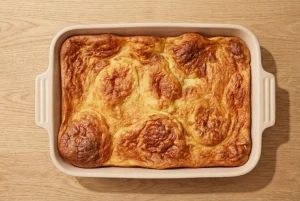
- Remove from oven when deeply golden at the edges and puffed. Rest 5–10 minutes. Slice into squares.
Notes
- Room-temp ingredients = better rise.
- Preheated pan is non-negotiable for that dramatic puff.
- A slight collapse after baking is normal and helps create a jam-catching “crater.”
FAQ + Troubleshooting
Almost always one of these:
1) The pan wasn’t hot enough (preheat the dish inside the oven).
2) Your milk/eggs were cold, cooling the batter and delaying steam production.
You likely overmixed after adding flour. Mix just until combined—small lumps are fine and often bake out.
That’s usually underbaking. Bake until the center looks set (it should jiggle slightly but not slosh). Resting 5–10 minutes also helps it finish setting.
You can, but whole milk gives better texture and flavor. Lower fat can bake up a bit drier and less tender.
No. A whisk works beautifully—especially with the “paste first” method that prevents lumps.
Yes. Reheat in a 350°F / 175°C oven for 8–10 minutes to restore a bit of edge crispness. Microwave works, but it softens everything (still tasty though).
Jam + whipped cream is the classic. Lingonberry is especially traditional because its tartness balances the rich, eggy pancake. Queen’s Jam (Drottningsylt) is also popular. I usually serve mine with strawberry jam.