
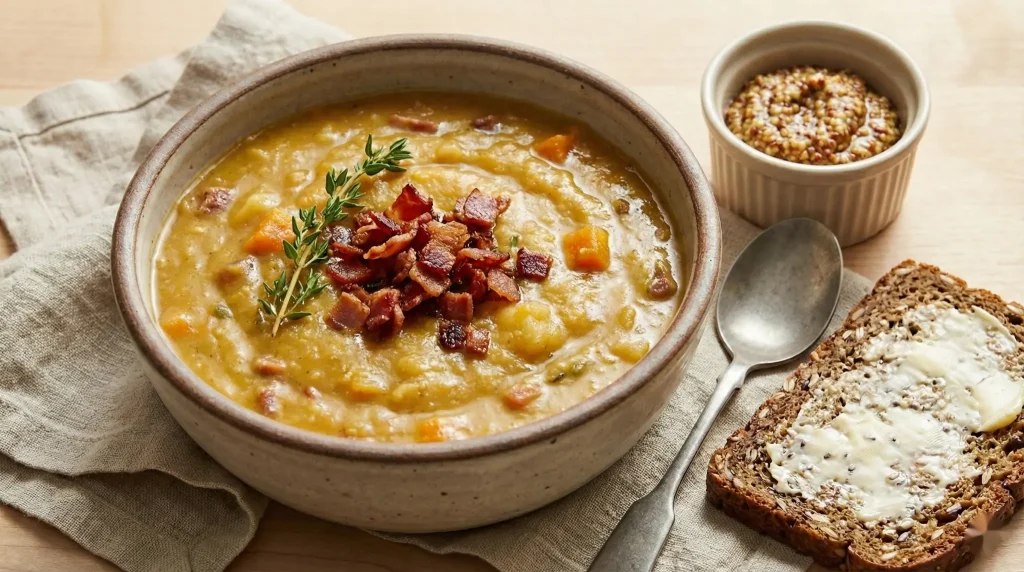
Picture a snowy evening in the Scandinavian countryside: you step into a warm kitchen to the aroma of simmering peas, salted pork, and herbs. On the stove Nordic pea soup – known as hernekeitto in Finland, ärtsoppa in Sweden, gule ærter in Denmark, and ertesuppe in Norway – burbles away, thick and hearty. This humble split pea soup has been a weekly ritual in Nordic homes for centuries, a one-pot meal that’s equal parts wholesome and soul-warming. The soup is simple – just dried peas, a bit of pork, root vegetables, and a few seasonings – yet it manages to be creamy, savory, and utterly satisfying. One spoonful, and you’ll understand why Nordic grandmothers swear by it to chase away the winter chill.
A Beloved Tradition with Local Twists
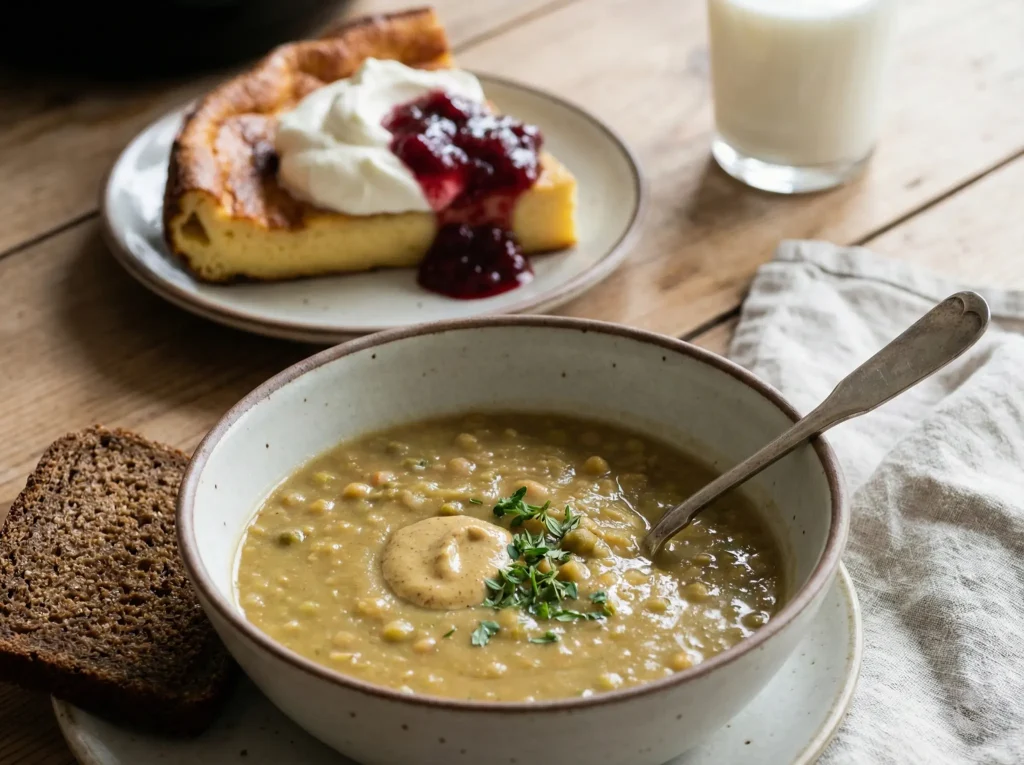
Part of this soup’s charm is how each Nordic country adds its own twist. In Finland and Sweden, pea soup Thursdays are practically an institution – a tradition dating back to the Middle Ages when Catholic fasting on Fridays meant a hearty pea soup on Thursday. Finns typically make hernekeitto with dried green peas and often serve it with dark rye bread and a side of pungent mustard for stirring in. Swedes, on the other hand, favor sweet yellow peas for their ärtsoppa, which they slow-simmer with pork (often a ham hock or salt pork) until it turns into a thick, golden stew. A pinch of thyme or marjoram is the secret to the Swedish recipe’s comforting aroma. Come Thursday, lunch tables in Sweden and Finland alike feature steaming bowls of pea soup with a dollop of grainy mustard on top, and it’s traditionally followed by a dessert of oven-baked pancakes with jam – a sweet reward for polishing off your peas. (In Sweden, folks might even wash it down with a tiny glass of warm punsch, a sweet liqueur, for good measure!)
Denmark and Norway love their pea soups just as much, though their traditions differ. The Danish gule ærter (literally “yellow peas”) is often so thick and hearty that some joke a spoon could stand upright in it. Rather than serving pancakes after, Danes turn pea soup into more of a savory feast: the thick yellow soup comes accompanied by slabs of salted pork or sausage (like flæsk or medisterpølse), plus tangy pickled beets, a smear of sharp mustard, and dense rugbrød (rye bread) on the side. It’s the kind of meal that can warm you to your toes – and fill you up for hours. In fact, Danish pea soup suppers often become festive occasions with plenty of beer and snaps (aquavit) to drink alongside. Meanwhile, Norway’s pea soup – called ertesuppe or gul ertesuppe (when made with yellow peas) – has a tradition of its own. Norwegians commonly enjoy it in late winter and early spring (especially around Easter time) as a sturdy country dish to close out the long winter. A classic Norwegian ertesuppe usually includes root vegetables like carrots, potatoes, celeriac, or parsnips simmered along with the peas for extra heartiness. It’s often served with a slice of flatbrød (crispy Scandinavian flatbread) or buttered rustic bread. Historically, Norwegian pea soup was frequently meatless – dried peas were cheap protein for farming families, and meat was a luxury used sparingly. Even today, a vegetarian pea soup feels authentic in Norway, though if available, a little smoked pork or ham tossed into the pot is welcomed for the rich flavor it adds.
Despite these local variations, all Nordic pea soups share the same comforting essence. This is humble farmhouse cooking at its best – nutritious, filling, and made from a handful of inexpensive ingredients that could be stored through the winter. It’s no wonder peas have been a staple since Viking times (peas grow well in the north, when fancier legumes like lentils could not). There’s even colorful lore attached to the dish: one legend claims that a 16th-century Swedish king, Erik XIV, was assassinated by poison slipped into his pea soup – a macabre myth that has stuck in popular imagination. Rest assured, however, the only surprise in your pot will be how such simple ingredients cook into something so delicious. As the peas break down, they thicken the soup into a rustic porridge, enriched by the smoky depth of ham and the sweetness of root veggies. It’s the kind of stick-to-your-ribs meal that has sustained Nordic folks through dark winters and lengthy snowstorms.
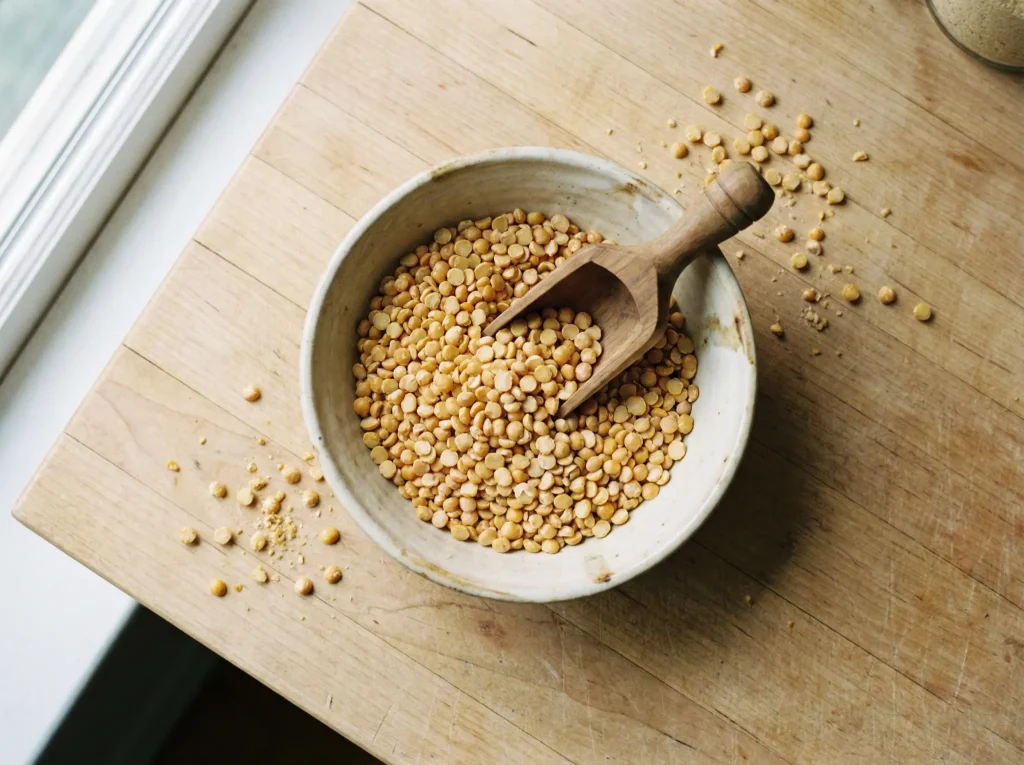
Ready to make your own? Below, you’ll find my recipe that blends elements from all the Nordic versions into one hearty soup. I use yellow split peas (for that classic golden color loved in Sweden, Denmark, and Norway – but feel free to use green split peas if that’s what you have). We’ll borrow a Finnish trick of serving mustard on the side, include the Swedish/Finnish habit of a little marjoram in the seasoning, and add a few diced carrots and perhaps a bit of potato or celery root as the Norwegians and Danes often do. The result is a creamy, savory pea soup that’s distinctly Nordic and utterly comforting. This family-friendly recipe is also flexible: you can make it vegan by simply omitting the ham (the peas alone pack plenty of protein), and it can be cooked traditionally on the stovetop or conveniently in a slow cooker or Instant Pot. However you cook it, take your time and let the peas slowly soften and meld with the flavors – pea soup only gets better with time (in fact, many say it tastes even better the next day, once reheated). Let’s get cooking!
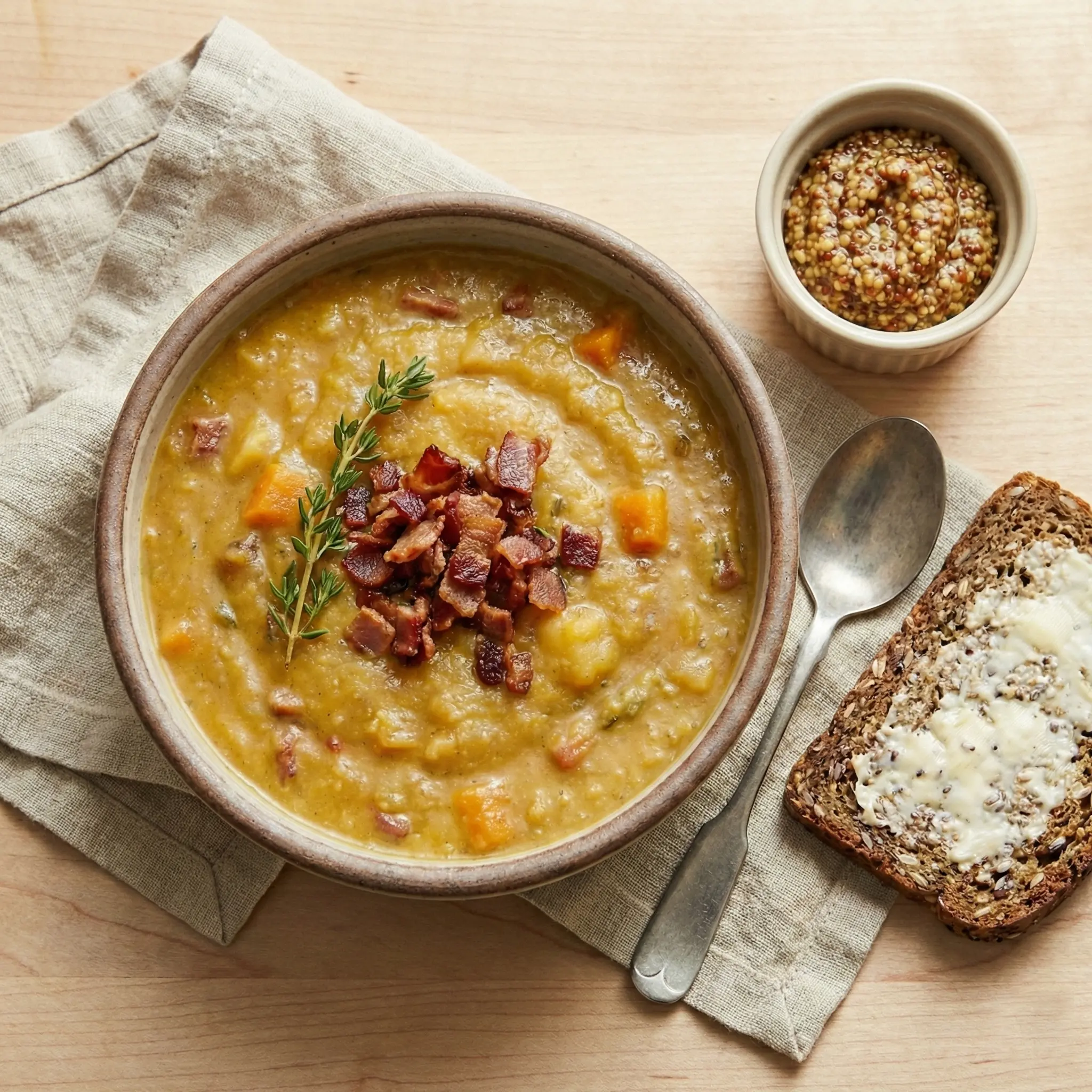
Nordic Pea Soup (Scandinavian Split Pea Soup)
Ingredients
Method
- Rinse the dried split peas under cool water. Pick out any debris. Place the peas in a large bowl and cover with plenty of cold water.
- Let them soak overnight (8–12 hours) at room temperature. (Soaking helps soften the peas and improves digestibility – a step highly recommended to avoid any “musical” side effects later!)
- After soaking, drain and rinse the peas well.
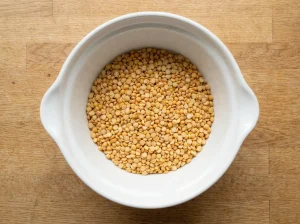
- In a large heavy soup pot or Dutch oven, heat a drizzle of oil or a knob of butter over medium heat.
- Add the chopped onion (and diced bacon or salt pork, if using that instead of a whole ham hock).
- Sauté for about 5 minutes, stirring occasionally, until the onion is soft and translucent (and the fat from the bacon has rendered).
- Add the minced garlic and sauté 1 minute more until fragrant.
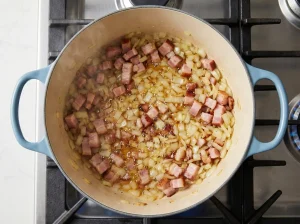
- Add the drained soaked peas to the pot along with the 8 cups of water/broth.
- Nestle the ham hock into the pot (if using a ham hock; if you sautéed bacon, it’s already in there).
- Drop in the bay leaves, thyme, and marjoram. Stir everything and bring to a boil over high heat.
- Once it reaches a boil, skim off any foam that rises to the top, then reduce the heat to low.
- Cover the pot with a lid tilted slightly ajar to allow a bit of steam to escape, and let the soup simmer gently.
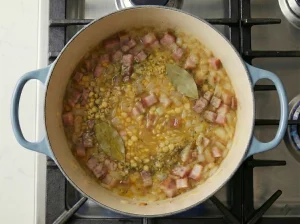
- Let the soup simmer on low for about 60 minutes, stirring occasionally to make sure the peas aren’t sticking to the bottom. The peas will gradually soften and break down, thickening the soup.
- After about an hour, add the diced carrots and rutabaga/celeriac or potato. (If the soup seems very thick at this stage, you can add a cup or two of hot water to loosen it up.)
- Continue simmering for another 30 minutes, or until the peas have completely softened into a puree and the vegetables are tender.
- Total simmer time is roughly 1.5 hours, but older peas can take longer – simmer until everything is meltingly soft.
- Stir often, scraping the bottom to prevent burning, and add a bit more water if it gets too thick before the peas are done.
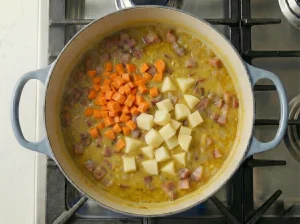
- Once the peas are fully cooked and the soup has a pleasantly thick, stew-like consistency, remove the bay leaves and discard.
- If you used a ham hock, carefully pull it out of the pot and set it on a cutting board. Use a fork and knife to pull the meat from the bone, discarding any fatty skin or bone.
- Chop or shred the ham into bite-sized pieces. Return the meat to the soup and stir. (If you used bacon, it should already be distributed in the soup.)
- Taste and add salt and pepper as needed. (Tip: If the soup seems too thick at any point, stir in a bit more hot water or broth to reach your desired consistency. Conversely, if it’s too thin, let it simmer uncovered for a few minutes to thicken.)
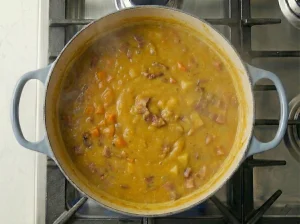
- Ladle the hot Nordic pea soup into bowls. Serve with grainy mustard on the side – each diner can stir a spoonful of mustard into their soup bowl to their taste, which is the traditional way in Finland and Sweden. This adds a lovely zesty kick to the creamy soup.
- Enjoy the soup with slices of buttered rye bread or crusty bread.
- For a Danish touch, offer some pickled beet slices on the side to nibble between spoonfuls.
- If you really want to go Nordic-old-school, follow your soup with a dessert of thin pancakes and jam (or perhaps a little glass of schnapps) – you’ve earned it!
Notes
Slow Cooker Method
Follow Step 1 above (soak and drain the peas). You can sauté the onion and garlic in a pan with a bit of oil (and brown the bacon, if using) as in Step 2 for extra flavor, but it’s optional. Then transfer the sautéed onions/garlic (and bacon) to your slow cooker. If you prefer to skip sautéing, simply put the chopped onion, garlic, and other ingredients directly into the slow cooker.
Add the soaked peas, the ham hock (or diced bacon), carrots, rutabaga/celeriac or potato, bay leaves, thyme, marjoram, and the 8 cups of water/broth to the slow cooker. Give it a good stir to combine. Cover with the lid.
- Cook on LOW for 8–10 hours or on HIGH for about 4–5 hours, until the peas are very soft and breaking down. Slow cookers can vary, so if possible, stir once or twice during cooking and check the texture around the minimum time. The soup is done when the split peas have dissolved into a creamy base.
Once cooked, remove the ham hock and pull off/shred the meat as in Step 5 above, returning the meat to the soup. (If using bacon, it’s already incorporated.) Remove bay leaves. Stir and season with salt and pepper to taste. If the slow-cooked soup seems too thick, thin with a bit of hot water; if too thin, you can puree a cup of the soup and stir it back in, or just let it sit on “Keep Warm” uncovered for a bit to evaporate excess liquid.
Serve with mustard and the traditional accompaniments as described above. Even from the slow cooker, this soup will have that classic Nordic flavor and stick-to-your-ribs goodness!
Instant Pot (Pressure Cooker) Method
No time to soak? You can still make this soup in an Instant Pot (or any electric pressure cooker) relatively quickly – the pressure cooking will soften the peas nicely. If you did soak the peas, that’s great (drain them before use); if not, just rinse them well. Keep in mind that cooking legumes under pressure can cause foam, so do not fill the cooker more than halfway and add a bit of oil to help minimize foaming
- Sauté (Optional)
Turn on the Instant Pot’s Sauté function. Add a tablespoon of oil or butter to the pot. Sauté the chopped onion (and diced bacon, if using) for about 3-4 minutes until softened. Add garlic and sauté 30 seconds more. (You can skip this sauté step to save time – just add everything to the pot at once – but sautéing will build extra flavor.) Cancel the Sauté mode.
- Add Ingredients
Add the split peas (soaked and drained, or unsoaked), the carrots, rutabaga/celeriac or potato, bay leaves, thyme, marjoram, and the water/broth (again, about 8 cups, but do not exceed the pot’s max fill line!). Stir to combine. Place the ham hock into the liquid (or stir in the bacon, if using). Add 1–2 tablespoons of mustard into the pot if you like (totally optional – you can also just stick to adding mustard when serving). Add a tablespoon of cooking oil as well (this helps cut down foaming).
- Pressure Cook
Lock the Instant Pot lid and ensure the valve is set to sealing. Select Pressure Cook (High) and set the time for 15 minutes (if peas are soaked) or 20 minutes (if using unsoaked peas). It will take about 10–15 minutes for the pot to come up to pressure, then the cooking countdown will begin.
- Natural Release
When the pressure cooking time is up, allow the pressure to release naturally for at least 10 minutes (this lets the soup continue to cook a bit and reduces splattering). After 10-15 minutes, carefully turn the valve to quick release the remaining pressure. Once the pin drops, open the lid. Caution: Hot steam and possibly a bit of starchy sputter may escape – open the lid facing away from you.
- Finish
The peas should be very soft. Give the soup a good stir – you’ll likely see it thicken up as you stir. If it’s extremely thick, you can add a bit of boiling water to thin it. Remove the bay leaves and the ham hock. Shred the ham meat off the bone as described in stovetop method, then return the meat to the pot. Stir in salt and pepper to taste (you may not need much salt if your ham/broth was salty). If you skipped sautéing earlier and find some peas stuck to the bottom, gently scrape the bottom of the pot with a wooden spoon now to mix everything (the Instant Pot’s built-in scorch protection might have turned off the heating if too much stuck, but usually the soup will be fine).
Ladle out a bowl of your Instant Pot pea soup and serve with the traditional mustard, rye bread, etc. No one will guess it cooked so fast, because it will have that all-day simmered taste and texture. Velbekomme, smaklig måltid, and enjoy your Nordic pea soup!
Cultural Notes and Serving Tips
Nordic pea soup is a meal built on simple ingredients and tradition. It’s incredibly budget-friendly (dried peas cost next to nothing), yet it feels rich and indulgent on a cold day. In Scandinavian countries, it’s common to make a gigantic batch for a crowd – this soup has fed armies (literally, it’s been standard fare for Swedish and Finnish military mess halls) and family gatherings for generations. If you find yourself with a surplus, don’t worry – the leftovers only get better, and you can freeze portions for a rainy (or snowy) day.
When you serve this soup, set out an array of condiments like grainy mustard and maybe a jar of pickled beets or gherkins. Guests can customize their bowl: a spoonful of mustard stirred in gives a lovely tangy contrast to the sweetness of the peas and pork. A slice of buttered rye bread on the side is practically required – perfect for dunking or for spreading with a bit of mustard and enjoying between spoonfuls (Danes often scoop up mustard with rye bread rather than dropping it directly in the soup). And if you really want to channel the full Nordic Thursday experience, whip up some simple thin pancakes for dessert. Serve them hot from the griddle with jam (lingonberry, strawberry, or raspberry jam are all traditional) and a dollop of whipped cream. It’s the classic sweet finish after a bowl of pea soup, especially in Sweden and Finland.
Finally, feel free to make this recipe your own. Our version combines the best of Finnish, Swedish, Danish, and Norwegian pea soups, but there’s wiggle room. You can toss in a smoked sausage or a bit of leftover roast pork. You can use smoked turkey instead of ham hock for a lighter twist, or add a handful of diced celery if you like its flavor (some modern recipes do). As long as you give those peas time to cook down into a creamy stew, you’ll have a marvelous pot of comfort food. Hyvää ruokahalua, smaklig måltid, velbekomme! In any language: Happy eating! Enjoy your cozy Nordic pea soup night.
FAQ
You can, but not in this recipe, it will not turn out right. But fresh peas do make a really nice cold peas&mint soup.
Soaking serves two primary purposes:
Texture: It softens the peas, ensuring they cook evenly and eventually break down into the desired creamy consistency.
Digestion: It helps remove the complex sugars that cause flatulence (the “musical” side effects mentioned in the post). Always discard the soaking water and rinse the peas before cooking.
Yes. To adapt the recipe, omit the ham hock/bacon and use vegetable broth or water. To maintain the depth of flavor and “body” of the soup without meat, the post suggests adding extra root vegetables (like rutabaga or potatoes) and being generous with the marjoram and mustard.
If too thick: Pea soup naturally thickens as it sits and cools. Simply stir in a splash of water or broth while reheating until you reach the desired consistency.
If too thin: Increase the heat and simmer the soup uncovered for 10–15 minutes to evaporate excess liquid. Alternatively, take a cup of the soup, puree it in a blender, and stir it back in.
Marjoram is the “secret ingredient” in traditional Finnish and Swedish pea soup. It provides a specific floral, earthy aroma that distinguishes Nordic pea soup from other versions (like American split pea soup). If you want an authentic taste, do not skip this herb.
In the Nordic tradition, grainy or sweet mustard is a mandatory condiment. It isn’t just a garnish; the acidity and spice of the mustard cut through the richness of the legumes and pork, balancing the heavy flavors of the soup.
Yes. Like many stews, the flavors “marry” and deepen overnight. Because it thickens significantly in the fridge, it is often considered a perfect make-ahead meal for meal prepping.
While the stovetop takes about 1.5 to 2 hours, you can use an Instant Pot (Pressure Cooker). Under high pressure, the peas will soften in just 15–20 minutes. However, you must allow for a “natural release” (letting the pressure drop on its own) for at least 10 minutes to ensure the peas are fully tender and the soup doesn’t foam out of the valve.
Following the “Thursday Pea Soup” tradition in Sweden and Finland, the soup is almost always followed by thick pancakes served with strawberry or raspberry jam and a dollop of whipped cream.
Absolutely. Pea soup freezes exceptionally well for up to 3 months. When reheating, you will likely need to add a significant amount of water or broth, as the starch in the peas will cause the soup to turn into a thick paste once frozen and thawed.