Ingredients
Method
Instructions (Stovetop)
Soak the Peas
- Rinse the dried split peas under cool water. Pick out any debris. Place the peas in a large bowl and cover with plenty of cold water.
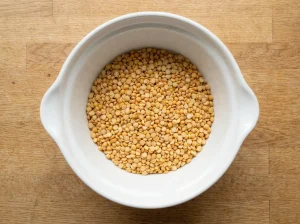
- Let them soak overnight (8–12 hours) at room temperature. (Soaking helps soften the peas and improves digestibility – a step highly recommended to avoid any “musical” side effects later!)
- After soaking, drain and rinse the peas well.
Start the Soup
- In a large heavy soup pot or Dutch oven, heat a drizzle of oil or a knob of butter over medium heat.
- Add the chopped onion (and diced bacon or salt pork, if using that instead of a whole ham hock).
- Sauté for about 5 minutes, stirring occasionally, until the onion is soft and translucent (and the fat from the bacon has rendered).
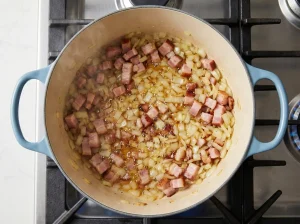
- Add the minced garlic and sauté 1 minute more until fragrant.
Add Peas, Ham and Liquid
- Add the drained soaked peas to the pot along with the 8 cups of water/broth.
- Nestle the ham hock into the pot (if using a ham hock; if you sautéed bacon, it’s already in there).
- Drop in the bay leaves, thyme, and marjoram. Stir everything and bring to a boil over high heat.
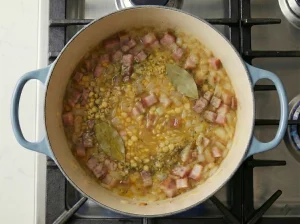
- Once it reaches a boil, skim off any foam that rises to the top, then reduce the heat to low.
- Cover the pot with a lid tilted slightly ajar to allow a bit of steam to escape, and let the soup simmer gently.
Simmer Until Tender
- Let the soup simmer on low for about 60 minutes, stirring occasionally to make sure the peas aren’t sticking to the bottom. The peas will gradually soften and break down, thickening the soup.
- After about an hour, add the diced carrots and rutabaga/celeriac or potato. (If the soup seems very thick at this stage, you can add a cup or two of hot water to loosen it up.)
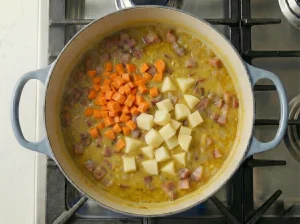
- Continue simmering for another 30 minutes, or until the peas have completely softened into a puree and the vegetables are tender.
- Total simmer time is roughly 1.5 hours, but older peas can take longer – simmer until everything is meltingly soft.
- Stir often, scraping the bottom to prevent burning, and add a bit more water if it gets too thick before the peas are done.
Finish the Soup
- Once the peas are fully cooked and the soup has a pleasantly thick, stew-like consistency, remove the bay leaves and discard.
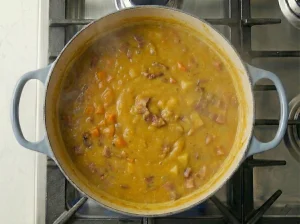
- If you used a ham hock, carefully pull it out of the pot and set it on a cutting board. Use a fork and knife to pull the meat from the bone, discarding any fatty skin or bone.
- Chop or shred the ham into bite-sized pieces. Return the meat to the soup and stir. (If you used bacon, it should already be distributed in the soup.)
- Taste and add salt and pepper as needed. (Tip: If the soup seems too thick at any point, stir in a bit more hot water or broth to reach your desired consistency. Conversely, if it’s too thin, let it simmer uncovered for a few minutes to thicken.)
Serve
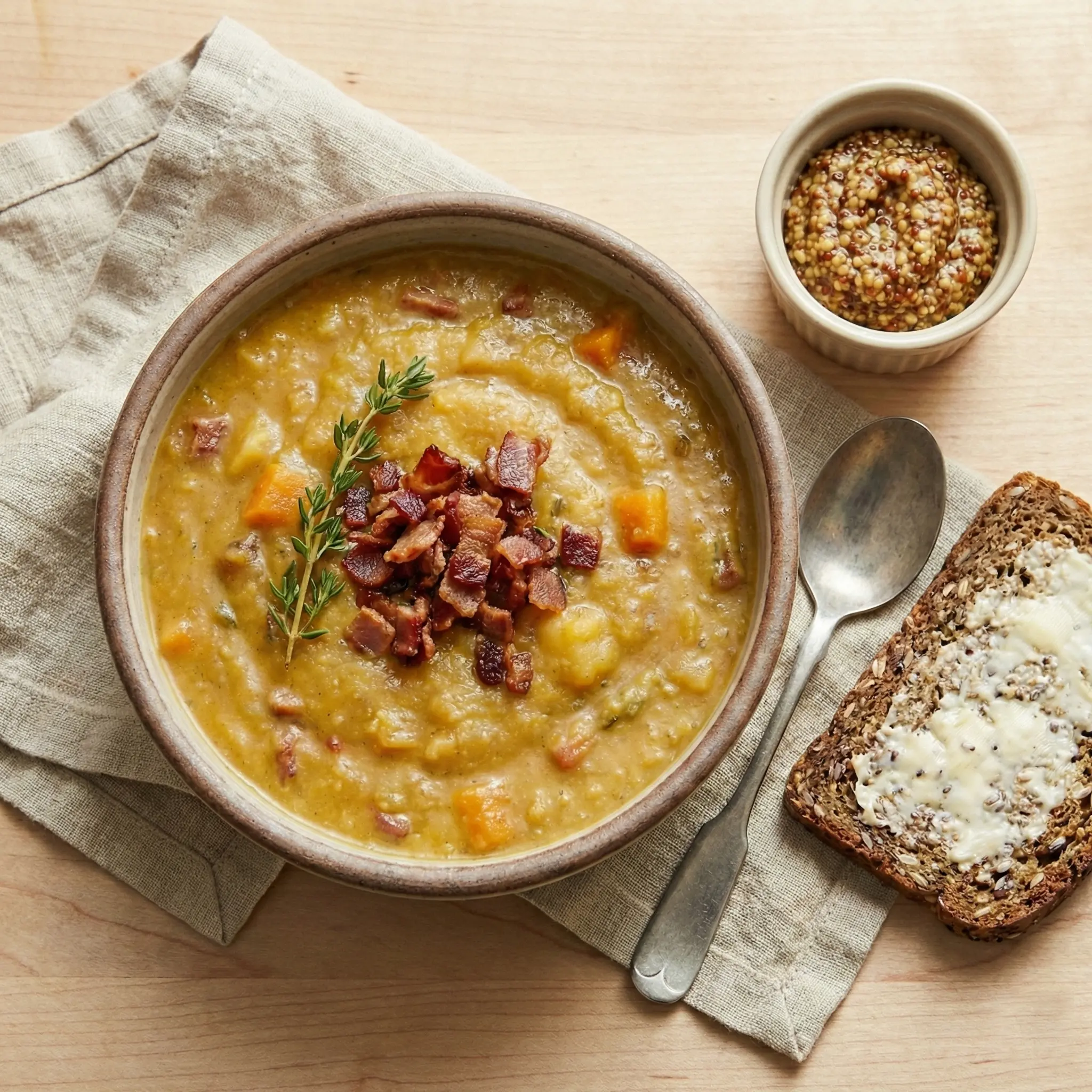
- Ladle the hot Nordic pea soup into bowls. Serve with grainy mustard on the side – each diner can stir a spoonful of mustard into their soup bowl to their taste, which is the traditional way in Finland and Sweden. This adds a lovely zesty kick to the creamy soup.
- Enjoy the soup with slices of buttered rye bread or crusty bread.
- For a Danish touch, offer some pickled beet slices on the side to nibble between spoonfuls.
- If you really want to go Nordic-old-school, follow your soup with a dessert of thin pancakes and jam (or perhaps a little glass of schnapps) – you’ve earned it!
Notes
Nordic pea soup is even better the next day: The flavors deepen overnight, and like many hearty soups, it thickens up a lot as it cools. You may need to stir in a bit of water when reheating leftovers. Store leftovers in the fridge for up to 5 days, or freeze portions for up to 3 months. This soup freezes and reheats beautifully – a boon for make-ahead meal planning.