
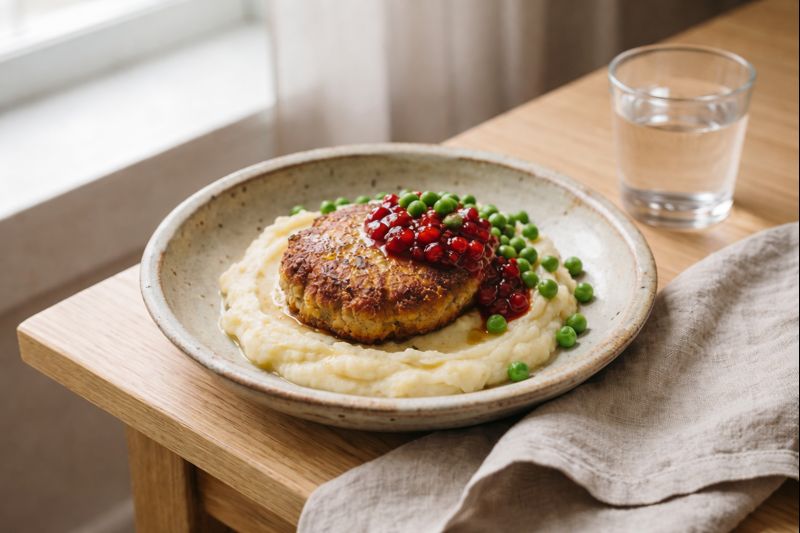
Few Swedish dishes manage to feel both luxurious and comforting at the same time. Wallenbergare does exactly that. At first glance, it looks like a simple breaded patty. One bite in, however, and you understand why this dish has held a place on Swedish menus for over a century.
Soft, almost spoon-tender inside. Gently crisp on the outside. Rich without being heavy. Wallenbergare is less about bold flavors and more about texture, technique, and restraint—hallmarks of classic Scandinavian cooking.
This guide walks you through what Wallenbergare is, where it comes from, how to make it properly at home, and how to serve it in a way that feels timeless wherever you live.
What Is Wallenbergare?
Wallenbergare is a traditional Swedish veal patty made from finely minced meat emulsified with egg yolks and cream, shaped gently, coated in breadcrumbs, and fried in butter.
Unlike meatballs or burgers, Wallenbergare is intentionally delicate. The mixture is worked just enough to bind, not kneaded. The result is a pale, velvety interior that almost melts when cut.
In short:
Wallenbergare is Sweden’s answer to a luxury comfort dish—simple ingredients, elevated through careful technique.
The History Behind Wallenbergare
Wallenbergare is closely associated with Stockholm’s early-20th-century restaurant culture and the influential Wallenberg family, whose name it bears. The dish is generally believed to have been created in a prominent city restaurant during a period when European culinary ideas were being interpreted through a distinctly Swedish lens.
Rather than copying continental veal dishes outright, Swedish chefs refined the concept: fewer spices, colder handling, more cream, and a strong focus on texture. By the 1930s, Wallenbergare had become firmly established as a refined yet approachable dish—something elegant enough for restaurants, but still rooted in home cooking.
Over time, it became a symbol of mid-century Swedish cuisine: confident, understated, and quietly indulgent.
What Makes a Proper Wallenbergare?
1. Cold Ingredients
Temperature control is essential. Keeping the meat, bowl, and cream cold allows the mixture to emulsify smoothly instead of breaking.
2. Egg Yolks and Cream
Egg yolks bind the patty, while cream provides richness and moisture. The mixture should be pale, smooth, and softly spoonable—not stiff.
3. Gentle Seasoning
Traditionally, seasoning is minimal: salt and white pepper. The goal is to let the dairy-rich veal flavor remain front and center.
4. Breadcrumb Coating
Breadcrumbs protect the delicate interior and give just enough contrast once fried in butter.
5. Butter—Always Butter
Wallenbergare is fried gently in butter and traditionally finished with browned butter spooned over just before serving.
Can You Make Wallenbergare Without Veal?
Yes—and many home cooks do.
While veal is traditional, similar results can be achieved using:
- Finely ground pork
- A mix of pork and poultry
- Fish (most commonly cod, or cod blended with salmon)
The key is low connective tissue, fine grinding, and cold handling. The technique matters more than the protein.
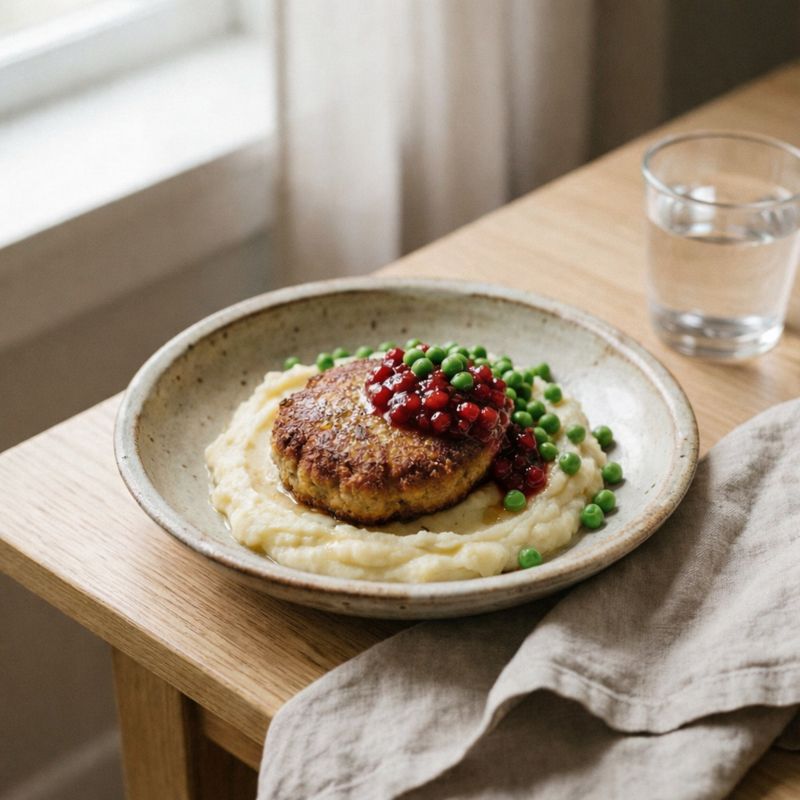
Classic Swedish Wallenbergare (Creamy Veal Patties)
Ingredients
Method
- Place the meat, mixing bowl, and beaters (or spoon) in the refrigerator until well chilled.
- In the cold bowl, mix the veal with salt and white pepper until slightly sticky.
- Mix in the egg yolks one at a time, blending gently but thoroughly.
- Slowly drizzle in the cold cream while mixing continuously. The mixture should become pale, smooth, and airy.If it warms or loosens, refrigerate briefly before continuing.
- Divide into four equal portions. With lightly damp hands, shape gently into thick, oval patties—do not press firmly.
- Coat each patty in breadcrumbs, shaking off excess.
- Melt butter in a pan over medium-low heat. Fry the patties slowly until golden on both sides, turning once.They should feel soft but set.
- Add a knob of butter to the pan and let it brown lightly. Spoon over the patties just before serving.
How to Serve Wallenbergare
Traditional Swedish Style
- Creamy mashed potatoes or pommes mousseline
- Green peas or butter-glazed vegetables
- A spoonful of lingonberries or lingonberry jam
- Plenty of browned butter
Variations to consider
- Serve with roasted root vegetables instead of mash
- Pair with lightly pickled cucumbers or radishes for acidity
- Add a fresh green salad with a mild mustard vinaigrette
The richness of Wallenbergare benefits from contrast—something green, something acidic, and something buttery.
A Lighter Alternative: Fish Wallenbergare
A popular modern interpretation replaces veal with finely processed white fish, often blended with salmon for richness. The same technique applies: cold ingredients, egg yolks, cream, breadcrumbs, and butter.
The result is just as soft and luxurious, but with a lighter, maritime character—proof that the Wallenbergare method is remarkably adaptable.
Why Wallenbergare Still Matters
Wallenbergare endures because it rewards care. It asks you to slow down, chill your ingredients, mix gently, and trust restraint over excess. In return, it delivers one of the most refined comfort dishes in Scandinavian cooking.
Whether you prepare it exactly as tradition dictates or adapt it to what’s available in your kitchen, Wallenbergare remains a masterclass in texture, balance, and quiet confidence.
If you serve it once, chances are it will become part of your regular rotation—reserved for evenings when simple food deserves a little ceremony.