Ingredients
Method
Prep and Sauté the Base
- Chop the veggies: Finely chop the onions and carrots. Mince the garlic. Having everything prepped and ready will make cooking go smoothly.
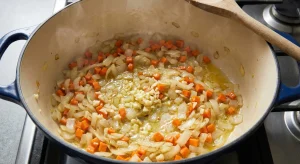
- Sauté the veggies: In a large pot or deep sauté pan, melt the butter over medium heat (or heat the oil). Add the chopped onions and carrots. Cook, stirring occasionally, for about 5–7 minutes until the onions turn translucent and start to golden around the edges. Stir in the garlic during the last minute of this step so it doesn’t burn. You want them soft and just beginning to caramelize. Season the veggies with a pinch of salt and pepper as they cook – this layers in flavor from the start.
- Optional – add bacon: For an extra flavor boost, you could begin by frying some diced bacon until lightly crisp, and then sauté the veggies in the bacon fat (no need for butter then). Not traditional, but very delicious.
Brown the Ground Beef
- Add the ground beef: Increase heat to medium-high. Crumble the ground beef into the pot with the onions (if there’s a lot of fat from butter, you can drain a little off, but leave some for flavor). Use a wooden spoon or spatula to break the beef into small bits as it cooks.
- Brown it really well: This step is key to a flavorful millionbøf. Let the beef cook undisturbed for a few minutes at a time so that it browns nicely on one side before you stir – you’re looking for some deep brown, crispy bits. If you stir too often or overcrowd the pan, the beef will just steam and turn gray. If your pot is small, consider browning the beef in batches (setting aside the browned meat and then combining later) so that each bit gets a chance to sear. It takes a little patience, but getting that rich browned crust on many of the beef bits will add tremendous depth to your gravy.
- Season and stir: As the beef browns, season it with another pinch of salt and pepper. Add the ½ tsp of paprika now, tossing to coat the meat. The paprika will cook in the fat and release its color and flavor. Continue cooking until the beef is thoroughly browned (no pink remaining) and you see some crunchy-looking edges on a few pieces. This can take about 5–8 minutes. Don’t worry if the bottom of the pot develops brown fond (sticky bits); that’s flavor we’ll use.

Simmer with Broth and Seasonings
- Deglaze the pan: Once the beef is browned, it’s time to get all those tasty browned bits off the bottom of the pan. Pour in a splash of the beef stock (about 50–100 ml or 1/4–1/2 cup) into the hot pan. It will sizzle and steam – immediately use a wooden spoon to scrape up all the browned bits from the bottom. This is called deglazing, and it dissolves those flavorful bits into the liquid, forming a great base for our gravy.
- Add the rest of the stock: After deglazing, add the remaining beef stock to the pot. The beef and veggies should be just barely covered by liquid; if not, add a bit of water until they are.
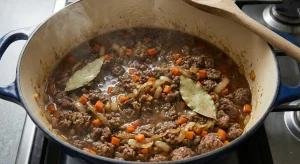
- Bay leaves & Worcestershire: Drop in the bay leaves and stir in the Worcestershire sauce (or soy sauce). These will infuse the gravy as it simmers. Also add a few grinds of black pepper (to your taste).
- Simmer: Bring the pot up to a gentle boil, then reduce heat to low to maintain a simmer. Cover with a lid (ajar is okay) and let it simmer for about 15–20 minutes. This allows the flavors to meld and the beef to become tender. Give it a stir once or twice to make sure nothing is sticking. (If you’re in a real hurry you could shorten the simmer, but even 10 minutes helps. If you have more time, you can simmer longer – 30 minutes or even up to 45 – for even deeper flavor; just watch that it doesn’t dry out, adding a splash of water if needed.)
- Optional additions: During the simmer, you can toss in a sprig of fresh thyme or rosemary if you like an herbal note (remove it before serving, along with the bay leaves). This is entirely optional and not traditional, but a tiny sprig can add a subtle aroma. Also, if you happen to have a tablespoon of red wine on hand, you could stir that in along with the stock earlier – it will cook off and add complexity. These little tweaks can elevate the sauce, but the dish will be delicious even without them.
Meanwhile, prepare the mashed potatoes
- You know how to do this. If not, ask your mother.
Thicken the Gravy
- Make a slurry: In a small bowl or cup, stir the 2 tbsp of flour into about 100 ml (~6 or 7 tbsp) cold water. Mix it well so there are no lumps – it should look like a smooth, thin paste. (If using cornstarch instead, 1 tbsp cornstarch in 2 tbsp water will do; cornstarch is more potent thickener.)
- Add slurry to simmering pot: Raise the heat slightly to get the stew bubbling. Remove the bay leaves now (and herb sprig, if you added one). Stir the stew with one hand while slowly drizzling in the flour slurry with the other hand. The hot liquid will immediately start to thicken. Add about 2/3 of your slurry first and see how thick the gravy gets. It should become nicely coating and gravy-like, not watery, but also not a solid paste. If it’s still thinner than you like, add the rest of the slurry. If it gets too thick, just stir in a bit more water or stock to loosen it. Cook for another minute or two at a gentle boil while stirring, to cook out any raw flour taste and let the gravy fully thicken.
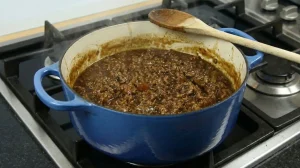
- Adjust seasoning: Taste your millionbøf and add more salt or pepper if needed. (Be careful – if your broth was salted or you used a bouillon cube, it might already be adequately salty.) If you feel it needs a little more punch, a few extra drops of Worcestershire or a pinch more pepper can be added. Once seasoned to perfection, turn off the heat.
Serve and Enjoy
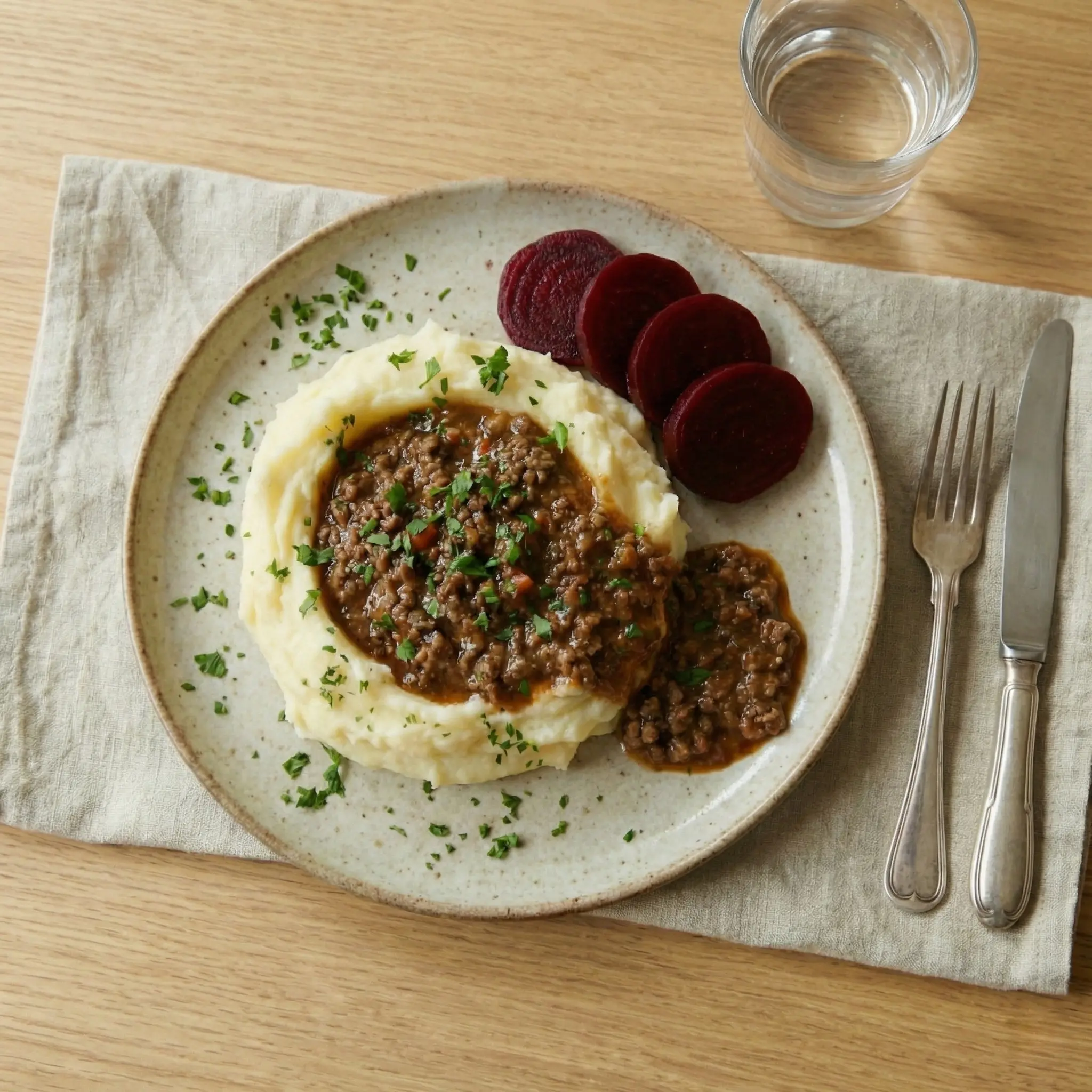
- Plate it up: Spoon a generous heap of warm mashed potatoes onto each plate (or bowl). Create a little well in the center of the mash and ladle that glorious millionbøf gravy right into it. The sauce will run over the sides – that’s perfect. You want plenty of gravy with each serving.
- Garnish: If you like, sprinkle a bit of chopped fresh parsley on top of the millionbøf. The pop of green is pretty and adds a hint of freshness to each bite.
- Add pickles: Don’t forget the pickled beets or cucumbers on the side! Place a few slices of pickled beetroot alongside the mash, or a small pile of sliced pickled cucumber. The bright, sweet-and-sour tang of pickles is a traditional pairing and really balances the rich, savory beef and potatoes. If you’ve never tried pickled beets with beef gravy, you’re in for a treat – it’s a surprisingly perfect combo.
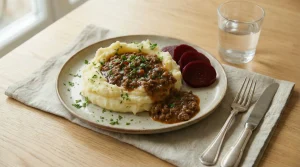
- Dig in: Millionbøf is best enjoyed immediately while hot. Make sure each forkful has a bit of potato, a bit of gravy, and a bit of pickle for the full experience. Velbekomme! (That’s “enjoy your meal” in Danish.)