Ingredients
Method
Brine the ham (wet cure method)
- Skip this step if you plan to dry-brine instead.
- In a large pot, combine the water, salt, and sugar for the brine. Add the bay leaves, peppercorns, allspice, and juniper if using. Bring to a boil, stirring until the salt and sugar dissolve.
- Let the brine cool completely to room temperature, then stir in the optional pink curing salt (if using).
- Place the ham in a clean tub or heavy-duty brining bag and pour the brine over it, ensuring the ham is fully submerged (weigh it down with a plate if necessary)
- Cover and refrigerate for 5 to 7 days, turning the ham every day or two so it cures evenly. (If your ham is larger than 10 lbs, aim for the full week or slightly longer.)
Dry cure alternative
- If not wet brining, mix the coarse salt, sugar, and ground spices (if using) in a bowl. Rub this mixture all over the ham’s surface.
- Place the ham in a large zip-top bag or non-reactive pan, cover, and refrigerate for 5 to 7 days.
- Liquid will seep out; turn the ham once a day and drain off any excess liquid if needed.
- After curing, rinse the ham well in cold water to remove surface salt.
Prep for cooking
- After brining (wet or dry), remove the ham from the fridge. If wet-brined, take the ham out of the brine solution and discard the brine. Rinse the ham thoroughly under cold running water to wash off excess salt, then pat it dry.
- Let the ham sit at room temperature for about 1 hour before cooking (this helps it cook more evenly).
- If the ham has a thick layer of skin, you can choose to leave it on for now (it helps retain moisture during cooking) and remove it after cooking.
Cook the ham – boiling method
- Place the ham in a large stockpot. Add enough cold water to cover the ham completely. Drop in the bay leaves, allspice berries, peppercorns, and the quartered onion.
- Bring the pot to a boil over high heat, then immediately reduce heat to low to maintain a gentle simmer.
- Simmer the ham, partially covered, until it is cooked through – roughly 3 to 4 hours for a 8–10 lb ham (estimate ~20 minutes per pound, but it can vary). Skim off foam from the surface occasionally.
- The ham is done when an instant-read thermometer inserted into the center (not touching bone) reads 145°F (63°C) for a just-done, juicy ham, or up to 155–160°F (68–71°C) for a very tender ham.
- Tip: If you have time, turn off the heat and let the ham cool in its broth for 30–60 minutes; this can improve juiciness.
- Carefully remove the ham from the pot and set it on a baking sheet.
- Reserve the broth for later (dipping sauce)
Cook the ham – oven roasting method
- Preheat your oven to 325°F (165°C).
- Place the ham fat-side up in a roasting pan.
- Pour about 2 cups of water into the pan to create steam, and tent the ham loosely with foil.
- Roast for approximately 3 to 3.5 hours (about 18–20 minutes per pound) or until the internal temperature reaches at least 145°F (63°C).
- Remove the foil for the last 30 minutes to allow the ham to brown slightly. (If using a foil-wrapped method for a boneless ham: wrap the ham entirely in aluminum foil and place in the pan; bake for ~2.5–3 hours until 145°F, then unwrap.)
- Once done, take the ham out of the oven and let it rest for 15 minutes.
- Drain the pan drippings and save them (you can use them to make a bread-dipping broth or gravy).
- Increase oven temperature to 450°F (230°C) in preparation for the crusting step.
Prepare mustard crust mixture
- In a bowl, whisk together the egg yolks, mustard, and brown sugar until smooth.
- Add the salt and a pinch of ground allspice/cloves if desired.
- If the mixture is very thin, stir in 1–2 tablespoons of flour or breadcrumbs to thicken it slightly (it should be a spreadable paste that isn’t too runny).
Apply mustard and breadcrumbs
- Line a baking sheet with foil (for easy cleanup) and place the cooked ham on it.
- (If the ham has skin/rind, peel it off now and trim excess fat to leave about a 1/4-inch layer.)
- Brush or spread the mustard-egg mixture all over the top and sides of the ham evenly.
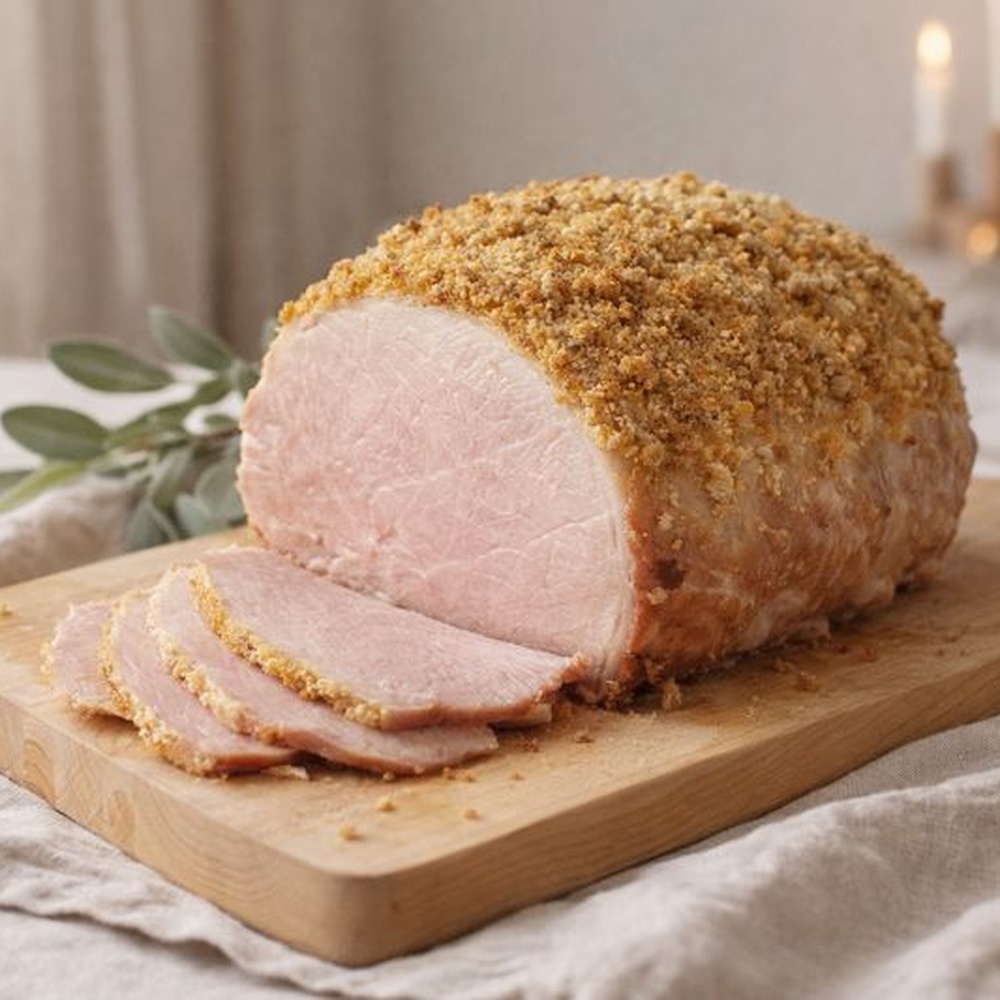
- Next, sprinkle the dry breadcrumbs over the ham, pressing gently so they adhere to the mustard layer.
- Use the full amount to form a nice coating – the ham should be covered in pale, mustard-dampened breadcrumbs.
Bake to set the crust
- Put the breadcrumb-coated ham into the 450°F (230°C) oven.
- Bake for about 10–15 minutes until the breadcrumb crust is golden brown.
- Keep a close eye to prevent burning – the crust should toast up and turn deep golden, but if you see very dark spots forming early, you can lower the oven temp a bit or shorten the time.
- You can also turn on the broiler for the last 1–2 minutes for extra color, but watch constantly.
Cool and serve
- Remove the beautiful, crusted ham from the oven.
- Let it cool for at least 20–30 minutes (for warm serving) or completely to room temperature if you plan to serve it the traditional way (cold). Cooling helps the crust set and juices redistribute.
- To serve Swedish-style, cut thin slices and serve cold or at room temp with mustard on the side. For a meal, you can carve thicker warm slices.
- Enjoy!
Notes
Note: If using table salt instead of kosher, use about 30% less by volume (e.g. 2 cups table salt ≈ 3 cups kosher salt) since table salt is finer/denser.