Ingredients
Method
Mise en place
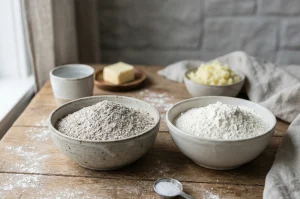
- Gather the ingredients you will need.
Mix Dry Ingredients
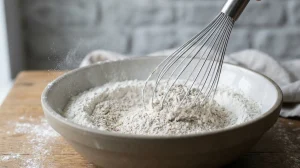
- In a large bowl, whisk together the whole grain flour, all-purpose flour, and salt until well combined. If you prefer a hint of sweetness or are aiming for a store-bought style, you could add a teaspoon of sugar here (optional).
Form the Dough
- Make a well in the flour mixture and pour in the warm water (or milk/buttermilk).
- If using mashed potato and/or melted butter, add them in as well.
- Stir with a wooden spoon or spatula until a shaggy dough forms.
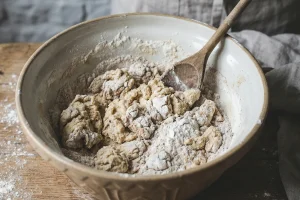
- Then use your hands to knead the dough in the bowl or on a lightly floured surface. Knead for about 3–5 minutes until it comes together into a smooth, firm dough.
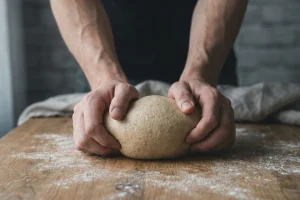
- The dough should feel similar to a firm pie crust or pasta dough – not sticky. If it’s too sticky, add a bit more flour; if it’s too dry or cracking, sprinkle a little more water. Form the dough into a ball.
Rest (Relax) the Dough
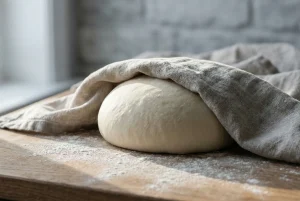
- Cover the dough ball with a damp kitchen towel or plastic wrap and let it rest at room temperature for about 30 minutes. This rest allows the flour to hydrate and the gluten to relax, which will make rolling easier.
Portion the Dough
- Divide the rested dough into smaller portions for rolling. For 6 large flatbrød, divide into 6 equal pieces (roll the dough into a log and cut into 6 segments).
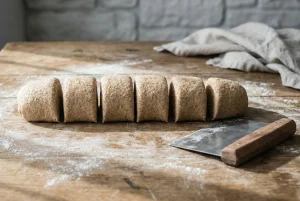
- For smaller flatbreads, divide into 8–10 pieces. Roll each piece into a ball, dusting with a bit of flour if needed.
- Keep the dough balls covered with a cloth so they don’t dry out as you work.
Preheat the Griddle/Pan
- Heat a large, flat skillet or griddle over medium-high heat. No oil or butter is needed in the pan – you’ll cook the flatbrød dry.
- A hot, evenly-heated surface is key for quick cooking, so give the pan a good few minutes to preheat. (If using an electric griddle or flat cooktop, aim for about 375°F/190°C.)
Roll Out the Flatbrød
- Working one ball at a time, generously flour your work surface (use barley flour for authenticity, or just all-purpose flour).
- Flatten a dough ball with your palm, then use a rolling pin to roll it out. Roll from the center outward, rotating the dough a quarter turn frequently to keep it round and even. It will resist and shrink a bit at first – that’s normal. Roll each piece as thinly as you can, ideally to about 1 mm thickness. The round will be roughly 8–10 inches across when thin. If the dough springs back or is hard to thin out, set that piece aside to rest further and start on the next one, then come back to it – a little rest works wonders if the dough is being stubborn.
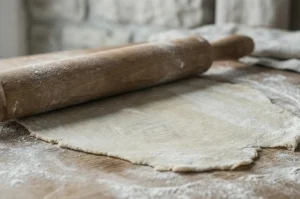
- (Tip: You can also use a pasta roller machine to roll the dough into thin sheets, then cut into circles or squares for flatbrød.)
Cook on the First Side
- Carefully transfer the rolled dough onto the hot dry skillet. If it’s a large round and tricky to move, you can drape it over the rolling pin or fold it gently in half to lift it, then unfold in the pan.
- Cook for about 30–60 seconds – you will see the dough start to dry and faint brown spots will form on the underside.
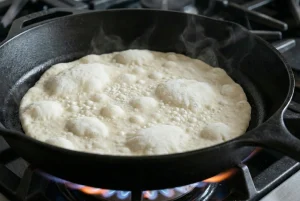
- Prick any large bubbles that may appear, though with an unleavened dough you usually won’t get big bubbles.
Flip and Finish
- Using a spatula, flip the flatbrød. Cook the second side for another ~30–60 seconds.
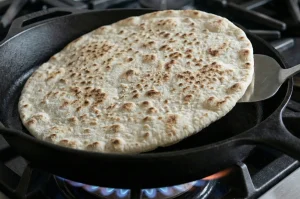
- The flatbrød is done when both sides have some brown freckling and the bread is mostly dry and firm.
- Don’t over-cook to a dark brown; a bit of golden color with spots is perfect. Total cook time is usually about 1–2 minutes per flatbrød. If your flatbrød is browning in less than 30 seconds, lower the heat slightly to avoid burning.
Cool to Crisp
- Remove the cooked flatbrød and prop it up on a wire cooling rack or a clean dry surface.
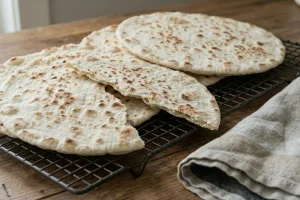
- As it cools, it will turn crisp. (If it still has soft areas once cooled, it may have been a tad thick or not cooked quite long enough – you can remedy this by drying it out in a low oven at 250°F/120°C for a few minutes, or just enjoy that one as a softer flatbread.)
- Meanwhile, continue rolling and cooking the remaining dough portions.
Serve or Store
- Once completely cool, enjoy your flatbrød!
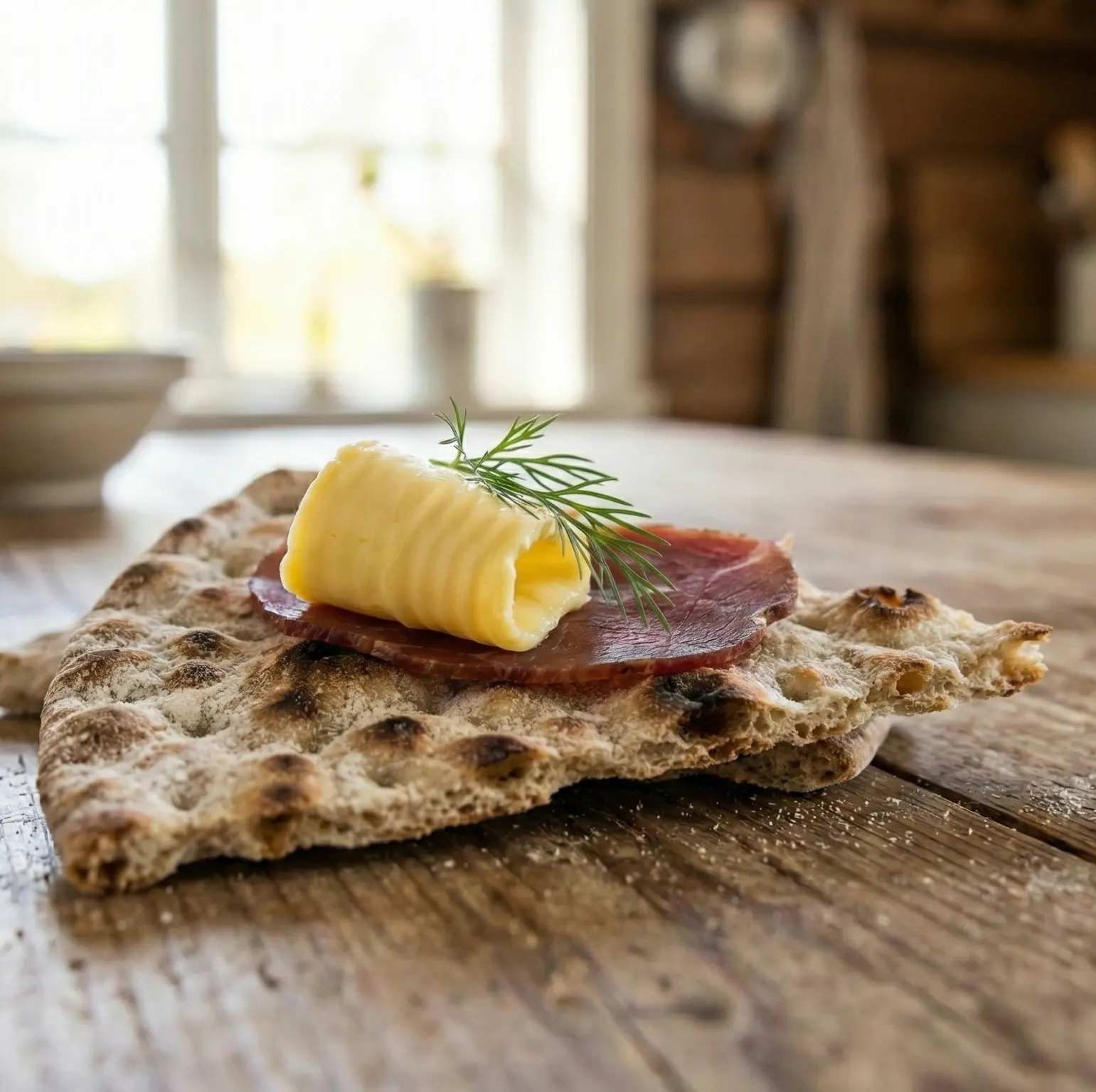
- Serve it alongside soups, stews, or topped with butter, cheese, or jam. To store, keep the flatbrød in an airtight container at room temperature. As long as they are thoroughly dried, they’ll stay fresh and crunchy for several weeks. (For longer storage, you can also freeze flatbrød in zip-top bags and re-crisp them in the oven later, but this usually isn’t necessary since they are shelf-stable when dry.)