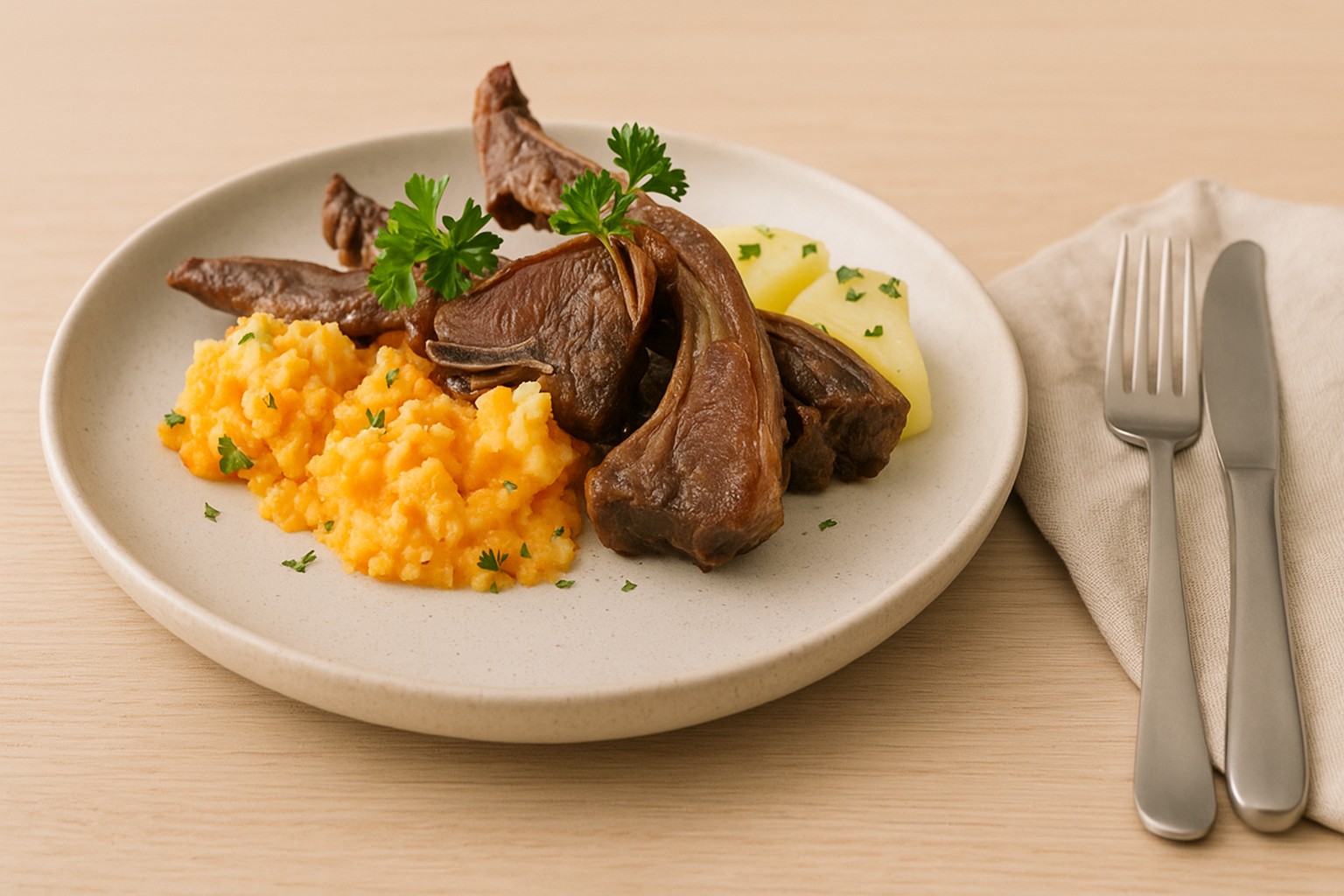

Ingredients
Method
Cure the Lamb (Salt + Time)
- Coat the lamb generously on all sides with coarse sea salt.
- Place in a non-reactive tray covered in plastic or a lidded container.
- Refrigerate 3–5 days. Pour off liquid (drawn out by salt) daily. The longer the cure, the deeper the flavor. 5 days is traditional.
- Always keep the meat refrigerated during curing and drying!
Dry & Mature the Meat
- Remove any excess salt (do not rinse yet).
- Place the ribs on a rack, uncovered, in the refrigerator for at least 24 hours, ideally 4–7 days.
Rehydrate (Soak)
- Place ribs in a large pot, cover with cold water. Soak 18–24 hours. Change water once halfway through. (Shoulder/shanks may need a few extra hours if very thick.)
The Classic “Stick Cooking”
- Line a large pot with birch sticks or a steaming rack.
- Add water until it just covers the sticks.
- Place the lamb on top, cover tightly.
- Steam low & slow for about 3 hours at a gentle simmer, until the meat loosens from the bone. Keep checking that water never dries out!
- Optional: For crispy edges, transfer the ribs to a baking sheet and broil/grill at high heat (220°C / 425°F) for 5–8 minutes, until the fat is browned and the edges are lightly crisp. Keep a close eye on them.