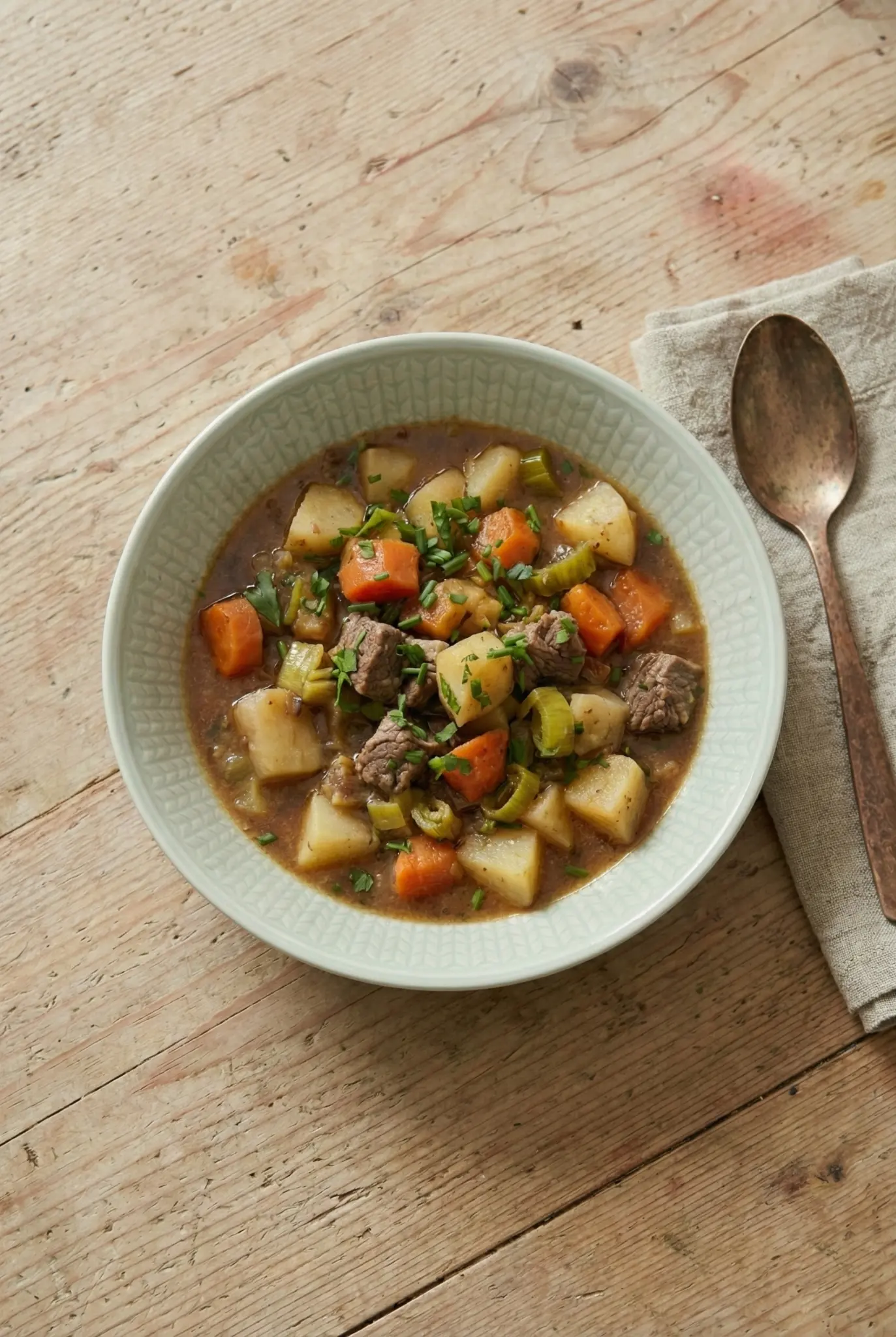
Ingredients
Method
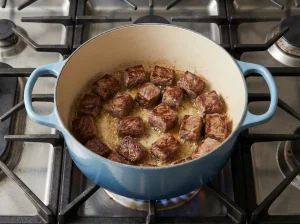
Brown the Beef
- In a large heavy pot or Dutch oven, heat the butter (and oil, if using) over medium-high heat.
- Pat the beef cubes dry with a paper towel (this helps browning) and season them lightly with salt and pepper.
- Brown the beef in batches – add a single layer of beef cubes and sear them for a few minutes on each side until nicely browned. Avoid overcrowding the pan (brown in 2–3 batches if needed).
Sauté Onions & Build Base
- After browning the beef, lower the heat to medium.
- If the pot is very dry, add a touch more butter or oil. Add the diced onions and sauté for about 5 minutes, stirring, until the onion is soft and translucent. Scrape up any browned bits from the bottom of the pot as the onions cook – those bits are flavor!
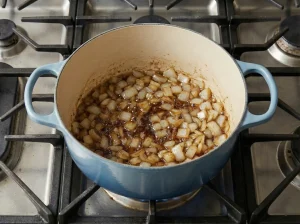
- If using the optional flour (to thicken the stew), stir it into the onions now and cook for about 1 minute, stirring constantly (this cooks off the raw flour taste).
Simmer Beef in Broth
- Pour in the beef stock (broth). Return the browned beef (and any juices from the plate) back into the pot.
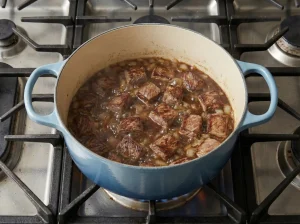
- Add the bay leaves and thyme as well. Give everything a good stir, scraping the bottom of the pot to deglaze any remaining brown bits into the liquid.
- Bring the mixture up to a gentle boil, then reduce the heat to low. Cover the pot with a tight-fitting lid and let it simmer on low for about 1 to 1½ hours, or until the beef is tender. You want a gentle simmer with just a few bubbles – slow cooking is key to tender meat.
- Stir occasionally, and if too much liquid evaporates you can add a bit of water. (The broth should just cover the ingredients; it will reduce and concentrate over time.)
Add Root Vegetables
- After the beef has simmered and is starting to get tender, add the chopped carrots, rutabaga, and celeriac (or parsnip) to the pot. (Hold off on the potatoes and leek for now.) Give it a stir. The liquid may not fully cover the veggies – that’s okay, they will release moisture as they cook.
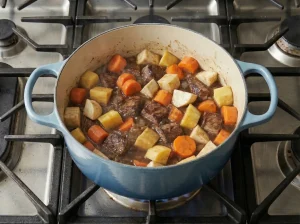
- Cover the pot again and continue simmering for about 15 minutes.
Add Potatoes (and Leek)
- Next, add the potato chunks and the sliced leek to the pot. At this point, all the veggies are in. If it looks very dry, you can splash in a bit more hot water or stock, but be careful – lapskaus should be somewhat thick and not too brothy in the end.
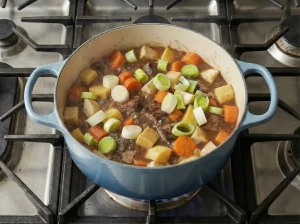
- Cover and simmer for another 20 minutes or so, until the potatoes and all vegetables are very tender.
- Tip: Try not to stir too vigorously or too often in this stage – the potatoes will naturally start to break down and thicken the stew, but you still want some nice chunks remaining. Gentle strirring is fine.
- By the end of cooking, the vegetables should be soft and some will have “melted” into the broth, which is exactly what you want for a slightly thick stew.
Season and Serve
- Check that the beef is fork-tender (a piece should break apart easily with a fork – if not, simmer a bit longer).
- Fish out the bay leaves and thyme sprig (if used).
- Taste the lapskaus and season with additional salt and pepper as needed. Don’t be shy with the pepper – a few grinds of black pepper add a lovely warmth.
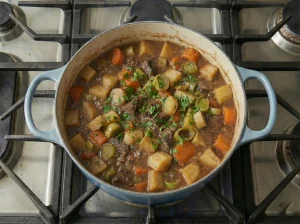
- Serve the stew hot in bowls, garnishing each with a sprinkle of fresh chopped parsley and lingonberry jam.
Notes
Lapskaus will thicken as it sits. If you prefer it thinner, you can always add a bit more hot water to the pot to adjust the consistency. Conversely, if it’s not thick enough for your liking, let it simmer uncovered for a few extra minutes or mash a few potato pieces against the side of the pot to release their starch.
This stew is even better the next day – the flavors deepen overnight – so don’t worry about making too much. Leftovers can be cooled and stored in the fridge for up to 3 days, or freeze portions for up to 3 months (it reheats wonderfully on the stovetop over low heat, just add a splash of water if needed)