
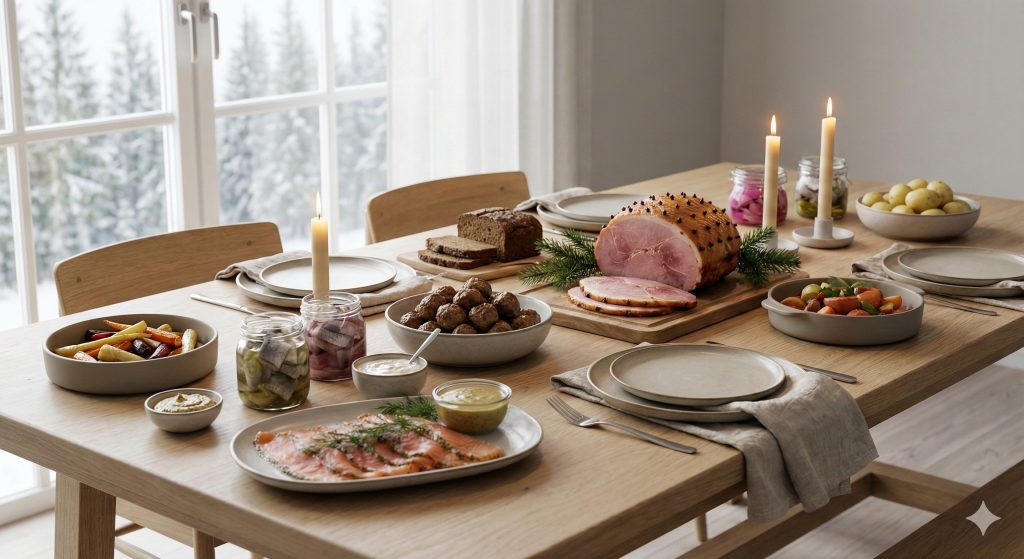
The Nordic countries have some of the coziest and most delicious Christmas dinner traditions in the world. Each country – Norway, Sweden, Denmark, and Finland – adds its own flavorful twist to the holidays. From crispy roast pork and caramelized potatoes in Denmark to hearty ham and casseroles in Finland, a Scandinavian Christmas feast is a true winter delight. In this in-depth guide, we’ll explore the fun and festive food traditions of each country, with a lighthearted touch. Whether you’re an international foodie or just curious about Christmas in the Nordics, get ready for a mouthwatering tour!
Norway: Ribbe vs. Pinnekjøtt – A Christmas Dinner Debate
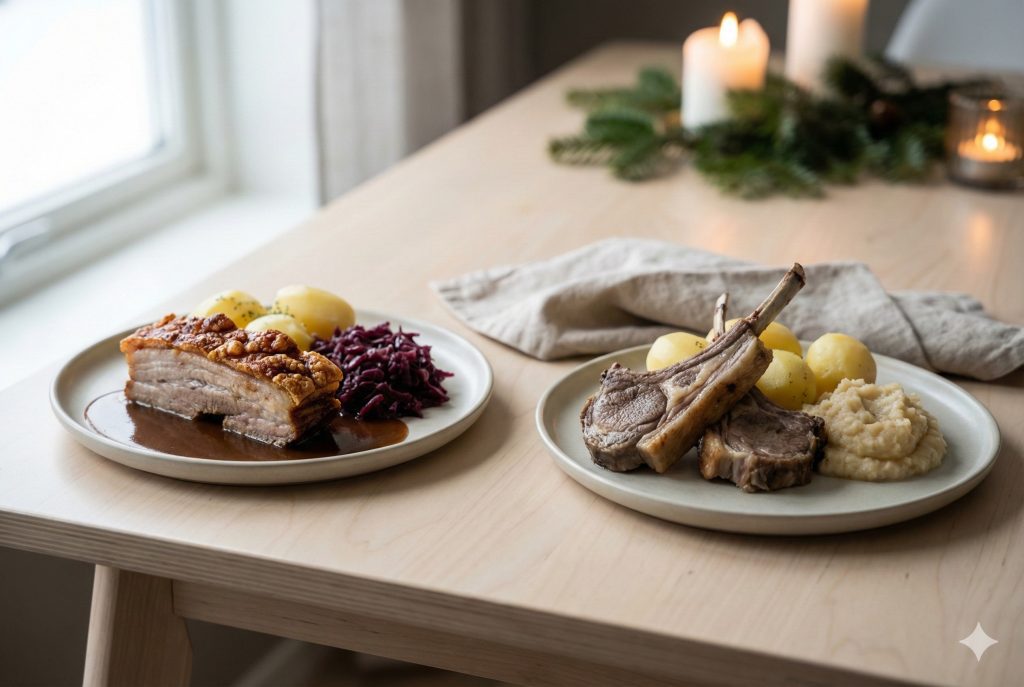
In Norway, the big Christmas meal is enjoyed on Christmas Eve (December 24th), and it famously features a friendly rivalry on the dinner table. Ask a Norwegian what’s for Christmas dinner, and you’ll likely spark a debate: pork ribs or lamb ribs? The country is almost evenly split between “Team Ribbe” (roast pork belly) and “Team Pinnekjøtt” (cured lamb ribs), with regional preferences driving the choice. In eastern Norway (around Oslo), most families serve ribbe with its crispy crackling skin, whereas out west among the fjords, pinnekjøtt reigns supreme. No matter which main dish wins, the goal is a rich, hearty feast that keeps you warm through the long winter night.

- Ribbe (Roast pork belly) – Perhaps the most popular Christmas dinner in Norway, enjoyed by about half the population. It’s a slab of pork belly roasted until the fat renders and the rind turns into irresistibly crunchy crackling. Ribbe is always served with plenty of sides: think boiled potatoes, gravy and tangy sauerkraut or red cabbage (called surkål) to cut through the richness. Often, there are also medisterkaker (pork meatballs) or sausages on the plate as extra treats.
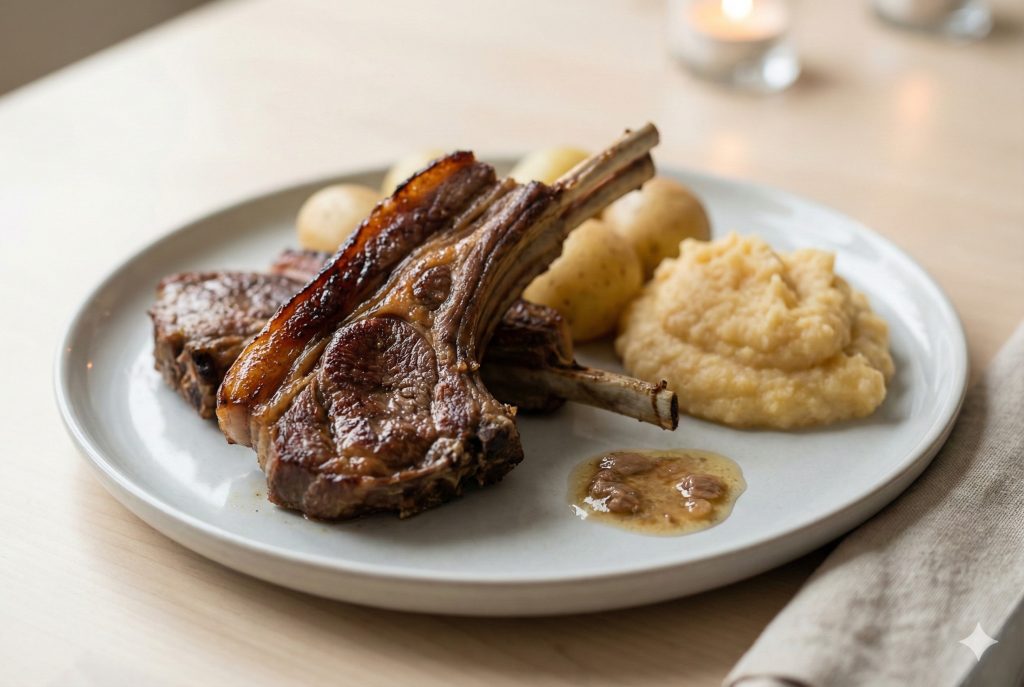
- Pinnekjøtt (Cured lamb ribs) – A Christmas staple in Western Norway, where as many as 75% of people have it on Christmas Eve. Pinnekjøtt are racks of lamb or mutton ribs that have been salted, dried, and sometimes smoked – an ancient preservation method that gives a unique, savory flavor. The name pinnekjøtt literally means “stick meat,” either referring to the birch sticks used for steaming the ribs or the fact that the ribs themselves look like sticks. To cook, the ribs are soaked to remove excess salt, then steamed for hours until tender (often on a bed of birch sticks in the pot). They’re served with boiled potatoes and mashed rutabaga (swede) – a sweet earthy mash that pairs perfectly with the salty meat. For many Norwegians, Christmas isn’t Christmas without pinnekjøtt – it’s the taste of holiday nostalgia.
- Lutefisk – The daring dish on the Norwegian Christmas menu. Lutefisk is dried fish (usually cod) that’s been soaked in lye, then rinsed and cooked into a gelatinous, translucent fish pudding. Sound intense? It is! This medieval-era delicacy is known for its pungent odor and jiggly texture, and Norwegians have a love-hate relationship with it. Some absolutely adore it as a pre-Christmas tradition, while others stay far away. Lutefisk isn’t usually the main event on Christmas Eve nowadays, but many families will have a lutefisk dinner on a day leading up to Christmas. It’s typically served with boiled potatoes, pea purée, crispy bacon, and mustard or brown cheese sauce – and plenty of aquavit liquor to wash it down. This is the dish that might separate the true Vikings from the rest!
- Other Norwegian Christmas Foods – Norwegians enjoy a variety of holiday treats beyond the big two. In some coastal areas, fresh cod (juletorsk) is traditional for Christmas Eve, harking back to times when Advent was a meat-free fast. And in parts of western Norway, the truly adventurous might serve smalahove, which is smoked sheep’s head, split in half and steamed until the meat is tender. (Yes, you read that right – an entire sheep’s head on your plate, eyes and all!) Smalahove is not for the faint of heart, but it is a centuries-old Christmas dish enjoyed by a small number of families as a special tradition. Don’t worry – most Norwegians today stick to more approachable fare, but they love to joke about these old-time dishes. For dessert, a Norwegian favorite is riskrem – a cold rice pudding mixed with whipped cream and served with red berry sauce. Often an almond is hidden in the riskrem too (Norwegians also enjoy the almond game!), with the finder getting a small prize or good luck.
Fun fact: In Norway, Christmas Eve dinner is such a big deal that families often start early. By the time “Kvelden før kvelden” (The Night Before the Night) television special is airing, many are already in a food coma on the sofa. And if you find a bowl of porridge left out in the barn on Christmas Eve, it’s not an accident – it’s for the nisse, the household gnome, to keep him happy!
Sweden: The Lavish Julbord Buffet – Smörgåsbord of Holiday Delights
Move over, Santa – in Sweden, the real star of Christmas is the food. Swedes celebrate Christmas on December 24th with a grand feast known as the julbord, which literally means “Christmas table.” And what a table it is! A julbord is essentially a holiday smörgåsbord, a buffet loaded with traditional dishes both savory and sweet. In fact, the spread is so enticing that many workplaces and groups of friends in Sweden hold multiple julbord parties in December, just to indulge more than once a year. But the most important julbord is the one at home on Christmas Eve, when families gather around the bountiful buffet for a long evening of grazing, toasting, and good cheer.
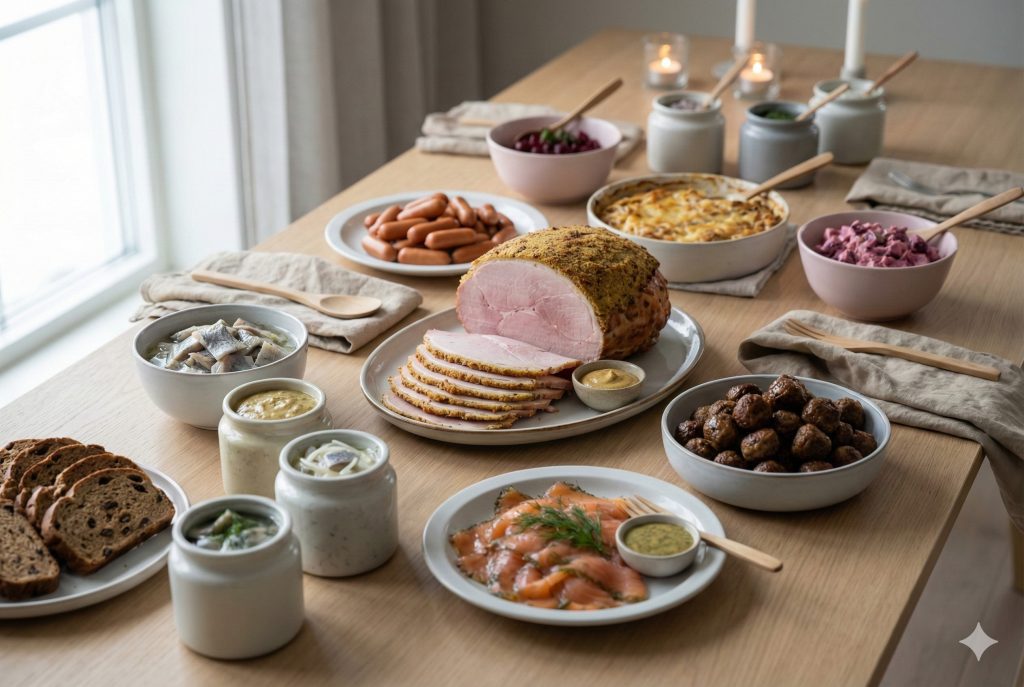
A Swedish julbord has several rounds (and you’ll want to pace yourself). Traditionally, you start with the cold fish dishes, then move on to cold cuts, then hot dishes, and finally dessert. It’s a marathon, not a sprint! Here are some must-have foods on a Swedish Christmas julbord:
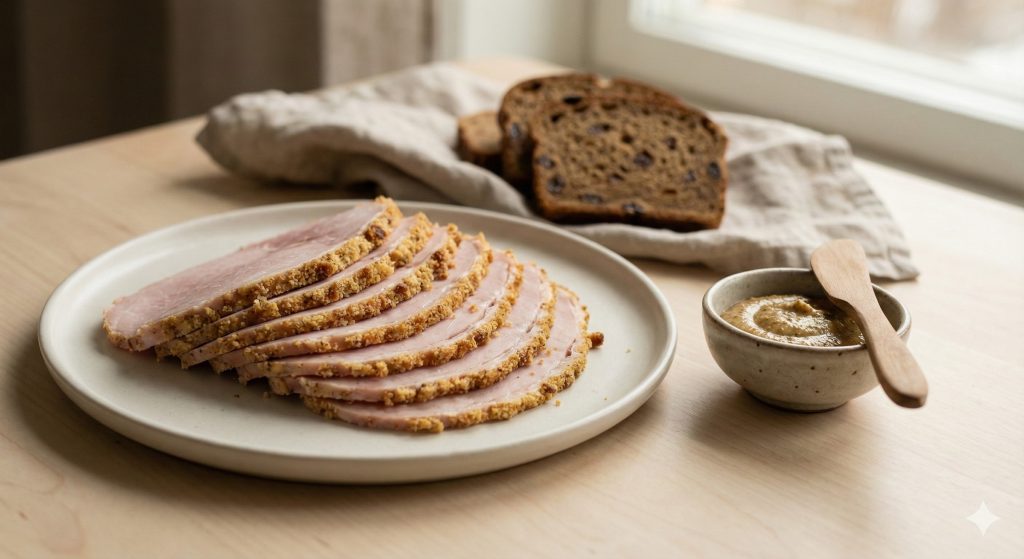
- Julskinka (Christmas ham) – The centerpiece of the Swedish julbord is a glorious whole ham. The ham is usually boiled or baked, then coated in a mixture of mustard and breadcrumbs and briefly oven-baked again for a golden crust. It’s served chilled, sliced thin, and everyone slathers their slice with a dab of strong Swedish mustard. No Christmas buffet is complete without the ham – it’s said the julskinka “holds court” over the table.
- Meatballs (Köttbullar) – Is it even a Swedish celebration without meatballs? Tiny homemade meatballs, spiced just right, are a staple of the julbord. Swedes are proud of their meatballs (yes, the IKEA ones are a distant cousin). On Christmas, they’re often enjoyed alongside beet salad or drizzled with gravy. Fun trivia: legend has it Swedish meatballs originated from a recipe King Charles XII brought back from Turkey – but now they’re as Swedish as ABBA and Avicii.
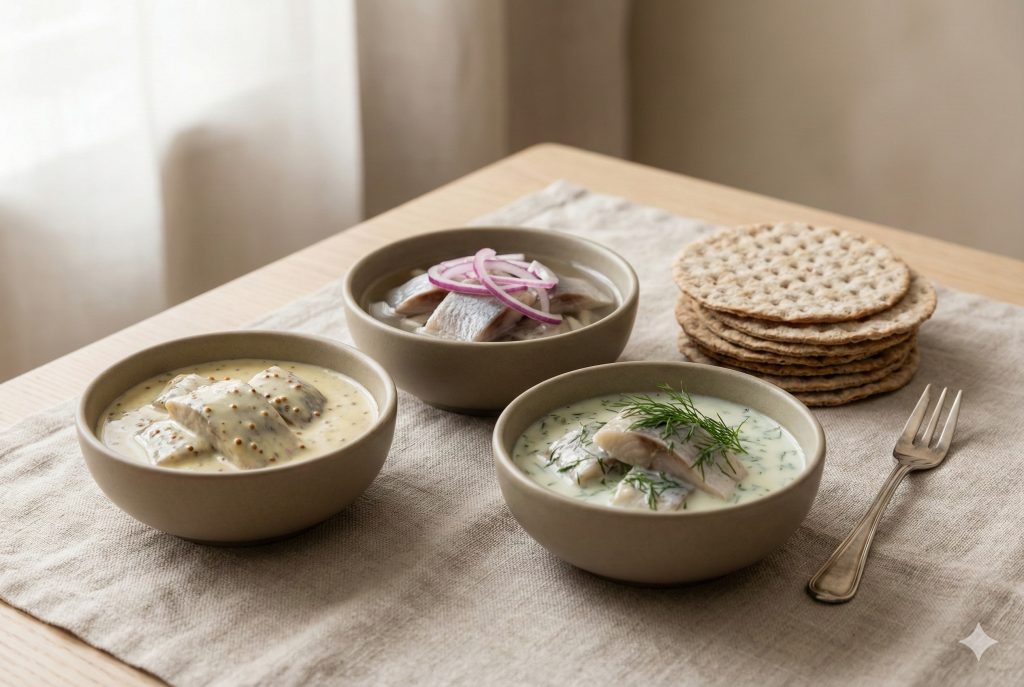
- Pickled herring (Sill) – Swedes love their pickled herring in all its varieties. On the julbord you’ll find several kinds of sill: herring in mustard sauce, in onion brine, in dill sauce, you name it. Each family might have their favorite recipe (Grandma’s secret herring, anyone?). You eat it on rye bread or crispbread, often with a shot of aquavit schnapps to chase it down. It might sound unusual to newbies, but many Swedes genuinely crave these tangy little fish each Christmas.
- Gravlax and other fish – Alongside herring, you’ll usually see gravlax, which is cured salmon (marinated in salt, sugar, and dill) thinly sliced. It’s silky and rich, served with a dill-mustard sauce called Hovmästarsås. Some julbords also include smoked salmon, eel, or other seafood delicacies – a nod to Sweden’s long coastline and fishing heritage.
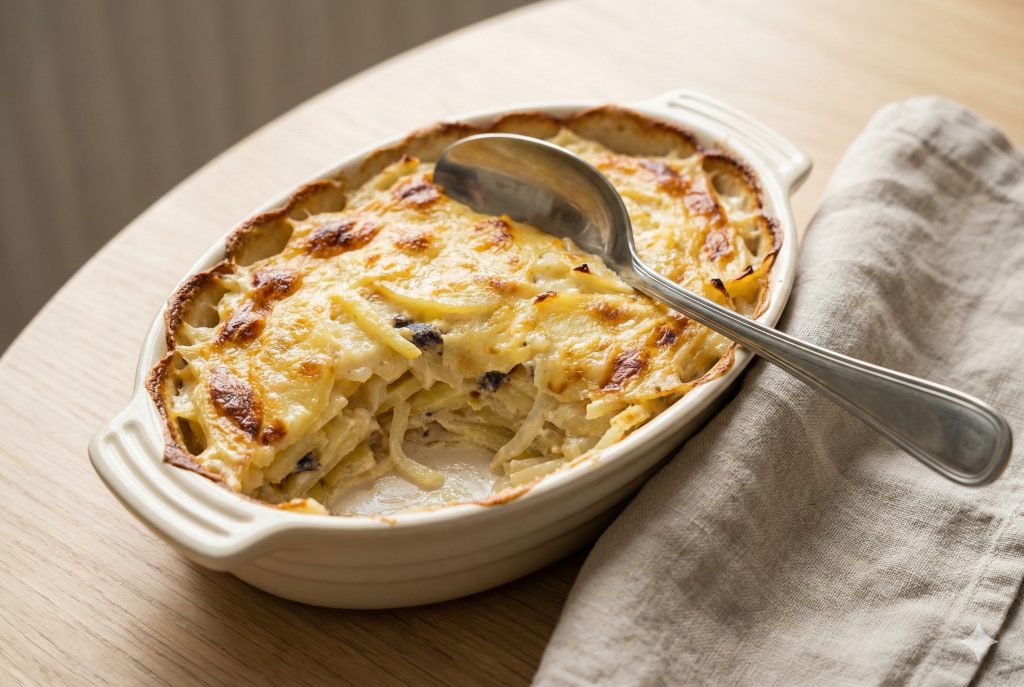
- Janssons frestelse (Jansson’s Temptation) – This curiously named dish is a creamy potato casserole and absolute comfort food. It’s made of layers of julienned potatoes, onions, and pickled sprats (small fish similar to anchovies) baked with cream. The result is a golden, bubbly gratin that is oddly addictive – hence the “temptation” in the name. Despite being a classic now, Jansson’s frestelse is actually a relatively recent addition to the Christmas table (dating to the 1940s), but Swedes embraced it wholeheartedly. Even those wary of fish love this dish, because the sprats just give a savory umami kick.
- Prinskorv and Julkorv – Don’t be surprised to see little sausages on the buffet. Prinskorv are tiny cocktail sausages that are fried up and devoured by the handful. There’s also julkorv, a larger spiced Christmas sausage that’s sliced for serving. Kids usually make a beeline for the prinskorv (and, let’s be honest, so do many adults!).
- Rödbetssallad (Beetroot salad) – This pretty-in-pink salad is made from diced beets, potatoes, carrots, apples, and pickles bound in a creamy dressing. Often a dollop of whipped cream (sometimes tinted pink from beet juice) is folded in just before serving. It’s a refreshingly sweet and tangy counterpoint to all the rich meats and saltiness on the plate.
- Vörtbröd – A special Christmas bread made with wort (unfermented beer) which gives it a malty sweetness, often studded with raisins. It’s perfect for making little open-faced sandwiches with ham or cheese during the julbord.
After multiple helpings (and possibly a nap), Swedes cap off the meal with desserts and sweets. A traditional dessert is Ris à la Malta, which is a cold rice pudding (similar to the Norwegian riskrem or Danish risalamande) mixed with whipped cream and often served with orange segments or a berry sauce. As in other Nordic countries, a single almond is hidden in the rice pudding – in Sweden, the legend goes that whoever finds the almond will get married within a year! (Cue the shouts of “Chew carefully!” and some good-natured cheating to make sure Grandma finds the almond if she’s eagerly awaiting a proposal…)
Sweden is also famous for its pepparkakor (gingerbread cookies) and saffron buns (Lussekatter) during the Christmas season, though those are often eaten earlier (like on St. Lucia Day, Dec 13). On Christmas Eve, a variety of homemade candies like knäck (almond toffee) and ischoklad (chocolate cups) are popular. And to wash it all down, you must have julmust – the iconic Christmas cola. Julmust is a malty, sweet soda that tastes like a mix of root beer and Coke, and Swedes are obsessed with it in December (it literally outsells Coca-Cola every year during the holidays). If you attend a Swedish julbord, don’t be surprised to see everyone from children to grandparents sipping this dark-brown fizzy drink.
Fun fact: At 3:00 PM on Christmas Eve, just as many families are preparing to sit down to their julbord, virtually the entire country of Sweden pauses to watch Donald Duck cartoons on TV (Kalle Anka och vänner) – it’s a beloved annual tradition since 1959! So if you’re in Sweden on Christmas, don’t be startled when the streets go quiet and the phrase “God Jul!” (Merry Christmas) echoes as everyone rushes home for ham, herring, and a little Disney magic.
Denmark: Duck, Pork, and Caramelized Potatoes – A Cozy Danish Feast
In Denmark, Christmas Eve is the pinnacle of hygge – that famous Danish coziness. The evening of 24 December is for candlelight, family, and one enormous dinner followed by dancing around the Christmas tree and exchanging presents. Danes are serious about their Christmas dinner; so serious, in fact, that there’s a friendly divide in the country: those who eat duck and those who eat pork. Which team are you on? Many Danish families actually make both roast duck and roast pork to keep everyone happy (and very full)! One thing everyone agrees on: the side dishes and desserts are non-negotiable and absolutely delicious.
A proper Danish Christmas menu will always include these essentials:
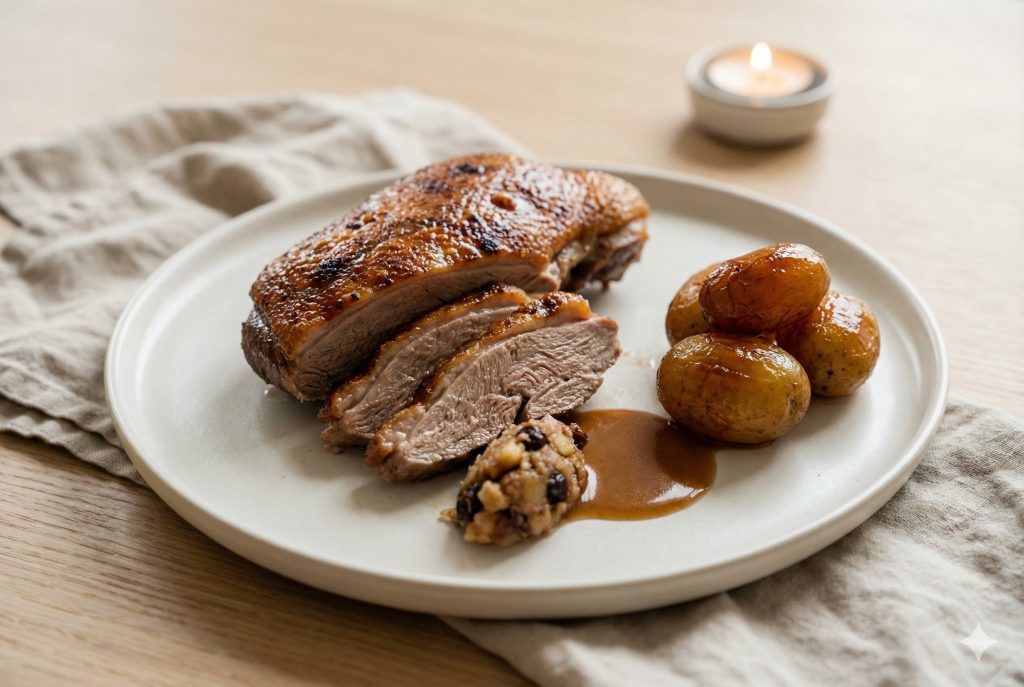
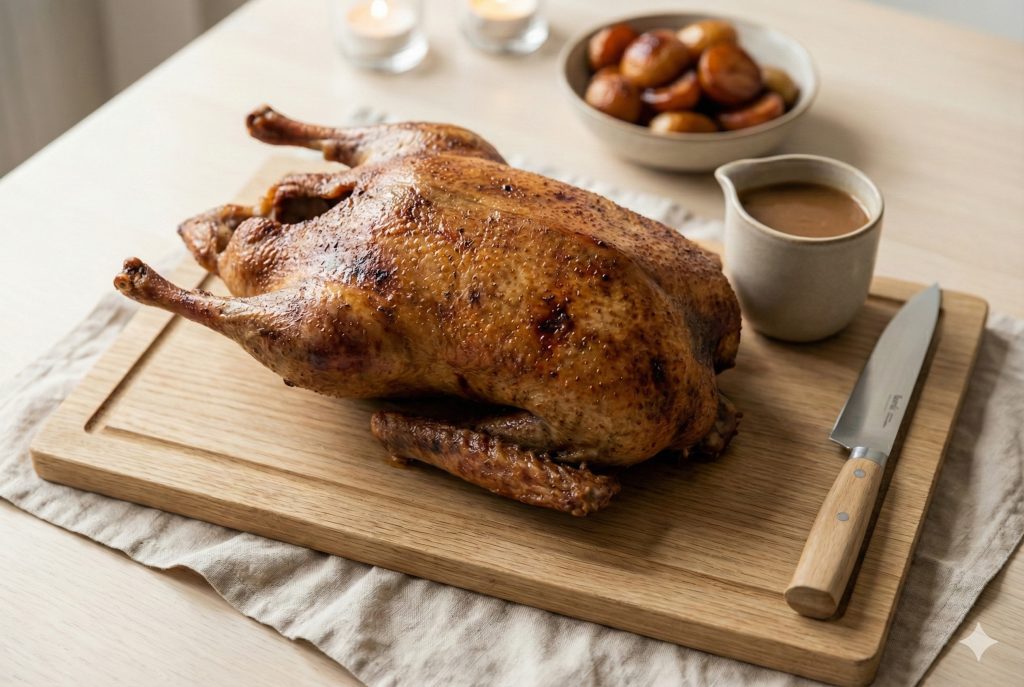
- Roast Duck (Andesteg) – Many Danes insist on a traditional Christmas duck, roasted to bronzed perfection. The duck is typically stuffed with apple pieces and prunes which help keep it juicy and lend a subtle sweetness. After hours of slow-roasting (often while the mouth-watering aroma fills the house), the tender duck is served with its savory stuffing on the side and plenty of rich gravy. Roast duck is so beloved that some families wouldn’t dream of Christmas without it – unless they’re on Team Pork (see below).
- Roast Pork (Flæskesteg) – The other Danish favorite is a roast pork loin or pork belly, always cooked with the rind on to achieve that critical crispy crackling. Danish cooks take pride in perfect crackling – there are endless tips like scoring the rind, rubbing in salt, and even techniques like pouring boiling water over it before roasting. When done right, the flæskesteg emerges with a shatteringly crisp crust (the svær) that’s fought over at the table. This dish actually has historical roots in eastern Denmark, but today it’s enjoyed nationwide alongside or instead of the duck. Flæskesteg is served in slices with gravy, and any leftovers make amazing open-faced sandwiches (smørrebrød) the next day.
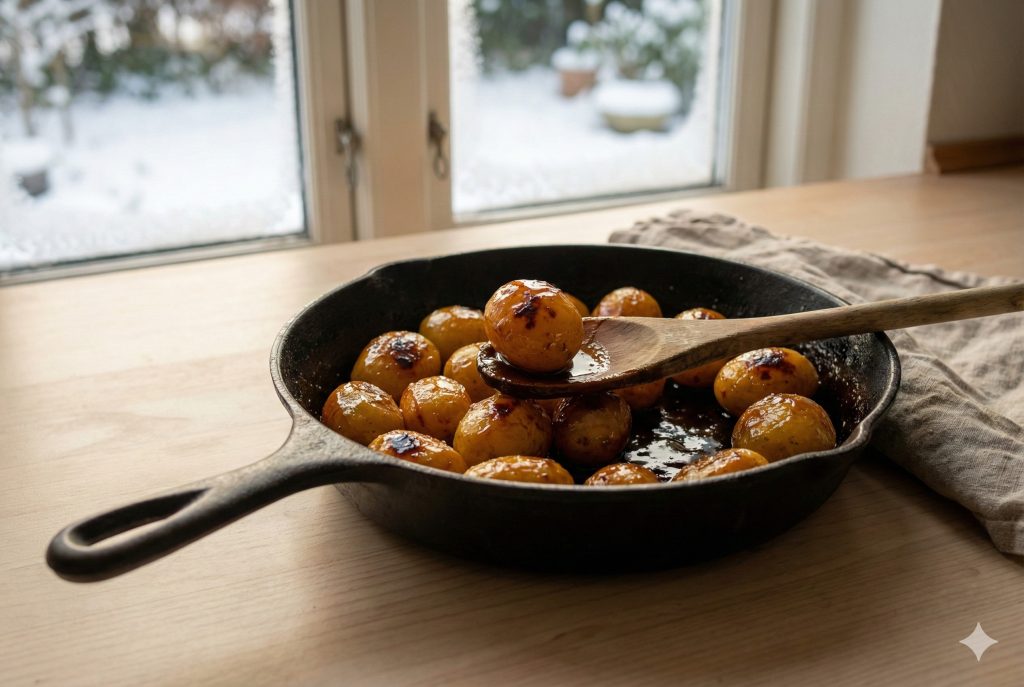
- Brunede kartofler (Sugar-browned Potatoes) – Potatoes are elevated to candy-like greatness in this Danish specialty. Brunede kartofler are small boiled potatoes that get tossed in hot caramelized sugar and butter until they are glossy, sweet little spheres of joy. They sound like a dessert but are actually served with the main meal, complementing the savory meats. The Danes use a particular small firm potato for this so it doesn’t fall apart in the pan. These caramelized potatoes are so decadent and beloved, you really only eat them at Christmas (which is probably for the best if you value your waistline!).
- Rødkål (Braised Red Cabbage) – This sweet and sour red cabbage is a must-have side dish in Denmark. It’s red cabbage slow-cooked with vinegar, sugar, and often redcurrant juice or apples, until it’s tender and deep purple. Rødkål adds a much-needed tart and fruity note to the plate, balancing the rich duck and pork. Plus, hey, it’s the token vegetable! As Danes joke, there aren’t many greens on the Christmas table, but at least there’s red cabbage to make you feel a bit virtuous.
- Brown Gravy – Both the duck and pork roasts yield delicious drippings, which are transformed into a luscious brown gravy. A good gravy ties everything on the plate together. Danish gravy often gets a touch of sweetness (a spoonful of sugar or currant jelly) to make it just right. It’s so tasty you might be tempted to lick the plate (we won’t tell).
- Other Trimmings – Danes also love to include pickled cucumber (Asier) for a sharp, cool contrast to the heavy meal, and often a spoon of redcurrant or cranberry jelly on the side for sweetness. These little extras cut the richness and brighten the flavors – smart and yummy.
After the main meal, it’s time for dessert – and in Denmark, that means one thing: Risalamande. This whimsically named dessert (from French riz à l’amande) is a creamy rice pudding laced with vanilla and plenty of chopped almonds, topped with a warm cherry sauce. It’s descended from the everyday rice porridge (risengrød) that Danes used to eat on Christmas, but sometime around the late 19th century someone had the brilliant idea to mix cold porridge with whipped cream and sugar, and risalamande was born. It’s so delicious and filling that it became the traditional Christmas Eve dessert – practically “written into the Danish constitution,” as one humorist put it.
Of course, there’s a game involved: one whole almond is hidden in the bowl of risalamande. Everyone serves themselves and eats and eats until the lucky person finds the almond. The prize is usually a little marzipan pig or some small gift. The catch is that you mustn’t reveal you have the almond until everyone is nearly bursting (to encourage second helpings!). It’s hilarious to watch people surreptitiously poking through their pudding hoping to strike almond. By the end, everyone is groaningly full – but it’s Christmas, that’s exactly how it should be.
After dinner and dessert, Danish families often hold hands and dance in a chain around the Christmas tree, singing carols in the living room. It’s the ultimate hygge moment. Only after the songs will presents be opened – a reward for both kids and adults who managed to wait while eyeing the tempting boxes under the tree. Later in the evening, if anyone has room (debatable!), there might be coffee with homemade cookies or a plate of marzipan confections to nibble on. A popular Christmas treat throughout December (not just on the 24th) are æbleskiver, which are round pancake puffs dusted with sugar and served with jam – often enjoyed with a mug of hot gløgg (spiced mulled wine) for peak coziness.
Fun fact: Denmark has julebryg, special strong Christmas beers brewed just for the season, and the release of Tuborg’s “J-Day” Christmas beer in early November is practically a national holiday for partygoers. By Christmas Eve, though, most people stick to wine or snaps with dinner – until the dancing’s done, and Uncle Lars breaks out the schnapps for a final round of cheer!
Finland: Ham, Casseroles and Candles – A Warm Finnish Christmas Feast
Up in Finland, Christmas is a magical time of year – the “land of Santa Claus” truly knows how to do the holidays right. Finnish Christmas dinner (joulupöytä, or “Christmas table”) is steeped in tradition and has a homey, hearty charm. Like its Nordic neighbors, Finland’s main celebration is on Christmas Eve, when families gather for a bountiful meal followed by perhaps a sauna session and a visit from Joulupukki (Santa) himself! The Finnish Christmas menu is delightfully old-fashioned and very comforting – it feels like something from a storybook, served by candlelight while snow falls quietly outside.
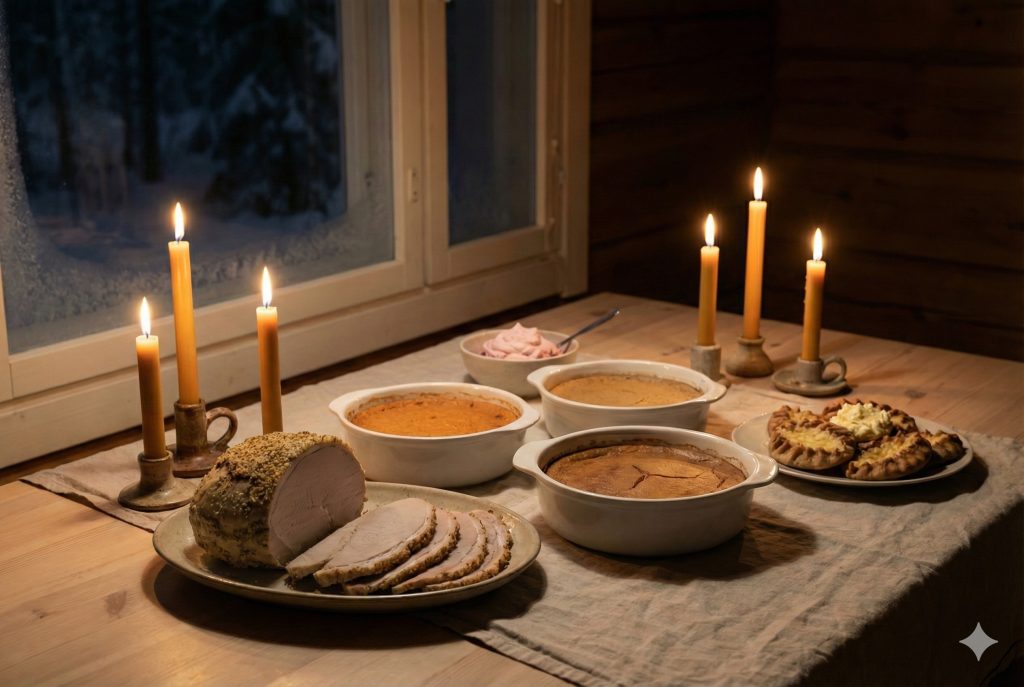
A Finnish Christmas dinner typically starts in the late afternoon or early evening. The meal often begins with an array of cold starters, especially fish dishes, and then moves on to the warm main course and sides. Many of the recipes go back generations. Here are the must-have foods on a Finnish Christmas table:
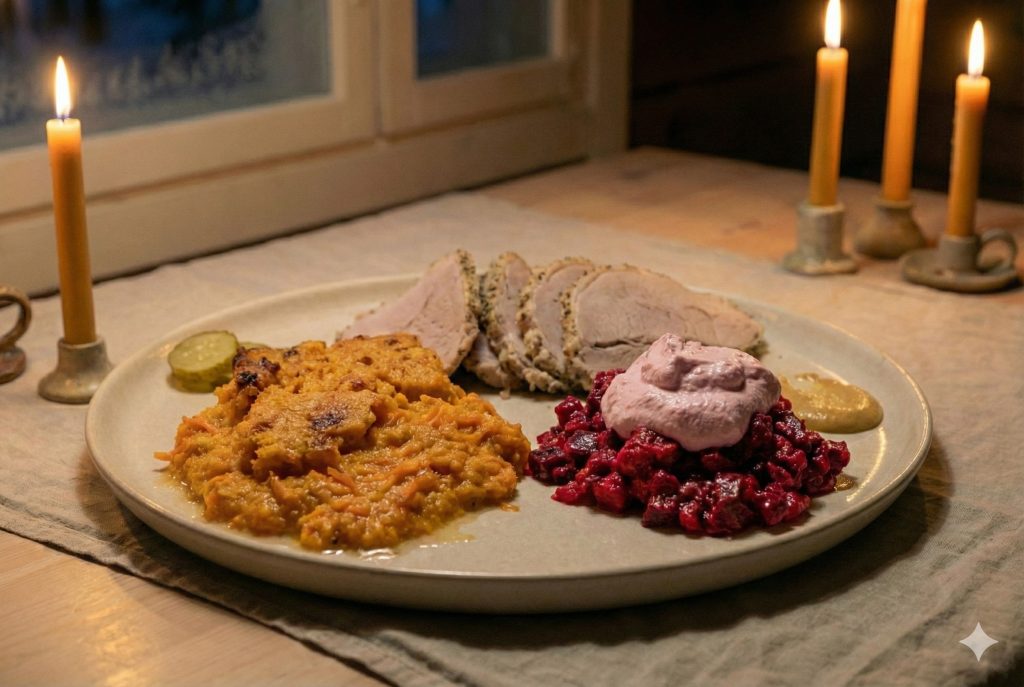
- Joulukinkku (Christmas ham) – The undisputed star of the Finnish Christmas dinner is a large oven-roasted ham. In fact, about 82% of Finnish households serve a Christmas ham, making it nearly universal. The ham is usually slow-cooked to tender perfection and covered in a mustard and breadcrumb glaze for a golden crust. It’s served warm or room temperature, sliced thin. And nothing is wasted – even the drippings are saved to bake a special bread or flavor other dishes. Leftover cold ham on rye bread with mustard on Christmas Day is almost as important as the main event itself!
- Laatikot (Casseroles) – The Finnish casserole trio is essential. These are traditional baked puddings of root vegetables, known as laatikko, that serve as hearty sides to the ham. The big three are: porkkanalaatikko (carrot casserole), which is slightly sweet from grated carrots and often rice; lanttulaatikko (rutabaga/swede casserole), with a distinctive earthy sweetness – this one is a favorite, with about 77% of Finns including rutabaga casserole at Christmas; and Malted potato casserole (imelletty perunalaatikko), a subtly sweet potato casserole made by letting mashed potatoes malt and sweeten before baking. There’s also sometimes maksalaatikko (liver casserole with rice and raisins), though that one doubles as a everyday dish year-round. These casseroles may sound odd if you haven’t tried them, but they are true comfort food – creamy, slightly sweet, and spiced with a hint of nutmeg or ginger. They pair wonderfully with the salty ham.
- Rosolli – Adding color to the plate is rosolli, a beautiful pink beetroot salad. Rosolli is made of diced beets, carrots, potatoes, and often apple and pickled cucumber, all tossed in a mild vinegar dressing. Sometimes a dollop of whipped cream tinted pink (by beet juice) is served on top for extra flourish. Rosolli has been around since at least the 18th century in Finland (it was originally an upper-class dish) and it balances the rich ham and heavy casseroles with a cool, tangy crunch. Many Finns wouldn’t feel it’s Christmas without a bowl of rosolli on the table.
- Fish and Seafood Starters – Finland’s thousands of lakes and long coastline mean fish has always been important, even at Christmas. To start the meal, families often enjoy an assortment of cold fish delicacies. Pickled herring (silli) in various marinades is common, as in Sweden. So is gravlax (graavilohi) – cured salmon with dill. There might be smoked salmon or whitefish roe served with sour cream on rye bread, or even lipeäkala, which is the Finnish version of lutefisk (dried fish soaked in lye – in Finland often made with pike). Don’t worry, lipeäkala is not as universally beloved, but some Western Finnish families keep that tradition alive too. Alongside the fish you’ll have boiled potatoes and maybe a dill sauce. It’s a flavorful Nordic spread to kick off the feast.
- Karjalanpiirakat (Karelian pies) – These aren’t exclusively Christmas food, but you’ll often find Karelian pies on the holiday table or as an appetizer. They are rye crust pastries filled with rice porridge (or potatoes), typically served with a spread of egg butter. Originally from Karelia in the east, they’ve become a Finnish staple and are often present at festive occasions – including Christmas.
- Glögi (Mulled Wine) – To drink, the Finns love glögi, their version of spiced mulled wine. It’s served warm in mugs, fragrant with cinnamon, cloves, and cardamom, and usually garnished with almonds and raisins swimming in the cup. Glögi can be alcoholic (made with red wine or vodka) or non-alcoholic (juice-based) so everyone can enjoy some. From late November onward, you’ll find Finns warming their hands around cups of glögi at Christmas markets and home gatherings. It’s basically the Finnish way of saying “cheers” to the holiday season.
- Joulutorttu and Piparkakku – After the heavy meal, Finns indulge their sweet tooth with coffee and traditional Christmas pastries. Joulutortut are those pretty pinwheel-shaped tarts made of flaky pastry, filled with dark prune jam, and dusted with powdered sugar. They look like little stars and are as tasty as they are beautiful. Meanwhile, piparkakut (gingerbread cookies) are omnipresent – often baked in lovely shapes and sometimes hung as decorations. A variety of Christmas breads and cakes (like spice bread or fruit cake) might also appear. And if there’s room (big if), maybe some chocolate confections or a piece of a Finnish Christmas log cake.
One more tradition: Riisipuuro – Finnish rice porridge. On Christmas morning, many families enjoy a bowl of warm rice porridge sprinkled with cinnamon and sugar, with one almond hidden in the pot. The one who finds the almond in their breakfast is said to have good luck for the coming year (or sometimes wins a prize, like marzipan pig candy). This mirrors the other Nordic almond traditions and is a charming way to start Christmas Eve day. Any leftover rice porridge might later be turned into rice pudding dessert for dinner (similar to Sweden’s Ris à la Malta or Denmark’s risalamande). But most Finnish grandmas will tell you: a bowl of simple riisipuuro in the morning keeps the Christmas spirit cozy and bright.
Despite modern twists here and there (some Finns now might add turkey or even vegan roasts to the table), surveys show that traditional foods still dominate Finnish Christmas celebrations. The nostalgia and comfort of ham and casseroles are hard to beat – these recipes have been passed down through generations, connecting the Christmas of today with the Christmas of centuries past. After dinner, many Finnish families light candles and visit the graves of departed loved ones – a quiet, beautiful tradition – or they might head to a late-night church service. It’s a reflective time after the belly is full. Then it’s back home to see if Santa (Joulupukki) will knock on the door – in Finland, he often comes in person on Christmas Eve, with a sack of gifts, asking “Onko täällä kilttejä lapsia?” (“Are there any well-behaved children here?”). Hopefully everyone made the nice list!
Fun fact: In Finland, it’s common to heat up the sauna on Christmas Eve. Families enjoy a relaxing sauna session in the afternoon – considered a cleansing ritual before the festivities. It’s a unique way to prepare for the big night, sweating out any stress and getting truly into the spirit of peace. Just imagine: a snowy yard, a warm wooden sauna, and later a table laden with ham and casseroles… if that isn’t Christmas heaven, what is?
Bringing Nordic Christmas Cheer to You
From Norway’s stick meat and crispy pork to Sweden’s endless smörgåsbord, Denmark’s sweet caramel potatoes and Finland’s hearty ham and casseroles, the Christmas dinner traditions of the Nordic countries are as rich and varied as a holiday tapestry. These foods are more than just dishes – they are stories on a plate, connecting families with their heritage and with each other. The common threads are warmth, abundance, and togetherness: gathering in the candlelight to share a special meal that has been eagerly awaited all year.
If you’re inspired to bring some Scandinavian flavor to your own holiday table, you can’t go wrong with any of these classics. Make a Swedish julskinka and toast with julmust, or try a Danish risalamande for dessert and start your own almond hunt tradition. Even simply lighting a few extra candles and saying “skål!” with mulled glögg can add that Nordic touch of coziness.
Above all, Nordic Christmas dinners remind us to slow down and savor the moment. As they say in Sweden, “God Jul och Gott Nytt År!” – Merry Christmas and a Happy New Year! May your days be merry, your spirits bright, and your stomachs happily full of good food and holiday cheer.