
This post contains affiliate links and paid product placements. I may earn a commission if you make a purchase.
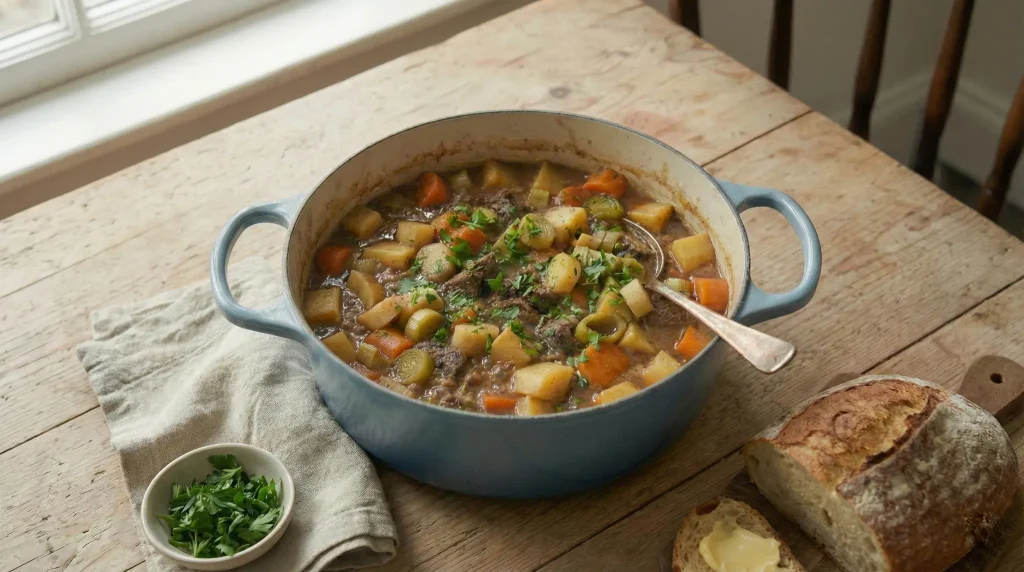
Imagine a frosty winter evening in Norway. Snowflakes dust the windowsills, and the air is crisp. Inside, a pot of lapskaus simmers away on the stove, filling the kitchen with the cozy aroma of beef, potatoes, and sweet root vegetables. Lapskaus is Norwegian comfort food at its finest – a hearty stew slow-cooked until everything is so tender it practically melts in your mouth. In fact, if you ask many Norwegians what their ultimate cold-weather comfort dish is, a good number will point to a steaming bowl of lapskaus.
This humble stew may not win any beauty contests, but one taste will convince you why it’s a beloved classic in Norway.
Lapskaus (pronounced LOP-scouse) is essentially a one-pot beef and vegetable stew – rustic, filling, and wonderfully simple. Traditionally, it’s made by slowly cooking beef with potatoes and hearty root veggies until everything is tender and the flavors have mingled into pure cozy goodness.
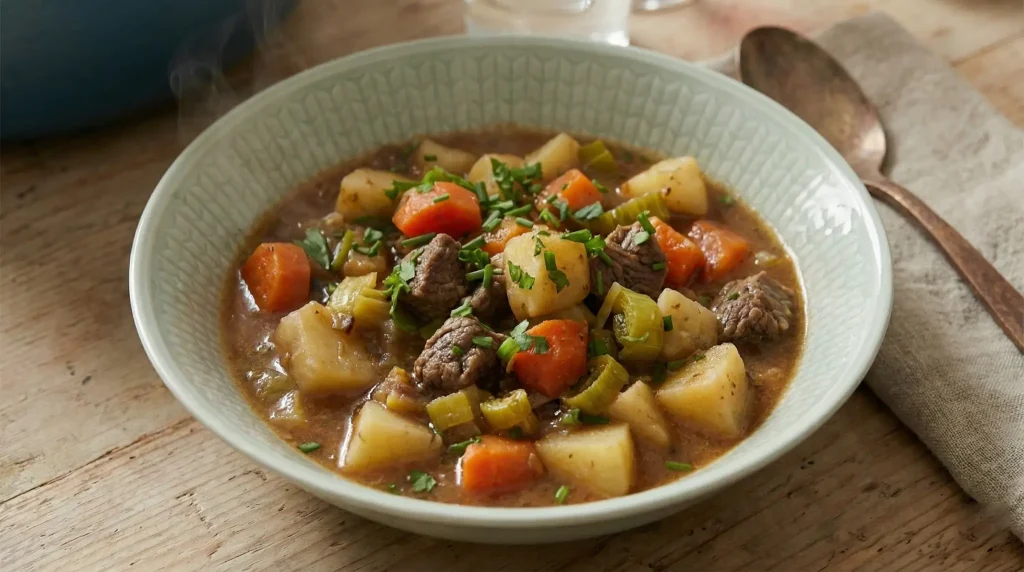
Each spoonful gives you chunks of soft carrots, earthy rutabaga, and beef that falls apart at the touch of a fork, all coated in a rich, savory broth. It’s the kind of meal that warms you from the inside out, perfect for dreary days or whenever you need a bit of Scandinavian hygge on your dinner table.
A Bit of History and Culture
Lapskaus has a fun little backstory that spans land and sea. The dish likely traces its roots to European seafarers. The very name lapskaus comes from the old stew called “lobscouse”, a staple for sailors in past centuries. As Norway has long been a seafaring nation, sailors supposedly brought this hearty stew back home from their voyages, and it caught on. (Fun fact: In England, particularly Liverpool, a similar stew called “scouse” was so popular that locals earned the nickname “Scousers” – all thanks to that lobscouse stew!). Early versions of lapskaus were a no-frills affair – sailors would throw together whatever they had on hand into a pot. In fact, one historical version even used soaked ship’s biscuits (hardtack) as a thickener instead of potatoes. Over time, as the stew made its way from the ship to Norwegian kitchens (sometime in the 1800s), it became a bit more refined and standardized. Across the Nordics, you’ll find many versions of this sailor’s stew. In Finland, the traditional lapskoussi from Rauma is a beloved classic, but for a dish that captures the same meaty, oven-baked heartiness as Norwegian Lapskaus, I highly recommend my Karelian Hot Pot recipe.
These days, lapskaus is considered one of Norway’s most iconic dishes, no longer just a poor man’s hodgepodge but a national comfort food treasure.
Families across Norway have their own cherished recipes, often passed down through generations. It’s the kind of dish a Norwegian grandma might whip up to feed a crowd, using simple local ingredients to create something greater than the sum of its parts. Don’t be surprised if you find lapskaus served at casual family dinners, cafes, or even traditional festive gatherings – it’s loved for being easy, nourishing, and absolutely satisfying.
And while lapskaus is unapologetically old-fashioned, that’s part of its charm. In Norway, you might even hear it lovingly called “old man’s food” (since it’s been around forever and was especially popular among working folk and, yes, sometimes older gentlemen who’d buy it pre-made for a quick meal). But today, people of all ages enjoy it – a bowl of lapskaus is basically a warm hug in food form, for anyone who craves comfort.
Types of Lapskaus: Brown, Light, and More
Like many traditional dishes, lapskaus comes in a few tasty variations. The fundamentals are the same (meat + potatoes + veggies), but you’ll find regional and personal twists. Here are the main types of lapskaus you might encounter:
Brun Lapskaus (Brown Lapskaus)
This is the classic version most folks think of – a rich brown stew made with beef. The meat is usually browned first (hence the “brown” name), and then simmered with stock to create a deeper color and flavor. The result is a hearty, thick beef stew with a darker gravy-like broth. We’ll focus on this brun lapskaus in the recipe below, since it’s the most traditional form.
Lys Lapskaus (Light Lapskaus)
A lighter-colored variation typically made with pork instead of beef. Often, lightly salted pork or ham (sometimes even smoked pork) is used as the protein, and importantly, the meat is not browned first. Everything is cooked directly in a light broth, so the stew stays pale in color (more of a beige or light golden soup). Lys lapskaus can be a bit quicker to make and has a slightly more delicate, salty-pork flavor. Some families even toss in sliced sausages or frankfurters in their light lapskaus for an extra twist. It’s a great alternative if you prefer pork, and it’s every bit as comforting as the brown version.
Suppelapskaus (Soup Lapskaus)
As the name suggests, this is a soupier version of lapskaus. The ingredients are similar (often beef or pork with root veggies), but with extra broth to make it more like a thick soup rather than a stew. You might find suppelapskaus in some regions or homes that prefer to eat lapskaus with a spoon and lots of broth. It’s thinner in consistency, but still hearty. People who like a more brothy stew (or want to dip lots of bread) appreciate this version – you can always add more stock or water to standard lapskaus to achieve this style.
Jukse-Lapskaus (“Cheater’s” Lapskaus)
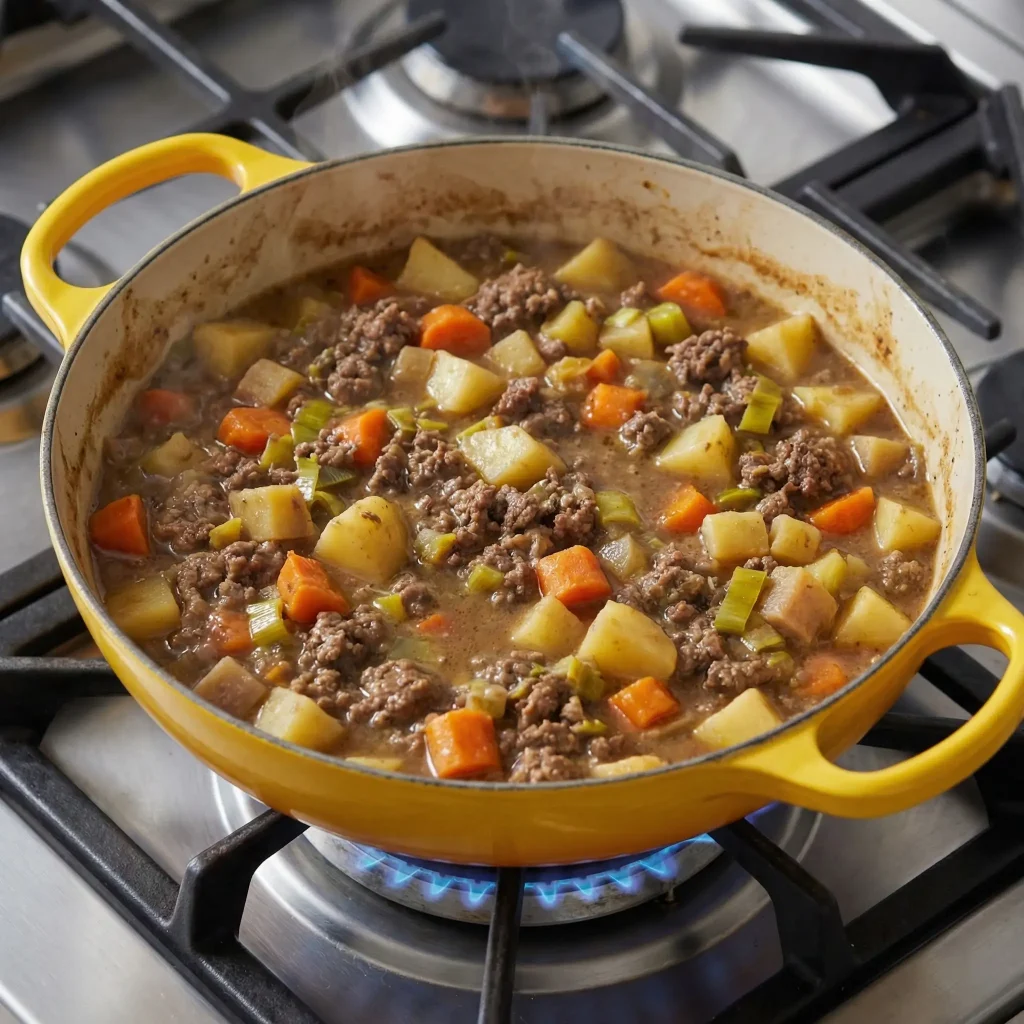
Don’t let the name fool you – this quick & easy variation still tastes delicious. Jukselapskaus is a modern shortcut version for busy days. It often uses ground beef (instead of chunks of meat) and frozen mixed vegetables, allowing you to throw together a lapskaus in under 30 minutes. Everything goes into one pot and simmers just until done – perfect for a weeknight when you want that lapskaus comfort without spending hours. In Norway, there’s even a popular frozen “lapskaus mix” of pre-chopped veggies (potatoes, carrots, rutabaga, etc.) that home cooks use for this purpose
Jukse-lapskaus might not have the same depth of flavor as a slow-cooked brun lapskaus, but it’s wonderfully convenient and crowd-pleasing. Think of it as the Norwegian equivalent of a quick beef-and-vegetable soup. (We’ll include notes on how to make this version easily, later on.)
Other Variations
As lapskaus is a dish meant to use what’s on hand, you’ll find countless little variations. Some cooks like to add a bit of bacon or mushrooms to the stew for extra flavor. Others might season it with a pinch of ground allspice or cloves (a throwback to seafaring days when spices were used in preservation) – though generally, lapskaus is not a heavily spiced dish. You can also make a vegetarian lapskaus by simply omitting the meat and using vegetable broth – the medley of root veggies is plenty hearty on its own. And of course, there’s flexibility in the vegetables: turnips instead of rutabaga, parsnips instead of parsley root, sweet potatoes or celery root – it’s all fair game. There isn’t one “correct” recipe for lapskaus; every family makes it a bit differently. The goal is just a warming stew that you love.
Ingredients You’ll Need
One lovely thing about lapskaus is its simplicity – it uses common, inexpensive ingredients, and you can mix-and-match veggies based on what you have. Here’s a rundown of the key ingredients in a traditional brown lapskaus (with some notes and substitutions):
Beef
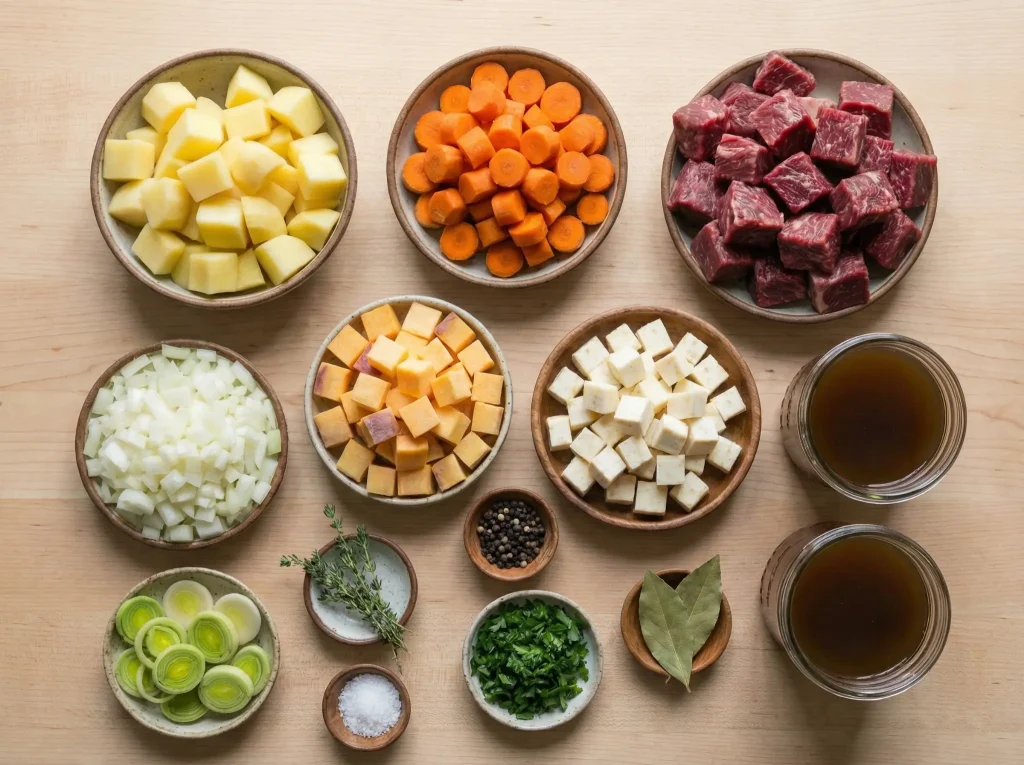
Typically a tough, flavorful cut of beef is used – something like chuck roast or stewing beef, cut into cubes. Tough cuts are ideal because the long, slow cooking will make them meltingly tender and infuse the stew with rich flavor. You don’t need an expensive cut; in fact, lapskaus is a great way to use cheaper cuts that benefit from slow cooking (chuck, brisket, beef shank, or even flank). Trim off excessive fat or gristle, but leave a little bit – it renders down during cooking and makes the stew more flavorful. If you prefer, you can also make lapskaus with lamb or venison for a twist, but beef is most common.
Potatoes
No Norwegian stew is complete without potatoes! Potatoes form the starchy backbone of lapskaus. Use a floury or starchy potato variety (like Russets or Yukon Golds) if possible – as they cook, the edges of the potatoes will start to dissolve into the broth, naturally thickening the stew. Cut the potatoes into chunks (about 1/2- to 1-inch pieces). I like to chop a few of the potatoes a bit smaller than the rest to encourage them to break down and thicken the stew more. If you prefer a chunkier stew, use waxy potatoes that hold shape (like red or new potatoes) and be gentle when stirring. Either way, potatoes make the lapskaus creamy and satisfying.
Root Vegetables
Along with potatoes, other root veggies are what give lapskaus its signature sweet-earthy flavor. Common choices are carrots, rutabaga (called swede in some places), parsnips or parsley root, celery root (celeriac), and leeks. Carrots add sweetness, rutabaga adds a distinct earthy sweetness and lovely yellow color, parsnips or parsley root add an aromatic sweetness (similar to carrot with a hint of celery; you can substitute parsnip if you can’t find parsley root), and celery root brings an earthy, celery-like depth. Leeks or onions provide the savory base flavor. You don’t need to use all of these – a classic combo is carrots, rutabaga, potatoes, onion, and perhaps a bit of celery root or parsnip. Feel free to use whatever root veggies you have; Norwegians often just use a mix of seasonal vegetables or even leftover veggies for lapskaus. The key is a nice balance of sweet and earthy flavors. Peel and cut everything into bite-size pieces (around 1-inch or a bit smaller). The uniform size helps them cook evenly.
Broth or Stock
A good stock brings it all together into a stew. For brown lapskaus, beef stock is traditional for a rich flavor. You can use homemade stock, store-bought broth, or even just water with a bouillon cube if that’s what you have (many Norwegian home cooks do exactly that for convenience). The broth will simmer with the meat and vegetables and turn into a flavorful gravy by the end. If you prefer a lighter flavor (or are making light lapskaus), you could use chicken or vegetable stock instead – it will still be delicious, just a bit lighter. Some people even add a spoonful of brown gravy or Worcestershire sauce for extra depth, but that’s optional. You’ll need a few cups of liquid – enough to barely cover the ingredients at first, then you can adjust later. Remember, lapskaus can be thick or soupy; you control the consistency by how much liquid you use and how long you cook it. It’s perfectly fine to add a little extra water if it’s looking too dry, or boil it uncovered a bit if it’s too brothy. (Tip: If you want an especially thick stew, you can dust the beef with a little flour and brown it – the flour will thicken the stew as it simmers, or just stir a couple tablespoons of flour into the pot before adding stock.)
Seasonings
Traditionally, lapskaus is very simply seasoned – mainly salt and pepper to taste. The long simmer builds flavor on its own. That said, adding a couple of bay leaves and a dash of dried thyme (or a sprig of fresh thyme) to the pot really complements the beef and vegetables, so I definately recommend it. You don’t need strong herbs or spices here – it’s a mild stew. A little fresh parsley at the end, sprinkled on top, is classic and adds a welcome pop of freshness and color. Some like a sprinkle of freshly ground black pepper on their bowl for a tiny kick.
Butter or Oil
You’ll start the stew by browning the meat and sautéing the onions, so you need a bit of fat. Butter is often used for that traditional cozy flavor (Norwegian cooking loves its butter), sometimes combined with a bit of oil to raise the smoke point. You only need a couple tablespoons. If you’re making a light lapskaus with pork, you might render some of the pork fat instead, but generally, butter/oil does the job.
Flatbrød (Norwegian Flatbread), for Serving:
Lapskaus is nearly always served with flatbrød, a traditional Norwegian crispy flatbread, on the side. Flatbrød is paper-thin and brittle, made of flour and water (almost like a cracker or giant crusty chip). Norwegians love to slather a bit of butter on the flatbrød and use it to scoop up the stew or dip into it.
The combination of rich stew and crunchy buttered flatbread is heavenly – the textures and flavors contrast perfectly. If you can’t find Norwegian flatbrød make your own with my recipe, or any thin crispbread or even a slice of crusty bread will do for serving. It’s an optional accompaniment, but highly recommended for the full Norwegian experience! And don’t forget to put some good butter on that bread.
Now that we’ve covered the basics, let’s get cooking! Below is a traditional brun lapskaus recipe – the brown beef stew version – with all the details. We’ll also include tips for making a cheat’s version, as well as slow-cooker and Instant Pot variations afterward. Time to bring some Nordic coziness into your kitchen.
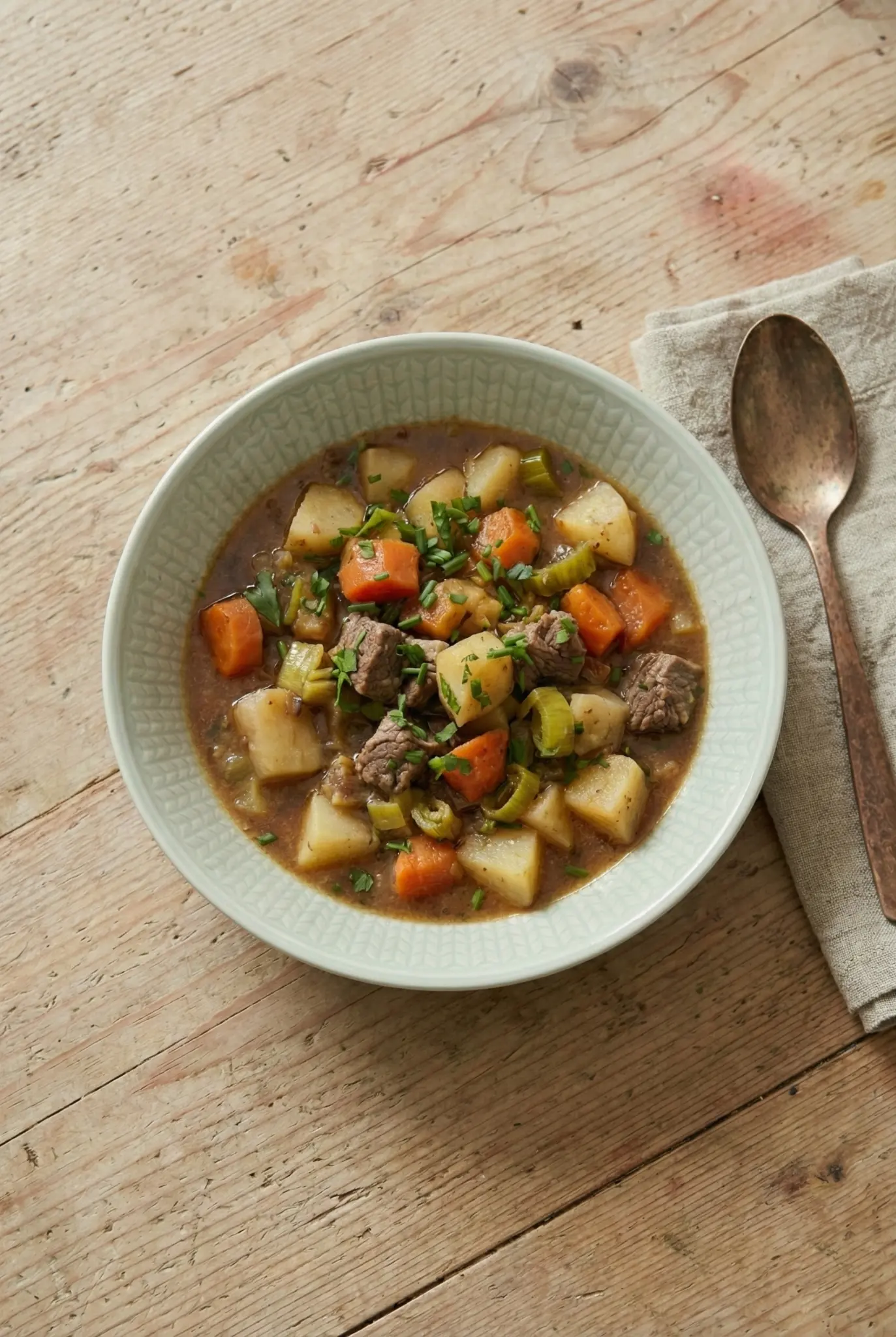
Traditional Norwegian Brown Lapskaus Recipe (Beef & Root Vegetable Stew)
Ingredients
Method
- In a large heavy pot or Dutch oven, heat the butter (and oil, if using) over medium-high heat.
- Pat the beef cubes dry with a paper towel (this helps browning) and season them lightly with salt and pepper.
- Brown the beef in batches – add a single layer of beef cubes and sear them for a few minutes on each side until nicely browned. Avoid overcrowding the pan (brown in 2–3 batches if needed).
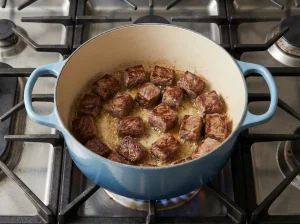
- After browning the beef, lower the heat to medium.
- If the pot is very dry, add a touch more butter or oil. Add the diced onions and sauté for about 5 minutes, stirring, until the onion is soft and translucent. Scrape up any browned bits from the bottom of the pot as the onions cook – those bits are flavor!
- If using the optional flour (to thicken the stew), stir it into the onions now and cook for about 1 minute, stirring constantly (this cooks off the raw flour taste).
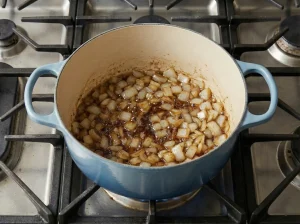
- Pour in the beef stock (broth). Return the browned beef (and any juices from the plate) back into the pot.
- Add the bay leaves and thyme as well. Give everything a good stir, scraping the bottom of the pot to deglaze any remaining brown bits into the liquid.
- Bring the mixture up to a gentle boil, then reduce the heat to low. Cover the pot with a tight-fitting lid and let it simmer on low for about 1 to 1½ hours, or until the beef is tender. You want a gentle simmer with just a few bubbles – slow cooking is key to tender meat.
- Stir occasionally, and if too much liquid evaporates you can add a bit of water. (The broth should just cover the ingredients; it will reduce and concentrate over time.)
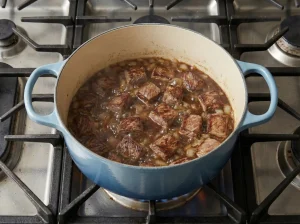
- After the beef has simmered and is starting to get tender, add the chopped carrots, rutabaga, and celeriac (or parsnip) to the pot. (Hold off on the potatoes and leek for now.) Give it a stir. The liquid may not fully cover the veggies – that’s okay, they will release moisture as they cook.
- Cover the pot again and continue simmering for about 15 minutes.
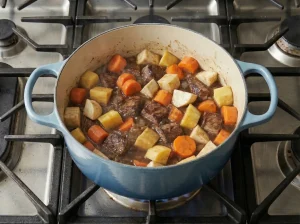
- Next, add the potato chunks and the sliced leek to the pot. At this point, all the veggies are in. If it looks very dry, you can splash in a bit more hot water or stock, but be careful – lapskaus should be somewhat thick and not too brothy in the end.
- Cover and simmer for another 20 minutes or so, until the potatoes and all vegetables are very tender.
- Tip: Try not to stir too vigorously or too often in this stage – the potatoes will naturally start to break down and thicken the stew, but you still want some nice chunks remaining. Gentle strirring is fine.
- By the end of cooking, the vegetables should be soft and some will have “melted” into the broth, which is exactly what you want for a slightly thick stew.
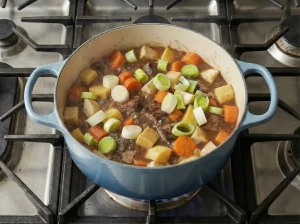
- Check that the beef is fork-tender (a piece should break apart easily with a fork – if not, simmer a bit longer).
- Fish out the bay leaves and thyme sprig (if used).
- Taste the lapskaus and season with additional salt and pepper as needed. Don’t be shy with the pepper – a few grinds of black pepper add a lovely warmth.
- Serve the stew hot in bowls, garnishing each with a sprinkle of fresh chopped parsley and lingonberry jam.
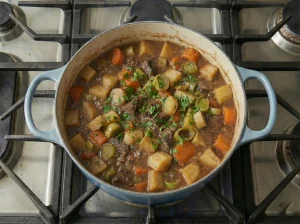
Notes
Slow Cooker Lapskaus (Crockpot Method)
If you want to come home to lapskaus ready to eat, the slow cooker is your friend. Preparing lapskaus in a crockpot is almost effortless and yields tender, flavorful results. Here’s how to adapt this recipe:
- Prep: Brown the beef cubes first in a skillet with the butter/oil (this step is optional, but browning adds great flavor, so it’s worth the extra few minutes). Transfer the browned beef to your slow cooker. Sauté the onions in the same pan until soft, then add them to the slow cooker as well (deglaze the pan with a bit of broth to get all the tasty bits, and pour that in). If you’re in a real hurry, you can skip the browning and just put the raw beef and onions straight into the crockpot – it will still be good, just slightly less rich in flavor.
- Load the Slow Cooker: Add all the remaining ingredients to the slow cooker: carrots, rutabaga, celeriac/parsnip, potatoes, leek, bay leaf, thyme, a teaspoon of salt, and some pepper. Pour in the beef stock (use about 3–4 cups). It should cover most of the ingredients – if not, add a bit more stock or water until the veggies are almost covered (some can be poking out, that’s fine). Give everything a quick stir to distribute.
- Cook: Cover the slow cooker and cook the lapskaus on LOW for 6–8 hours or on HIGH for about 3–4 hours. (Every slow cooker is a bit different; times may vary, but basically cook until the beef is very tender and the veggies are soft.) In a slow cooker, the moisture doesn’t evaporate much, so you’ll end up with a somewhat soupier lapskaus. If it looks too brothy at the end, you can thicken it by turning the heat to high, removing the lid, and letting it bubble for 20-30 minutes to reduce a bit. Or simply mash some of the potatoes in the pot to thicken the stew (the mashed potatoes will integrate and thicken the liquid). If it’s too thick, stir in a little hot water.
- Serve: Once everything is tender and delicious, fish out the bay leaves and thyme. Taste and add salt/pepper as needed. Serve your slow-cooked lapskaus with the obligatory buttered flatbread on the side. The slow cooker version will have the same hearty flavor – possibly even more, since slow cookers are great at melding flavors over time – and the beef will be super tender. It’s comfort food with zero fuss. Enjoy!
(Note: You can also prep everything the night before in the slow cooker insert, keep it in the fridge, then just pop it into the base and start it in the morning. Coming home to a warm pot of Norwegian stew is a wonderful thing.)
Instant Pot / Pressure Cooker Lapskaus
For those who have an Instant Pot or electric pressure cooker, lapskaus can be a quick weeknight dish! The pressure cooker drastically cuts down the simmering time while still giving you that slow-cooked tenderness. Here’s how to do it:
- Sauté First: Use the Sauté function on your Instant Pot. Add the butter/oil and brown the beef cubes in the pot (again, in batches, just as above). Then sauté the onions until soft. This all can be done right in the Instant Pot insert. Deglaze with a bit of the broth to scrape up any brown bits.
- Add and Seal: Add the carrots, rutabaga, celeriac (or parsnip), potatoes, leek, bay leaf, thyme, and the 4 cups of beef stock into the Instant Pot along with the beef and onions. Don’t fill the pot past the max fill line (it likely won’t, since this recipe is for 6 servings). Give it a good stir. Lock the lid and set the valve to sealing.
- Pressure Cook: Cook on High Pressure for 30 minutes. (If your beef is in smaller 1/2-inch pieces, you could do 20 minutes, or even 15. For larger 1-inch chunks or tougher cuts, 30 is great.) Once the time is up, let the pressure naturally release for about 10 minutes (this helps the meat fibers relax and stay tender), then carefully quick release the remaining pressure.
- Finish: Open the lid and give the lapskaus a gentle stir. It will likely be quite soft – many of the veggies may have broken down, which gives the stew a wonderful thick texture. If it looks a little thin, turn on the Sauté mode and let it simmer uncovered for a few minutes to reduce, or again mash a few pieces of potato against the side of the pot. If it’s too thick, stir in a bit of hot water. Taste and season with salt and pepper as needed.
- Serve: Ladle out your Instant Pot lapskaus, sprinkle with fresh parsley, and serve with flatbrød or bread. In well under an hour (not counting pressure build time), you’ve got a deeply flavorful lapskaus that tastes like it simmered all day. The meat and veggies will be perfectly cooked together in one go, and you only have one pot to clean – magic! This is a great option for busy folks who still crave that old-school Norwegian comfort on a weeknight.
Jukse-Lapskaus Quick Version (30-Minute “Cheater” Stew)
We mentioned jukse-lapskaus earlier – the cheat’s version of this stew. If you’re short on time or just feeling a bit lazy (no judgment – we all have those days!), here’s how you can whip up a satisfying lapskaus in about half an hour using a few shortcuts:
- Ingredients for Shortcut Stew: Instead of stew beef, use ground beef. About 1 lb (450 g) of ground beef will do for 4 servings (scale up if you need more). Also grab a package of frozen mixed vegetables – if you’re lucky, your store might carry a “stew mix” or “vegetable soup mix” with diced potatoes, carrots, celery, etc. (In Norway, the frozen lapskausblanding typically contains potatoes, carrots, rutabaga, leek, and celery root all pre-chopped.) About 1½ pounds (600–800 g) of frozen veggies is good. You’ll also need a bouillon cube (beef or vegetable) or two, some water, and the usual salt/pepper. You can throw in any extra veggies you want (canned diced tomatoes, peas, etc., though non-traditional).
Method: In a large pot, heat a bit of oil or butter and brown the ground beef, breaking it up with a spatula until it’s nicely browned and crumbled. Season with a little salt and pepper. Dump in the frozen vegetables (no need to thaw – the convenience is the whole point!). Add about 3 cups of water along with the bouillon cube(s). Bring it up to a boil while stirring to dissolve the bouillon. Then lower heat to a simmer, cover, and let it cook for about 15–20 minutes, or until the vegetables are tender. Give it a stir every so often. The starch from the potatoes in the mix will slightly thicken the stew as it cooks; if it seems too thin, simmer uncovered for a bit at the end. If it gets too thick, just add a bit more water. Voilà! That’s basically it – season to taste (be careful, bouillon is salty) with salt and pepper.
Serve: Even this quick version benefits from the little touches – sprinkle some chopped parsley on top and break out the flatbread and butter. You’ve got a hearty beef-and-veg stew in under 30 minutes
- . It’s a perfect weeknight hack and still scratches that lapskaus itch. Think of this as the savvy Norwegian grandmother’s trick for busy days: all the flavor, a fraction of the time.
(Feel free to tweak this jukse-lapskaus: you can use ground lamb or pork instead of beef, or even sliced pre-cooked sausages. Basically, any flavorful protein + mixed veggies + broth will give you a similar comforting result. It’s hard to go wrong when you combine meat, potatoes, and vegetables in a pot!)
Serving and Enjoying Lapskaus
Lapskaus is best enjoyed in a casual, family-style way. Ladle it into big bowls, garnish with that fresh parsley, and make sure everyone has some flatbrød or good crusty bread at hand. In Norway, people often spread a bit of salty butter on their flatbread and nibble it alongside each bite of stew – highly recommended! The contrast of crunchy bread and soft stew is delightful. You might also set out some quick-pickled cucumbers or lingonberry jam as tangy side condiments, which can complement the rich stew (this is more common with the Danish version called labskovs, but hey, it’s all Scandinavian comfort food). And definitely have a pot of hot coffee or tea ready for afterwards to complete the cozy Nordic meal experience.
One of the beautiful things about lapskaus is how well it keeps. As noted, it might even taste better the next day – the flavors deepen and meld overnight. So don’t fret about leftovers; in fact, plan for leftovers if you can. The stew will thicken up in the fridge. When reheating, you can add a splash of water or stock to loosen it, and warm it gently on the stovetop, stirring occasionally, until hot. It also freezes nicely: divide into airtight containers, freeze, and you’ve got ready-to-go homemade stew for a busy day.
Lastly, feel a little pride that you’ve made a dish with such history and heart. Lapskaus may have humble origins, but it’s truly stood the test of time – from feeding hungry sailors at sea to comforting families in mountain cabins during long winters. It’s the kind of recipe that connects you to generations past. And more importantly, it’s just really delicious. 😋
So the next time you need a bit of warmth and comfort, remember this Norwegian stew. Whether you slow-simmer it all day like tradition dictates or whip up a quick modern version, lapskaus is there to give you a big, hearty culinary hug. God appetitt! (Enjoy your meal!)
FAQ
Yes! Lapskaus freezes beautifully. Let it cool completely before transferring to airtight containers. It can be frozen for up to 3 months. Thaw in the fridge overnight before reheating.
Starchy potatoes like Russets or Yukon Golds are best. They break down slightly during simmering, which helps thicken the stew naturally without needing flour.
They share a common history! “Lapskaus” is the Norwegian version, while “Scouse” is a famous stew from Liverpool, England. Both originated as hearty meals for sailors traveling between North Sea ports.