
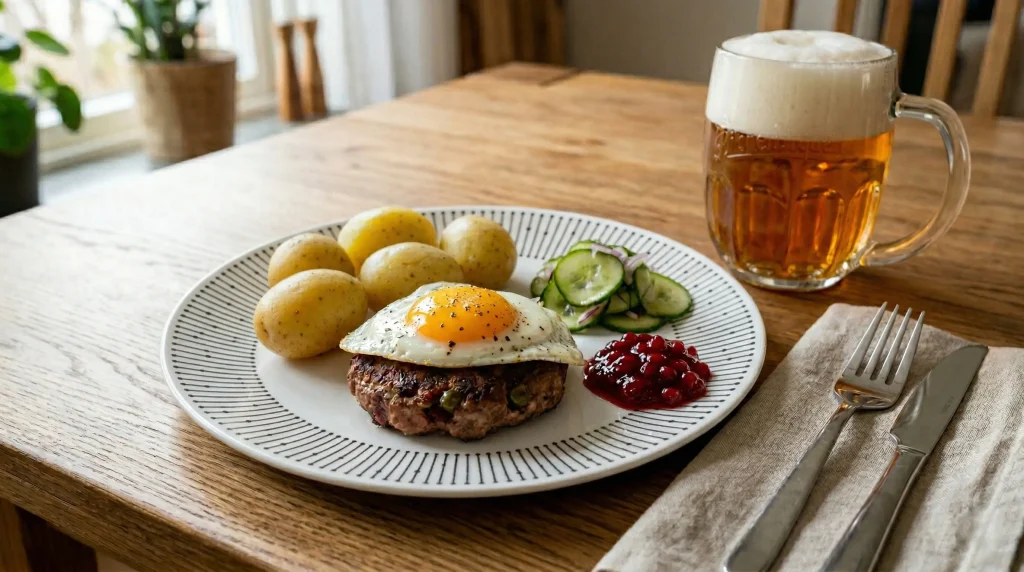
A Dish Born at a Hotel Table
On the evening of May 4, 1862, a man named Henrik Lindström walked into Hotel Witt in Kalmar, Sweden. He was hungry, he was particular, and he had a plan. Born and raised in Saint Petersburg, Russia — in a Swedish family — Lindström carried a deep love for the bold, briny flavors of Eastern European cooking. That evening, he called for ingredients to be brought directly to his table: a combination that reflected the cooking of his St. Petersburg upbringing far more than anything on the Swedish menu. He and his companions mixed the patties right there on the spot, then sent them back to the kitchen to be fried in butter. The hotel keeper, presumably a little wide-eyed, asked what to call the dish. “Biff à la Lindström,” came the answer. It went on the menu that same night. More than 160 years later, it is still there.
So What Exactly Is It?
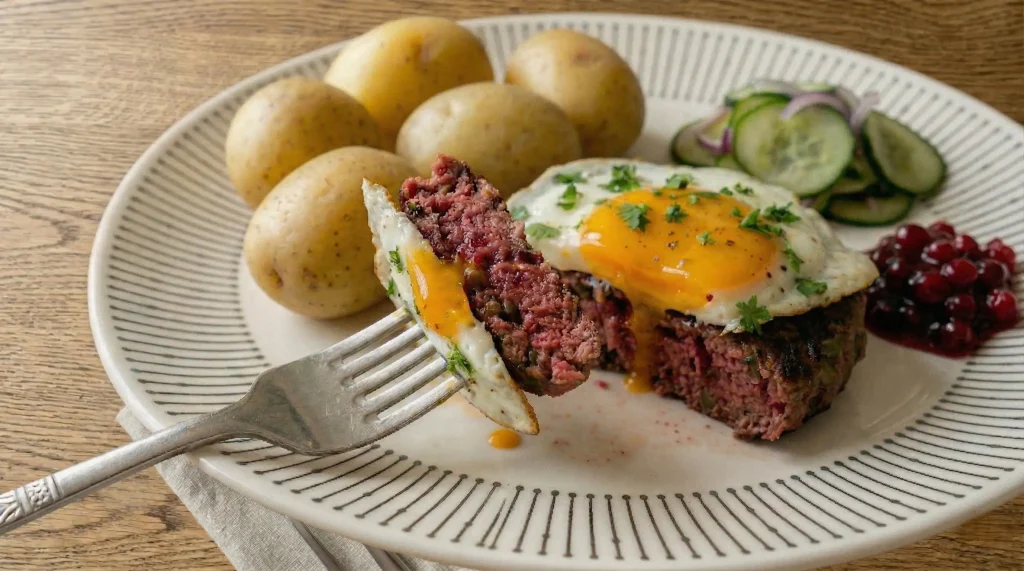
Biff à la Lindström is a beef patty — but calling it just that is a little like calling a sauna just a hot room. It looks unassuming from the outside. It fries up golden, smells of butter and browning meat, and lands on the plate looking perfectly ordinary. Then you cut into it. The inside is tinged a deep, rosy pink. The first bite delivers something earthy, a little tangy, and surprisingly complex — flavors you would not expect to find tucked inside a beef patty. It is the kind of dish that makes people ask “what is in this?” with their fork already halfway back for a second bite. Juicy in the middle, golden-crusted outside, and deeply satisfying in every way — this is a recipe that earns a permanent place in the weeknight rotation.
What You Will Need
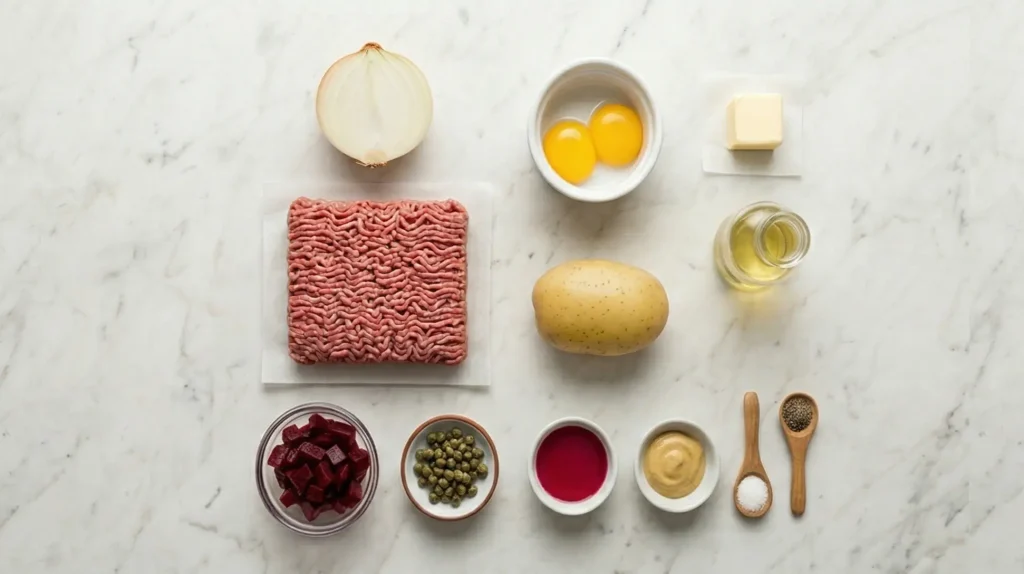
Here is a look at the ingredients and why each one earns its place in the bowl:
- Ground beef (80/20) — Fat content matters here. A leaner grind makes the patties dry and crumbly. 80/20 keeps them juicy and helps them hold together in the pan.
- Pickled beets — The star ingredient. Look for jarred or canned pickled beets near the canned vegetables or salad toppings in most grocery stores. Drain them very well before chopping — extra moisture is the enemy of a good patty.
- Capers — Small, brined flower buds with an unmistakable salty, tangy bite. Find them in the condiment aisle, usually near the olives and pickles. Rinse them briefly if they taste very sharp.
- Yellow onion — Finely chopped, it adds a gentle savory base. Grating the onion on the fine side of a box grater is a brilliant shortcut — it melts right into the meat without chunks.
- Egg yolks — Two yolks bind the mixture and add richness. Using yolks only (rather than whole eggs) keeps the patties tender and dense, not spongy.
- Cold boiled potato — A classic Swedish addition that adds body and helps the patties keep their shape. A small, previously cooked and cooled potato works perfectly. Fine dry breadcrumbs are an easy substitute.
- Dijon mustard — A small spoonful adds depth and a gentle tang. It is subtle, but you would notice its absence.
- Beet juice (optional) — A splash of the liquid from the jar deepens the flavor and gives the inside of the patties a beautiful rosy color. Worth it.
- Salt and black pepper — Season thoughtfully. Both the capers and beets carry salt, so taste as you go.
- Butter — For frying. Non-negotiable. Butter gives the crust a flavor and golden warmth that oil alone simply cannot replicate.
Tips Before You Start
Keep everything finely chopped — this is the single most important step in the whole recipe. Chunky pieces of beet or onion will cause the patties to crack and fall apart as they fry. A sharp knife and a moment of patience will serve you well. If the mixture feels too wet, add an extra tablespoon of breadcrumbs. If it feels too stiff, a small splash of beet juice loosens it right up.
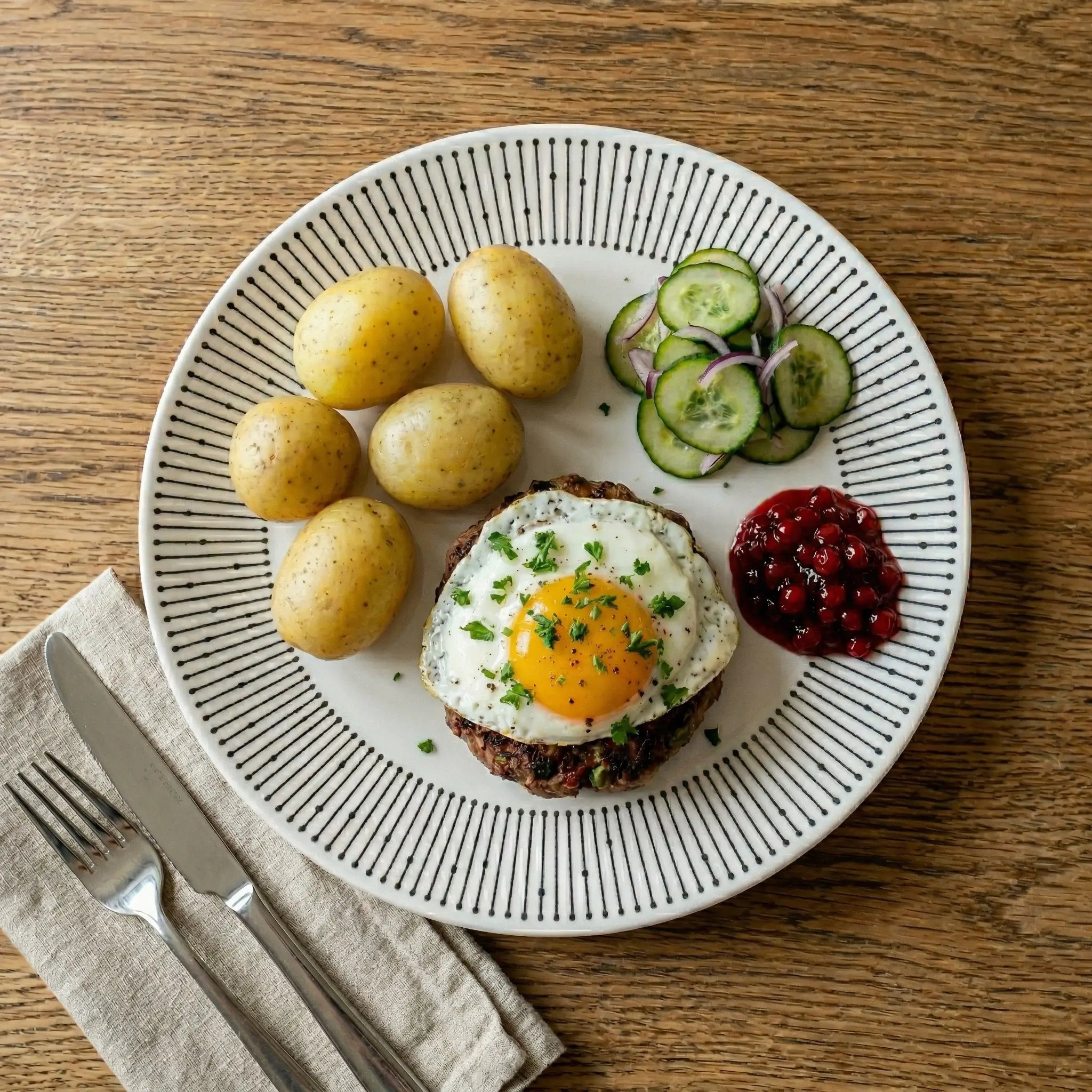
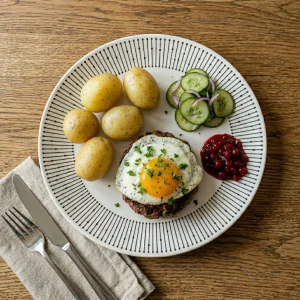
Cook the patties on medium heat, not high. Resist the urge to press them flat with your spatula. Let the crust develop undisturbed for four to five minutes per side. They should be deeply golden outside and just cooked through inside. A fried egg on top is the traditional finishing touch — and one of the best decisions you will make all week. The yolk runs into the beef and beet juices on the plate in a way that is genuinely hard to resist. Serve with boiled potatoes, a few pickled cucumbers, and a spoonful of lingonberry jam on the side.
Biff à la Lindström
Ingredients
Method
- Drain the pickled beets thoroughly, then chop as finely as you can manage — nearly a paste is ideal.
- Do the same with the capers.
- Very finely chop or grate the onion.
- If using a boiled potato, mash it roughly with a fork while cold — you want it broken down evenly, not smooth.
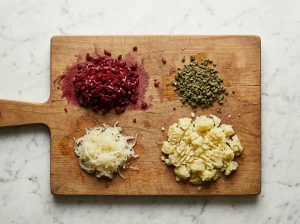
- In a large bowl, combine the ground beef, chopped beets, capers, onion, egg yolks, potato or breadcrumbs, Dijon mustard, and beet juice if using. Season with salt and pepper.
- Mix gently with your hands until just combined. Do not overwork the meat — overmixing makes patties tough.
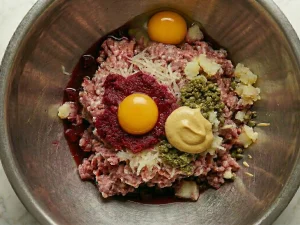
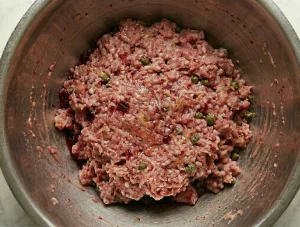
- Divide the mixture into 4 equal portions. Shape each into a round, flat patty about ¾ inch / 2 cm thick.
- Heat the oil and butter together in a large heavy skillet over medium heat.
- Once the butter foams and the foam begins to subside, add the patties. Cook for 4–5 minutes on the first side without moving them, until a deep golden crust forms.
- Flip carefully and cook for another 4–5 minutes, until cooked through.
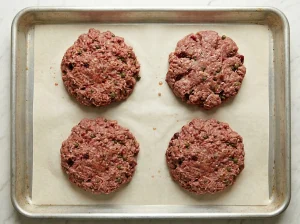
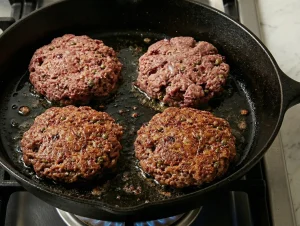
- Transfer the patties to a plate and let them rest for 2 minutes.
- Top with a fried egg. Serve alongside boiled potatoes, pickled cucumbers, and a small spoonful of lingonberry jam.
FAQ & Troubleshooting
Moisture is almost always the culprit. Pickled beets hold a surprising amount of liquid. Drain them thoroughly and chop them as finely as possible. If the mixture still feels wet, fold in an extra tablespoon of breadcrumbs and refrigerate the shaped patties for 15–20 minutes before frying. Chilling firms them up considerably.
You can, but the flavor will be noticeably flatter. Pickled beets provide the acidity and brine that balance the richness of the beef. If plain beets are all you have, add a teaspoon of white wine vinegar or apple cider vinegar to the mixture to compensate.
Absolutely. Shape the patties and refrigerate them (covered) for up to 24 hours before frying. They actually benefit from the rest — the mixture firms up and becomes much easier to handle. Raw patties can also be frozen for up to 2 months. Thaw overnight in the refrigerator before cooking.
Finely chopped cornichons or a small dill pickle make a solid substitute. They bring a similar briny, tangy quality without dramatically changing the character of the dish.
You can use a leaner blend, but add a teaspoon of Worcestershire sauce for extra depth, and watch the cooking time carefully — leaner proteins dry out faster. Ground turkey works, though the result will be lighter in flavor.
Remember that both the pickled beets and the capers already carry a fair amount of sodium. If you’re using capers packed in salt rather than brine, rinse them thoroughly before chopping. Always taste the mixture before forming patties — fry a tiny pinch in the pan first. It takes thirty seconds and saves the whole batch.