
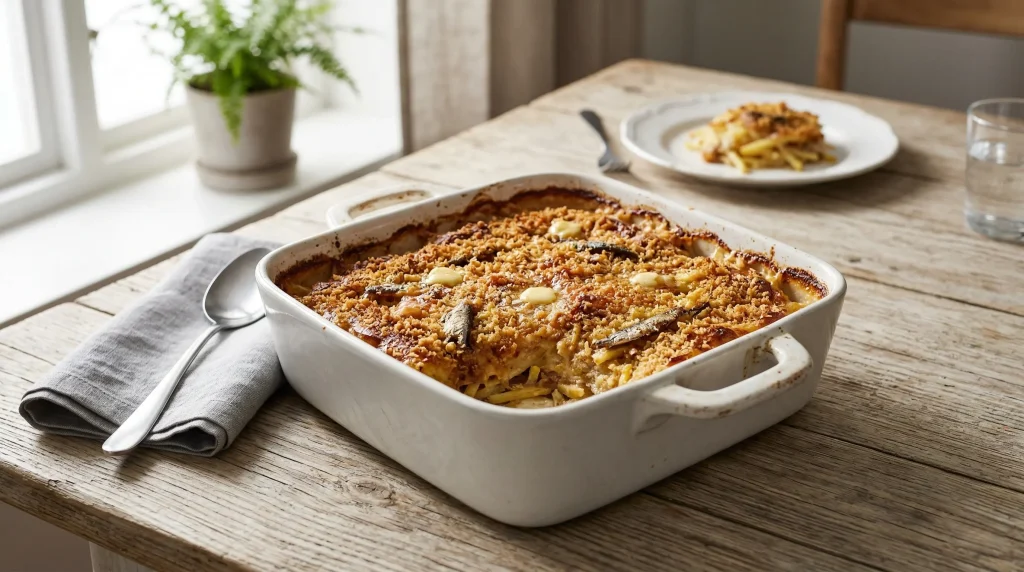
The name alone raises an eyebrow. Jansson’s Temptation. Who is Jansson? What did he want? And why does he need an entire casserole named after him? Once you take your first bite of this bubbling, golden Swedish classic, the questions stop mattering entirely.
Janssons Frestelse — as it’s known in Swedish — is one of those dishes that sounds improbable on paper but tastes undeniably right in practice. Creamy layered potatoes, slow-cooked sweet onions, and strips of spiced, briny sprats come together in something warm, rich, and quietly addictive. This is the dish that converts skeptics mid-forkful.
What Is Jansson’s Temptation?
At its core, Jansson’s Temptation is a Swedish potato gratin — but calling it just a potato gratin feels like calling a symphony just music. The potatoes are cut into thin matchstick strips, layered with buttery soft onions and small spiced fish fillets, then drenched in heavy cream and baked until the top turns deep golden and the insides become utterly silky.
It’s a fixture on the Swedish julbord — the Christmas buffet table — alongside meatballs, pickled herring, and rice pudding. But don’t let the Christmas association fool you. This is a year-round comfort dish, equally at home at a festive holiday table or a quiet weeknight dinner when the weather outside demands something warm and deeply satisfying.
A Dish With a Mysterious Past
Every great dish deserves a story, and Jansson’s Temptation has a wonderfully murky one. The dish is thought to be named after Pelle Janzon, a Swedish opera singer in the early 1900s who was as famous for his love of good food as for his voice. Legend has it that this devoted food lover couldn’t resist the casserole even when he had sworn off indulgent eating — hence, Temptation.
Whether the legend holds up to scrutiny remains gloriously unverified. What is certain is that by the mid-20th century, Janssons Frestelse had become deeply woven into Swedish culinary identity. It appears in beloved family cookbooks, on Christmas tables from Stockholm to Lapland, and now, very happily, right here.
What You Will Need
A short ingredient list, a forgiving technique, and one unusual fish. Here’s what makes this dish sing:
- Russet potatoes — Russets are starchy and hold their shape beautifully while absorbing all that cream.
- Yellow onions — Cooked low and slow in butter until soft and translucent, they add a gentle sweetness that balances the briny fish perfectly.
- Swedish ansjovis / sprats — Here’s the plot twist: despite the name “Swedish anchovies,” these are actually sprats cured in a sweet, warmly spiced brine. They taste nothing like sharp Mediterranean anchovies. They’re mild, lightly sweet, and deeply savory. Find them at IKEA’s food market or through specialty Scandinavian online retailers.
- Heavy cream — Full-fat, no compromises. This is Scandinavia. The cream is non-negotiable.
- Sprat brine — The liquid from the tin is liquid gold. It carries allspice, cloves, and a lightly sweet savoriness that defines the dish. Do not pour it down the drain.
- Unsalted butter — For the onions and a few golden dots on top before the final bake.
- Fine dry breadcrumbs — Scattered over the top for a satisfying, lightly crunchy crust.
- White pepper and a pinch of nutmeg — White pepper is the Scandinavian classic: milder, more floral than black. Nutmeg adds a barely-there warmth that ties everything together.
Before You Start: A Few Good Tips
A little prep knowledge goes a long way with this dish:
- Skip rinsing the potato strips. Surface starch means a creamier, more cohesive casserole.
- Go low and slow on the onions. Rushing them leads to browning. You want soft, sweet, and golden — not crispy.
- Reserve every drop of the brine. That aromatic liquid is what makes this dish taste like Janssons Frestelse and not just a cream potato bake.
- Use a snug, deep baking dish. A 9×9 inch (23×23 cm) deep dish gives you better layering and a creamier result than a wide shallow pan.
Building the Jansson’s Temptation
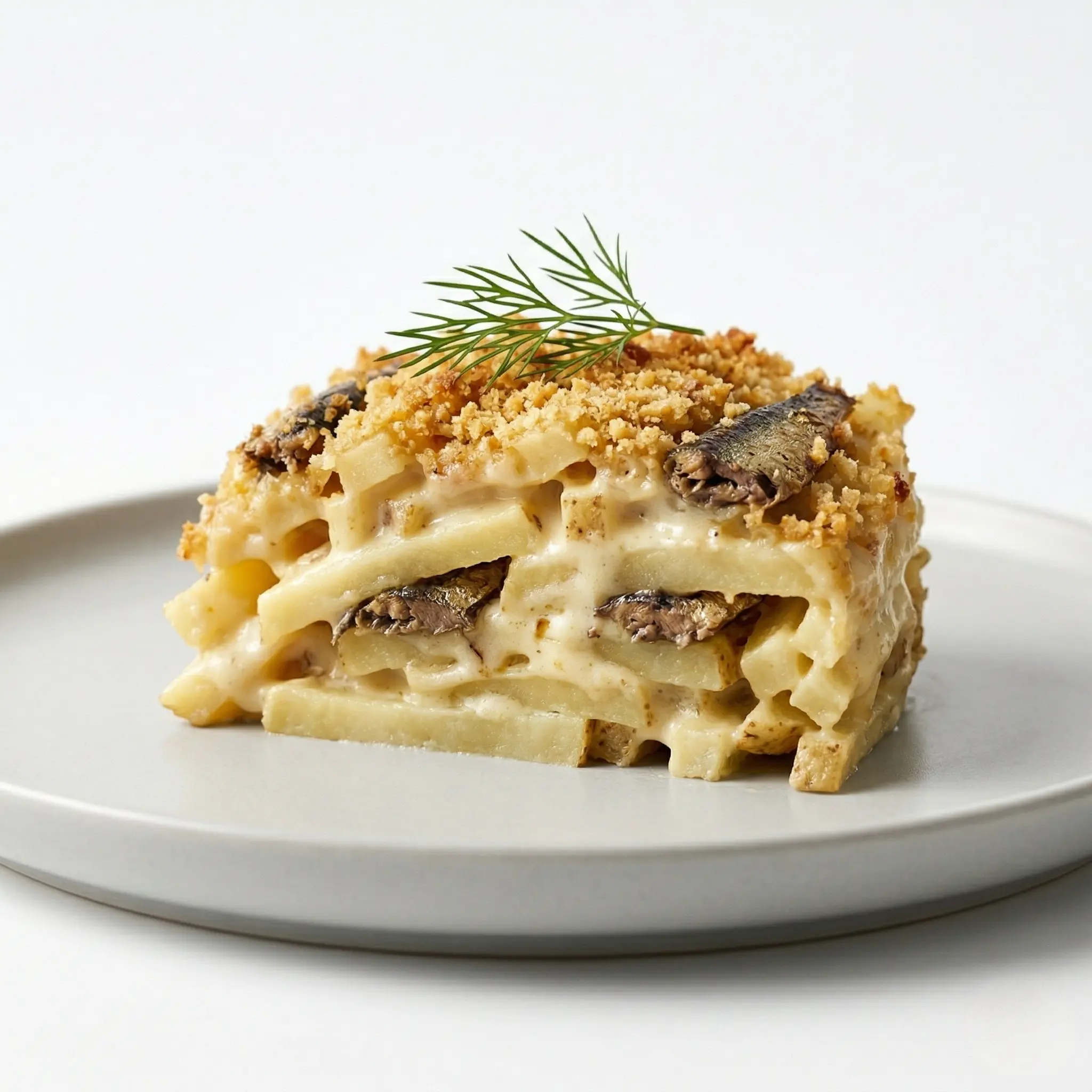
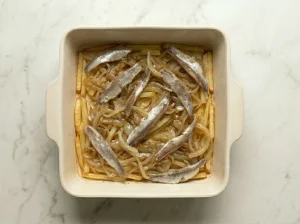
Layering is beautifully simple: potatoes go down first, followed by half the onions and half the sprats, then another potato layer, remaining onions and sprats, finishing with a final layer of potatoes. Pour half the cream-brine mixture slowly and evenly over the top, then slide the dish into the oven.
Once the first bake is done, take it out and pour the remaining cream around the edges and into any gaps. This second pour is the real secret to a luxuriously creamy interior — it stops the bottom from drying out while the top finishes browning. Scatter on the breadcrumbs, dot with butter, and return it to the oven until gloriously bronzed and bubbling.
Let it rest for five minutes before serving. The wait is harder than it sounds.
Jansson’s Temptation (Janssons Frestelse)
Ingredients
Method
- Preheat the oven to 400°F (200°C). Generously butter a deep 9×9 inch (23×23 cm) baking dish and set aside.
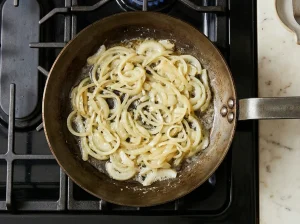
- Cook the onions: Melt the butter in a skillet over medium-low heat. Add the sliced onions and cook, stirring occasionally, for 8–10 minutes until soft and translucent. They should be tender and lightly golden — not browned. Remove from heat.
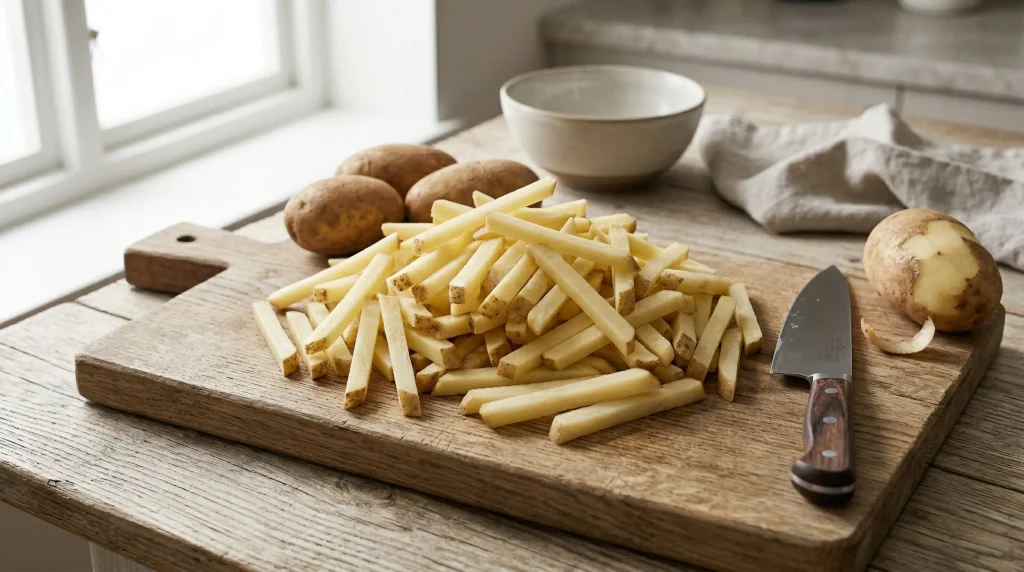
- Prepare the potatoes: Peel and cut the potatoes into thin matchstick strips, roughly ¼ inch (6 mm) wide. Do not rinse them after cutting.
- Mix the cream: In a small bowl or measuring jug, combine the heavy cream and sprat brine. Stir in the white pepper and nutmeg.
- Layer the casserole: Spread an even layer of potato strips across the bottom of the prepared dish. Top with half the softened onions and half the sprat fillets. Add a second layer of potatoes, then the remaining onions and sprats. Finish with a final, even layer of potato strips.
- First bake: Pour half of the cream mixture slowly and evenly over the casserole. Transfer to the oven and bake for 25–30 minutes.
- Add remaining cream: Remove the dish from the oven. Pour the remaining cream mixture around the edges and into any visible gaps. Scatter the breadcrumbs evenly over the surface and dot the top with a few small pieces of butter.
- Final bake: Return to the oven and bake for a further 20–25 minutes, until the top is deep golden brown and a fork slides through the potatoes with no resistance.
- Rest and serve: Allow the casserole to rest for 5 minutes before serving. Bring it straight to the table in the baking dish.

Notes
- Swedish ansjovis ≠ regular anchovies. They are sprats in sweet spiced brine, not the salty, sharp Mediterranean kind. Find them at IKEA’s food market or order online.
- Do not rinse the potato strips — the surface starch helps the casserole hold together and creates a creamier texture.
- Use full-fat heavy cream. Lower-fat alternatives will make the casserole watery and thin.
- Make-ahead tip: Bake fully, cool, and refrigerate. Reheat at 325°F (160°C) with a generous splash of cream poured over the top.
- Serving suggestion: Pairs beautifully with Swedish meatballs, pickled cucumber, lingonberry sauce, and a crisp green salad.
FAQ & Troubleshooting
You can, but expect a noticeably sharper, saltier flavor. Regular Mediterranean anchovies have a much more intense, briny punch. If Swedish ansjovis aren’t available, chopped pickled herring is the closest substitute. Reduce any added salt in the recipe if using regular anchovies.
The IKEA food market is the most accessible source. You can also order them through specialty Scandinavian or international food shops online. Search for “Swedish ansjovis” or “Swedish sprats in brine” — not “anchovies.”
Most likely, the potatoes were rinsed after cutting, removing the starch that absorbs liquid. Pat them dry before layering, use full-fat heavy cream, and make sure your baking dish isn’t too wide and shallow, which causes faster evaporation.
Cover loosely with aluminum foil and continue baking in 10-minute increments. Potato thickness varies, and starchier potatoes can take longer. Always test with a fork — the very center of the casserole should feel completely soft with no resistance.
Absolutely, and it actually tastes even better the next day. Bake it fully, cool to room temperature, then cover and refrigerate. Reheat at 325°F (160°C), pouring a little extra cream over the top before it goes back in the oven.
This is the question everyone asks before their first bite, and the answer is — genuinely, no. The sprats melt into the cream during baking and act more like a seasoning, adding depth and a subtle hint of the sea. Most self-declared fish skeptics are surprised to find themselves reaching for seconds.
Yes — swap the sprats for thin layers of sun-dried tomatoes or finely sliced fennel, and add a tablespoon of white miso paste to the cream for umami depth. It won’t be traditional, but it will be genuinely delicious. Add extra salt to compensate for the missing brine.
Technically yes, but it’s really worth the extra ten minutes to cut your own. Frozen fries are pre-cooked, pre-dried, and often coated — which means they won’t absorb the cream the same way, and you’ll end up with a greasier, less cohesive casserole. The magic of Janssons Frestelse is in that slow exchange between raw starchy potato and rich cream as they bake together. Fresh-cut russets do something frozen fries simply can’t replicate. A sharp knife, a cutting board, and a little patience is genuinely all you need.