
The humble potato reaches its full potential in Hasselbackspotatis, a dish that marries crunchy edges with a fluffy interior. Born in Sweden, the technique transforms everyday spuds into an accordion of evenly spaced slices that crisp in the oven while absorbing buttery flavor. This guide traces the dish’s debated origins, presents a traditional recipe, and explores contemporary twists that keep it relevant on modern tables. Whether you’re preparing a holiday feast or seeking a show‑stopping side dish, Hasselbackspotatis delivers on both flavor and presentation.
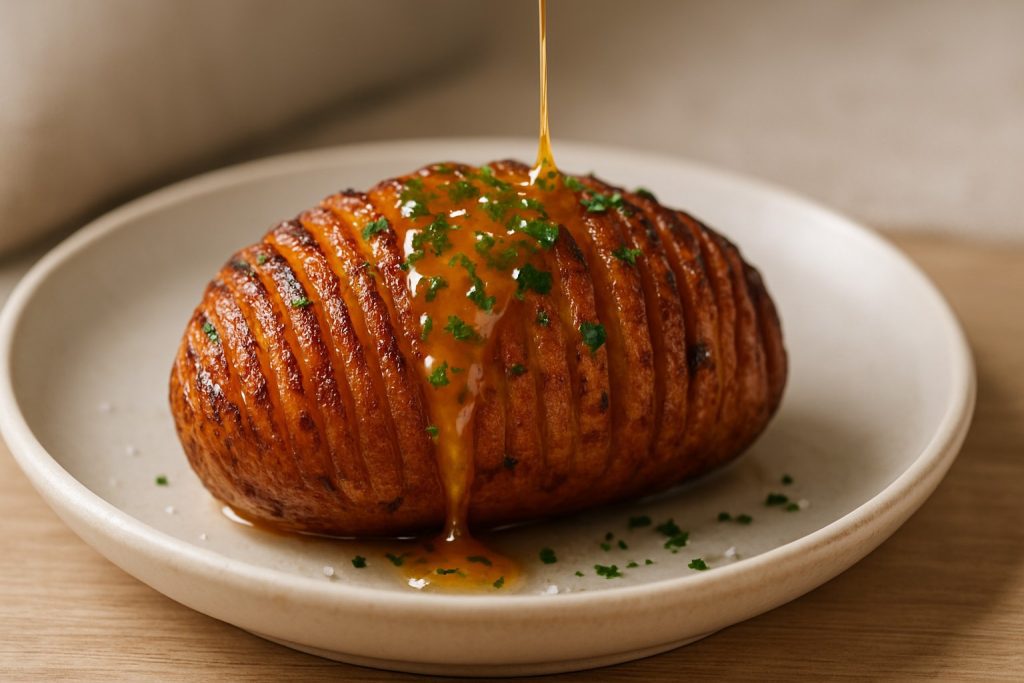
Origins and Culinary History
The name Hasselbackspotatis comes from Hasselbacken, a restaurant in Stockholm. Early accounts credit trainee chef Leif Eliasson with inventing the dish in 1953, and the restaurant’s own website repeats this story. However, food historian Ted Wärnåker found recipes in the classic Prinsessornas kokbok (1934), and Swedish newspaper archives from 1948 mention Hasselback potatoes. These discoveries suggest the dish predates Eliasson.
Regardless of the exact inventor, the dish became closely associated with restaurant Hasselbacken, whose name has existed since the 1760s. By the early 1950s it was a hit on the restaurant’s menu, and by the late 20th century it had spread throughout Swedish households. The technique—making thin, fan‑like cuts across a potato without slicing all the way through—became known as “hasselbacking.” Food writers note that the method increases surface area, resulting in a crispy exterior and allowing fats and seasonings to penetrate the interior.
Although rooted in Sweden, the dish took decades to gain international fame. Food blogs and digital media popularized hasselbacking around 2011; recipe developers then applied the technique to squash, beets and other vegetables. Hasselbackspotatis remains the canonical example, admired for its simplicity and dramatic presentation.
Traditional Ingredients & Tools
Classic Hasselbackspotatis uses only a handful of ingredients. Choose potatoes with an even, oval shape so they fan out easily—Russet or Yukon Gold potatoes work well. The basic Swedish recipe calls for butter and sea salt, but many home cooks add oil for extra crispness. Herb‑infused butter, garlic and breadcrumbs are popular additions, and Parmigiano cheese or herbs can be sprinkled on top for extra flavor.
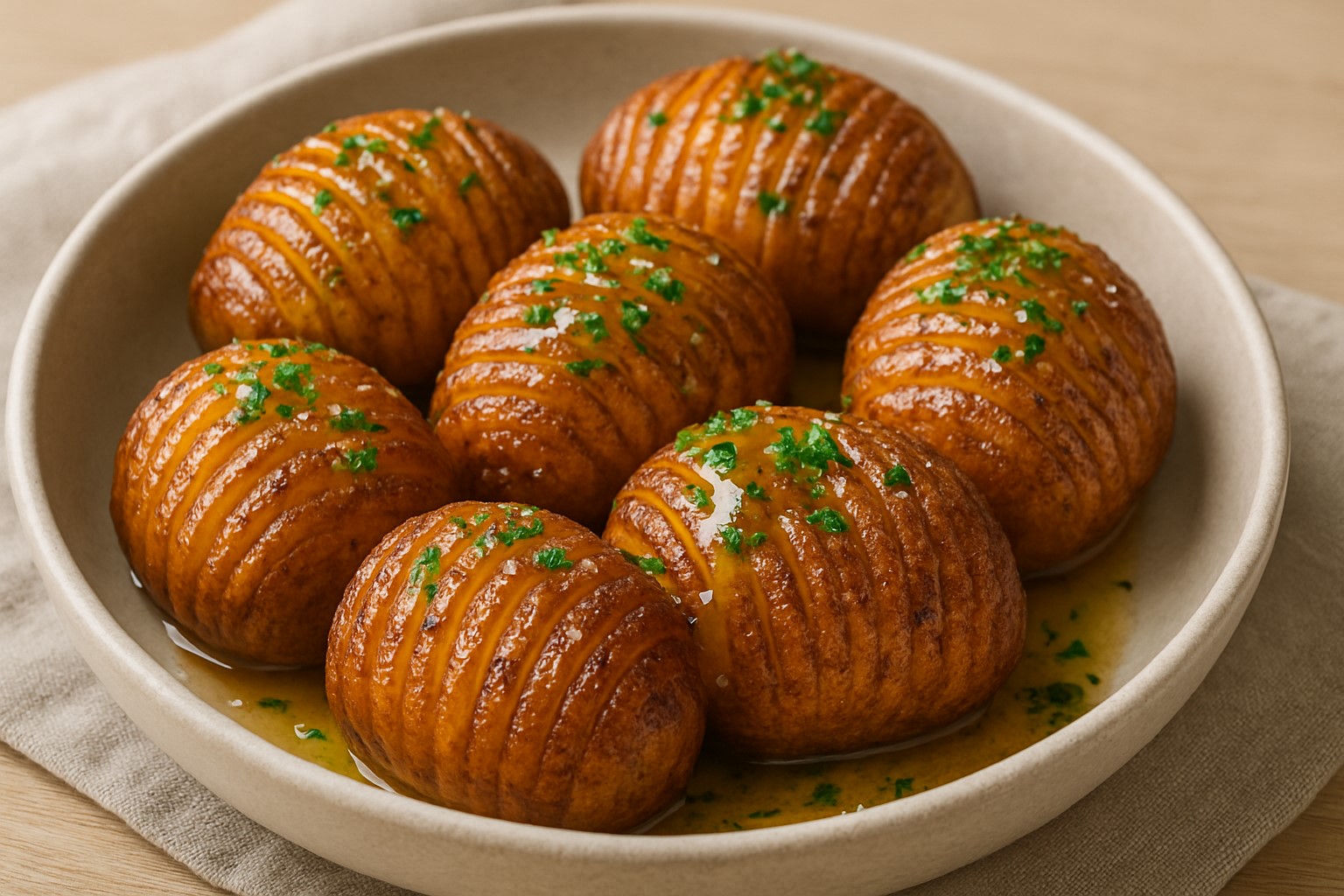
Crispy Hasselback Potatoes (Easy Oven-Baked Recipe)
Ingredients
Method
- Preheat the oven. Heat to 225 °C (435 °F), or 200 °C (400 °F) if using the convection setting.
- Prepare the butter or oil. Melt the butter in a saucepan. If using herbs and garlic, gently cook them in the melted butter for 5–10 minutes to infuse flavors. Mix in oil if desired.
- Wash and cut the potatoes. Scrub the potatoes and dry them. Place each potato between two chopsticks or in a wooden spoon so you don’t cut all the way through. Make thin slices 2 mm apart about two‑thirds of the way down.
- Season and bake (first bake). Arrange the potatoes in a buttered baking dish. Brush them with about half of the butter mixture, making sure to get between the slices. Sprinkle with sea salt and bake for about 30 minutes
- Baste and continue baking. Remove the dish and brush with more butter, oil or the herb mixture. Sprinkle breadcrumbs or pepper if using. Return to the oven and bake for another 20–30 minutes until the potatoes fan out and the interior is tender.
- Finish and serve. For extra crisp edges, increase the oven temperature slightly for the last 10–15 minutes. Sprinkle with grated Parmigiano or fresh herbs just before serving.
Notes
Tips & Technique Insights
- Fanning is critical. For the potatoes to fan out, you need thin, even slices and cuts that stop about 1 cm from the base. Oval potatoes fan better than round ones.
- Baste frequently. Brushing the slices during baking ensures the fat penetrates between the layers and encourages fanning; drag the brush across the surface to separate slices.
- Choose the right potato. Floury potatoes such as Russet or Yukon Gold create a fluffy interior, while waxy potatoes may turn slippery.
- Using a cutting guide prevents accidents. Chopsticks, spatulas or salad tongs provide a stop for the knife.
Serving Suggestions
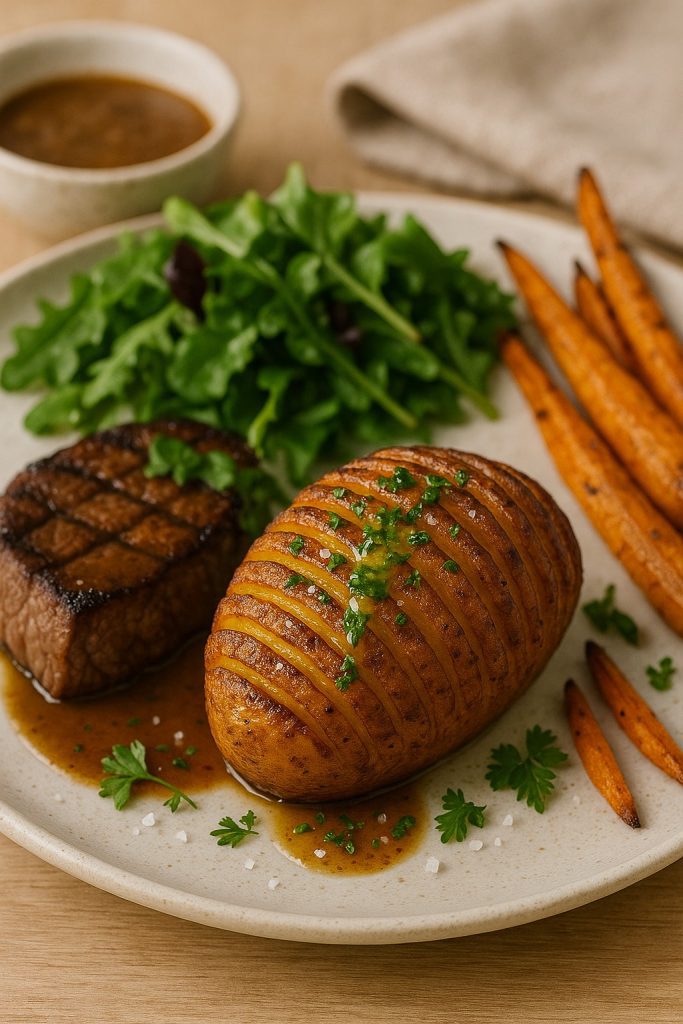
Traditionally, Hasselbackspotatis accompanies roasted meats, steaks or festive meals like New Year’s Eve dinners. In Sweden it often appears alongside a Sunday roast or smörgåsbord. For a lighter meal, serve with grilled fish or a crisp salad. Mini‑Hasselback potatoes make excellent party snacks; they can be dipped in sauces or used as canapés.
Modern Variations & Twists
- Herb‑Infused & Cheesy: Mix fresh rosemary, thyme and minced garlic into the butter mixture for a fragrant result. Sprinkle breadcrumbs or grated Parmigiano cheese over the top during the final bake for a crunchy, savory crust.
- Smoky or Bacon‑Topped: Some cooks drizzle bacon fat instead of butter or top the finished potatoes with crumbled bacon and sour cream; this version echoes loaded potato skins.
- Vegan & Dairy‑Free: Olive oil makes an excellent vegan alternative and produces an even crisper exterior.
- Cross‑Cuisine Experiments: Contemporary chefs apply the hasselback technique to butternut squash, beets, radishes and even tofu for visually striking dishes.
- Health‑Conscious Tips: Nutritionists remind us that potatoes are affordable sources of B vitamins, fiber and minerals, and they have been eaten for thousands of years. Using olive oil and herbs keeps the dish plant‑based and anti‑inflammatory.
Conclusion
Hasselbackspotatis may have an uncertain origin, but its popularity is no accident. Slicing the potatoes into thin, fan‑like layers ensures a wonderful contrast between crispy edges and creamy centers, while butter and herbs infuse rich flavor. Whether you stick to the original Swedish recipe or explore modern toppings like cheese, bacon or truffle butter, this elegant side dish is surprisingly easy to make at home. The next time you want to elevate a simple potato, try hasselbacking—and enjoy a piece of Scandinavian culinary heritage.